A teacher can make all the difference in transforming a subject into a true revelation for students. In pre-university education, many vocations have emerged thanks to the positive influence of a teacher who opened their students' eyes to the merits of their discipline. And at university, this process can be equally decisive in leading students toward one specialization or another within their degree program. But delivering those inspiring classes that optimally convey the curriculum's knowledge is not easy and requires teachers to make an effort to adapt to the specific needs of each group of students, apply diverse methodologies, and earn their students' trust.
A large majority of the teachers at the University of La Laguna strive every day to practice high-quality teaching, and five of them have had their vocation recognized with the Educational Excellence Award, presented last Institutional Day: Christ Manuel Hernandez Gomez, in the area of Arts and Humanities; Eduardo Pérez Roth, in the area of Science; Juan Elicio Hernández Xumet, in the area of Health Sciences; Belén Melián Batista, in the area of Engineering and Architecture; and Zeus Plasencia Carballo, in the area of Social and Legal Sciences.
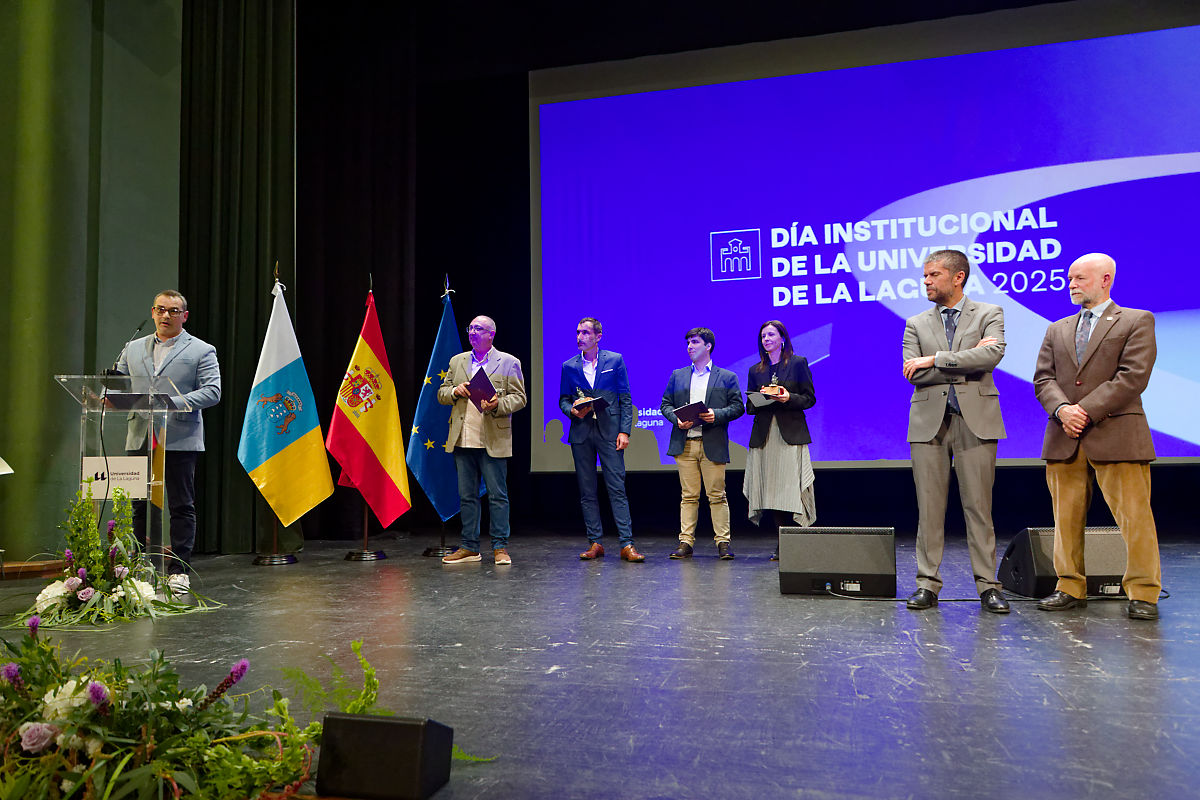
The five award winners during the award ceremony on Institutional Day.
This award draws on the results of the Support Program for the Evaluation of the Teaching Activity of University Professors, Teaching, established by the National Agency for Quality Assessment and Accreditation (ANECA) in 2007. After undergoing this evaluation, this group of teachers obtained the "Very Favorable" rating with an overall score above 9.0. This rating allowed them to voluntarily apply for the "Excellent" designation, for which their applications were evaluated by an external committee over several months and interviews, and they were finally granted it after registering the highest rating in their respective branches of knowledge.
Docentia is a three-way evaluation system: each instructor submits a self-report on their work, students in their courses evaluate them independently, and the department provides its assessment of their performance. These three parameters determine a final rating of "Very Favorable," "Favorable," or "Unfavorable." Participation is mandatory for tenured faculty and optional for those with temporary contracts. The goal is to achieve periodic evaluation of the entire faculty of the institution every five years.
This process provides the University of La Laguna with a calibrated tool to assess the quality of teaching and foster a culture of innovative and collaborative work as a means of professional and institutional development. Furthermore, faculty members see their work recognized through professional development opportunities that contribute to improving teaching quality and encouraging constructive and cooperative reflection on their performance, thereby promoting the implementation of innovative educational methodologies.
The classroom as a living and dynamic space
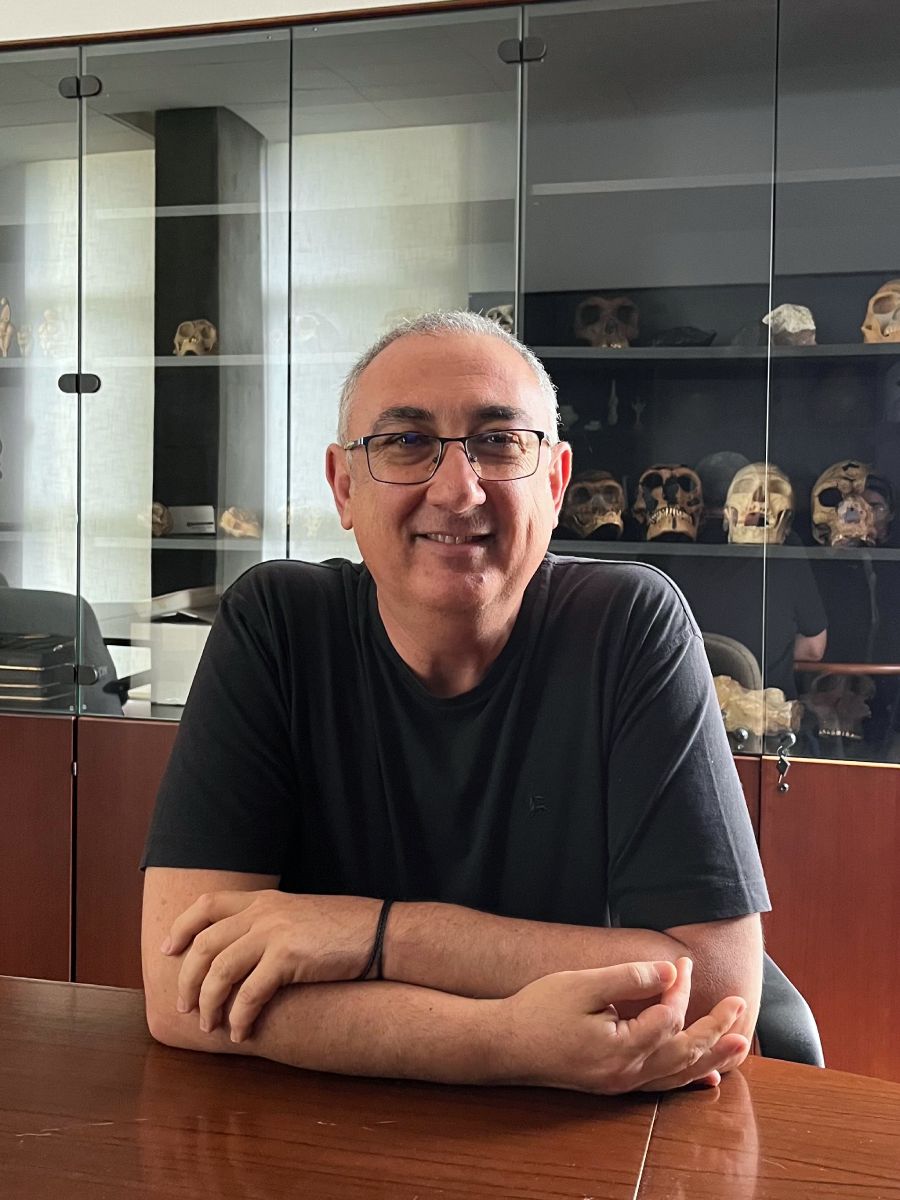
Christ Hernandez Gomez
Cristo Manuel Hernández Gómez, assistant professor with a doctorate in the Department of Geography and History, He encourages his students to take a central role during class, transforming the classroom into a veritable archaeology laboratory where they can reflect on historical questions such as the origin of humanity or the first settlement of the Canary Islands. For this teacher, who teaches at the Degree in History and the Master's Degree in Teacher Training, The classroom is a living, dynamic space where the problems that arise during the session influence its development. “A class is like interpreting a jazz piece; you know how you’re going to start, but from that moment on, the entire educational process depends on variables over which we have little control,” he points out.
This history teacher adds that he sees his role as that of a guide and facilitator in a “dialogical and critical learning context based on feedback.” This is particularly important with first-year students, among whom he observes certain common misconceptions and expectations about the subject they are studying. “It pleases me to see how they are gradually realizing that there are enormous uncertainties and that knowledge about humanity’s past is dynamic and constantly changing,” he notes.
Hernández is convinced that evaluation processes such as the Docentia program are a valuable tool for reflecting on one's own educational work and questioning the reasons behind certain decisions regarding methodology, classroom activities, or the evaluation system.
According to Hernández, a fundamental pillar of teaching is human connection: “We are primates; learning for us is not an individual or isolated process. As social beings, we live and learn in community,” she points out. She strives to foster the affective and ethical dimensions of learning in her classes, and it is no wonder that the students who attend her sessions particularly value her approachable manner and the opportunities for participation and exchange of ideas. “When I look at my students, I see the future in them, and I have complete faith in their capacity to transform the world.”.
Active and reflective learning
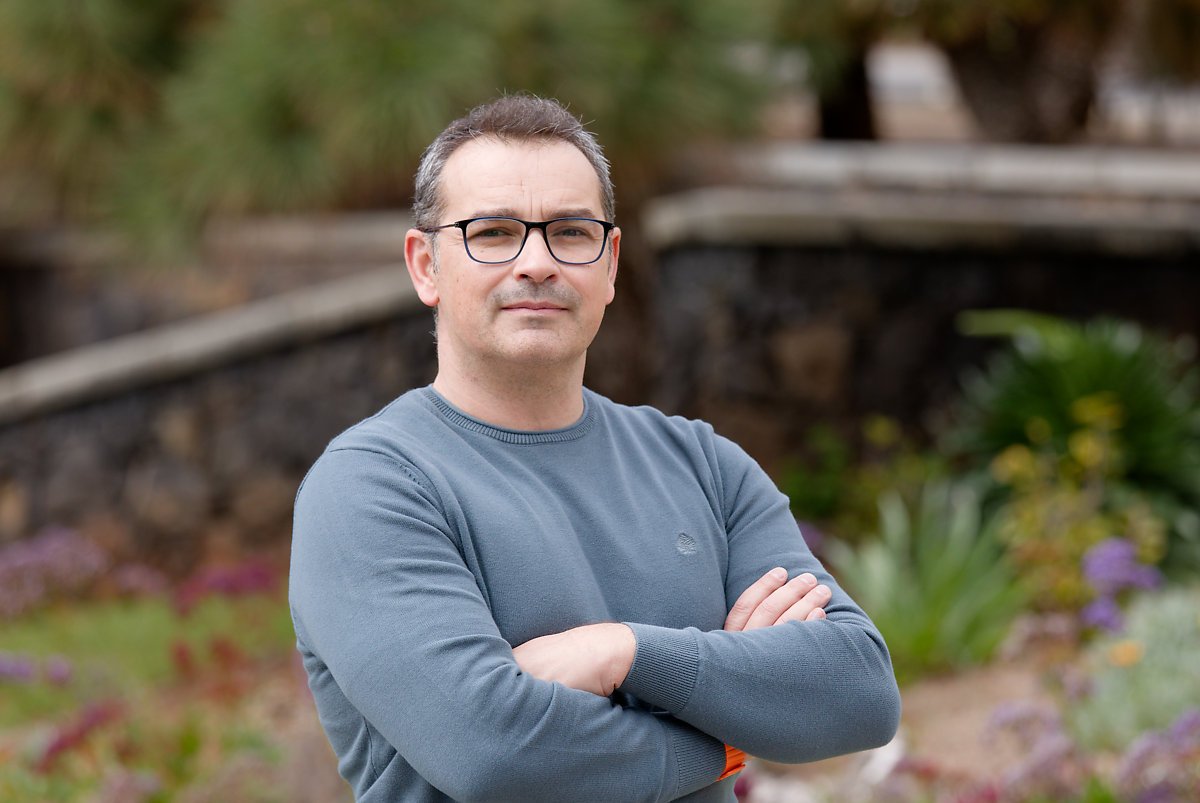
Juan Elicio Hernández
For Juan Elicio Hernández Xumet, professor at the Degree in Physiotherapy, Reflective learning and the development of clinical and critical thinking are key to his teaching methodology. He admits that, initially, he followed a traditional educational model widespread in the health sciences, based on the exhaustive transmission of theoretical information.
But he soon observed “a palpable disconnect between abstract theory and practical application in the real clinical context,” which led him to employ an active and participatory approach in the classroom, using clinical simulations and the analysis of real cases, many of them based on his own experiences or those of his students during their clinical placements. Furthermore, he integrates technology and multimedia resources to enrich the educational experience, ensuring that the activities are diverse, with theoretical sessions, classroom practice, the creation of medical histories, and demonstration videos.
Hernández believes that the research she conducts is fundamental to her work as a professor in clinical subjects, where she strives to offer an up-to-date perspective, which directly impacts better care for future patients and the effectiveness of treatments. “Research ensures that the teaching I provide is based on the most current and relevant evidence, preparing students to be reflective and critical professionals,” she affirms.
This physiotherapy professor notes that the most rewarding aspect of his teaching is witnessing how very shy students make insightful analyses during practical classes, and how this "epiphany" gradually transforms their confidence and participation. His students consider him an approachable and empathetic teacher who encourages them to share clinical experiences and discuss ideas. In this sense, the evaluation process provided an opportunity for self-reflection and a way to ensure he continues to offer relevant content for the training of future healthcare professionals.
Spaces for critical thinking and collaboration
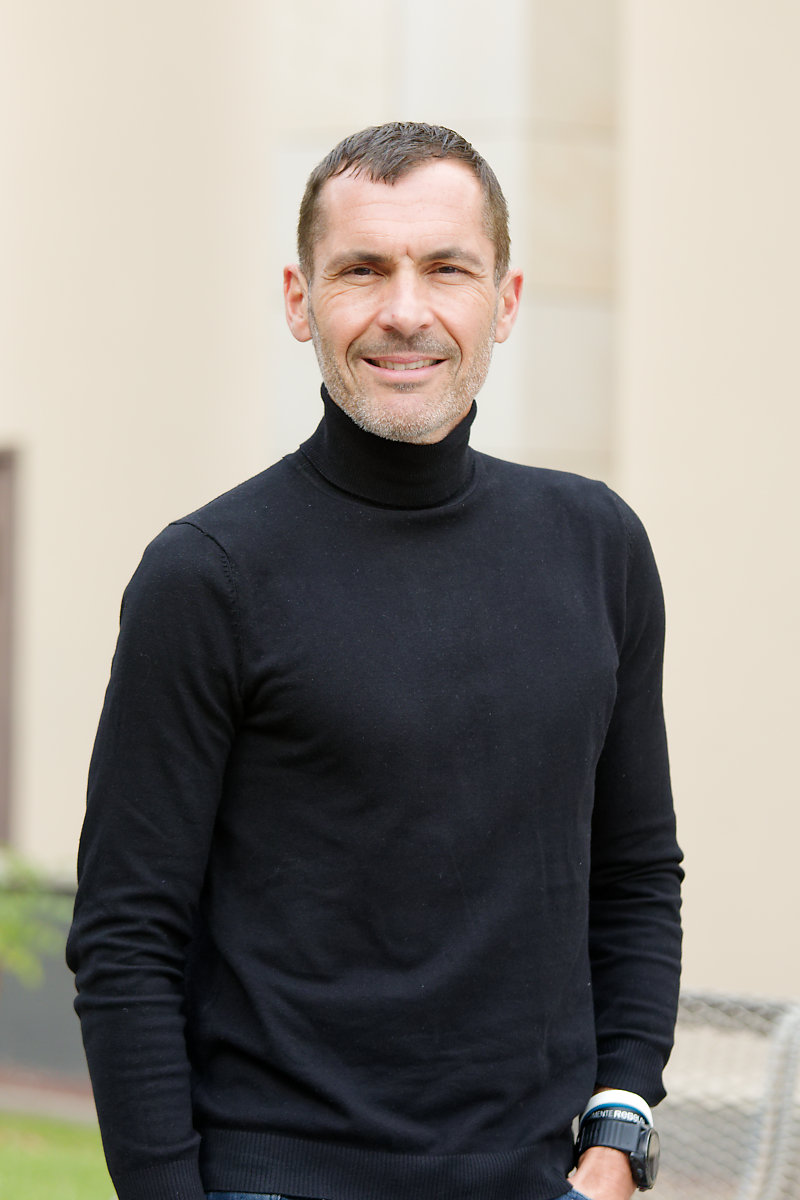
Eduardo Pérez Roth
“I believe it is essential to create an environment where students feel like they are the protagonists of their learning, fostering the confidence to ask questions, express their doubts, and make mistakes without fear of being judged,” says Eduardo Pérez Roth, who teaches in the grades of Biology y Pharmacy, as well as in the Master's Degree in Research and Diagnosis of Tropical Diseases. For this teacher, one of the most fun moments in the classroom is that instant when a student first looks through the microscope to see the microorganisms, followed by the excitement that arises when they finally manage to focus on the bacteria.
She admits that one of the mistakes she made at the beginning of her teaching career was maintaining certain expectations about the skills her students brought to the classroom. To address this, she focused on “listening more, observing more closely how they learn, not how I teach.” For this reason, she views each day in the classroom as an opportunity for testing and adjustment, applying methodologies that foster critical thinking and collaboration, such as... Peer instruction or the Jigsaw Classroom, and incorporating dynamics to increase participation in the theoretical sessions.
Pérez notes that his ongoing research in the field of bacterial resistance to antibiotics provides him with the opportunity to address this issue in the classroom from a practical and up-to-date perspective. Students highlight that Pérez succeeds in sparking their interest in the subject and in the field of Microbiology in general. This professor points out that, in addition to comprehensive processes like Docentia, student surveys are “a valuable tool for identifying strengths and, above all, areas for improvement in professional practice.”.
Active methodologies in foreign language teaching
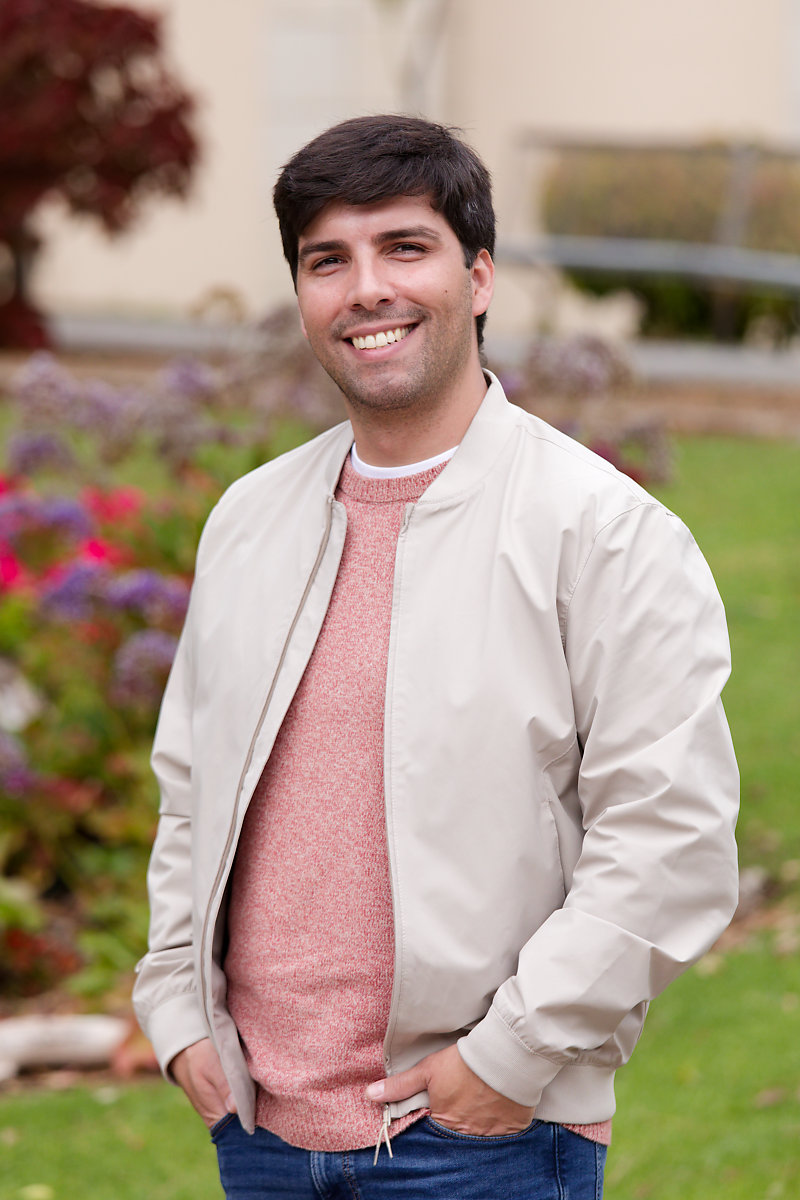
Zeus Plasencia
Zeus Plasencia Carballo, PhD, contracted professor at the Department of Specific Didactics, It uses active and practical methodologies in the classroom, based on the principle of "learning by doing". In the Degree in Teacher in Early Childhood Education, Students design activities to teach English to preschoolers through storytelling and dynamic resources. In the Master's Degree in Teacher Training, specializing in English, they combine case studies, teamwork, and simulation to connect theory with teaching practice.
In her classes, “future teachers research and experiment with different teaching strategies and resources, adapting to the realities of the classroom,” she says. One of the biggest challenges is overcoming students' barriers and prejudices toward the language, especially in the Early Childhood Education degree program, where students arrive with a basic level of English. Therefore, to reduce language anxiety, Plasencia avoids technical terms, uses simple sentences, repeats key ideas, uses gestures and images, and resorts to Spanish only when necessary. Furthermore, she encourages students to express themselves without fear, using grammar correctly: “It doesn't matter if they use simple sentences, what matters is that they are well-spoken.”.
In this way, Plasencia promotes the active use of English, reinforcing students' confidence in their communicative abilities. The balance between rigor and accessibility, as well as the usefulness of the content, are aspects highly valued by her students and by ANECA (the Spanish National Agency for Quality Assessment and Accreditation). One of the sessions that Plasencia particularly enjoys takes place in the initial methodology module of the teacher training master's program, where she invites students to reflect on their own experience learning English. “We don't start with theory. I ask them to think about how they learned English and what that teacher they remember fondly did well.” They often mention the human connection with the teachers, understood as a relationship of respect and trust. “I don't mean being colleagues, but a connection that inspires,” she points out. For Plasencia, this closeness is crucial for fostering reflection and preparing future teachers to assume that role.
Innovation in algorithm design
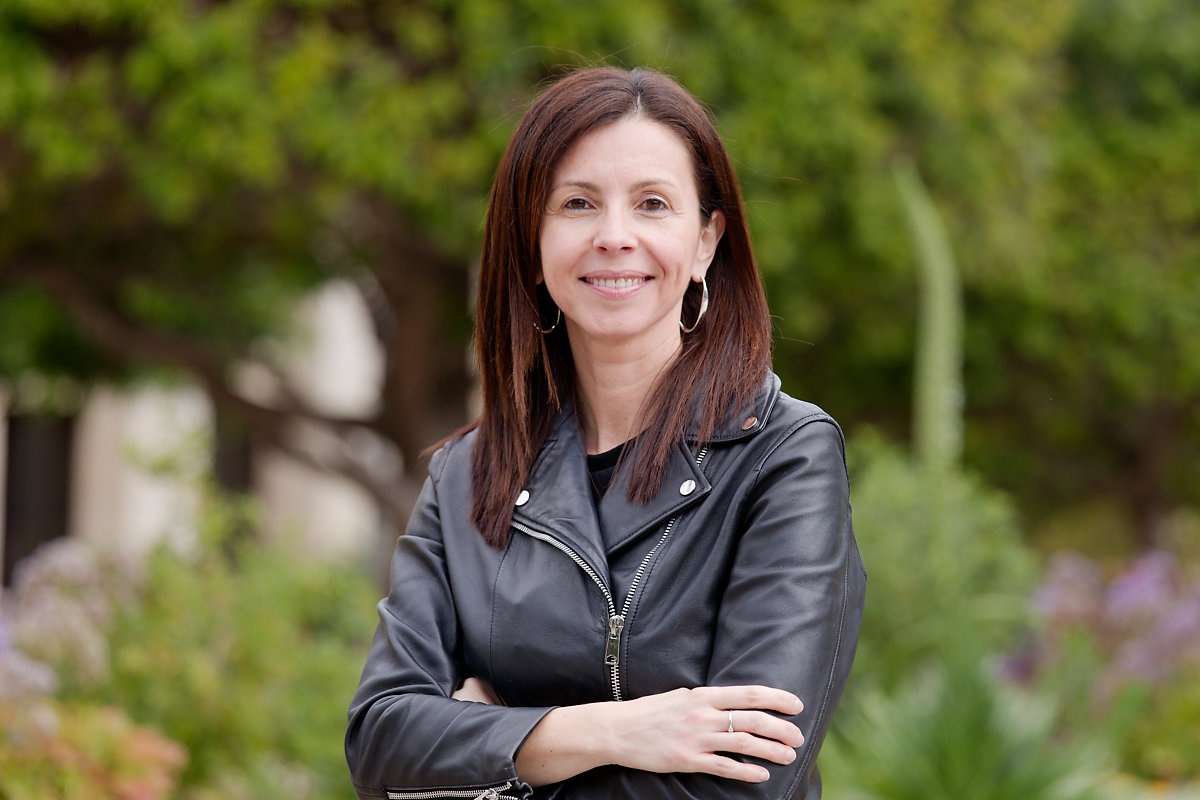
Belén Melián
Belén Melián Batista, professor at the Department of Computer and Systems Engineering, teaches the subject of Algorithm Design and Analysis of Bachelor's Degree in Computer Engineering, with a practical and collaborative approach. Although her projects are demanding and require many hours of work, her teaching has been recognized on several occasions by her students and the ANECA (National Agency for Quality Assessment and Accreditation). "I put all my energy into transmitting knowledge clearly," she says.
In her classes, students tackle complex optimization problems that require applying theory to real-world situations and designing their own algorithms, as there are no pre-established solutions. “The problems assigned in the projects have particularities that are not easily found in Artificial Intelligence code generation tools,” this professor points out. Melián explains that, for several years, student projects were usually carried out collaboratively in teams. However, in a particular course, she decided that the projects should be individual, without abandoning the collaborative approach. This decision arose from supervising a Final Degree Project in which she realized that this student had not fully grasped the content covered in her course.
The teacher emphasizes the importance of mutual respect and pushing students out of their comfort zone. Her assessment model focuses on practice, adaptation to the current context, critical thinking, creativity, and the development of transversal skills.
Furthermore, she is convinced that active research and knowledge transfer are key to quality teaching. To this end, she actively participates in the defense of research papers in journals such as the Journal of Heuristics, where she is an associate editor. She explains that students are taught to design rigorous and well-founded experiments, as if they were solving real-world business problems. “It’s rewarding to see how, despite the complexity of the projects, they manage to find original solutions,” she says. She especially enjoys it when students share their passion and enthusiasm for their research topic.
Communications Office

 Spanish
 English
 French