On May 9, 1950, French Foreign Minister Robert Schuman delivered a speech that marked the origin of the current EU. “The pooling of coal and steel production (…) will change the destiny of these regions, which for so long have been dedicated to the manufacture of weapons, of which they themselves have been the first victims,” the French politician declared that day, and his proposal gave rise to the European Coal and Steel Community, made up of France, West Germany, Italy, the Netherlands, Belgium, and Luxembourg. From that first step emerged the integration process that, 75 years later, is known as the European Union (EU).
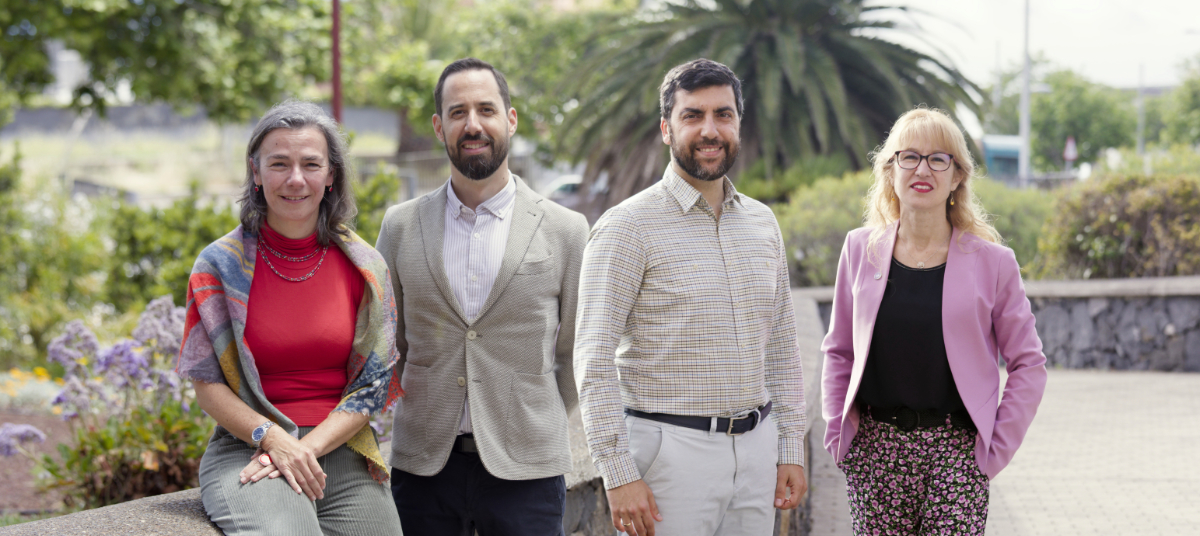
Although it may sometimes be perceived as a distant entity, the truth is that EU law is part of the Spanish legal system. “There is no separation or clear boundary between the two, but rather a deep integration,” he points out. Susana Eva Franco Escobar, a tenured lecturer in the Department of Administrative Law at the University of La Laguna. In this regard, and in the face of current challenges such as European security, the advancement of artificial intelligence, and the fight against disinformation, the research staff at the University of La Laguna analyzes, from disciplines such as Law and Economics, the role of this multilateral organization in public life and in our regulatory framework.

Alicia González Navarro.
Migration policy
One of the critical points is the treatment received by unaccompanied foreign minors arriving in Europe. Alicia Esperanza González Navarro, A senior lecturer in the Business and Law research group at the University of La Laguna argues that EU migration policy lacks coherence. As the Ombudsman has pointed out, member states are required to protect vulnerable groups while simultaneously reinforcing border closure policies. This contradiction particularly affects unaccompanied minors, who not only face a hostile migration journey but are also subjected to administrative procedures that, in many cases, question their age, even when they present supporting documentation.
González Navarro emphasizes that the Committee on the Rights of the Child has condemned Spain for procedures that violate the Convention on the Rights of the Child. He underscores that determining the age of those arriving in Spain is of paramount importance, as their inclusion in the child protection system depends on it. In this regard, Article 39.4 of the Spanish Constitution establishes that minors must enjoy the protection provided for in international agreements. Therefore, he states: “Regardless of how they entered the country, minors cannot be considered to be in an irregular situation nor can they be returned to their country of origin except in specific circumstances.”.
“The situation faced by minors arriving irregularly in our country is very serious,” he warns. In some cases, such as the right to effective judicial protection or to legal assistance and interpretation, the difficulties stem not from a lack of formal recognition of these rights and guarantees, but from the absence of effective implementation in practice. In others, such as the procedure for determining age, there are many aspects that need improvement.
“The EU hasn’t done much to improve this situation,” González Navarro adds. European migration policy has been guided by a philosophy of isolation to facilitate expulsions and returns to countries of origin, which explains why situations like the one in the Canary Islands are repeated in places like Lampedusa.
An opinion from the European Economic and Social Committee has urged the EU to develop a coherent approach to protecting these minors at the European level. “Guidelines for structuring age determination procedures could have been established in this harmonization process,” the expert comments. However, the few changes to Spanish legislation and the legislative proposals currently under consideration have arisen primarily as a result of observations made by domestic institutions and international bodies.
“We are facing a highly sensitive issue that must be addressed urgently,” says González Navarro, who warns that social and political tensions surrounding this issue cannot be allowed to increase.
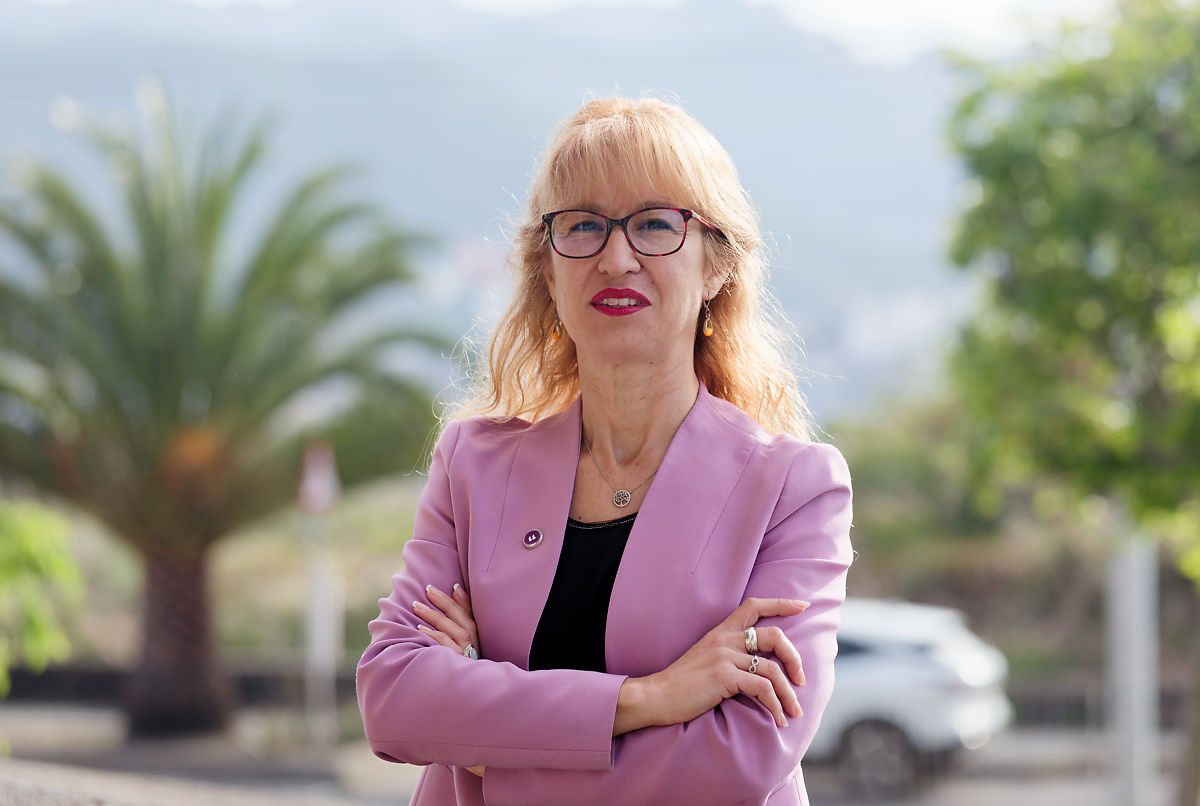
Susana Franco.
Water governance
In a territory surrounded by the sea but with a scarcity of fresh water, its management becomes fundamental. Franco Escobar has studied the particularities of water law in the Canary Islands compared to the national level. “In the islands, there is the possibility that the extraction and sale of water may be in private hands,” he explains. This raises a key question: What is the role of the island water councils in relation to these owners?
During the period 2024-2025, the researcher is analyzing how water reuse and the declaration of a water emergency, included in the island plans, can impact biodiversity. Although the work is in its initial phase, she already anticipates that conditions have changed: “I drafted the project under a scenario of scarcity, but there has been more rain recently, which will likely modify some of the results,” she notes. Even so, she considers it interesting to observe how public policies, from an administrative law perspective, can modulate the effects of natural phenomena. “Nature is one, but the way public authorities respond to it can significantly alter things,” she states.
Regarding the Sustainable Development Goals, Franco Escobar emphasizes that the major challenge for the EU is to integrate these goals coherently into its regulatory framework. The needs of northern and southern Europe are very different: “In the north, there may be excess water flow, while in areas like the Canary Islands, we face droughts and water emergencies,” he explains. “Therein lies the EU's challenge: to achieve a coherent policy that integrates these differences.”.
Franco Escobar believes the European Commission is the institution best positioned to achieve this integration. “Regulations sometimes arrive late, but they are usually effective,” he notes. However, he is more concerned about their implementation. Regarding wastewater discharge, the EU has prohibited untreated discharges since the 1980s, including in the Canary Islands. However, the only mechanism for enforcing these regulations has been through sanctions. “Building treatment plants, properly channeling wastewater, or establishing inspection systems could be much more effective measures,” he concludes.
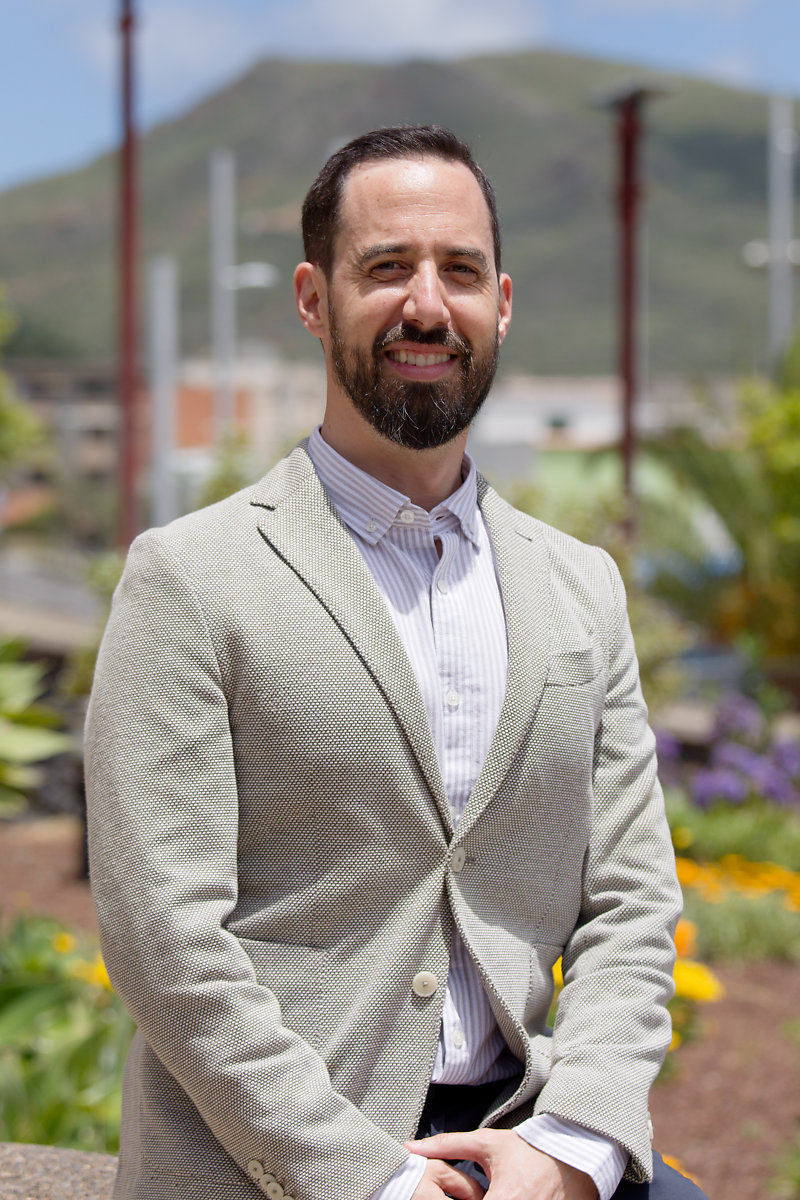
Carlos Trujillo.
Data protection
At a time when the European project faces economic, social, and technological challenges, it is worth asking whether principles such as equality, dignity, and freedom are truly guaranteed in the digital environment. An increasingly common practice among digital platforms casts doubt on this: the "consent or pay" model. Carlos Trujillo Cabrera, A lecturer with a doctorate in the Civil Law department at the University of La Laguna explains that this method allows data controllers to offer personalized advertising to users. It is behavioral advertising, based on the analysis of user behavior when browsing or shopping online.
“The data collected by the browser is stored in cookies—alphanumeric text files—which require the user’s prior consent. Subsequently, this data is used to show you advertising tailored to your browsing habits,” Trujillo Cabrera explains.
The European Data Protection Board (EDPB) has reiterated that consent is only valid if the user can decide freely, without risk of deception, intimidation, coercion, or significant negative consequences for refusing. Therefore, when the alternative to consent is paying for access to information, this requirement of freedom may be compromised.
Although at first glance it may seem like a free choice, the truth is, as the Court of Justice of the European Union reminded us in a July 2023 ruling, user consent cannot be considered freely given if it is forced upon them as a condition for accessing an essential service such as a social network, especially when the platform has a dominant market position. In these cases, the apparent freedom of choice is conditioned by the company's market power and the lack of real alternatives, which can generate a situation of dependency or a coercive effect. lock-in, which, in practice, forces the user to remain on the service offered by the platform, under the risk of becoming somewhat isolated from their contacts and relationships, or else consider the amount to be paid.
The problem is compounded when the real possibility of accessing information is at stake. In this regard, it is worth considering whether this is creating an information gap based on economic means. “The EDPB considered that offering only a paid alternative to a service that involves processing data for behavioral advertising purposes cannot be the default solution used by data controllers,” Trujillo Cabrera points out. “They should consider offering data subjects an equivalent alternative that does not involve any payment,” he adds.
For its part, the Spanish Data Protection Agency, in its guide published in May 2024, has finally aligned itself with this interpretation, recommending that a free alternative without behavioral advertising also be offered. This alternative would be based on general or contextual ads; that is, advertising that requires the processing of little or no personal user data, such as advertising based on a selection of topics chosen by the user from a list of interests provided by the platform.
The recommendation not only seeks to safeguard the freedom of consent, but also to protect compliance with fundamental principles of the General Data Protection Regulation (GDPR) such as minimization, which establishes that the data processed must be adequate, relevant and limited to what is strictly necessary to fulfill the purpose of the processing.
In the case of a social network, this would translate to collecting only the essential information needed to provide its service, such as name, age, or location. However, behavioral advertising continuously monitors user behavior: visits, clicks, searches, etc. All of this is done through cookies that store and cross-reference this information to develop a profile for each individual. This data collection, besides being excessive for the stated purpose, often involves sharing the data with third parties. "The number of partners ranges from 800 to 900 in the case of media outlets, and up to almost 48,000 on social networks like Facebook," he indicates.
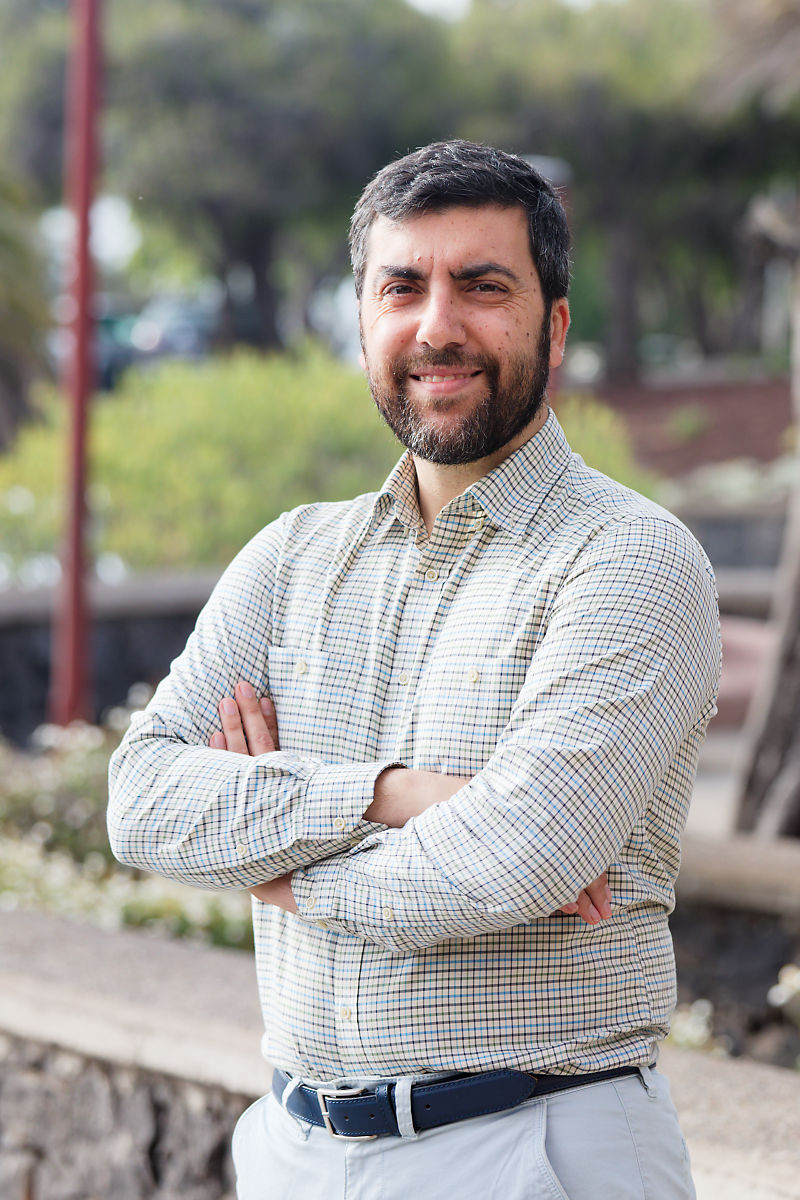
Javier Mendoza.
Public procurement
Decisions and directives adopted at the European level have an impact on citizens' daily lives. One of the most obvious examples is public procurement, particularly smaller contracts. Javier Mendoza Jiménez, a researcher in the area of Business Organization at the University of La Laguna, points out that all EU countries are governed by the same directive and face similar problems.
“Spain is in a low position regarding monetary limits for minor contracts: €15,000 for supplies and services, and €40,000 for works,” he explains. “If we compare this with countries like France, where the limits were €25,000 and €50,000—and were later increased—or with Italy, which went even further, it’s clear that Spain is at a disadvantage,” he adds. Furthermore, he points out that minor contracts in Spain have a maximum duration of one year, a restriction that doesn’t apply in other countries.
The researcher explains that, together with the Canary Islands innovation cluster, they presented an initiative in Congress with the aim of modifying and increasing these limits. “It was well received, they responded, but nothing has been done about it yet,” he notes.
This type of contract facilitates access to public contracts for SMEs, especially micro and small businesses. “Participating in a tender is costly, requires a lot of documentation, and numerous requirements,” he states. “A minor contract is simpler,” he adds. Sometimes it's not even necessary to request quotes, except in some autonomous communities.
Raising the thresholds would allow more companies to access the market under better conditions and would reduce administrative costs. Currently, larger contracts can take between seven and nine months to complete due to their legal complexity. To avoid these delays, contracts are sometimes split into smaller contracts, which carries certain risks.
Mendoza Jiménez points out that around €200 billion worth of public works projects are put out to tender in Spain each year. “Although there are cases of corruption, if we put them in perspective with the total volume, they aren't that many,” he states. He also notes that European funds must be spent before 2026, so it's advisable to streamline procedures by making greater use of direct contracting. “In research, we can already spend up to €50,000 on direct contracts, and there haven't been any problems,” he explains. “It works, it has improved efficiency, and it hasn't caused any issues. Therefore, perhaps this model could also be applied in other sectors,” he concludes.
(This report is an initiative framed within the InvestigaULL Commemorations Calendar, a scientific dissemination project promoted by the University of La Laguna).
Scientific Culture and Innovation Unit (Cienci@ULL)

 Spanish
 English
 French