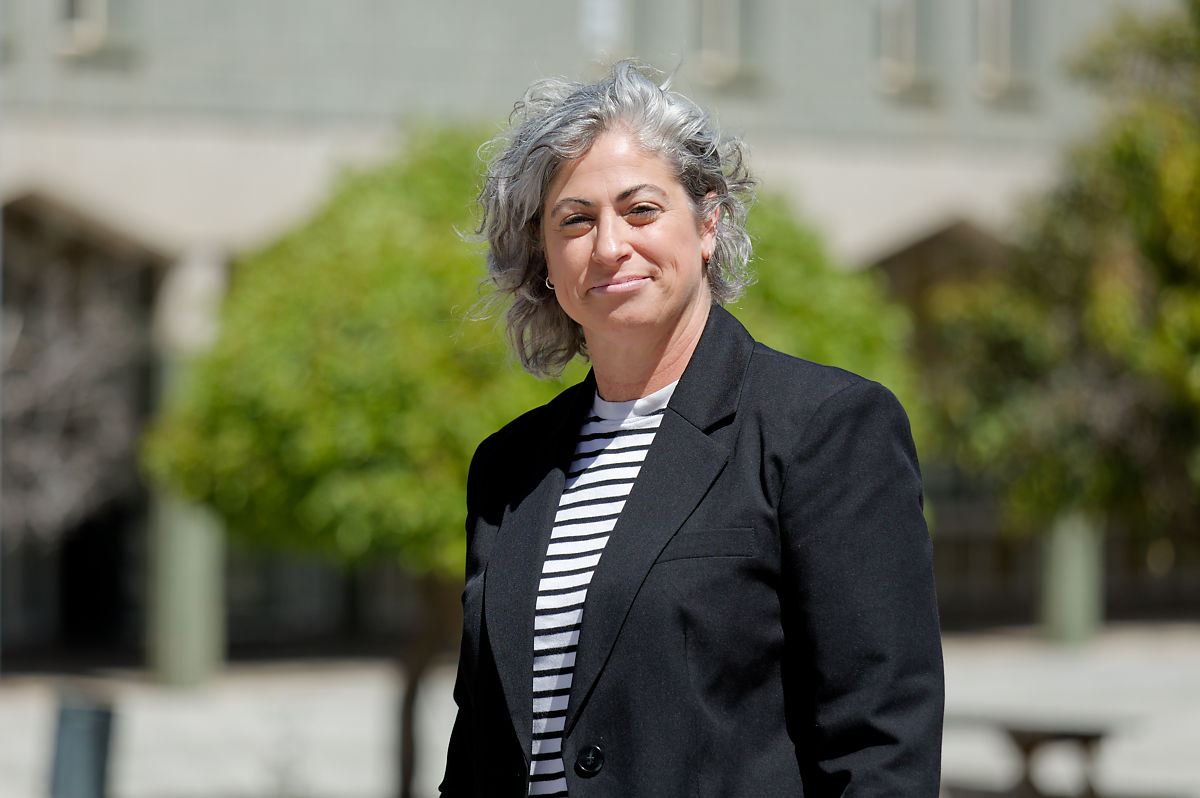
The humanities are not an ornament of progress, but its compass, something he understands very clearly. Cristina Aranda, A philologist, technology consultant, and co-founder of Mujeres Tech and Big Onion, the expert visited the University of La Laguna to talk about scientific entrepreneurship, AI, and challenges we haven't yet foreseen. Her visit was part of the program. TEKNE, which promotes knowledge-based entrepreneurship.
Cristina Aranda's path to the world of technology wasn't planned; she arrived at that intersection of words and machines out of necessity, and her first step was to enroll in an SEO course. What seemed like a practical solution became a pivotal moment when she discovered a connection between her thesis, which focused on the creation of keywords and brand names, and how search engines work. "There's nothing more philological than words," says Aranda.
This discovery led her to study Internet Business and work in technology companies. “That’s where I started getting involved in natural language processing projects,” she explains, a branch of artificial intelligence deeply linked to linguistics. She began with pre-sales tasks and later collaborated directly with development teams, where she found a way to apply her philological perspective to automatic language interpretation and generation systems.
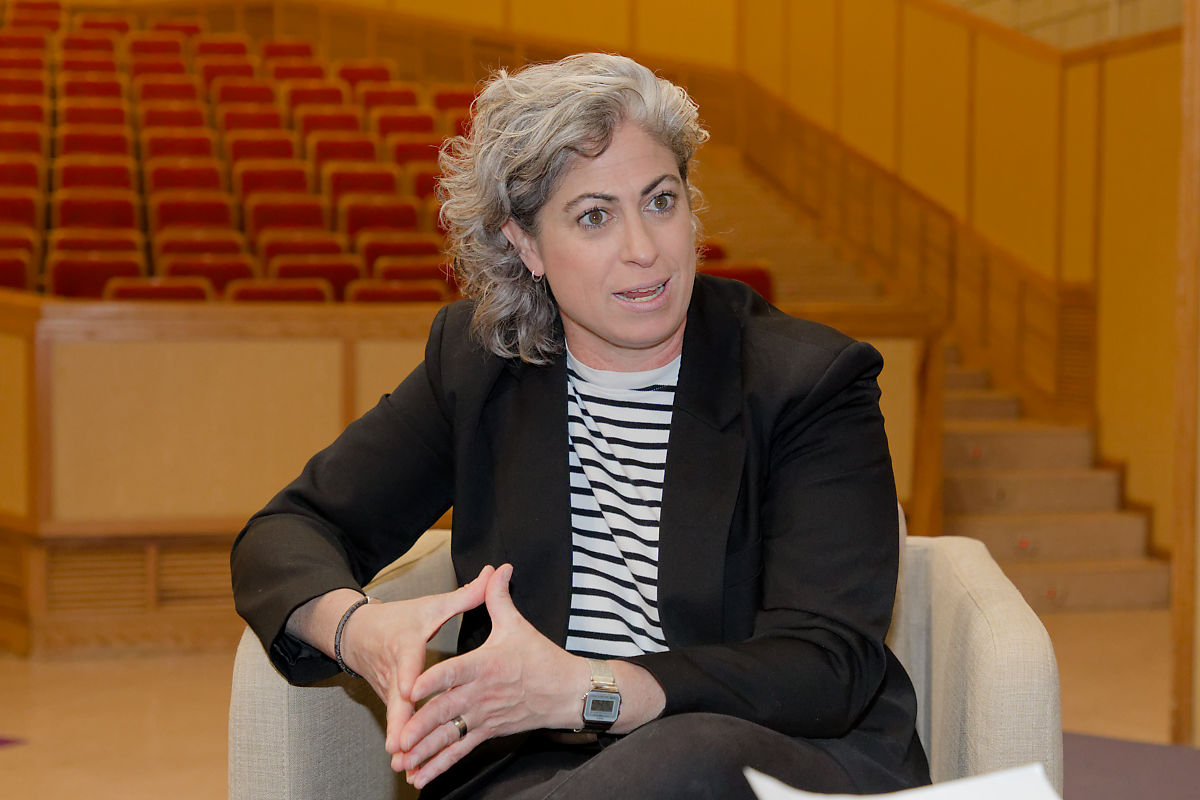 For Cristina Aranda, one of the keys to training professionals capable of facing current technological challenges lies in recovering critical thinking from the ground up, and that inevitably involves bringing the humanities, and especially philosophy, back into the classroom. “It is urgent that we return to teaching students to question, to analyze, to not accept as valid any information that reaches us through our mobile phones,” she emphasizes.
The lack of filters in the digital environment has direct consequences, especially among young people. Aranda warns about the effects of social media on mental health, self-esteem, and identity formation: perfect and false lives, constant stimulation, and comparisons without context. “Without critical thinking, without self-esteem, without tools to interpret what they see, many teenagers are completely lost,” she points out.
This also extends to the professional sphere, since artificial intelligence requires training that goes beyond the purely technical. “AI doesn't make decisions on its own; we, as people, are the ones who decide what to do with it,” she reminds us. Therefore, she argues that we must educate the public so they can understand how it works, its limitations, and its ethical implications.
The risks of AI
Artificial intelligence is not a thing of the future: it's already integrated into our daily lives. From the phones we use to the automated trains that connect terminals at airports, this technology operates silently, making decisions that affect us every day. That's why Aranda argues that it's essential to incorporate humanities perspectives into its development: "We are the ones who use these tools, and we are also the ones who decide how they are designed and who benefits from them.".
One of the biggest risks of AI is the reproduction of existing biases. If a system is trained with discriminatory data, its decisions will also be discriminatory. “The machine doesn't distinguish between good and bad; it only detects patterns, and if the data is biased, the result will be too,” he explains. That's why he insists that humanistic profiles are key to detecting and correcting these distortions and “hacking” inequality from within.
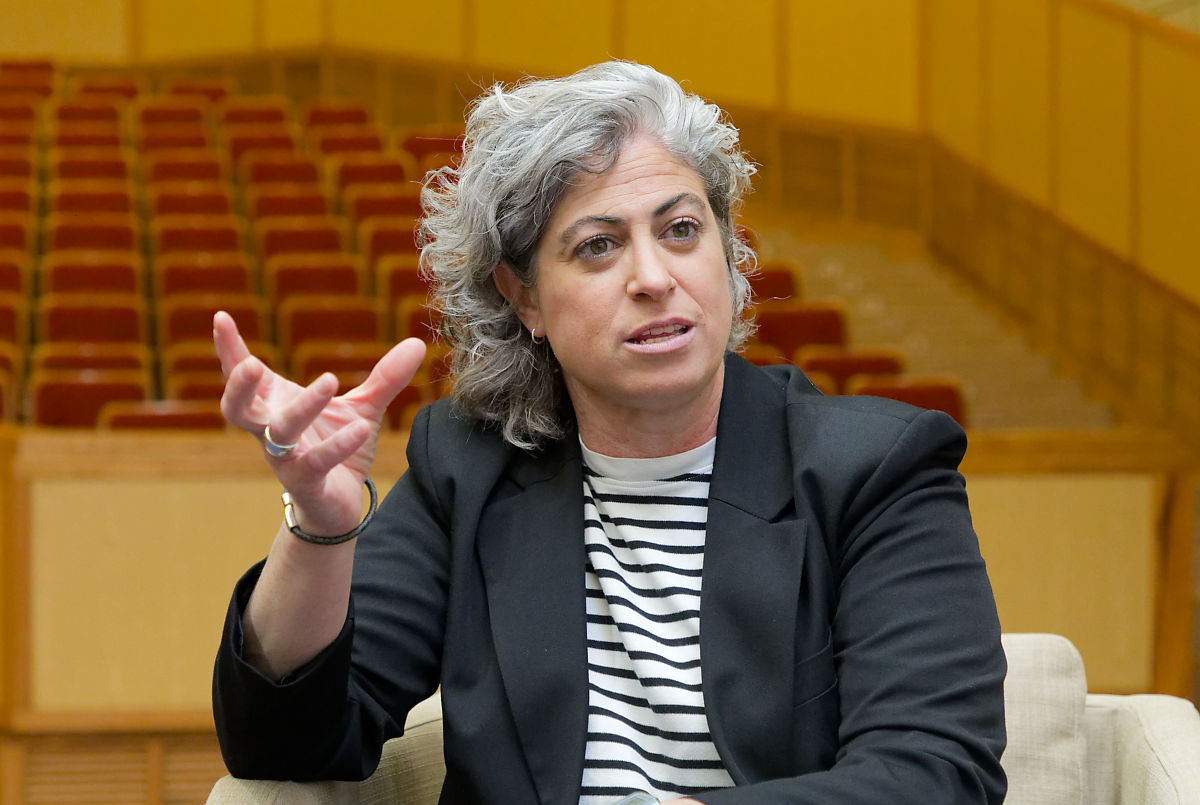 Furthermore, she points out that many automated decisions are already having life-altering consequences: they can determine whether a person receives a scholarship, receives medical surgery sooner, or obtains a bank loan. “These are crucial decisions that must be considered from a human, diverse, and inclusive perspective,” she notes. To achieve this, more than just programmers are needed; teams are required where different worldviews coexist. “Technology cannot be built solely from an engineering standpoint; we also need diversity in how we think,” she concludes.
Aranda conveys a clear message to the Humanities students: “Don’t worry, we live in a society where people will always want to be with other people, and there, those of us who come from the Humanities have enormous value.”.
The rise of language models demonstrates that the skills of those who study Philology, Linguistics, or Psychology are more valuable than ever. “Natural language processing has revolutionized AI; you no longer need to know how to program to communicate with a machine, you simply need to use our language, and those who understand how language works have a great deal to contribute.”.
The consulting firm is convinced that the coming wave of automation will highlight something profoundly human: the capacity to evoke emotion, to move people. “Machines can’t make you feel what you feel with a great play or a piece of music played with soul. That can’t be automated,” she says.
A fair, inclusive, and humane AI
The future of work will be shaped by automation, but Aranda emphasizes that artificial intelligence won't take people's jobs: those who know how to use it best will. According to her, many companies are still in their infancy in this area, "they talk about AI, but they don't even know where their data is or how to structure it.".
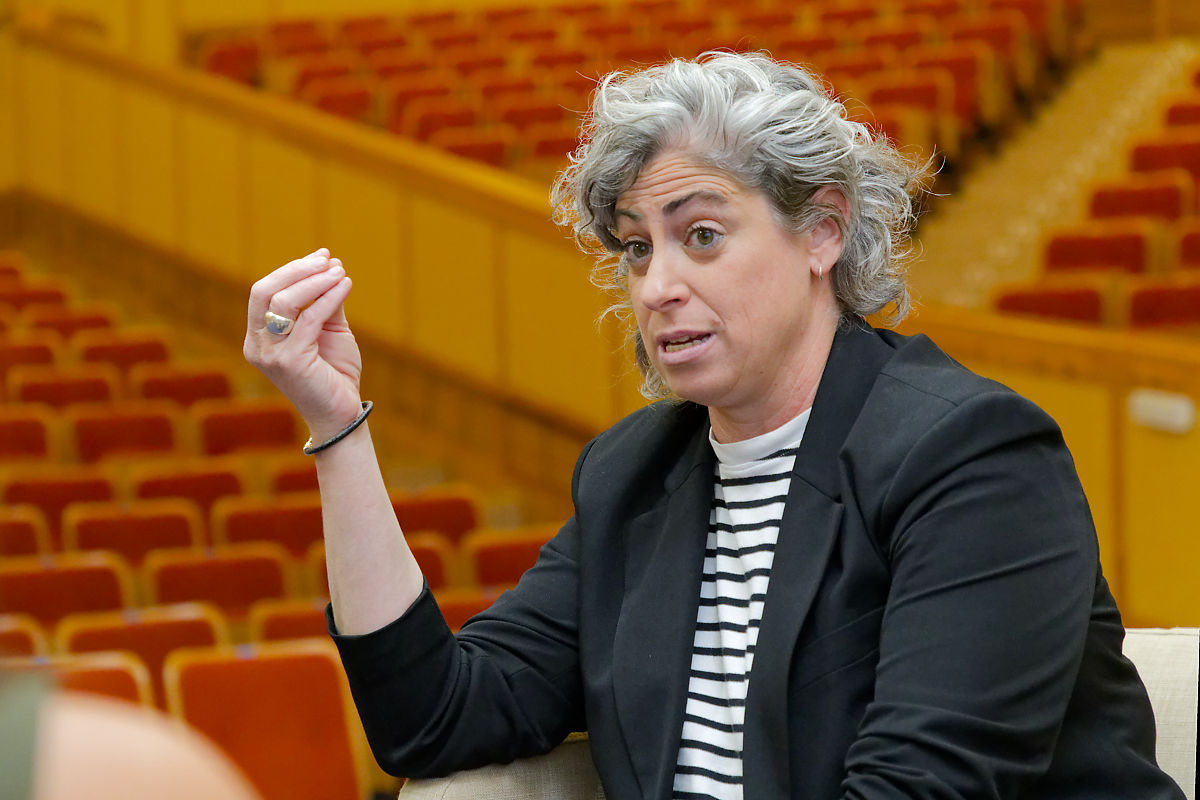 However, as automation becomes widespread, many routine tasks will disappear. “That’s why it’s important to train people; AI is just a tool, like a calculator. The important thing is knowing what to do with the result,” he points out. In that context, mastering AI will be as fundamental as knowing English. “Anyone who wants to access skilled jobs will have to understand how it works and how to use it, even if they don’t know how to program,” he states.
The philologist has also advised public institutions on the integration of emerging technologies, and although she acknowledges there is still a long way to go, experts in the field are beginning to be heard. Among the projects she highlights with enthusiasm is the Artificial Intelligence Master Plan for Tourism in Tenerife: “I’m excited because it wasn’t just well done, but things have already been put into action.” She emphasizes the creation of a sandbox, an isolated testing environment for running software code without damaging the main system.
Furthermore, it underlines the importance of public investment for innovation in Spain, since most companies are SMEs or micro-enterprises, which hinders progress, especially in scientific entrepreneurship or technological spin-offs.
Since innovation and creativity go hand in hand, a question that crosses many people's minds is whether AI limits the latter, but this philologist is clear on the matter: "AI amplifies what you already are." She gives the example of how a person, despite being very creative, lacks the technical skills to draw, but, thanks to artificial intelligence, can give instructions and see their ideas take shape. "This is no different from what happened with AutoCAD in architecture or Photoshop in design; it's progress," she affirms. "Those who resist it are those who don't want to evolve." That's why she defends the potential of these technologies as allies, especially in education. "AI allows for cross-curricular, more original, and more personalized teaching, and those who are creative will know how to take advantage of it.".
What should really concern us
Data is fundamental because, essentially, it doesn't lie: it has an objective component that often dismantles subjectivity. "If I tell you, for example, that the majority of people who develop artificial intelligence are white, heterosexual, able-bodied men who were educated at the same universities, you can already imagine the systemic bias behind it. That's the power of data when used correctly; it reveals structures, inequalities, and uncomfortable truths.".
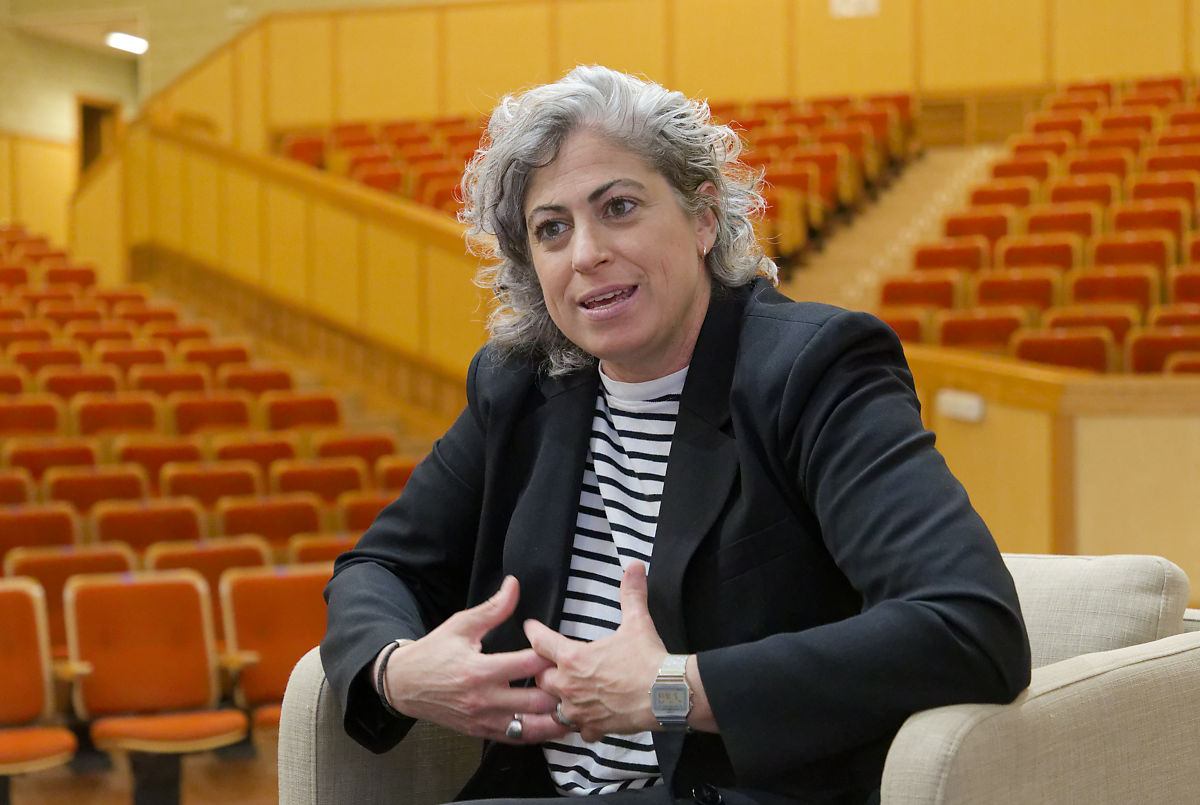 The major challenge lies in the fact that the vast amount of data generated today is unstructured; it consists of social media conversations, comments, and posts. Aranda points out that this is where things get complicated because “human language is wonderfully imperfect; it has nuances, ironies, contexts, and double meanings. Machines, however much they have advanced, still lack real-world experience; they lack semantics, pragmatics, and real-world context.‘.
Today's artificial intelligence systems are capable of processing information at incredible speeds, but sometimes they are astonishingly clumsy; "they lack judgment, understanding of their surroundings, and also ethics." Why is this? The technology consulting firm explains that "many have been trained with thousands of unfiltered texts taken from the internet, without respect for intellectual property, without citing authors.".
To build transformative stories from data, more than just technology is needed: it requires sound judgment, ethics, linguistic understanding, and narrative ability. “The important thing is not just having the data, but knowing what story it tells and how to tell it meaningfully, rigorously, and impactfully,” she emphasizes.
Now, in the wake of events like Donald Trump's return to the US presidency, there's talk of technological sovereignty and reducing that dependence. "The problem is that Big Tech has imposed a dangerous narrative: that regulation stifles innovation." Regarding this assertion, his position is clear: "I prefer to safeguard citizens, rather than worry about what you do with my data, how that impacts democracy, mental health, our daily lives...".
Aranda mentions that these types of narratives are constructed to avoid confronting uncomfortable truths "because being transparent implies assuming responsibilities, and that's why regulation is necessary," making clear the obligation of entities to be transparent and pay the corresponding taxes. "AI is not inherently bad; it's a tool, and like any tool, its impact depends on how it's used.".
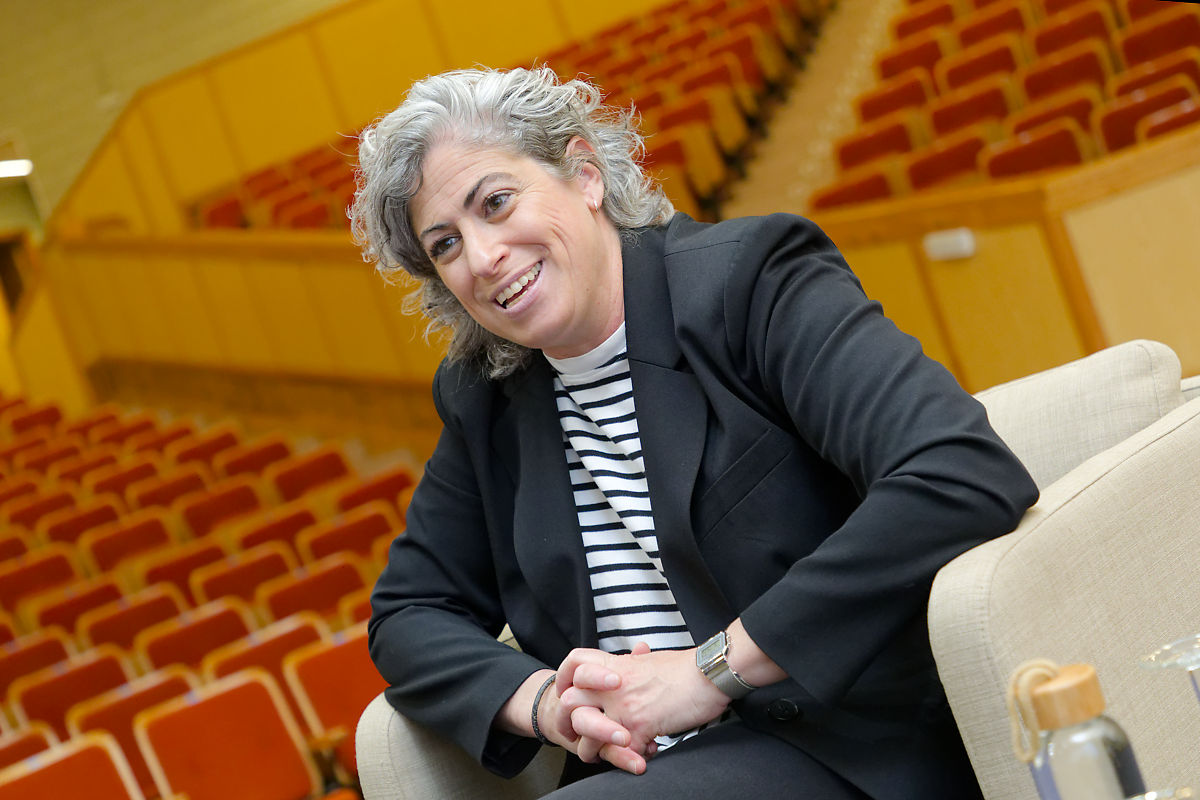 In his book Future lives It addresses profound changes thanks to new technologies and AI, such as in the field of health, where everything points towards a more preventive medicine based on data, with innovations such as having a microchip that monitors in real time what has been eaten or how long one has slept, and that this information goes directly to the family doctor not to control, but to anticipate diseases and take better care.
Another sector Aranda mentions is education, since Big Data will allow for true personalization: “If I have special needs, the content adapts to me; if I have high abilities, that too. I will progress at the pace I need, without being tied to a single system,” she explains.
In the workplace, we are heading towards massive automation, so many jobs will disappear but new ones will emerge "such as specialists in ethics applied to technology, because these systems will have to be constantly audited, monitored and reviewed," he explains.
“This technology has forced us to stop as humanity and ask ourselves things we never even considered before: What happens when I die? Can my consciousness be replicated in a parallel reality? If I create an AI with consciousness, will it be a Western or Eastern consciousness?”, as well as questions related to social applications such as, for example, combating loneliness in older people.
Not everything is beneficial, and for this reason, the specialist expresses concern about the amount of leisure time people will have, since not everyone knows how to enjoy it. "When a person with bad intentions has free time, they can do a lot of harm." She then refers back to her book to emphasize the importance of needing systems for containment, supervision, and entertainment. "We are repeating history: fake news, propaganda, pandemic, recession, and the rise of extremism... All of this happened a hundred years ago, and AI didn't exist," she explains. Therefore, she states that we shouldn't fear artificial intelligence, "what should worry us is human stupidity and malice, because you can disconnect artificial intelligence, but what do we do with people?".
AI and Big Data are reshaping people's lives, but there is still much to learn. These technologies offer opportunities to improve the world, but they also present ethical, social, and political challenges. Ultimately, it is we humans who decide how to use these tools to ensure that the future we build is fair, inclusive, and, above all, responsible.
Communications Office

 Spanish
 English
 French