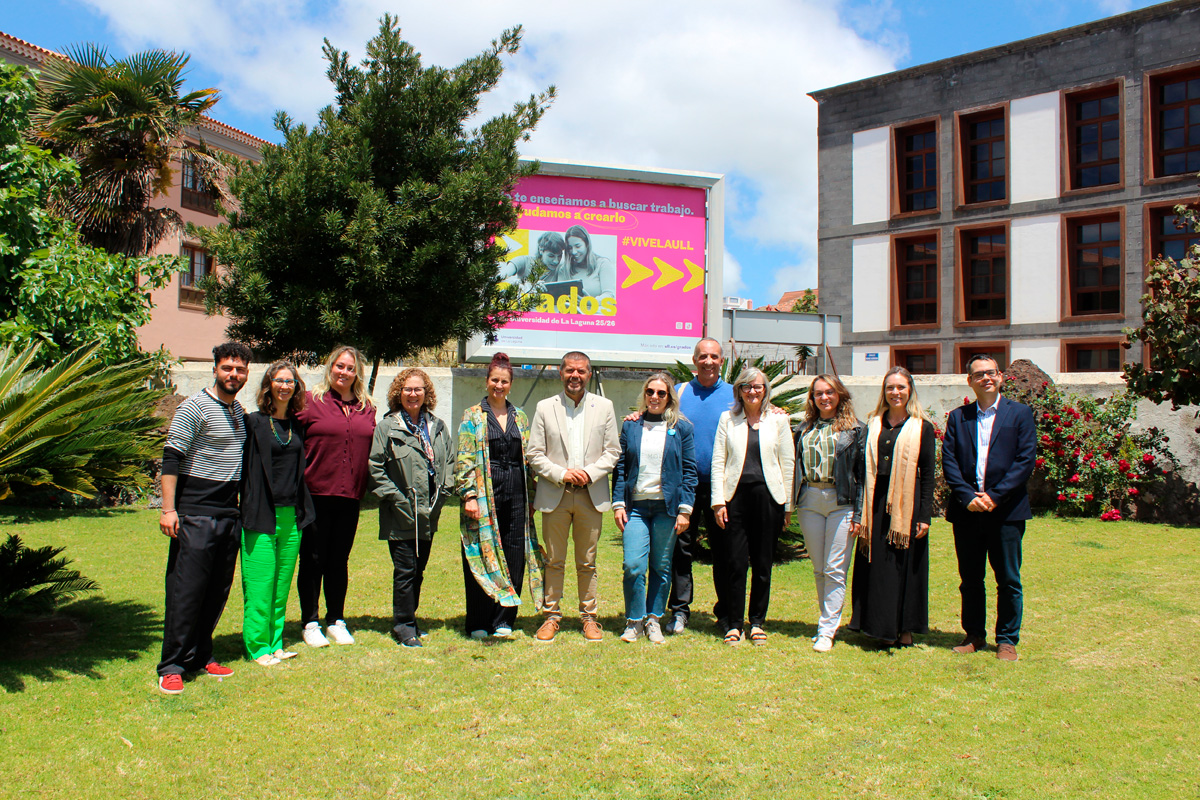
Lanzarote has recently hosted the 10th International Meeting of Agro-Wine Tourism in the Canary Islands, Organized by the Canary Islands Chair of Agritourism and Wine Tourism of the Canary Islands Institute of Agri-Food Quality and the University of La Laguna, the event has become a key forum for debate and the promotion of a more sustainable tourism model closely linked to the local area.
Over three intense days, more than 70 experts, along with over 250 virtual participants from around the world, analyzed the potential of wine tourism and the wine-growing landscape as a strategic opportunity for the sustainable development of Lanzarote and the Canary Islands. Researchers, academics, technicians, businesspeople, and professionals from the Canary Islands, the Iberian Peninsula, Brazil, Portugal, and Italy, among others, highlighted the sector's capacity to build a more respectful, equitable, and deeply rooted tourism model.
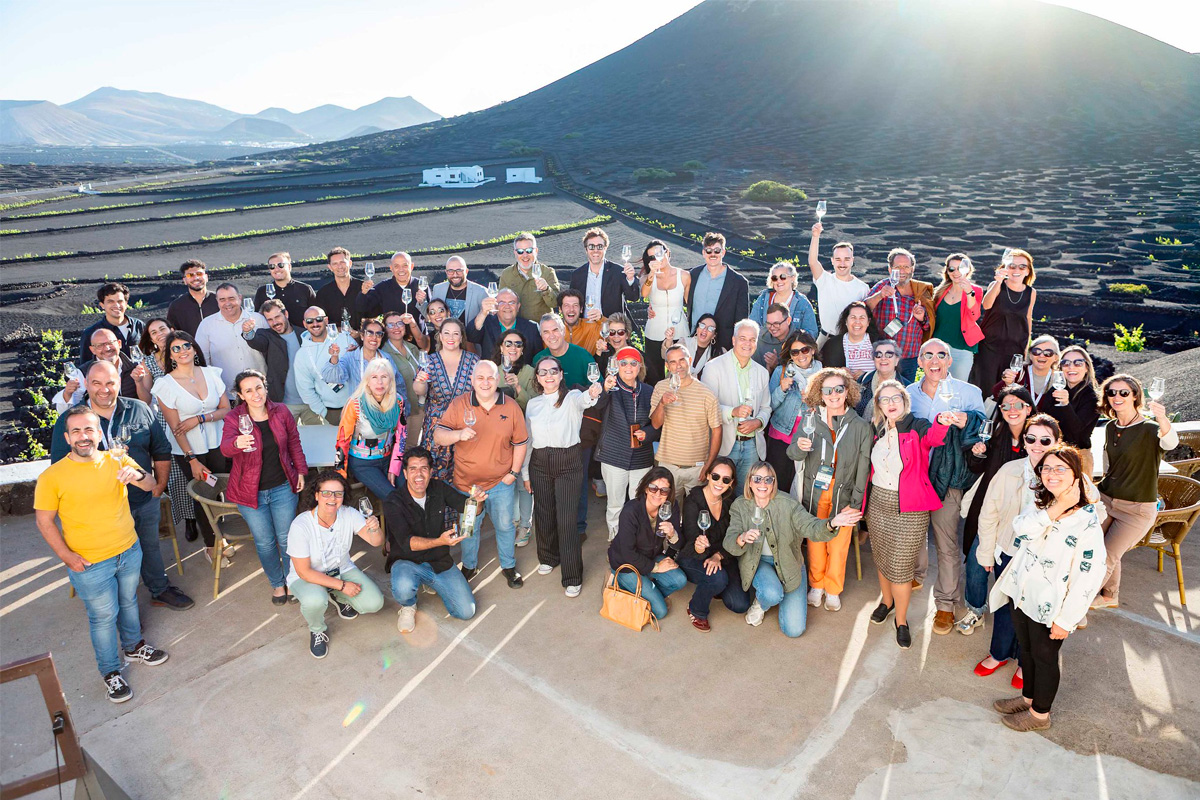
Photos provided from the meeting in Lanzarote.
The opening conference, given by Emanuela Panke, president of the European Council's Iter Vitis Cultural Route, focused on the potential of wine tourism as an engine for sustainable development in wine-growing regions, with particular emphasis on measuring and managing sustainability. Sergio Moreno Gil, principal investigator at Emotur Lab (ULPGC), complemented this perspective with a presentation of the Emofood project. Both speakers agreed on the need to harmonize the economy with environmental protection and social well-being in wine regions.
Throughout the event, 20 presentations were given, enriching the debate around four key areas of discussion. Wine tourism as an engine for sustainable development was the central theme of a panel discussion that brought together experts from the Canary Islands, highlighting the importance of measuring and managing sustainability through precise indicators, digitalization, and collaboration among stakeholders to ensure a balance between the economy, the environment, and social well-being.
In the area of female leadership, a debate moderated by Carolina Real Torres and Anabel Calderín Castro highlighted the growing role of women in the wine, agritourism, and tourism sectors, although gaps in ownership and leadership were identified. Experts such as Amor López Sirvent (Bodegas Erupción), Luciana Marion Fagundes da Silva (Federal Institute of Rio Grande do Sul), Sofia Monshouwer Peraza (Bodega Piedra Fluida), and Susana Pérez Represa (ASOLAN) emphasized the need for training, funding, and support networks to strengthen female empowerment, as well as the importance of highlighting role models.
Local governance emerged as a crucial element for the successful and sustainable development of wine tourism, enabling tailored and equitable management in each wine-producing region. A roundtable discussion moderated by María Eugenia Fonte García (ICCA-ULL) explored the importance of the active participation of winemakers, farmers, tour operators, government agencies, universities, and local communities in formulating joint strategies. During the debate, the panelists agreed that governance aligned with international sustainability frameworks and policies is fundamental to balancing economic growth, landscape conservation, and community well-being.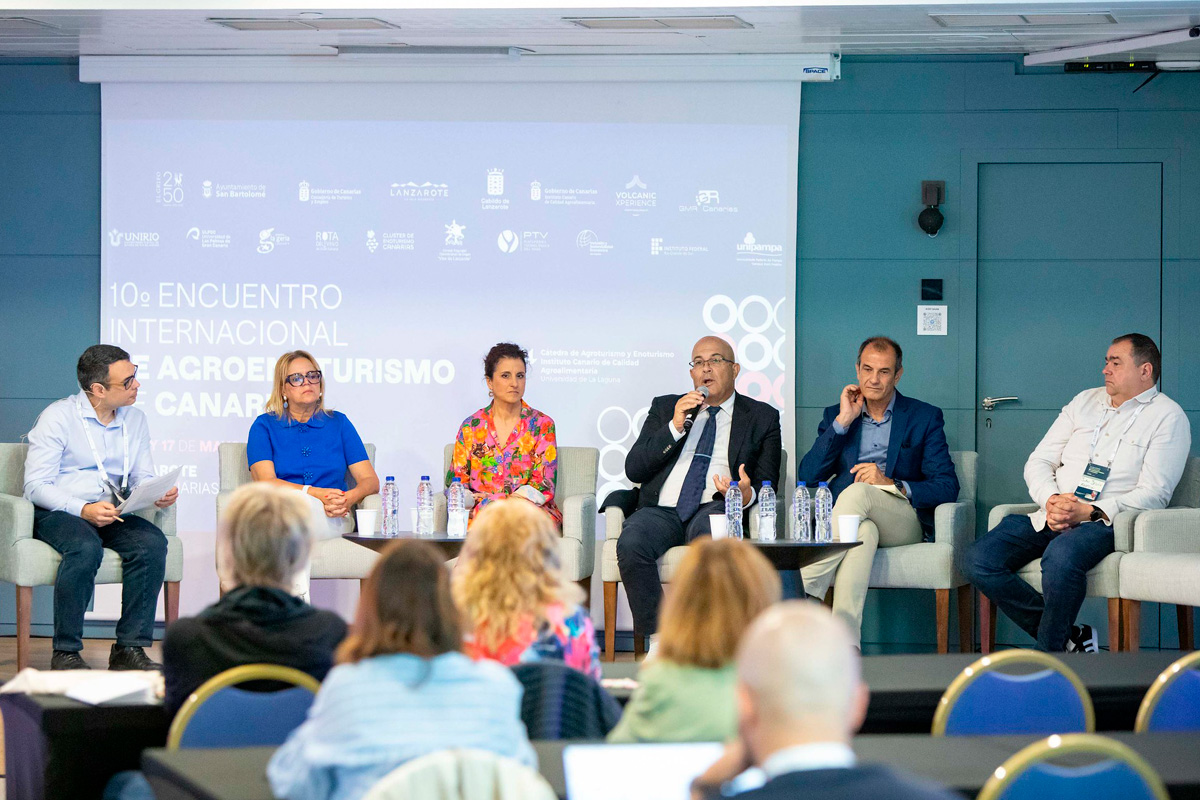
The value of protected agricultural landscapes was highlighted in a debate moderated by Miguel Ángel Mejías Vera, where experiences such as the Fuencaliente Salt Flats Site of Scientific Interest (La Palma), the wine-growing landscape of Pico Island (Azores), and the La Geria Protected Landscape (Lanzarote) were presented. Participants also enjoyed a wine and food experience in the unique La Geria region, visiting the emblematic La Geria and El Grifo wineries.
The 10th International Meeting on Agro-Wine Tourism in the Canary Islands was supported by the Lanzarote Island Council, the Government of the Canary Islands, the Directorate General for Tourism Planning, Training and Promotion, the Canary Islands Institute of Agri-Food Quality, the San Bartolomé City Council, and Rural Management of the Canary Islands (Volcanic Xperience). Other collaborators included the Lanzarote Wine PDO Regulatory Board, the El Grifo and La Geria wineries, the Canary Islands Wine Tourism Cluster, the Gran Canaria Wine Route, the Wine Technology Platform, the Canary Islands Institute for Inclusion and Economic Sustainability, and several national and international universities.
Institutional visit to the Rectorate
After the international meeting ended, the members of the Brazilian delegation traveled to Tenerife where they were received by Francisco García, rector of the University of La Laguna, and Isabel Karely León, vice-rector of Culture and University Extension, with whom they were able to continue talking about agritourism and wine tourism in the Canary Islands and their role in the university, before returning to their native country.
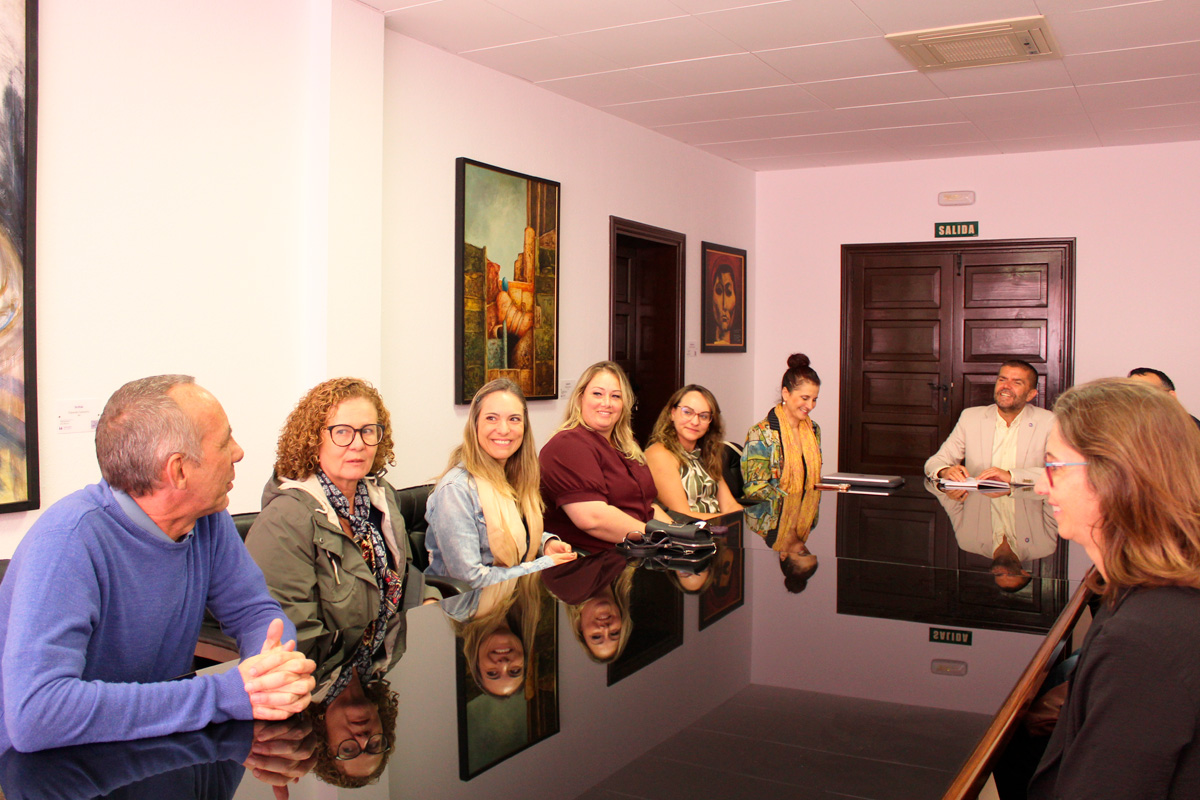
Visit to the Rectorate by the Brazilian delegation.
From the Federal Institute of Education, Science and Technology of Rio Grande do Sul, the teachers Hernanda Tonini (Tourism and Hospitality), Soeni Bellé (Agronomic Engineering and Geography), Tatiane Pellin Cislaghi (Foreign Trade Management) and the researchers Luciana Marion Fagundes da Silva and Lisiane Gallina attended the meeting.
Representing the Federal University of the State of Rio de Janeiro at the meeting with Rector Elisabeth Silva Rocha were Reginaldo Schiavini and Joice Lavandoski. Both institutions maintain a collaboration agreement with the University of La Laguna through the Canary Islands Chair of Agritourism and Wine Tourism.
Francisco García thanked the attendees for their visit, which was also attended by the Chair's director, Jesús de las Heras, as it will serve to strengthen the University of La Laguna's ties with two public institutions in the South American country. “We want to reinforce our internationalization strategy. This meeting, as well as the interest of Latin American students in studying at La Laguna or completing their doctoral theses at this university, are some of the actions that can help us achieve this,” commented the rector.

 Spanish
 English
 French