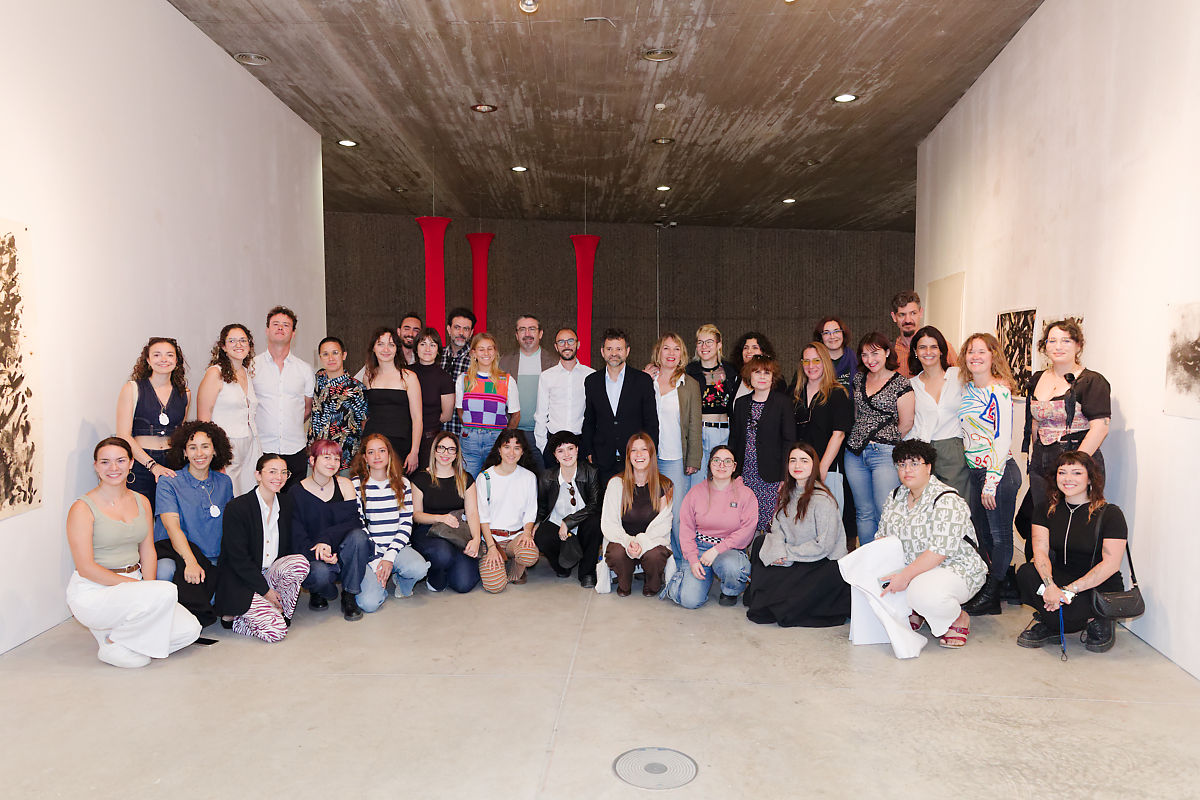
The experience of university encompasses much more than learning specific subjects; it forms an artistic journey that affects all the relationships that develop there. The exhibition “Dynamic Dialogues”The exhibition, organized by the Faculty of Fine Arts and the "Center for Research and Artistic Practices" (CIPA) Cultural Center, follows this premise. The exhibition alludes to the dynamic and horizontal nature of the relationships that develop between faculty and students within the university context.
The exhibition, which will be open until June 13, is spread across several spaces in the building: the exhibition hall and the auditorium on the ground floor form its core, while other pieces extend into the Salita (second floor) and the 15 Sillas space (first floor). Present at its opening today, May 23, were the Dean of the Faculty, Bernardo Candela, along with the Vice-Dean of Culture and Extension, Javier Sicilia, and the Director of the Secretariat of University Institutes and Publications of the Vice-Rectorate for Research and Transfer, Roberto González.
This exhibition project arose from the need to highlight the commonalities—both theoretical and artistic—that emerge between faculty and students in the classrooms of the Faculty of Fine Arts. Following this initial idea, each professor established contact with students with whom they shared conceptual, aesthetic, or methodological affinities. The result is a constellation of artistic and pedagogical relationships in which 45 students engage in dialogue with 23 professors. The students occupy a central position in this network of artistic and pedagogical connections.
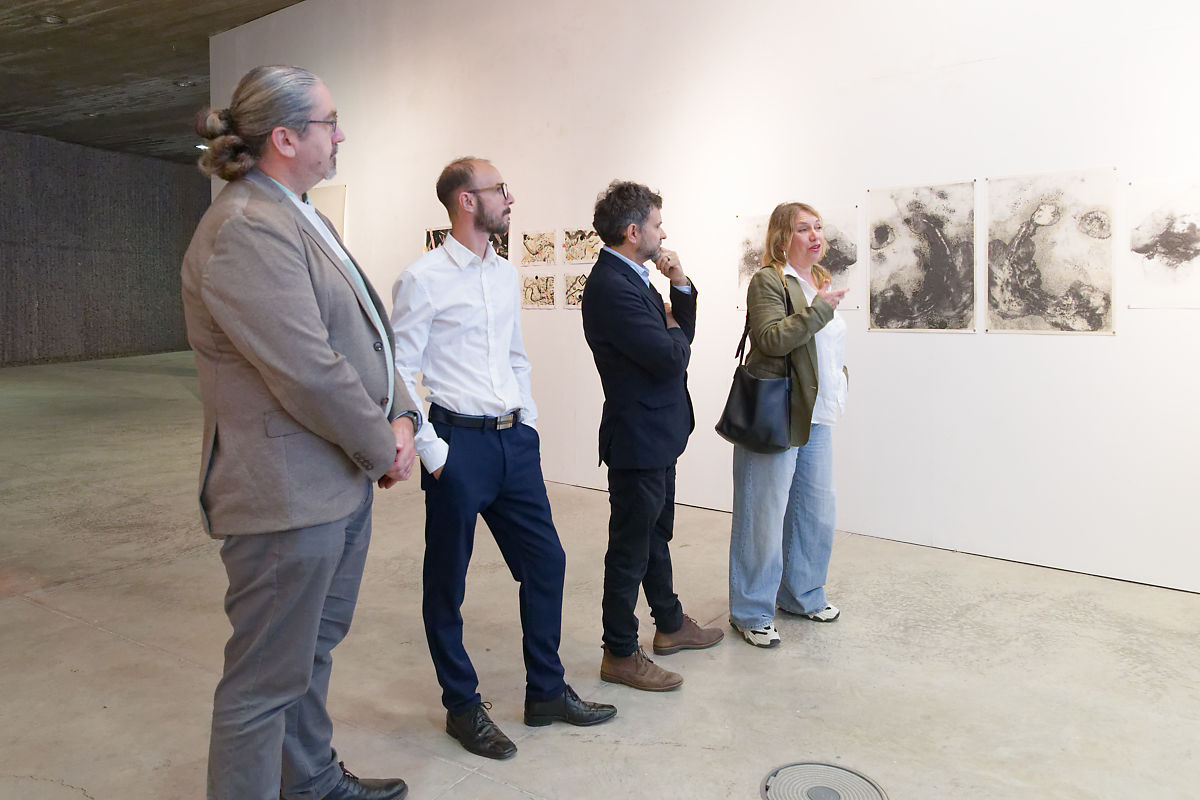
Roberto González, Bernardo Candela, Javier Sicilia and Emilia Martín.
Bernardo Candela welcomed the attendees, highlighting that this exhibition commemorates the first anniversary of the CIPA's establishment to reconnect with artistic institutions in the Canary Islands. “This has enabled us to work on different lines of action. For example, we have had satellite projects, such as the use of the Los Lavaderos gallery, provided by the Santa Cruz City Council, and the former Santo Domingo convent and the San Miguel chapel, provided by the La Laguna City Council,” the dean explained. In collaboration with the Island Council, artistic residencies are also being offered to graduates through a training grant program.
The exhibition's curator, Javier Sicilia, added that CIPA has also served to professionalize artistic practice in all areas, through residencies and nine exhibitions aimed at reaching as many people as possible. He emphasized that "Dynamic Dialogues" highlights "those points of convergence that we, as faculty, often experience when we begin working with you in the workshops; we see certain overlaps at the artistic, theoretical, and other levels, which seem like mere coincidences, but they are not.".
Sicilia emphasized that these similar dynamics have led to a de-hierarchization of traditional relationships and working methods, placing everyone involved on the same level. “No one will know which works belong to a teacher or a student, because the museum's layout has been arranged according to the artwork's best interests, not the people's,” she explained.
From the Vice-Rectorate for Teaching and Research, Roberto González highlighted the support provided at the University of La Laguna to help consolidate projects with a proven track record and potential. “This is an opportunity for all students to share their work with the Canary Islands community,” González concluded.
Speaking on behalf of the faculty, Emilia Martín, from the Painting department, emphasized that “the beauty of creating artistic pieces lies in establishing dialogue, in achieving communication and bridging those gaps.” In her case, she has worked alongside students Marina Sunyer and Ana Estrada in a process of mutual advice, fully immersing themselves in the art form.
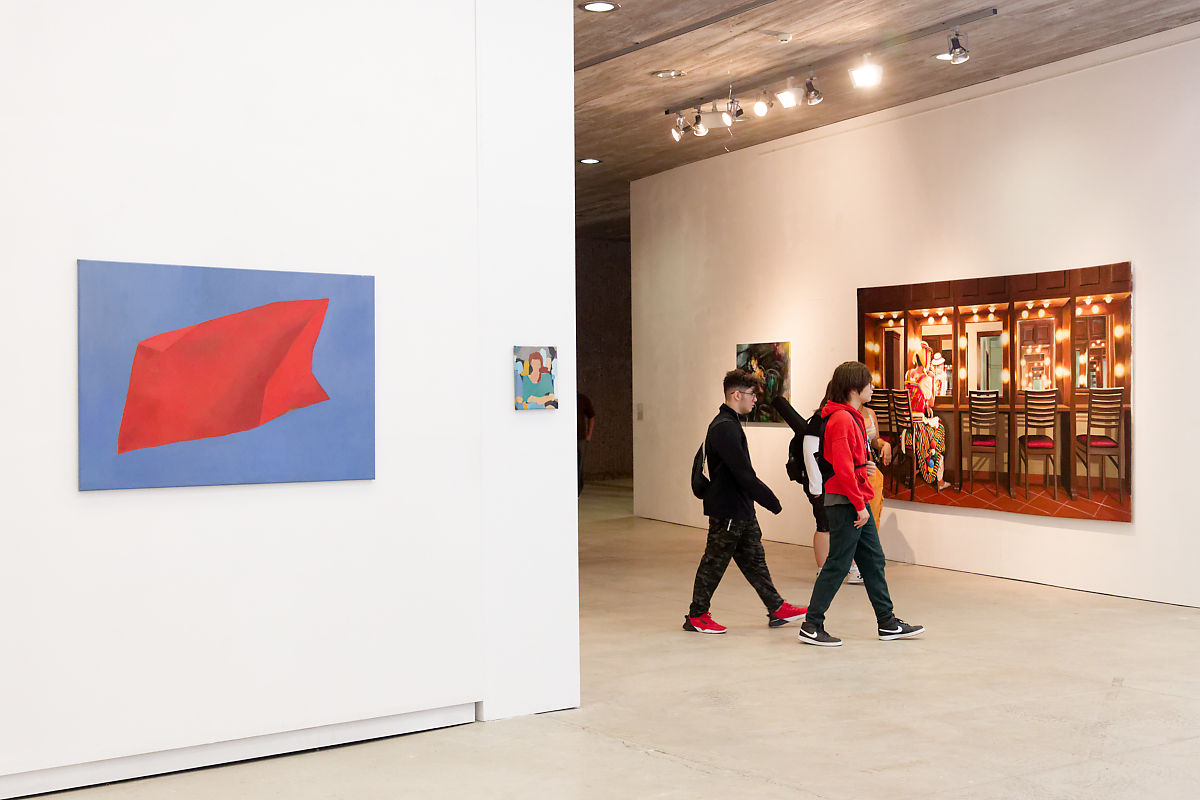 As an example of the exhibited works, Drawing professor Madeleine Lohrum, along with students Paula Machado and Gara Hernández, from the Transdisciplinary specialization, discussed the relationship between the body's traces and the body itself. Taking a contemporary art perspective, they aimed to capture a dual concept: the representation of the body itself, as in photography, and its traces, not only as lines but also as the body's gestures.
“Dynamic Dialogues” is part of the CIPA 360 cycle, which includes the seminar of talks “Forms of Encounter” on May 22 and 23, as well as a series of cultural mediation actions that invite you to rediscover the Faculty from unusual perspectives

 Spanish
 English
 French