Human beings have demonstrated their creativity since their origins, using many formats to transmit the legends, reflections, and stories that, whether imaginary or real, have contributed to shaping different cultural traditions throughout the generations. From the Odyssey to the Bible, by way of Hamlet, Don Quixote, or Journey to the West from the Chinese tradition, we can surely recall numerous texts that we consider part of our heritage. And not only literary works, because music, the visual arts, and film have also added milestones to this canon.
At first, our minds go to examples of great length, but this cultural identity has also been shaped by shorter contributions: the popular wisdom of anonymous proverbs has its cultured echo in the aphorisms promulgated by the great minds of philosophy; haikus leave us in a few syllables images as evocative as those of the great sonnets; and from the screen, short films and even nano-films can surprise us in a few seconds.
Without a doubt, the most celebrated of all these short formats is the micro-story, and perhaps Augusto Monterroso's "The Dinosaur" is the example that, at least in the Spanish-speaking world, first comes to mind to illustrate the remarkable power that a few words can have to recount an evocative event. "When he awoke, the dinosaur was still there." Seven words—or nine, if we include the title—that, despite their brevity, have inspired countless analyses to unravel their meaning and appreciate their ingenuity.
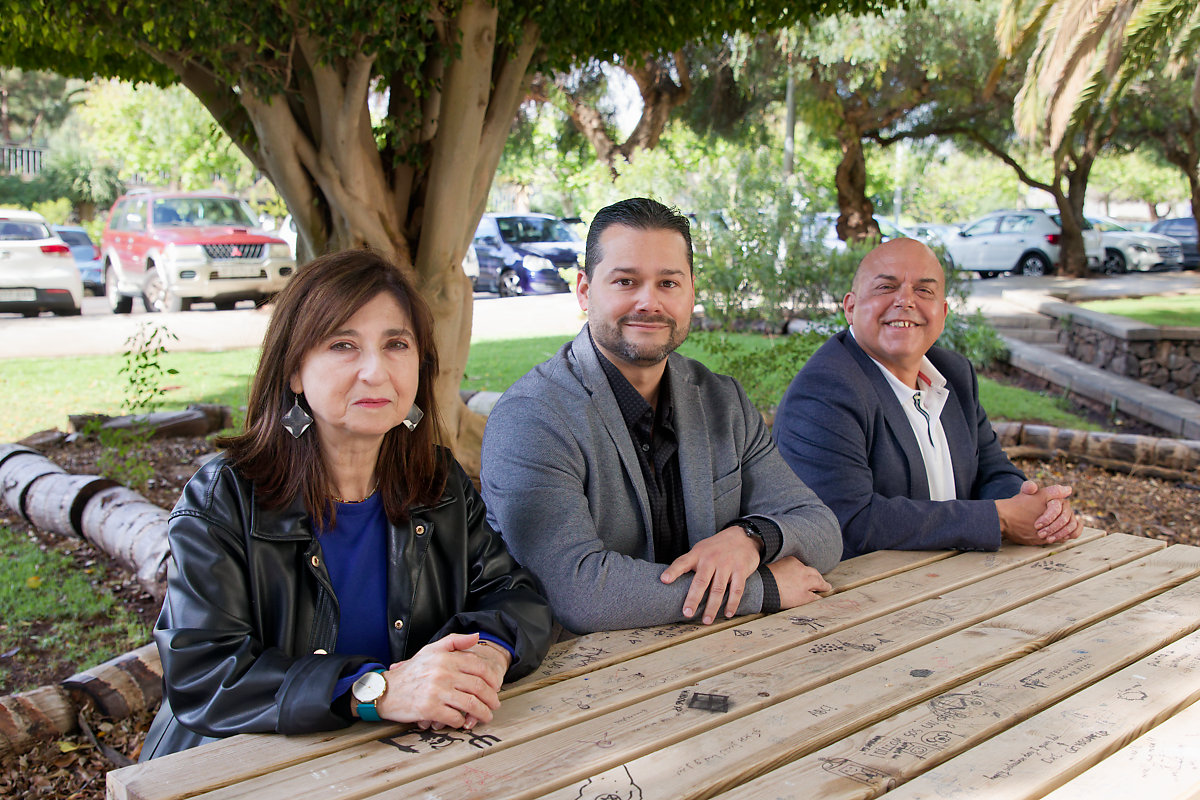
These short formats can be the gateway to literary creation for many people, but let's not forget that established authors have also cultivated them, so much so that there is already a tradition of micro-creations relevant enough to be the subject of academic study. For a decade, the University of La Laguna has been dedicated to this task through the Canary Islands Symposium on Microfiction which will celebrate its sixth edition between November 12 and 14, 2025. Its main promoter is a professor in the Department of Spanish Philology. Darío Hernández Hernández, with the invaluable collaboration of the teachers from the same department Nieves Concepción Lorenzo y José Antonio Ramos Arteaga.
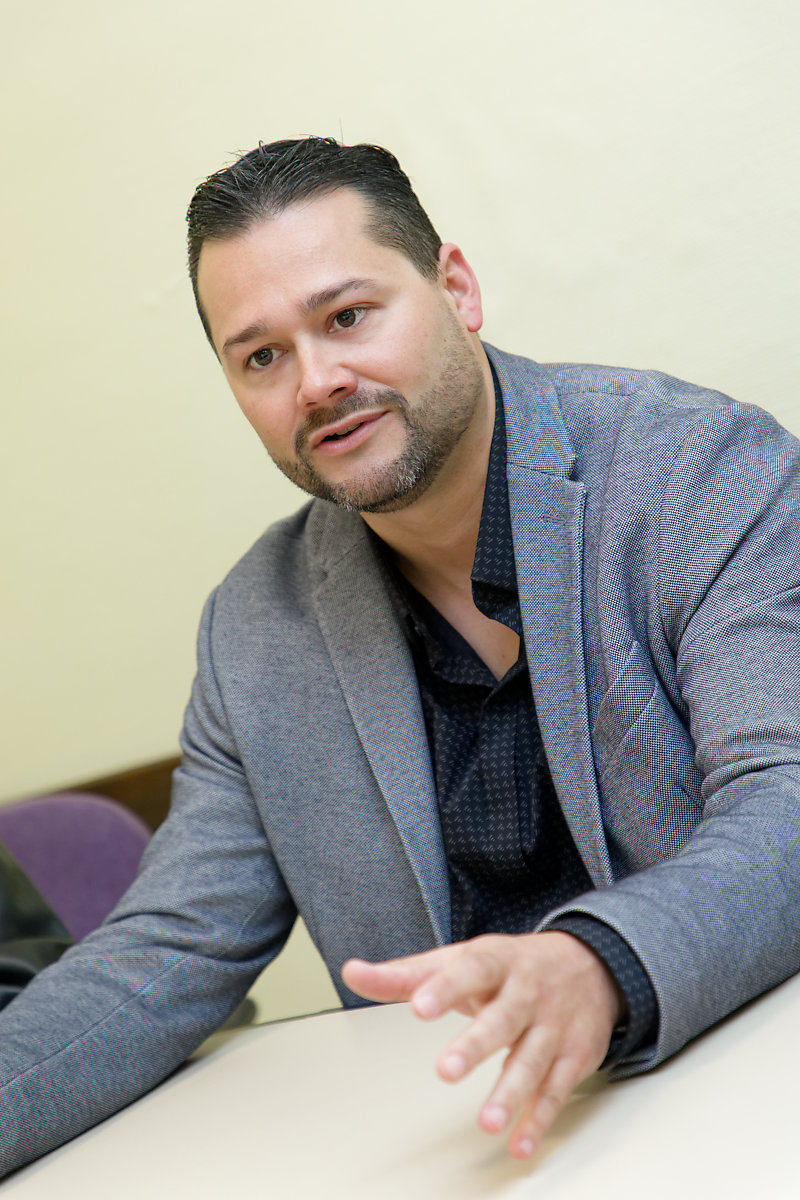
Darío Hernández.
The mini-fictionón
Darío Hernández offers a first approach to what microfiction would be: “an artistic and literary supracategory where we can introduce genres characterized by brevity and structural and textual conciseness such as, in literature, the micro-story, the prose poem and the haiku; in theater, the microdrama; in audiovisuals, we can talk about the spot or the music video” and, in film, nano-films, which would be films of between one and five minutes and which would even admit the subgenre of the cineminute, which would include films of less than that duration.
If we're talking specifically about theater, José Antonio Ramos points out that "it's one of the art forms that has most extensively practiced what was formerly called the short genre," explaining that, on many occasions, the theatrical performance was introduced by some kind of short piece before the main work. "Theater has always been one of the privileged fields for experimentation with short forms. What's happening now is that, indeed, experiments specifically created with the aim of concision and brevity have emerged in the wake of the micro-story," and it has featured renowned authors such as the late Javier Tomeo.
Regarding the flagship genre of this movement, the micro-story, specialists place its origins in Europe and, more specifically, with Baudelaire. “But short micro-narrative forms have their prehistory,” clarifies Darío Hernández. “If we go back to the classical world, there are Aesop’s fables; if we go back to the Middle Ages, we find examples in bestiaries and lapidaries. In other words, everything has its history and its prehistory. We could go genre by genre, but in the specific case of the micro-story, it would begin with Symbolism in 19th-century France and Modernism in the Hispanic world.”.
Although Monterroso is the best-known author, he is far from the only one. His famous dinosaur first appeared in 1959 in a collection shared with works from other genres. And by then there was already a long tradition of these short creations, with illustrious names like Rubén Darío, Juan Ramón Jiménez (who, with no small amount of irony, called his short pieces “long stories”), that great cultivator of the literary miniature, Ramón Gómez de la Serna, with his greguerías (aphorisms), gollerías (micro-essays), and caprichos (micro-stories), or, a little later, Ana María Matute.
In poetry, one of the star forms is the haiku, which can be practiced more freely, or one can focus on its strictest formulation, according to which the author must adhere to a mere contemplation of nature without interpretations or subjective judgments. “There are purists who say that a series of content elements must be followed, and also those who define that, in Spanish, as long as it is a composition with three lines of 5, 7, and 5 syllables, it can already be considered a haiku. But we can say that there is a genre with its different subgenres, and all are respectable,” explains Darío Hernández.
Of course, this microtextuality can also serve to develop non-fiction content, such as the aforementioned brief philosophical reflections in aphoristic format. It can also happen that a short fragment transcends a lengthy work. “The classic example would be Machiavelli’s ‘The Prince,’” Ramos Arteaga points out. “No one has read the book, but everyone has in mind that ‘the end justifies the means.’ That short statement has generated countless articles, and although the book is a long text, what has gone down in history is that kind of maximum condensation of its discourse.”.
This success of microformats also reflects the evolution of society and culture; as Nieves Concepción points out, all of this is related to a paradigm shift: “We have already moved beyond grand narratives and everything that is considered minor is part of the knowledge and history of which we are a consequence and in which we are embedded.”.
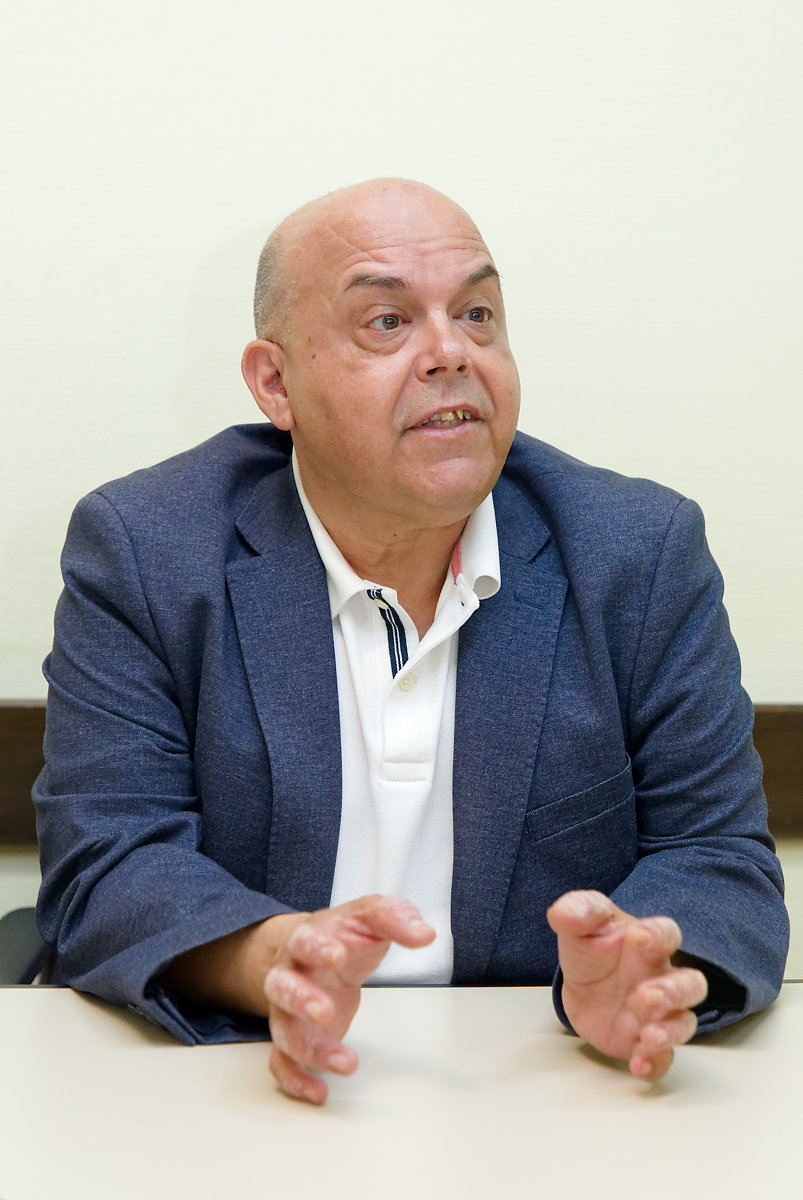
José Antonio Ramos.
Nanofilología
We have seen that short forms of expression have always been part of tradition and that there are works and authors with sufficient merit to warrant study. Initially, the tools of philology were used to approach them, but because they are very particular creations, they require more specific analytical tools. Therefore, since the late 20th century, a first step toward specialization was taken with the coining of the term "microfiction" to define the object of study. Initially, it focused, of course, on the micro-story, "but then it became clear that this semantic condensation and expressive synthesis affect other genres and other artistic disciplines," explains Darío Hernández.
Initially, there was resistance from some academic circles to accepting the then-nascent theory of microfiction, and some even questioned whether the micro-story was an independent genre and not a subgenre of the short story. “Today it is considered the fourth narrative genre, along with the novel, the novella, and the short story; that is rarely questioned anymore,” continues the philologist from the University of La Laguna.
In 2008 another advance occurred, when at a congress held in Germany the prestigious professor of Romance Philology Ottmar Ette He broadened the scope of studies on the theory of microfiction and introduced it within what he understood as a sub-discipline within philology that would not only study microfiction, but microtextuality as a whole: nanophilology, which has its own particular methodology and epistemology, to analyze how microtextuality and microforms have allowed human beings to transmit their knowledge and creativity not only with large formats.
“For example,” Hernández explains, “many philosophers left their thoughts in gnomic genres such as aphorisms, sayings, and maxims, which have remained in the background until now. The same is true in the realm of religions, for example: the wisdom of great spiritual masters has been transmitted not in grand sermons and speeches—though those exist as well—but in short pieces like the parable and the catechetical question, and, if we look to the East, the Buddhist koan or the mantra as an anchor for meditation. In other words, nanophilology compels us to re-examine all of human creation and knowledge from a new perspective, recovering what has been transmitted using brief formats and which has sometimes been relegated to the background.”.
While, as we saw, the theory of microtextuality had to overcome certain resistances, nanophilology is such an emerging concept that it hasn't yet encountered significant resistance. “There isn't even a consensus on the concept of 'nanophilology' itself, but it will begin to generate interest. Ottmar Ette published his research in articles and book series with other authors, but it all fell into a kind of void, and now we're reviving it,‘ notes Darío Hernández.
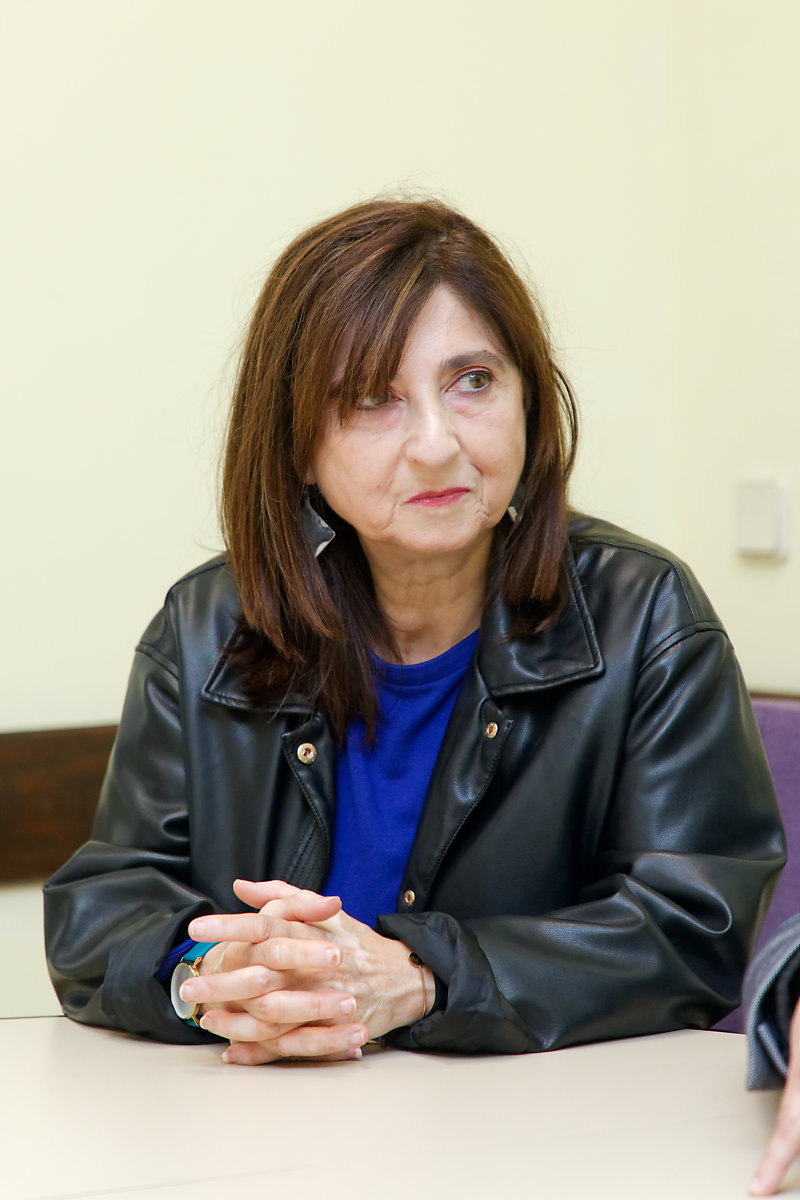
Nieves Concepción
Canary Islands Symposium on Microfiction
The path to this recovery is precisely the Canary Islands Symposium on Microfiction, which will reach its sixth edition in 2025 and celebrate a decade of history, as it is a biennial event. “The biennial format was a decision made from the beginning, because holding it annually was too much to maintain the quality standards, given the significant amount of work involved. We decided to dedicate one year to organizing the event and another to working on it and, if there is a publication of proceedings, to giving it the time it deserves. Ideally, we, from the coordination team, as well as the organizing and scientific committees, should enjoy the work.”.
Although the first edition of the Symposium was held in 2015, the origins of the event date back to 2008, when the University of Las Palmas de Gran Canaria hosted some pioneering international conferences of literature and criticism that focused on microfiction, sponsored by his professor of Latin American Literature, Osvaldo Rodríguez Pérez. Darío Hernández, at that time a young philologist already interested in microfiction (it was, in fact, the subject of his thesis) attended that meeting and recalls that a good number of people interested in the subject from both the creative and philological perspectives gathered there, so there were soon expectations that there would be a second forum.
Unfortunately, Professor Rodríguez's health deteriorated, preventing him from organizing another edition. "The desire to put something together, using that previous experience as a reference point, always remained, because I learned so much from Professor Osvaldo Rodríguez Pérez," Hernández recalls. "Not only technically, but also personally: how he managed things and his supportive way of interacting with the speakers and creators. And from then on, the three of us (Nieves, José Antonio, and I) decided that we had to do something, and in 2015 we took the plunge. That first edition was a tribute to Osvaldo," who had passed away that very same year.
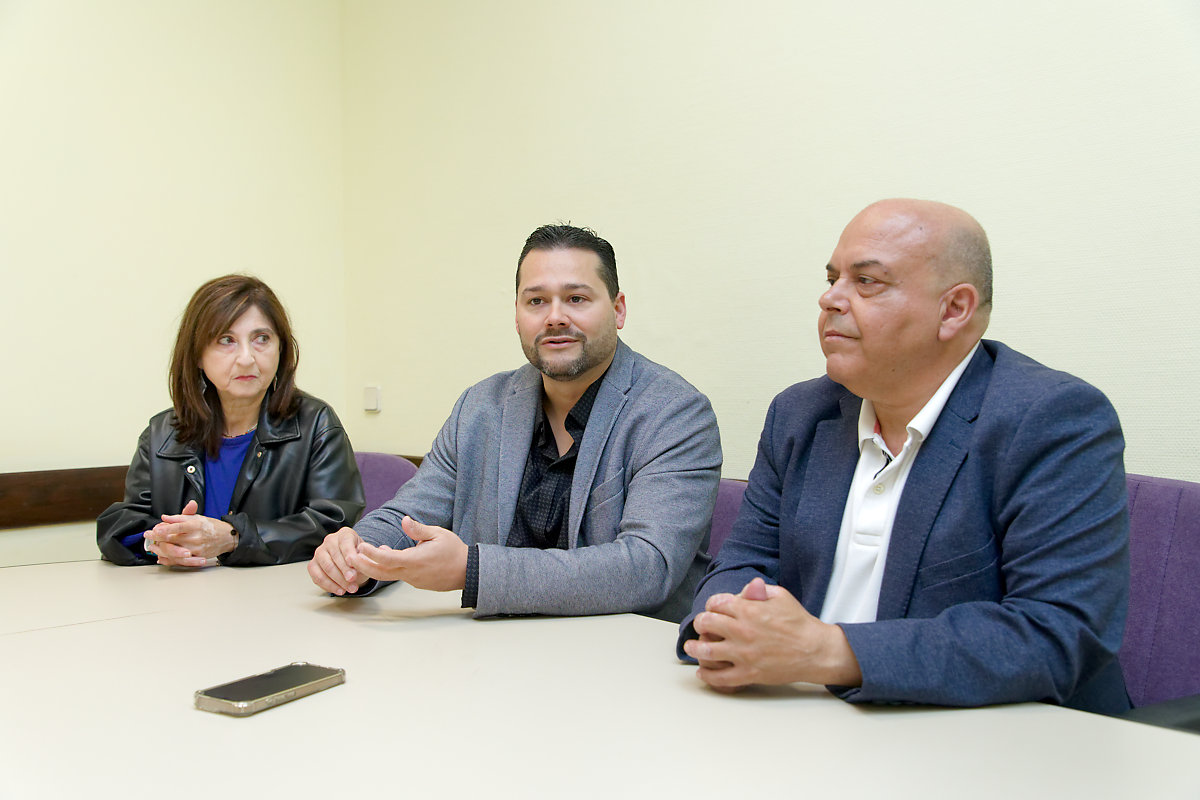
The three philologists interviewed have been involved in the project since its inception. Darío Hernández, due to his area of expertise; Nieves Concepción, for her work on the Hispanic American sphere (“in fact, I discovered microfiction when I was a student thanks to Nieves,” Hernández points out); and José Antonio Ramos, for his research on performing arts, in addition to coordinating the Philology Theatre Group, an organization that has collaborated on every edition of the symposium, including the performance of Javier Tomeo's microdramas, something that had only previously occurred in Paris and Barcelona.
Each symposium usually has a monographic theme, and in 2025, it is mystery understood from three perspectives: the more traditional sphere, as a concept encompassing everything esoteric, mystical, and religious; the mystery of the criminal sphere, which may arise from a police or detective investigation; and, above all, mystery in the current sense, everything related to the paranormal, the parapsychological, the UFO world…
The themes emerge from conversations during the previous edition: “This theme of mystery, for example, already came up in the last one, which we dedicated to cosmology. And from there, many people saw that cosmology, which falls within the realm of science, also opens itself to the mystical,” explains Hernández. This year's meeting will take place in mid-November, but its program is far from finalized, and in fact, proposals can be submitted until June 30.
Another special feature of the symposium is that it doesn't focus exclusively on presentations of academic work, but also serves as a forum for writers and other artists working in different microfiction genres to connect with their audiences, present their work, and discuss this phenomenon from the perspective of those who create it. “We try to balance the weight of research with creation. Author collaboration is ongoing. They have their own panels, we've organized book presentations, discussions with authors, and even exhibitions of pictorial microfiction—a term we use, coming from a philological background, and which most artists don't. But, obviously, all forms of minimalism, miniatures, and comics are welcome.”.
With five editions already held and another on the way, the symposium has sought to transcend its role as a mere meeting and document all the presentations through the publication of proceedings, books, and monographs in specialized journals. “We have three very important books. For example, one called 'Size Does Matter,' which we dedicated to gender issues and was published in Iberoamericana. The University of La Laguna's Publications Service has published two of the volumes, and other articles have appeared in specialized journals. The idea is that anyone who wants to publish their material can do so; we handle the editing.‘.
 Microtextuality
Nanophilological research may experience a boom in the coming years because the media landscape, especially social networks and blogging platforms, seems to be a very fertile ground for the proliferation of microfiction. “To illustrate its relevance in contemporary times, for example, university entrance exams will no longer be based solely on lengthy expository-argumentative texts, but rather multimodality is now being encouraged, and within that, microtextuality,” explains José Antonio Ramos.
She continues: “A comic strip or a WhatsApp chat might appear on an exam. In other words, the field is expanding because that's truly the world we live in. And microtextuality demands different philological tools for its analysis, for understanding how it interacts with the reader and the social context. The era of the printed book has already faltered, and new critical tools are needed.” To this, Nieves Concepción adds: “Short texts are gaining ground, and now we should consider both the paradigm shift and the opportunity that the internet presents for exploring all these kinds of brief experiences in different areas of life and knowledge.”.
Of course, from an ethical standpoint, this proliferation fostered by the internet will require us to be more critical of these creations: “Microtextuality must offer something of quality; it's not about using it to cause harm or say stupid things, because brevity also lends itself to that. We will have to critically distinguish what is valid from what is not. An aphorism or a statement born from reflection and human experience is one thing, and an insult or a piece of nonsense uttered in two lines is another,” says Darío Hernández, who also acknowledges that, despite this rise of microtextuality on social media, the novel remains the best-selling and most widely read genre: “Human beings have a tendency towards rest and long, leisurely reading. And they are drawn to something that more closely resembles their own lives, with a beginning, a middle, and an end.”.
Ultimately, as Nieves Concepción acknowledges, the discussion arises when considering the ultimate purpose of literature: something that should be enjoyable for both its creators and its readers. “Then comes the reflection on how short genres contribute to the development of readers and the encouragement of reading, which is important. In fact, the educational aspect of microfiction has been one of the highlights of the symposium.”.
And, in addition to its educational value, José Antonio Ramos adds another element that reinforces the value of microtexts in today's society: it fosters broad access to literature. “Following the old saying of Lautréamont, the pre-surrealist, poetry should be made by everyone. And microfiction makes this idea possible. Of course, the 90% of what is produced may be mere irrelevant emanations, but even so, at least we are already creating citizenship in some way, because there is a personal involvement. So, it is a type of writing that is much more democratic than other genres that, moreover, are very canonized and have a whole industry behind them, while here there is the possibility of blogs, the internet, social media… There is a democratizing element.”.
Communications Office

 Spanish
 English
 French