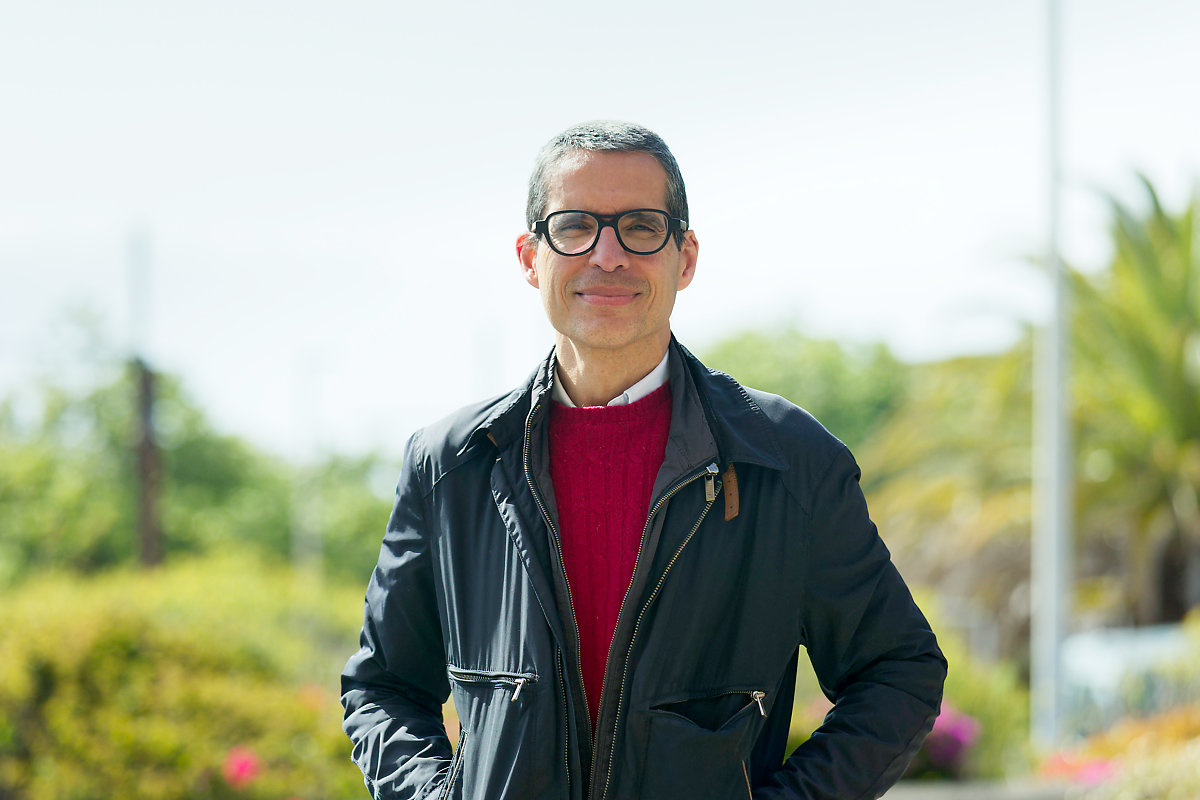
Are the Canary Islands a paradise? Before answering, let's delve into the etymological origin of the word "paradise," which comes from ancient Greek. paradises, which in turn derives from the Indo-Iranian language pairidaeza, The word "Eden" literally means "walled garden" or "enclosed space." The Greeks, during the time of the Persian Empire, identified paradise as a beautiful, idyllic landscape surrounded by a wall. From those ancient times, it was understood that the Gardens of Eden, the temples of nature, had to be protected against external threats. But walls not only protect, they also isolate.
Our very island status offers us a wall in the form of the ocean. Eight fortresses that were impregnable until the widespread adoption of navigation. Multiple cultures landed on the islands, all praising their beauty. This, combined with the mystique of the island concept, elevated us to the pantheon of classical earthly paradises.
And who doesn't want to be in paradise? That's what millions of people have desired and achieved in recent decades. Tourists who enjoyed all the attributes we've been promoting around the world. So much so that we risk being victims of our own success. According to historical passenger arrival data published by the Canary Islands Government, from 1990 to 2023, the Canary Islands received just over 400 million tourists, and although many are obviously repeat visitors, the figure is staggering: we're talking about more than the population of the United States accommodated in a territory 1,320 times smaller.
Tourism, once celebrated, is now being criticized by many social groups that, in recent years, have managed to mobilize a considerable portion of Canarian society. The University of La Laguna is studying the tourism phenomenon and its impact from multiple perspectives. Serafín Corral, Professor of the Department of Applied Economics and Quantitative Methods at the University of La Laguna, does so from an economic perspective.
 The post-growth moment
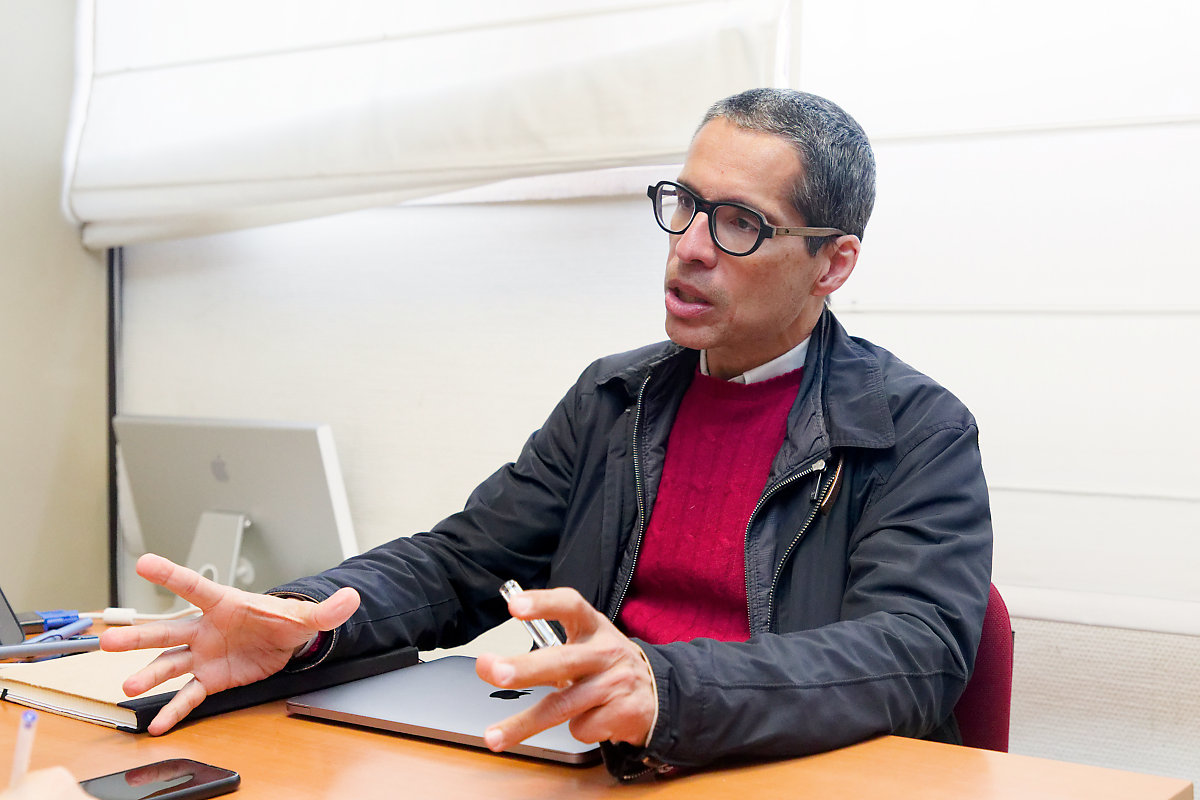
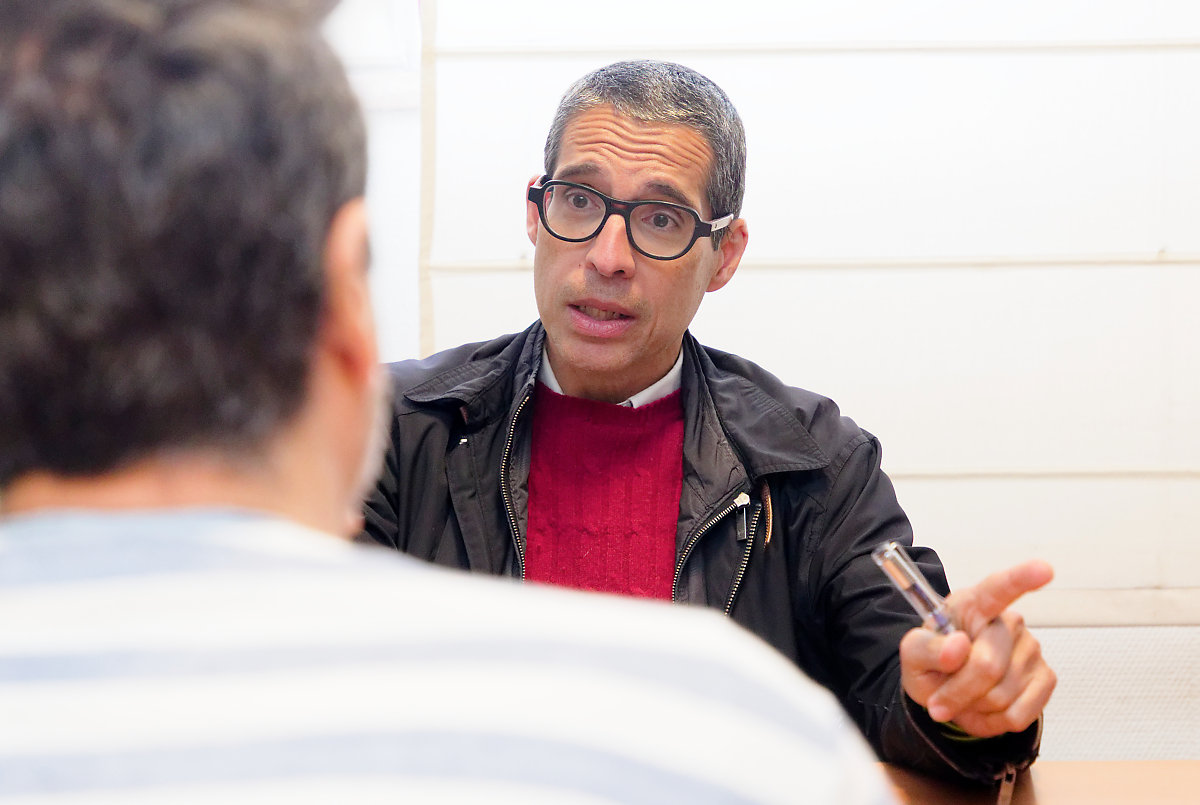
Professor Corral leads a research group which investigates post-growth in island spaces. The work starts from a key premise: these territories, due to their scale and specificity, offer ideal conditions for testing new ways of understanding development. “We consider that islands and other remote spaces are not only peripheral or vulnerable areas, but authentic laboratories of the future,” she explains.
The research is not limited exclusively to island territories such as the Canary Islands —its main area of work—, but also covers other remote regions of the planet, such as some areas of the Arctic because, although they are not islands in the strict sense, they share certain characteristics with them: geographical isolation, ecological fragility and particular social structures.
Precisely because of these limitations—or thanks to them—these territories can become privileged settings for experimenting with alternative models to the dominant economic paradigm. “We are interested in spaces with restrictions, because these restrictions open the door to innovation: they force us to rethink how we inhabit, produce, or distribute resources.”.
The post-growth approach—or degrowth, —in its Anglo-Saxon formulation— seeks to go beyond the logic of Gross Domestic Product as the sole measure of success. “Growth for growth’s sake has proven insufficient to guarantee well-being and happiness. We see it every day in our islands: the land is degrading, and the population doesn’t necessarily live better,” he adds. The disconnect between economic growth and real prosperity is becoming increasingly evident, opening an urgent debate about what we understand by development.
 More tourists, less prosperity: the paradox of growth in the Canary Islands
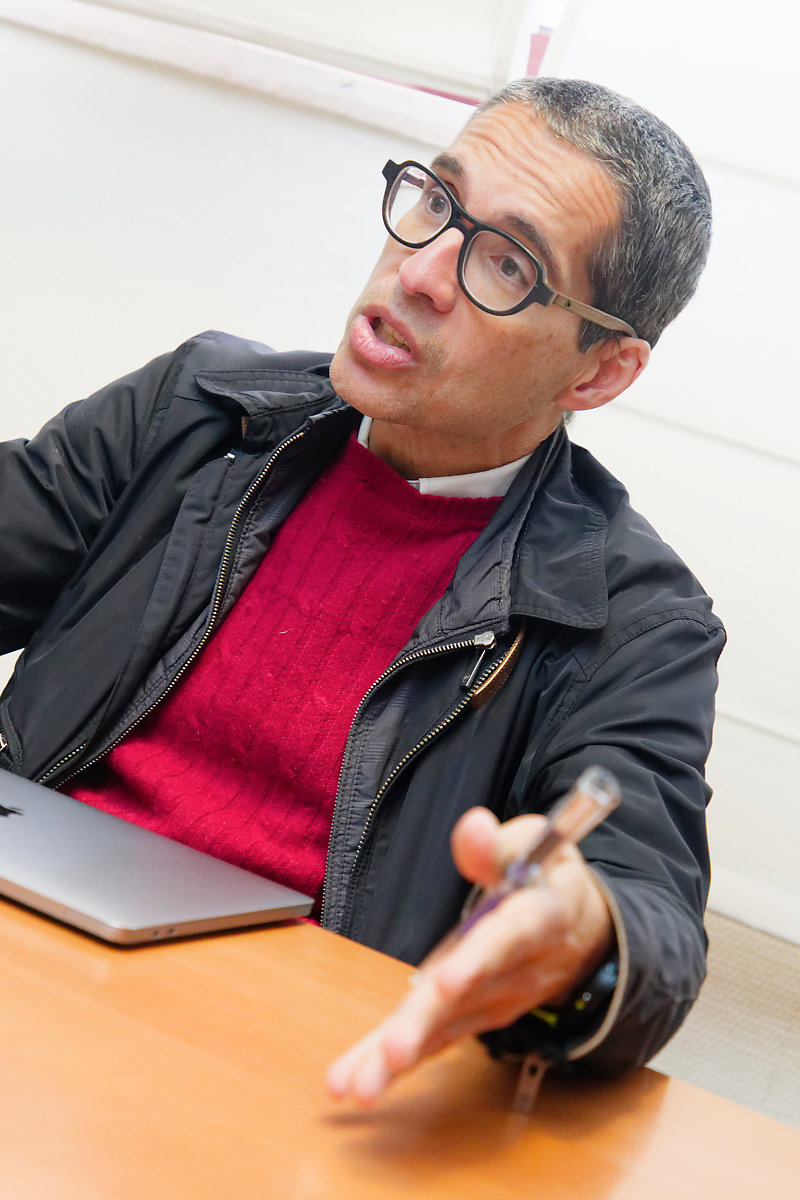
In the Canary Islands, where the economy depends heavily on tourism, the steady increase in visitors has not translated into greater well-being for the local population. “We continue to receive more tourists every year, but that is not reflected in an improvement in the quality of life for residents. There is no direct correlation between more tourism and greater prosperity,” he warns.
For decades, institutional objectives focused on increasing numbers: one million more tourists, one hundred thousand more… A quantitative logic that fueled an expanding industry, difficult to stop without causing negative impacts. “How do you reverse that model without anyone losing? It’s complex. First, you have to stop that momentum and then redirect it.”.
This is where the role of the university comes into play, and in particular, the need to define new indicators that allow for a more realistic measurement of well-being. In this regard, one of the most innovative projects currently underway is the San Cristóbal de La Laguna Barometer, a municipality that has promoted a pioneering initiative in Spain.
“The barometer is now in its third edition. In the first, we exclusively analyzed the concerns of the citizens. In the second, which we coordinated, we went further: we met with residents from all districts—more than 300 people—to identify not only what worries them, but also what they understand by prosperity.”.
From these meetings, a local prosperity index began to be developed, incorporating both traditional economic variables—such as income or employment—and social, cultural, and emotional dimensions: integration, access to services, leisure time, participation, etc. These are often intangible elements, but fundamental to collective well-being.
This line of research highlights the contradictions of the current model. “The Canary Islands have one of the highest unemployment rates in Europe, around 13%, and one of the lowest per capita incomes. If we followed classical economic theory, this should be a region of emigration. However, it is a destination. This dissonance forces us to rethink what we understand by development.” We are not only receiving more and more tourists, but also more permanent residents. “Our inequality gap with Europe is widening, but even so, the number of people choosing to live here continues to grow. Why? Because there are factors that go beyond traditional economic data.”.
These are intangible elements that, although difficult to quantify, play a decisive role in the perception of well-being: the climate, the natural environment, lifestyle, sense of community, or the possibility of a less hectic life. “It is not GDP, nor GDP per capita, nor even income that determines people's mobility today. It is other values, more subjective but equally real,” he emphasizes.
This trend, which began to emerge in the early 2000s, intensified significantly after the pandemic. COVID-19 acted as a catalyst for a profound shift in individual and collective priorities. “The pandemic revealed that many were looking for more than just economic security: they wanted quality of life, nature, time. And that positioned places like the Canary Islands in a new dimension,” he concludes.
 Dying of success
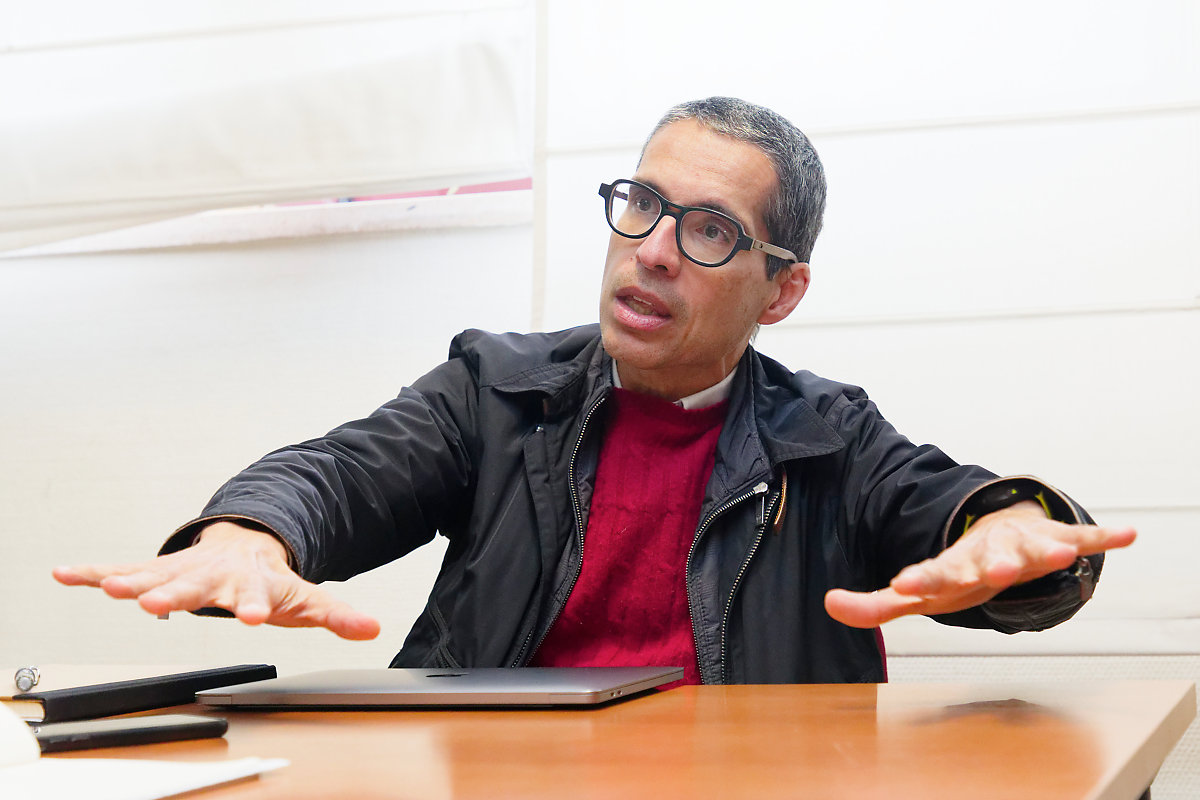
The question is no longer whether the Canary Islands are a mature destination, as it was for decades in traditional tourism analyses. Now the concern goes further: can a territory die of its own success? Can it become so attractive to tourists that it ends up losing precisely what made it special?
“Yes, clearly. We’re seeing it. And it’s not unique to the Canary Islands: it’s already happened in other places like the Caribbean, where tourism has become an encapsulated experience, disconnected from local life.” Examples like Punta Cana or some enclaves in Mexico show how tourism can lead to an artificial, closed-off reality, where visitors barely interact with the local population.
For a long time, the Canary Islands stood apart from those models. The archipelago's great added value lay in its ability to offer an integrated experience, where tourists could explore, socialize, and mingle. But that is changing.
“Today we are beginning to see worrying symptoms: overcrowding of natural spaces, loss of social hospitality, symbolic distancing between residents and visitors. It is no longer just about income or employment, but about disaffection. About losing those intangible elements that once gave meaning and balance to coexistence with tourism.”.
One of the key factors is the transformation of today's tourist. They no longer limit themselves to traditional routes, but explore, photograph, share, and occupy all the space. “Before, tourists concentrated in certain areas; today they are in every corner of the island, driven by social media. Places that were once quiet, like Cruz del Carmen, are now filled with visitors looking for the '‘selfie Perfect.' And that has radically changed social perception.".
The growing unease is palpable on the streets. What was once seen as a source of wealth is now beginning to be viewed as a threat to the local quality of life. “Until recently, tourism was respected. Today, many see it as a burden. And that's partly because there's no longer a clear boundary between resident and visitor space.” A transformation largely driven, moreover, by institutional policies themselves.
In this context, the professor emphasizes the urgent need to redefine the social contract surrounding tourism. “If we don’t want to repeat past mistakes, we need new rules of the game, new metrics, and, above all, to ask ourselves again: What kind of tourism model do we want? And for whom?”
Have we passed the point of no return?
Is there still time to redirect the model? The answer is yes, although with a caveat: “There’s always a solution for everything… except death,” he says ironically. The problem is that reversing the current course isn’t easy, because it involves “structural positions and decisions” that go far beyond occasional adjustments.
At the heart of the debate is the need for a new social contract, an idea that harks back to Rousseau, but which here is given a contemporary twist: collectively redefining what kind of society we want to be and what development model we want to sustain. “That hasn’t been done in the Canary Islands. We haven’t opened that debate. We’re just drifting along, letting reality run us over. And every year we’re surprised because we keep breaking tourist records without that translating into well-being.«.
The question “when to stop?” becomes a strategic dilemma. “It never seems to be enough. It’s like that James Bond movie: «The world is not enough.» But how many more millions are needed for the system to stop being in permanent crisis, as employers insist?”.
At the same time, experts point to a profound critique of the use of outdated economic indicators, especially the concept of productivity, which is still used with parameters inherited from the industrial era. “Marginal productivity emerged in 19th-century factory contexts: screws, pots, tangible objects per hour worked. But how do you apply that to a service economy like tourism?”
The comparison is clear: “Is the waiter who serves 200 coffees a day without making eye contact more productive than the one who serves 20 with attention, friendliness, and a human touch? Which brings more real value to the tourism service? In this type of economy, traditional indicators are useless. Productivity cannot be measured in the same way as on an assembly line.”.
This reflection points to a structural problem: evaluation frameworks are misaligned with the true nature of the Canary Islands' economy. And this affects not only academic analysis but also political and business decisions. “Insisting on quantitative growth—more tourists, more hotel beds, more GDP—without considering the intangible dimensions of well-being is part of the problem. We need other indicators. A different compass.”.
 An out-of-scale model
One of the biggest challenges for tourism in the Canary Islands isn't its success, but rather who actually makes the decisions. "The tourism strategy for Adeje, for example, isn't decided in the Canary Islands," he acknowledges, pointing to a loss of territorial control over a model that operates with a global logic and external actors.
This loss of sovereignty becomes critical when it intersects with resource scarcity, especially in a fragmented and energy-isolated island territory. “We’re holding on, but I don’t know for how much longer,” he warns. And he’s not just referring to water or hotel capacity. It’s about the systemic collapse stemming from an intensive consumption model: beach pollution, strain on infrastructure, dependence on fossil fuels, and land use that was never designed to support this density of population and visitors.
This idea is not new, but it continues to be ignored in political planning. And it is illustrated by a reference that remains devastating. In 1930, the economist John Maynard Keynes predicted that, thanks to technological progress, his grandchildren—that is, our generations—would work 15 hours a week. Productive efficiency would allow us to meet basic material needs, freeing up time for leisure and a fulfilling life.
“What Keynes didn’t foresee,” Corral explains, “is that the capitalist system is based on the constant creation of new needs. One mobile phone isn’t enough: you need two. One car isn’t enough: you have to replace it every few years. This perpetuates the fiction of happiness associated with endless consumption.”.
This system—in which tourism acts as the accelerator—clashes head-on with the archipelago's biophysical limits. The figure mentioned illustrates this starkly: "The Canary Islands often need their entire territory to sustain the current level of consumption." The message is clear: we are living far beyond our means.
The transport of goods from elsewhere, electricity consumption based on thermal power plants—with notable exceptions like El Hierro—and the proliferation of private vehicles (almost two per household) turn the islands into a laboratory of unsustainability. “There isn’t enough physical space for the Canary Islands to be 100% renewable with the current structure,” he concludes.
Given this reality, the question arises whether it's possible to rethink the model before it collapses from within. Energy communities can be part of the solution.
Despite institutional inertia and the inertia of the tourism model, there are tangible examples of energy transition in the Canary Islands that demonstrate that another model is not only possible, but is already underway. One of the most promising initiatives is the creation of local energy communities, cooperative structures that allow citizens to share, produce, and manage their own renewable energy.
“In Tenerife there’s Enérgetica, which I’m part of,” he explains. This island-wide energy community works with town councils and public entities to install solar panels on communal infrastructure and redistribute that energy among residents and public spaces within a two-kilometer radius.
The model is not unique to Tenerife. In La Palma, the Energía Bonita project has established itself as a global benchmark. This community has overcome numerous administrative and cultural obstacles to create a sustainable, decentralized, and participatory energy community. “They are on par with pioneering initiatives in Iceland and a few other places around the world.”.
These initiatives aim for an energy transition with a human face, one that allows for the redistribution of power, reduces external dependence, and moves toward a more resilient economy. But for them to take root, the framework of priorities must change: we must stop focusing all political and economic action on tourism and open the debate about the archipelago's future. “We have to seriously ask ourselves what model we want and where we want to be in 20 years. Based on those answers, we can design different strategies,” he insists. Because time to decide is not infinite.
Communications Office

 Spanish
 English
 French