In the coastal areas of southwest La Palma survives one of the lesser-known jewels of the Canary Islands' natural heritage: the La Palma stick cicada (Acrostira euphorbiae), a large grasshopper endemic to and found only on this island, which is now critically endangered, according to the International Union for Conservation of Nature. Researchers from the University of La Laguna, associated with the CanBio project, funded equally by the Government of the Canary Islands and the Loro Parque Foundation, are dedicating their efforts to understanding the distribution, ecology, and response of species to environmental disturbances.
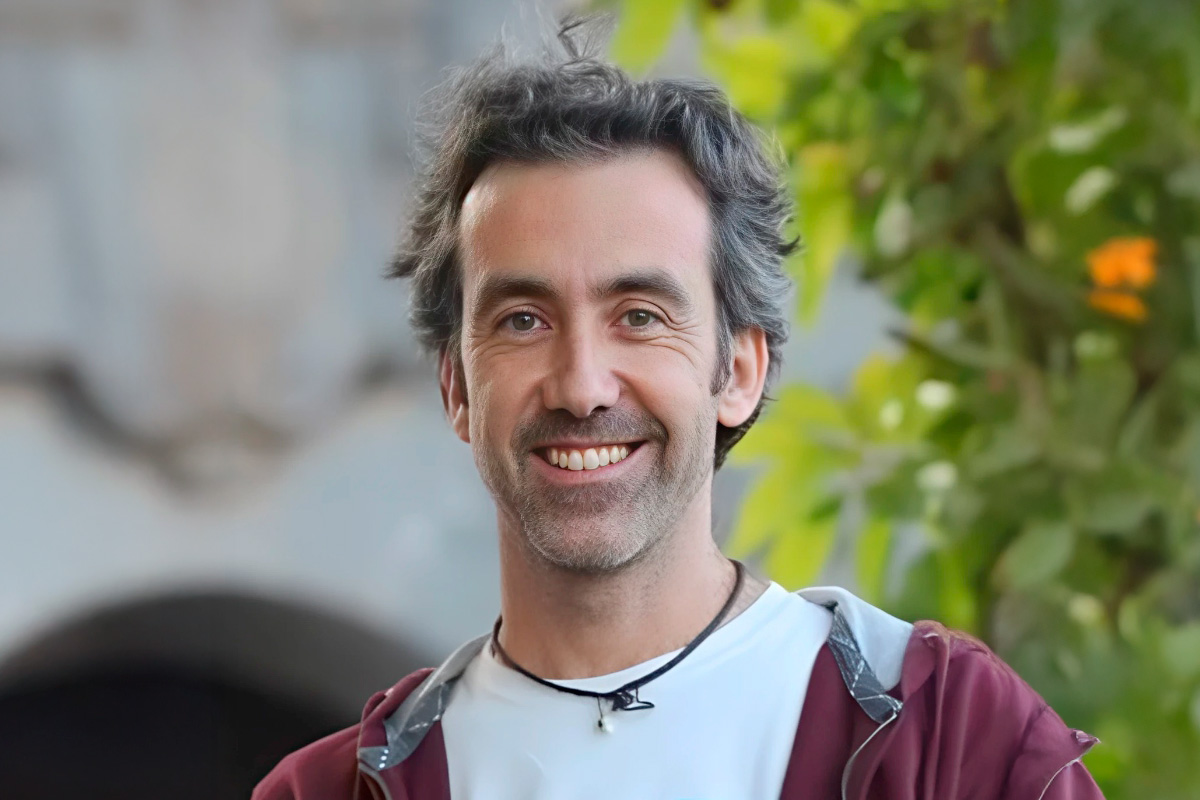
The eruption of the Tajogaite volcano in 2021 directly affected the habitat of this species, generating great uncertainty about its viability. “During the first samplings after the eruption, we managed to detect very few specimens, but this year another group has found up to 30 individuals, which gives us hope for a possible recovery,” he explains. Carlos Ruiz Carreira, Professor in the Department of Animal Biology, Soil Science and Geology in the Zoology Area of the University of La Laguna and principal investigator of 'BioTER: Arthropods'.
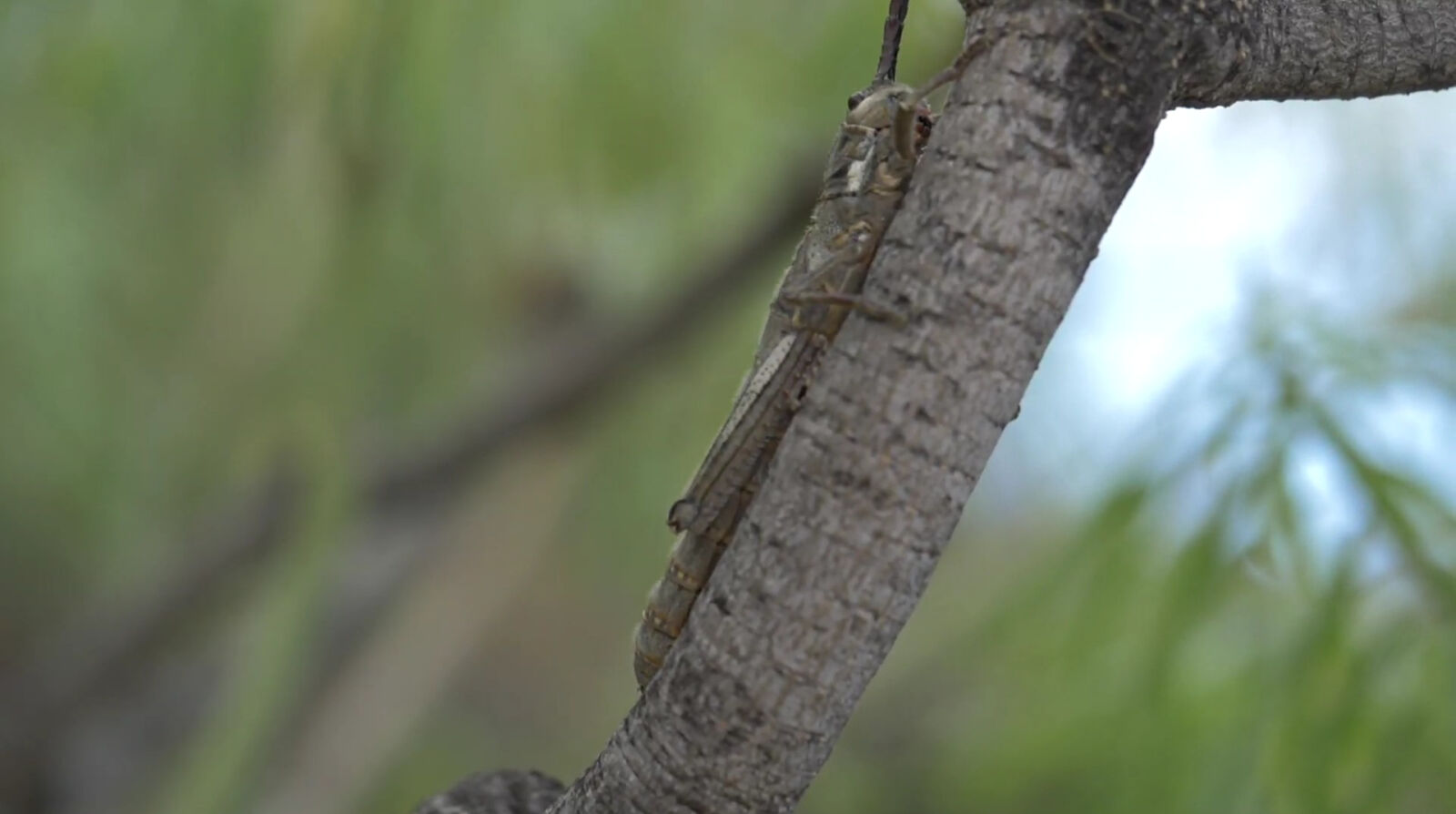
Specimen of a palm tree cicada. Image provided.
The palm tree cicada primarily inhabits spurge thickets along the coast of La Palma. Its extremely restricted distribution, low population density, and cryptic behavior—its tendency to disappear into the vegetation at the slightest movement—make it a challenge for researchers. Detecting it often requires two people to simultaneously circle a spurge tree. Faced with these difficulties, the scientific team is developing new, non-invasive methodologies, such as acoustic monitoring using sensors that record the females' calls. This technology could allow researchers to locate previously unknown populations and estimate their numbers without disturbing their behavior.
“It is essential to understand their natural cycles, which can include years of very low abundance followed by population rebounds. Without a long-term data series, we cannot know if we are witnessing a recovery or just a temporary fluctuation,” Ruiz adds. Conserving the Canary Island snipe is not only about protecting a unique species; it is also about preventing the progressive collapse of an extremely fragile island ecosystem. “In island ecosystems like those of the Canary Islands, losing a single component can jeopardize the stability of the entire ecological network,” Ruiz warns. For this reason, the CanBio project has established a monitoring network to track the effects of climate change on the most threatened species in the Canary Islands, as will soon be done with the Canary Island snipe to collect data, which is currently underway.
”It’s possible that many have already been lost without us even knowing about them,“ Ruiz warns. “It’s like a fire in a building: if we don’t know where the flames are, we can’t put it out. We need data on where vulnerable populations are, how they interact with other species, and what effects invasive species or climate change have. Without that
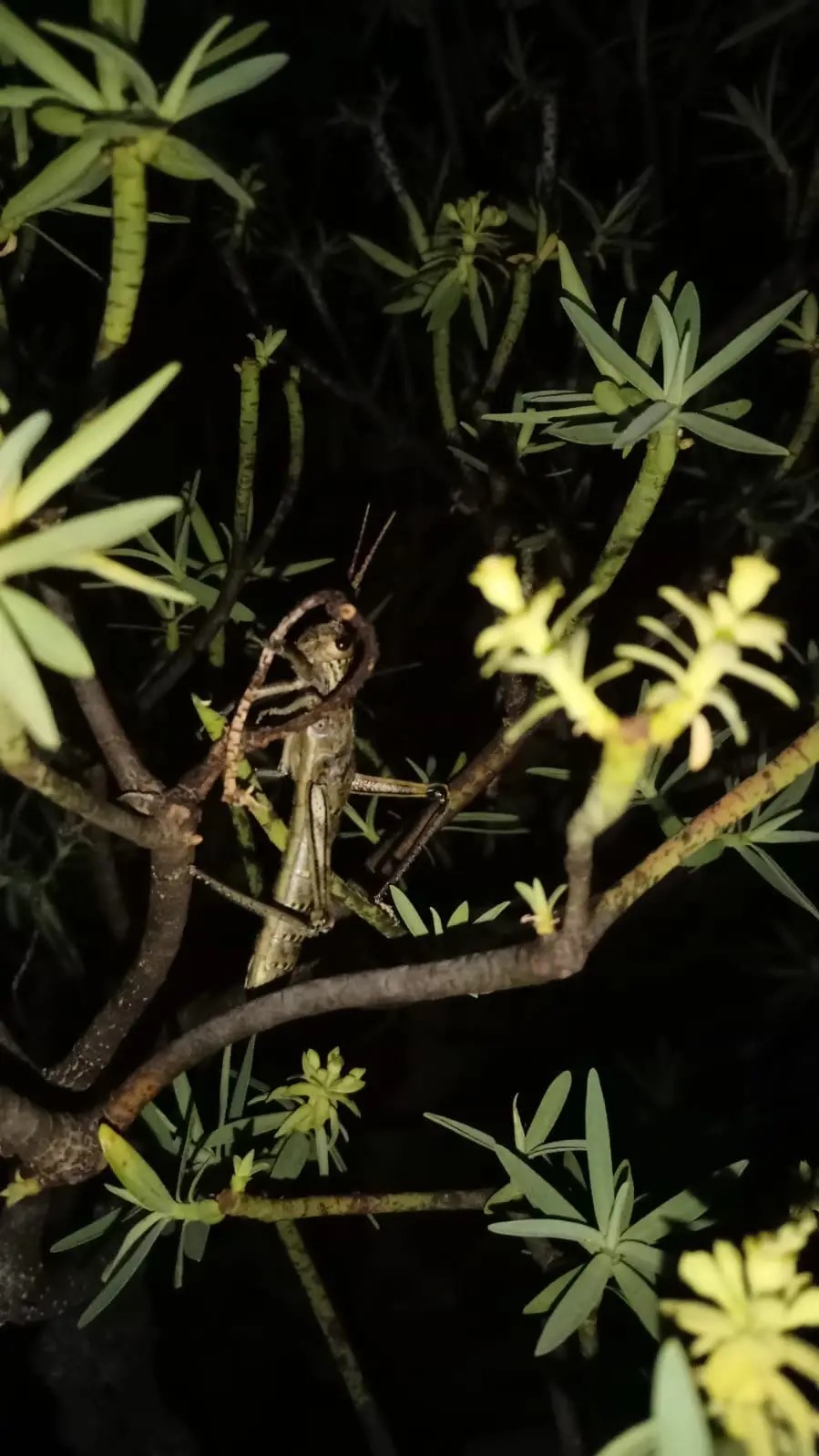
Image provided of a stick cicada from La Gomera.
Without this information, we cannot design effective conservation measures.”.
Therefore, the project emphasizes the need for long-term, systematic, and non-invasive monitoring to observe the real dynamics of populations over time. Only in this way will it be possible to differentiate between natural fluctuations and worrying trends, and to establish conservation strategies that guarantee the viability of such unique species as the Canary Island snipe, an emblem of island biodiversity and a sentinel of the environmental changes affecting the ecosystems of the Canary Islands.

 Spanish
 English
 French