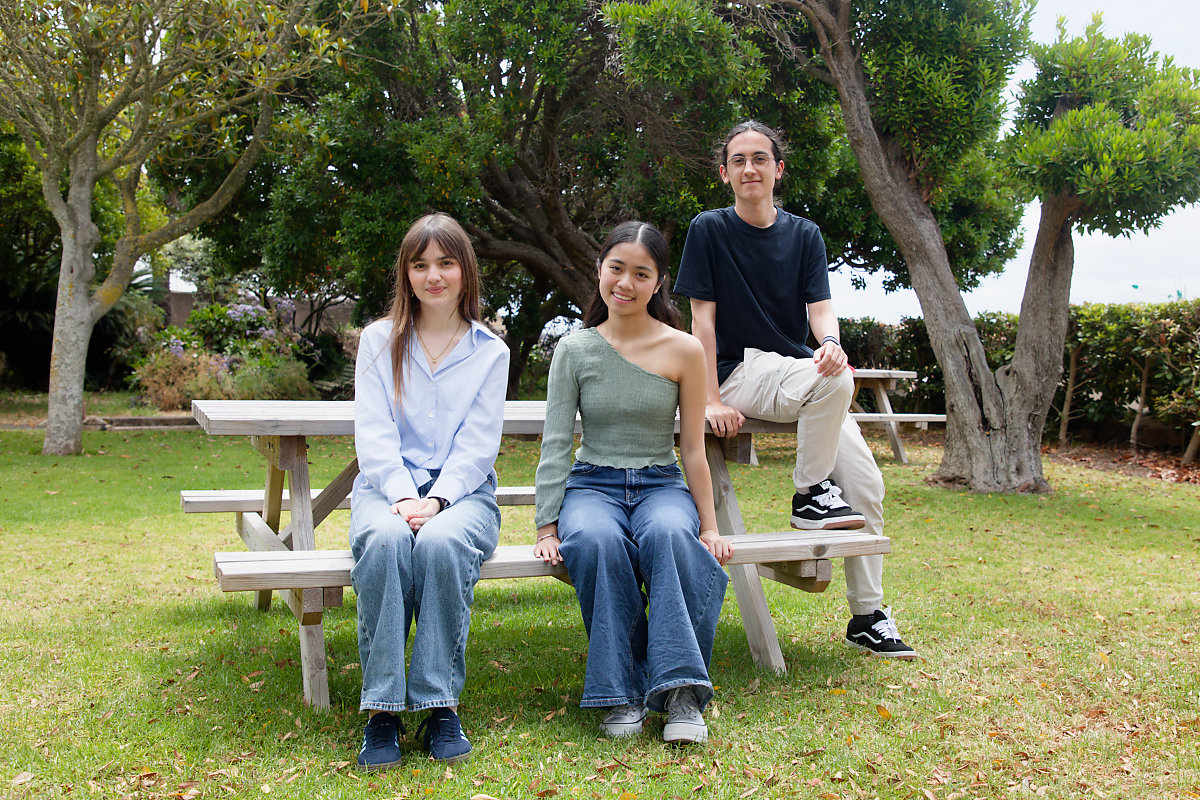
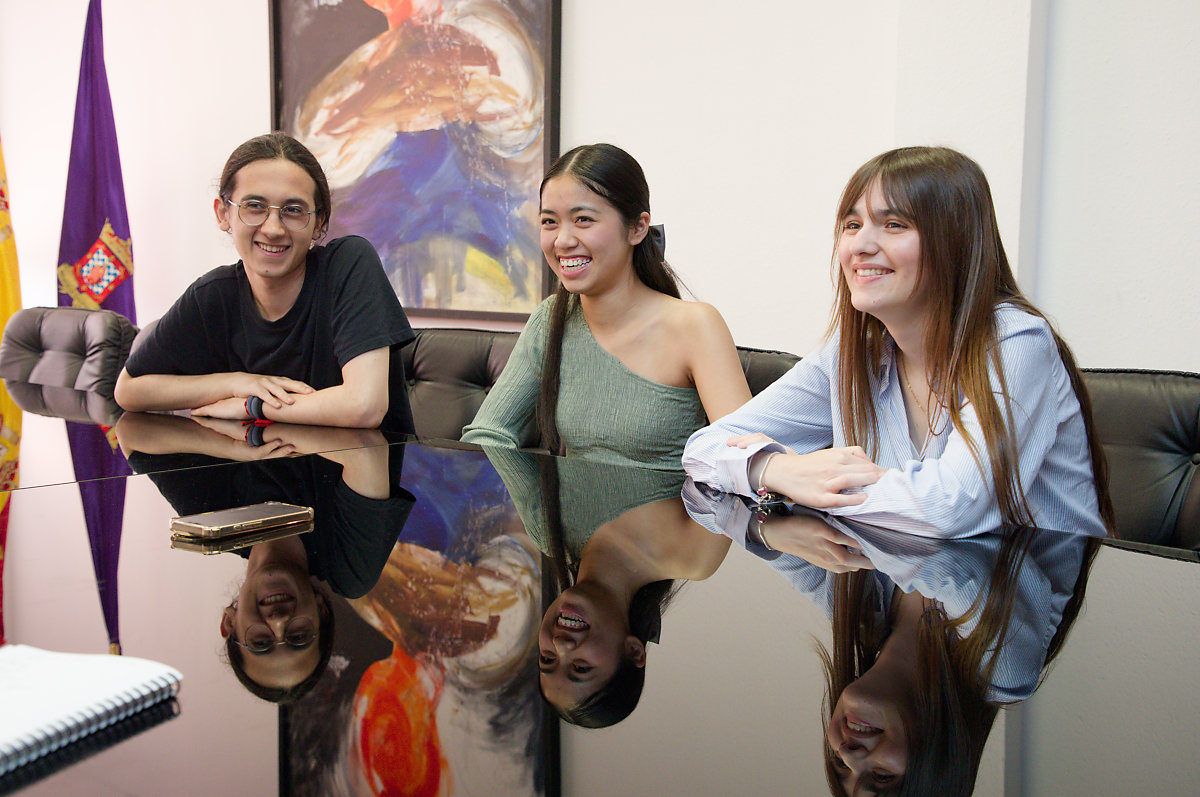
They didn't know each other, but after five minutes together, they were already chatting and laughing together when they met last Friday, June 13th, at the Rectorate. Aleix Gutiérrez, a student at the La Salle San Ildefonso School, Irene Pérez, from IES La Guancha, and Beatriz Wangzheng, from IES Lucas Martín Espino From Icod de los Vinos, despite coming from different parts of Tenerife, they share something very few people can boast of: obtaining the highest university entrance exam scores in the general phase in the province of Santa Cruz de Tenerife. All three achieved a perfect average in high school with perfect scores, and although their grades dropped slightly in the university entrance exams, their final scores remain astonishing: Aleix scored 9.88, and Irene and Beatriz each scored 9.925.
Students who perform well academically during high school usually have a pretty clear idea of which university degree they want to pursue, and in the case of Aleix and Irene, this stereotype holds true: Aleix will be studying Mathematics in Barcelona, where he has family. He considered a double degree with Physics at one point, but ultimately opted for a single degree to delve deeper into the subject. “Since preschool, I’ve always felt drawn to this field, and it’s the one I’ve excelled at. And in middle school, I had a math teacher who showed us the film “Hidden Figures,” about some women who worked at NASA and were mathematicians, and I felt that this was what I wanted to be.”.
In Irene's case, she will study Biomedicine in Seville because she has always loved science, and more specifically, biology and chemistry, so she found a degree that combines those two disciplines. "When I was little, I wanted to be a hairdresser," she recalls with a laugh, "and in my fourth year of secondary school, we studied genetics, and I fell in love with the subject. I started researching on my own and came across a YouTube channel by a girl who had studied Biomedicine, and I found it very interesting and beautiful." She is clear that she wouldn't want to have direct contact with patients, so her goal is to contribute her bit to the fight against cancer or rare diseases from the laboratory.
Beatriz, on the other hand, hasn't had as clear a vocation as her classmates, except for the fact that she also identifies with the scientific field, and she's still considering her future career, although Medicine seems like a strong contender. “Since I got pretty decent grades, people told me, 'You're definitely going to study Medicine!' And my sister is also in her first year of that degree in Madrid. So I thought, 'Do I want to study Medicine for myself or because it's what's expected of me?' I had that dilemma, but I think I'm going to go for that degree. I've done some research, I've seen what subjects it includes, I know about the experiences my sister has shared with me, and I like it.‘ She's also not sure where she would study, because while she thinks it would be good for her to leave the Canary Islands, she considers the University of La Laguna ’also to be a very good university.‘.
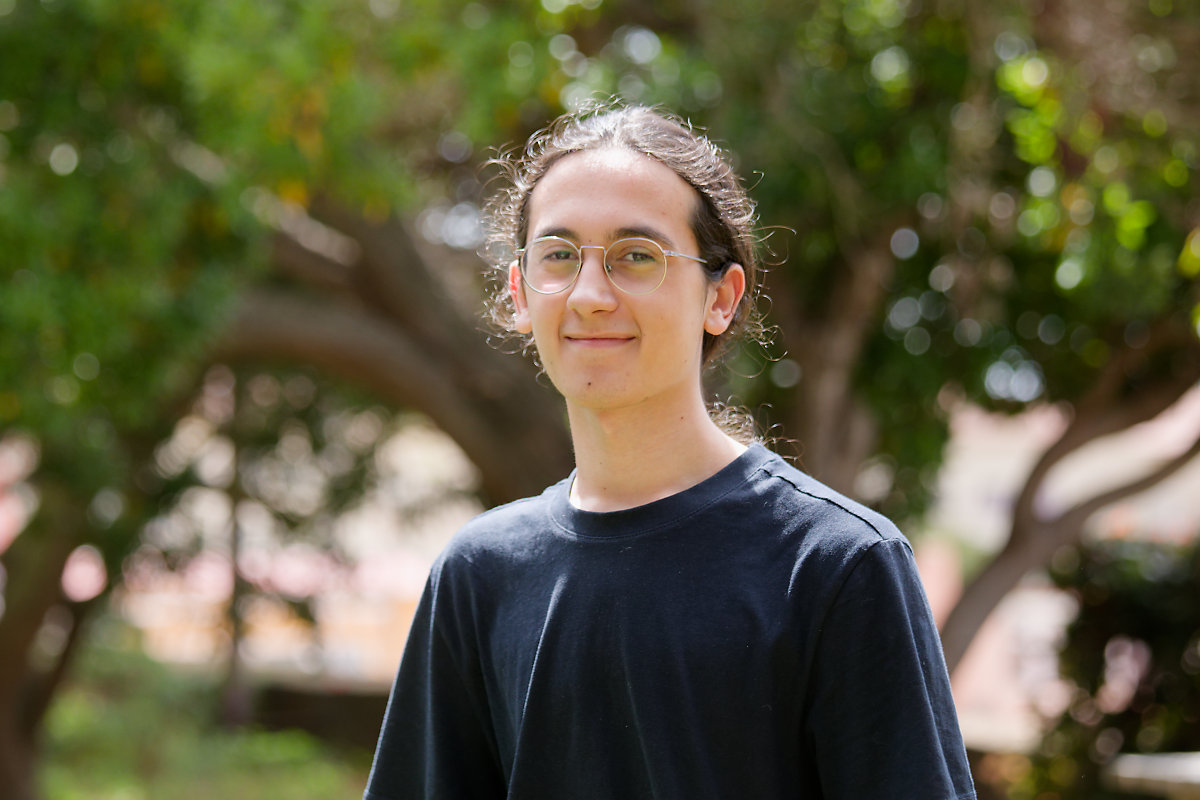
Aleix Gutiérrez.
Disorganization with good results
It's surprising that students with such high academic performance admit to being disorganized when preparing for their exams, without following any specific guidelines or established routines. "I finished high school by studying almost every time the day before the exam," says Aleix, who also reflects that it helped him to study with others, especially a friend he's known since school and with whom he remains in constant contact. "This week of the university entrance exams, for example, we made schedules together, and that forced me to study and, at least, not waste time on my phone. I think receiving help from other people motivated me.".
“I felt that other people were much better organized than I was,” confesses Irene, who then explains that, for her, there were more vocational subjects that didn't require as much effort and that she even enjoyed studying. “I dedicated less time to those, like Biology, for example, which I felt I didn't have to study so much, but rather understand. In the subjects I found most difficult, I did try to have a routine… which sometimes I didn't stick to.” She concentrated that extra effort on the humanities subjects, which were the ones she struggled with.
Beatriz explains that she always starts her studies with the intention of getting organized, but she struggles to stick to the plan she sets for herself. “One of the biggest changes that allowed me to study better was eliminating social media,” to which she dedicated far too much time. To achieve this, she even used apps that prevented her from accessing her profiles. She also realized that each subject requires a different approach. “High school was a way for me to experiment with how I best study each subject and perform better on the university entrance exams.”.
During their study time, all three consider it important to find time for rest and relaxation. Aleix has enjoyed spending his free time with his family, since his sister had a son a year ago, so he's been fully embracing the joyful role of being an uncle. "She says 'let's go' and takes me with her and the baby. I stay and look after him and disconnect. Mainly, I unwind from studying with her and my nephew.".
Of the three, Irene has the most structured hobby, as she plays the piano, guitar, and clarinet and is part of a brass band in her town, La Guancha. “It’s been my main pastime, along with talking to my friends. I’ve been in the band for about seven years, and we play at festivals, Holy Week, processions, and occasional concerts when we’re hired in other towns, etc.”
During this period, Beatriz recharged her batteries with friends and by taking walks, but finishing her university entrance exams has allowed her to rediscover her great passion: reading. “I haven’t touched a book since my second year of high school because I felt bad about myself; I kept telling myself I should be studying instead of reading.” Now she’s picked up reading again with the novel 'A Little Life' by Hanya Yanagihara. ‘I’m enjoying it because it shows how cruel life can be. It’s about a group of friends, narrating their lives from their twenties until they grow up, and it’s quite raw. But it’s good that it doesn’t romanticize that stage of life.“.
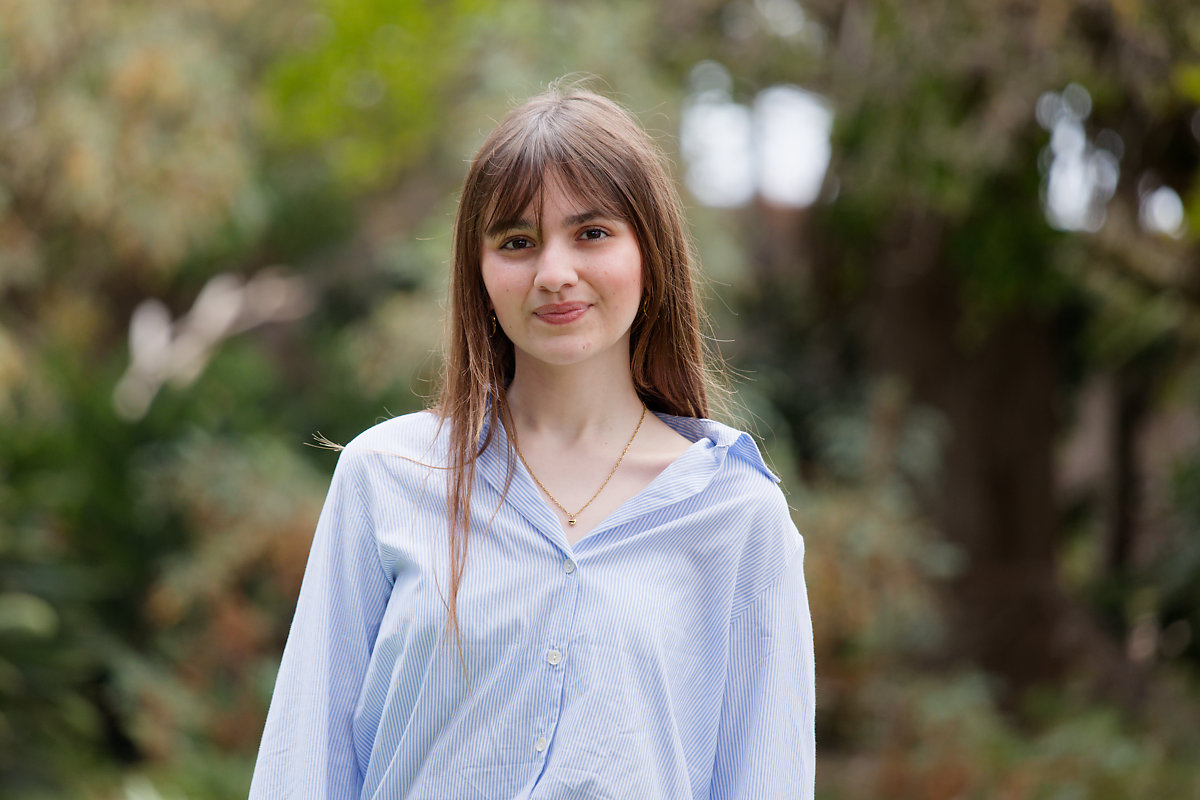
Irene Pérez.
The test
Two years of high school, weeks of preparation, and finally, the university entrance exams arrive. The feeling that so much is at stake and that everything will be decided in just a few exams is palpable, making it crucial to control nerves. However, Aleix, Irene, and Beatriz point out that, more than the stress of the moment—which is definitely present—the main problem they experienced was exhaustion.
“I didn’t believe it when people told me I arrived tired, but it’s true. I’d been studying for so long straight that when I got to the exam, I wasn’t nervous, I was tired, especially on the second day, because I had exams piled up over two days, and on the second day I started at 9:30 and finished at 8:00, so after lunch I just wanted to be done. You get nervous on the way to university the first day; then it all goes away because you either do it, or you just stand there,” Aleix explains.
“I think the nerves go away the day before, when you face the uncertainty,” Irene adds. “Afterwards, you hear comments like, ‘The university entrance exam isn’t that bad, you’ll do fine.’ But the truth is, at that moment, for you, the university entrance exam is a big deal, you know?” In her experience, the worst moment came with the first exam, but as the hours passed, she gained confidence. “You see that all your effort is reflected in what you do, that you know how to answer what they ask. That gives you confidence and helps you face the other exams. But it’s true that the nerves in the half hour before were always there, but they were necessary too because otherwise I would have fallen asleep because I was so tired.”.
Beatriz also appreciates this unusual advantage of feeling nervous: “I think the same thing happened to me; I didn't really feel nervous during the university entrance exams. But I did feel nervous in the half hour before going in. And it worked out well for me, because at times I felt like I was dying of sleepiness, so those nerves really woke me up.” In her case, she became so overwhelmed with studying that she stopped in the days leading up to the exam. “If someone had offered me three more days to study, I would have said no, because I was exhausted.”.
All three agree that the math exam was probably the most difficult, to the point that they felt they had done terribly wrong afterward. “I think everyone who took that exam had that impression, from what I’ve heard,” Beatriz points out. “In my class, half the people left crying,” Aleix adds, while Irene corroborates this, adding that in her classroom, “half the people left the exam; they had given up. I don’t know if I’d say it was hard, but it definitely required concentration and knowing what you were doing, because you had to take many details into account. I think with what you had studied in high school you could have passed, but it’s true that you had to be very attentive.”.
Another exam they found particularly challenging was History, mainly due to its density and the very tight time allotted. “Mathematics was tough because of its difficulty, but History was the most stressful for me. Besides the fact that it was in the last hour of the first day, when I was already tired, it's a very dense and long exam. You have to remember a lot of facts and write a lot. It's an hour and a half of writing, and you can't stop because you don't have enough time,” Aleix explains.
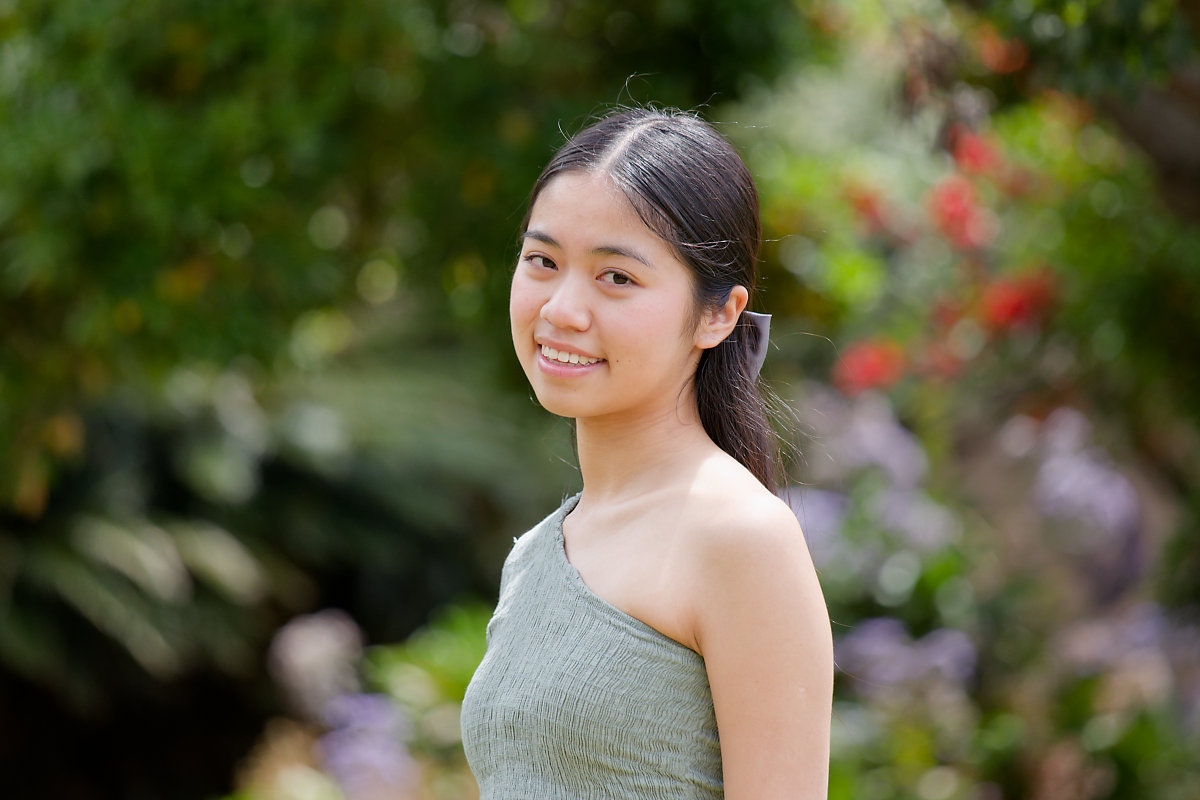
Beatriz Wangzheng.
A new stage
In three months, these three promising young people will begin their university studies, eager to pursue subjects that have captured their interest. They do so with little uncertainty because they have ample information about what awaits them. They feel they received adequate guidance both at their schools and from the University of La Laguna through initiatives such as the Open House events. Aleix would have liked to discuss the specifics of certain degree programs with the faculty more, and both Irene and Beatriz had some difficulty attending all the talks that interested them because some were scheduled at the same time. But despite these inconveniences, they believe they have the essential knowledge to take this step.
“I know for sure it’s going to be completely different from high school. Besides the fact that the way of working is different, many of my math teachers have told me that the first year of university is about survival: adapt or die,” Aleix points out. “In high school you have more contact with teachers, but at university you’re already an independent and autonomous person and you have to work for yourself.” So, this aspiring mathematician is ready to put in the effort, and in fact, it’s something he looks forward to and desires. “I like this idea I have of university as fostering autonomy, encouraging people to work for themselves, and I hope it’s something I enjoy and am proud to study.”.
Irene is perhaps more pragmatic, as she believes that university will indeed be a tough stage, but she also thinks it's the right place to make mistakes and learn to cope with them. “I think that's what university is for, to make mistakes and to learn how to make your own decisions and move on. I know it's going to be hard, maybe even harder than high school, but you still have to keep going, and at least you have the satisfaction of studying something you enjoy, even though some subjects will be more difficult than others. But that's going to happen in every degree program, whether it's university, vocational training, or anything else.”.
Beatriz adds the incentive of meeting new people who will become part of her life, although she's already preparing herself mentally for the effort she'll have to make. “I think I'm going to socialize and meet new people, but as for my studies, I know it's going to be very hard. I know myself and I know it's going to be difficult, that I'm going to suffer a lot. But I have to get through it because that's what's expected at this stage, and at least it's something I enjoy. That's what I'm most looking forward to: that when I start my degree, even though it's challenging, I'll enjoy it and want to continue studying it.”.
Before we finish, and taking advantage of the opportunity to have the experience of three outstanding students, we asked them for some advice for other young people of their age who, whether in the next extraordinary session of the PAU this July, or next year, will face this crucial test.
 “When you’ve been studying for a long time or have a very large topic to tackle, if you feel overwhelmed, it’s one of two things: either study or rest.” According to Aleix, it’s common to find yourself sitting at your desk in a kind of “limbo” where you’re not really making the most of your study time with full concentration, but you’re not enjoying your free time either. That’s why he reiterates the idea he expressed at the beginning about the importance of rest. “It’s better to go into an exam having slept or rested well than having spent an hour studying poorly or doing something stupid. Study or rest.”.
Irene's advice is to prepare to "make sacrifices" during exam preparation. "I'm not going to lie, it's a very demanding course, especially if you know which degree you want to get into and it requires a high score." She also advises against going through the whole process alone and recommends seeking support from family, classmates, and friends. "This course wouldn't have been the same without the classmates I had. The company you keep and who you choose to spend this time with are very important. And I would also advise them to get plenty of rest, which might seem silly, but it's very important.".
Beatriz, for her part, advises taking advantage of high school to try different ways of approaching subjects. “Take it seriously, because in the end you experiment a little to see what works best for you to study, what methods work. Because I know of people who got to the university entrance exams and still didn't know how to study. And I feel that they could have discovered that little by little while they were in high school.”.
Having achieved the best university entrance grades marks the end of an important life stage, but the story of Aleix, Irene and Beatriz has only just begun in the best possible way: being able to explore their vocations and dedicating themselves to what they are passionate about.
Communications Office

 Spanish
 English
 French