Paleoclimatic research is unearthing fascinating secrets about the environmental history of the Canary Islands, and one of the most significant findings is the confirmation that calima, the Saharan dust phenomenon that so greatly affects life in the archipelago, is an event that has accompanied the islands for millennia. Far from being a novelty, calima has left a deep imprint on the Canary Islands' subsoil, offering a unique perspective on its frequency and intensity over time.
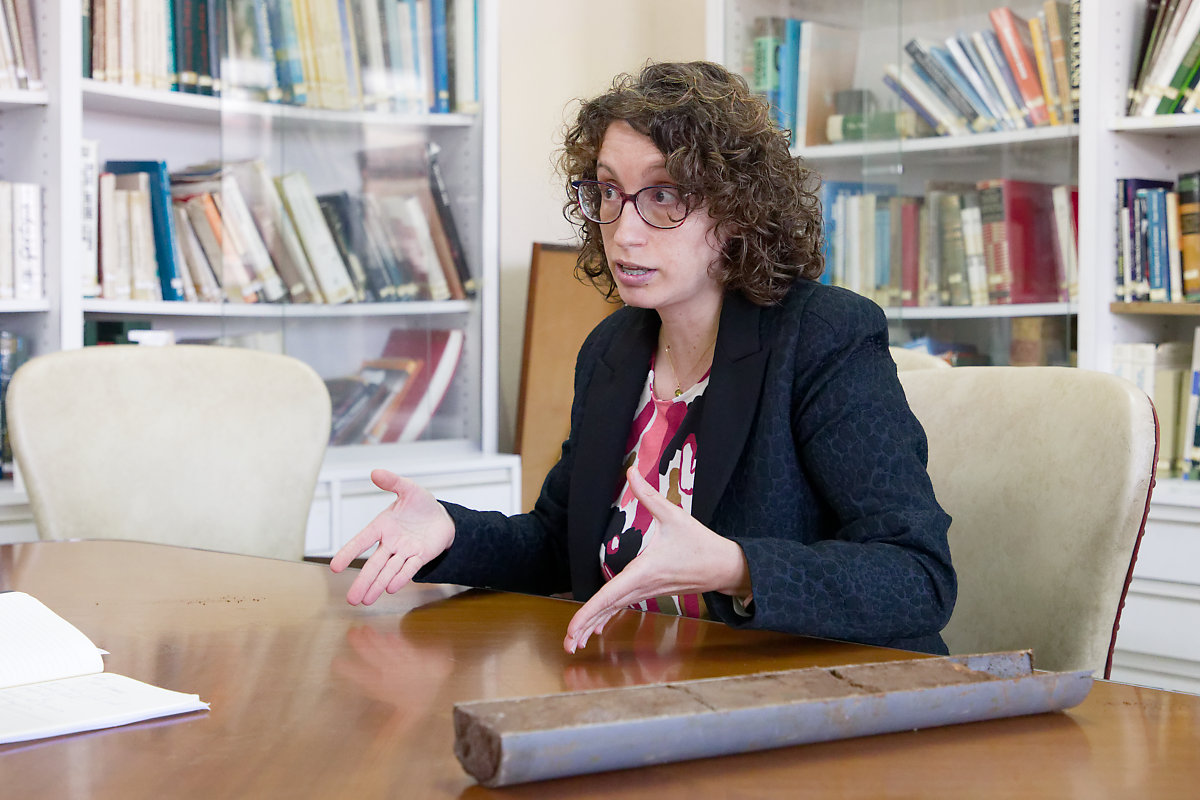
Margarita Jambrina, Jambrina, a tenured professor in the Department of Animal Biology, Soil Science, and Geology at the University of La Laguna, leads a team that delves into the sedimentary records of ancient lakes and wetlands. These "natural archives" of climate, as the researcher calls them, are analyzed layer by layer, unraveling the environmental history of the islands with astonishing precision. "With this data, we can calibrate and validate current climate models. The more data we have on the natural variability of the climate, the better we can distinguish between human-induced changes and natural processes," Jambrina states.
One of the primary objectives of the research is to identify, in ancient sediments, signs of phenomena that are of particular concern today, such as heat waves, torrential rains, and, especially, Saharan dust storms. "We want to know if the Saharan dust storms we are currently experiencing occurred in the past, and if so, how frequently, intensely, and for how long," explains Jambrina. Geochemical, mineralogical, and sedimentological analyses are key to this process. For example, changes in the mineralogy of the sediments can indicate a significant contribution of Saharan dust, differentiating it from other origins.
The haze in the Holocene
The first results of the research are already shedding light on the behavior of Saharan dust in the Holocene, the current geological epoch that spans the last 12,000 years. During the period known as the Norgripian (between 8,000 and 4,000 years ago), the arid conditions that gradually took hold in the region favored an increase in the frequency and intensity of these events. "During the beginning of the Holocene, in the so-called African Humid Period, the Sahara was green, with vegetation and rivers. This reduced dust emissions. But when that period ended and the region became drier, the Saharan dust intensified," Jambrina explains.
This suggests that the presence of calima (Saharan dust haze) in the Canary Islands is intrinsically linked to the climatic dynamics of North Africa, particularly the desertification of the Sahara. In the Canary Islands, this type of research is allowing scientists to reconstruct past climatic conditions—especially those of the Holocene—from sedimentary records. In ongoing projects on islands such as Tenerife, La Palma, and La Gomera, researchers are studying lake deposits and sedimentary fills in ancient basins to infer wet or arid periods.
Although CO₂ concentrations have been even higher in the planet's geological past than they are today, the rates of change were radically different. According to paleoclimatologists, the current rate of increase in carbon dioxide is unparalleled in the last two million years. Margarita Jambrina explains it clearly: "Although CO₂ levels were higher 70 million years ago, the configuration of the continents was different. Ocean circulation, known as thermohaline circulation, did not function as it does now. Only in the last two million years have we been able to compare systems similar to those of today, and within that context, the speed of the current change is unprecedented.".
Understanding the history of calima (Saharan dust storms) and other climatic phenomena through sediments is not only an exercise in environmental archaeology, but also in foresight. "To predict the future, we must understand the past," concludes the researcher from the University of La Laguna. The data emerging from the Canary Islands' subsoil are, ultimately, both a warning and an opportunity to build a more informed and resilient future in the face of the challenges of climate change.

 Spanish
 English
 French