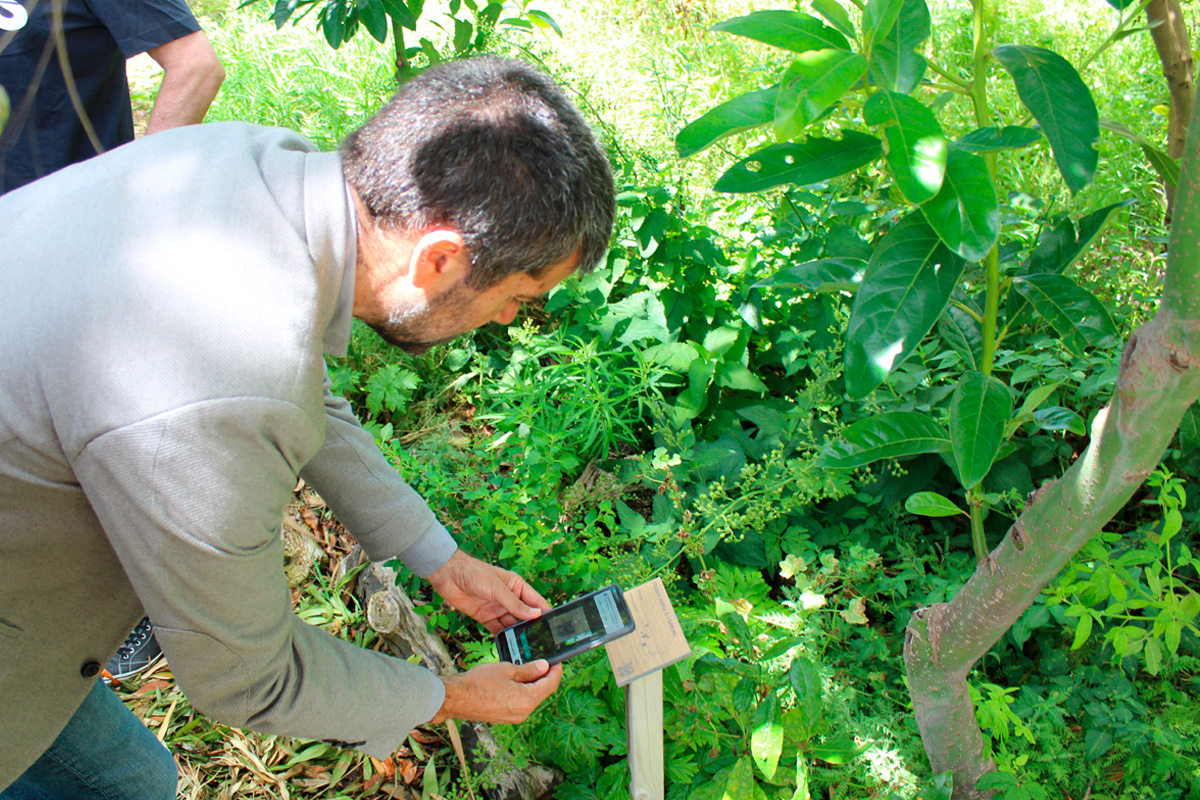
The Parks and Gardens Department of the University of La Laguna recently presented to the institution's governing team, including its rector, Francisco García, the progress made in recent years in the exterior areas of the Central Building. After years of work, these spaces have been transformed into what they are today. Canary Garden, The focus is on biodiversity and regional ecosystems, with a multidisciplinary and sustainable approach, while also fulfilling an educational role. Therefore, during the visit, there was a call to continue working towards a sustainable gardening plan, supported by the Cultural Center for Gardening, Biodiversity and Permaculture, as well as the faculty and management of the service organizing the visit.
In addition to the Rector, those who visited these garden areas included the Secretary General, Juan Antonio García; the Vice-Rectors for Research and Transfer, Antonio Aparicio; Sustainability and Infrastructure, Marta Domínguez; Digital Transformation, Vicente Blanco; Culture and University Extension, Isabel León; and Students, Rosario Hernández. The visit was guided by the Head of the Parks and Gardens Service, Francisco Oramas; the gardeners from the Central Campus, Borja Arizón, Pablo Vázquez, and Francisco Javier Peña; and the professors of Didactics of Experimental Sciences, Sara González; Zoology, Carlos Ruiz; and Botany, Cristina Montelongo.
During the visit, the staff explained that the garden's origins date back to the first plantings carried out by Biology students and residents of the Fernando Residence Hall. The space went through different phases, beginning with a traditional Versailles-style design and continuing with periods of neglect. However, in just over a decade, this space has undergone a profound transformation into a sustainable garden with its own distinct identity.
This renovation is the result of a collaboration between the Parks and Gardens Service and experts in endemic flora and fauna from the University of La Laguna, with the support of the university's governing bodies, which have committed to a more sustainable university and a greater responsibility towards the environment. During the visit, the improvements made to the grounds, the expansion of the Canarian flora collection, the gradual removal of invasive exotic plants, and the cataloging of the garden's fauna were explained.
 Support for teaching
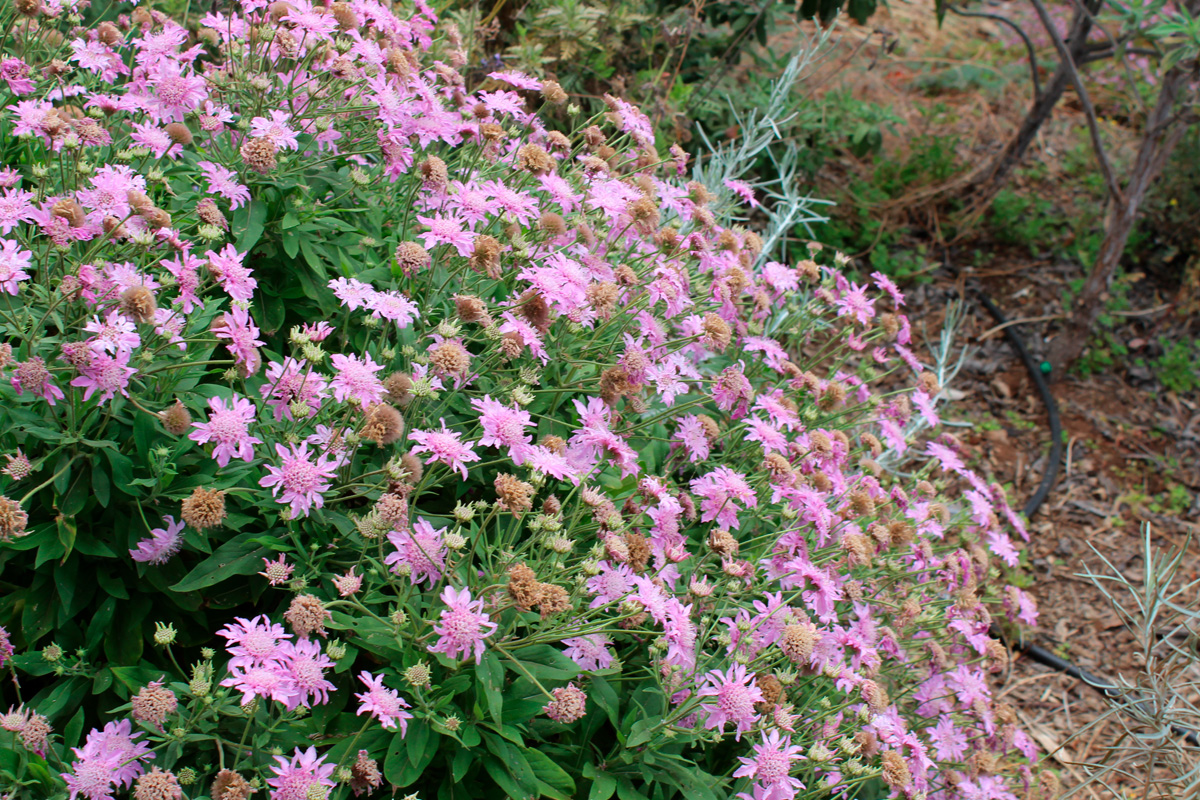
The accompanying faculty explained the importance of this garden for teaching in the Education, Biology, and Environmental Science degrees, as well as for research and knowledge transfer to different educational levels and to society. Education students have access to a representation of the Canary Islands' flora, structured according to the vegetation zones present in the archipelago, allowing them to study the representative flora of each zone in situ, as well as the formation and conservation of the different ecosystems.
Environmental Science and Biology students carry out practical exercises involving observation and the collection of data and samples for individual and group projects within the framework of general Botany and Zoology courses. They can appreciate threatened flora whose natural habitats are scarce and difficult to access, and which is found in these gardens.
In recent years, numerous final degree projects (TFG) from various degree programs have focused on the biodiversity of the Canary Garden on the Central Campus. This work has benefited from the collaboration of faculty from other institutions, such as the Master's Program in Biodiversity in Tropical Areas and its Conservation, offered jointly by the Royal Botanical Garden of Madrid and the Menéndez Pelayo International University; and the external internships undertaken by Vocational Training students, which have so far hosted 40 students.
Investigation
Furthermore, this garden has been and continues to be the cornerstone of numerous educational innovation and transfer projects, as well as regional, national and international projects.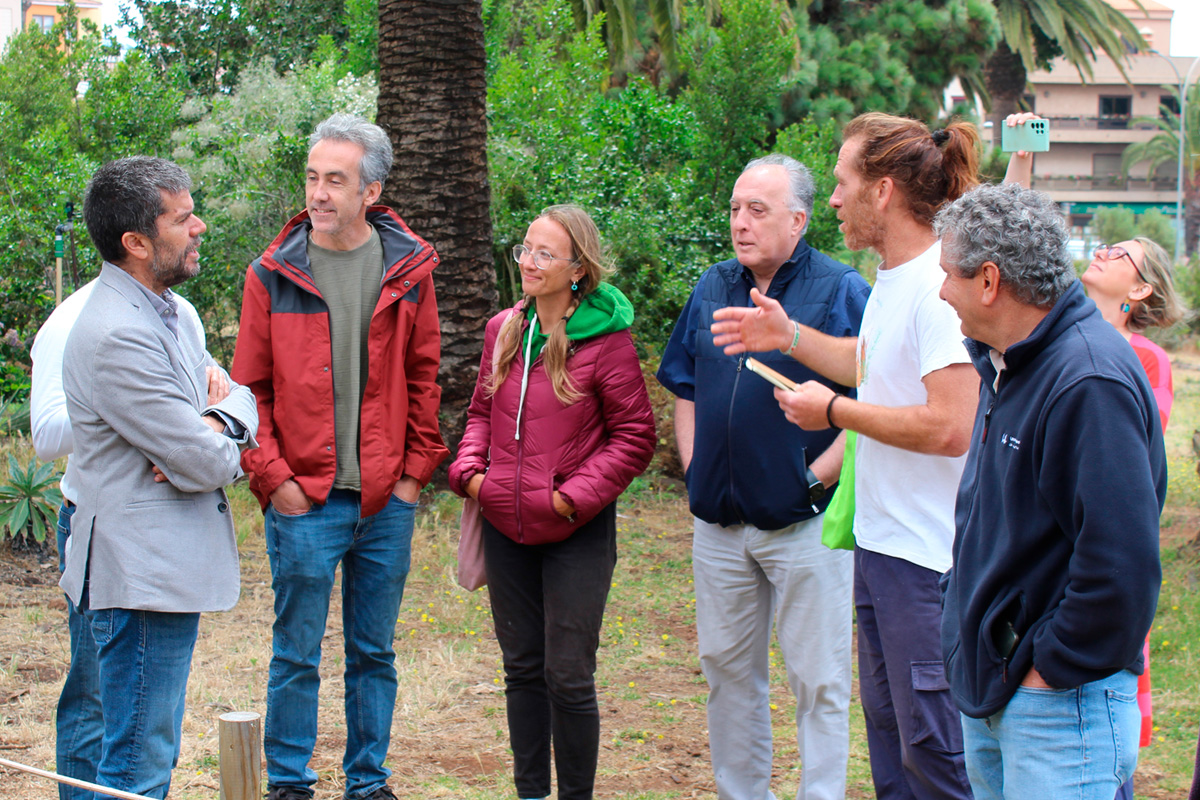 developed by the institution's faculty, many of them in collaboration with other research centers.
Thus, the Biodiversity Genomics Europe project, funded by the H2030 call, is currently underway. This project brings together institutions from twenty countries and aims to demonstrate the potential of advanced molecular tools for monitoring terrestrial invertebrate biodiversity. It also analyzes the role of parks and gardens as biodiversity reservoirs, and in this context, one of the selected sites is this garden on the Central Campus. This garden was chosen for its location within a heavily urbanized area, its (native) plant diversity, its environmentally friendly management practices (mulch and organic matter in the soil, herbaceous plants), and the positive attitude and ongoing monitoring by those responsible for and managing the space.
Regarding knowledge transfer activities, the four Biodiversity and Sustainability Days at the University of La Laguna stand out, attracting over 5,000 students from all educational levels. Furthermore, thanks to a citizen science project, the garden has become a knowledge hub, having already recorded over 1,700 observations that demonstrate remarkable biodiversity: 255 species of insects and arachnids, 250 of plants, 29 birds, 10 fungi, 6 mollusks, and 2 reptiles. This data, the result of collaborative effort, will continue to grow thanks to the active participation of the community and the development of future research projects carried out by the center's faculty and students.

 Spanish
 English
 French