Despite their proven effectiveness, antibiotics continue to have side effects and limitations in terms of bioavailability and targeting, which, along with their inappropriate use, have led to the current global antimicrobial resistance crisis. Furthermore, the extensive use of chemical pesticides to protect crops is causing highly detrimental effects on the environment and human health, in addition to contributing to resistance problems.
Antimicrobial peptides are emerging as a highly promising alternative to chemical antibiotics and pesticides, demonstrating comparable efficacy with minimal resistance issues and being naturally derived compounds. However, the practical application of antimicrobial peptides in clinical practice or agriculture is becoming challenging due to the potential degradation of these compounds and their limited targeting capabilities, leading to poor bioactivity and problems with toxicity and stability.
A study from the University of La Laguna, led by Professor Edgar Pérez Herrero, The study, in which researchers from the CSIC also collaborate, led by José Manuel Pérez de la Lastra, demonstrates the improvement of the bioactivity of two significantly different antimicrobial peptides (Cm-p1, obtained from the coastal mollusk Cenchritis muricatus, and Lip1, a cathelicidin isolated from the cetacean Lipotes vexillifer) by being encapsulated in 190-239 nm nanoparticles based on chitosan (biopolymer with antimicrobial properties) and synthesized using the ionic gelation method, which will result in their future application in areas as different as agriculture or biomedicine.
Bioinformatics studies have predicted the physicochemical characteristics of both antimicrobial peptides and the suitability of chitosan-based nanoparticles for incorporating these peptides. Although both free peptides showed different activities against Botrytis cinerea (pathogenic fungus that usually hosts in plant species), its encapsulation in chitosan-based nanoparticles significantly improved its effectiveness against Botrytis cinerea, inhibiting the germination of conidia (asexual spores) and hyphal growth (branching of the filaments that make up the body of the fungi).
According to experimental data, although the antimicrobial properties of chitosan are undoubtedly related to the improvement of peptide bioactivity, the vectorization of peptides through their inclusion in nanocarriers is undoubtedly the main cause of the increase in the antimicrobial efficacy of peptides.
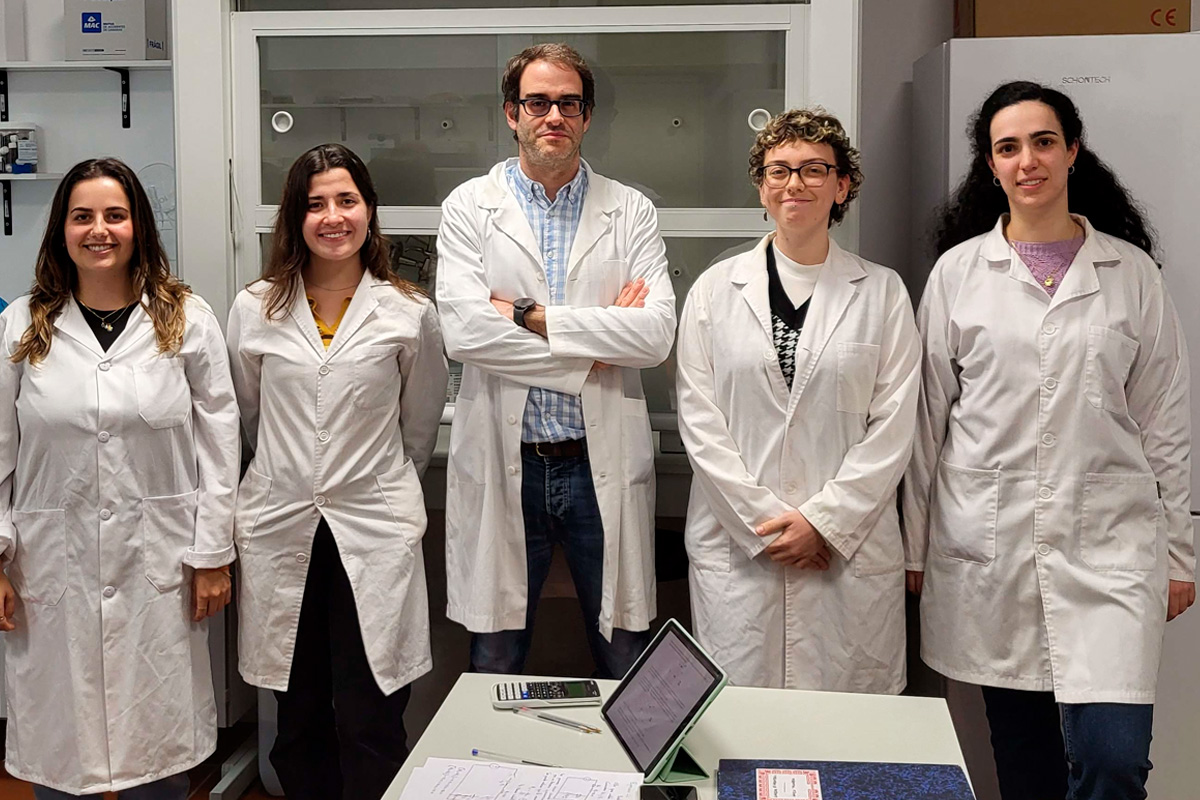
This research has been carried out in the Advanced Biological Encapsulation and Evaluation Research Group The newly formed research group at the University of La Laguna, coordinated by Professor Edgar Pérez Herrero, belongs to the Department of Chemical Engineering and Pharmaceutical Technology at this academic center. The group focuses on the design, synthesis, and characterization of different micro/nanotransporters and scaffolds to deliver bioactive molecules to various therapeutic targets of interest in diverse diseases, with a special emphasis on hematological cancers and neurodegenerative diseases.
Pérez Herrero is a tenured professor and is supervising four doctoral theses within the Doctoral Program in Medical and Pharmaceutical Sciences, Development, and Quality of Life. He is the co-principal investigator of two research projects, funded with €20,000 by the Canary Islands Foundation for Health Research (FIISC) and €30,266 by the University of La Laguna's patronage platform. He is also part of a national project (Ministry of Science and Innovation) funded with €262,500, in collaboration with the University of Santiago de Compostela and the University of Navarra.

 Spanish
 English
 French