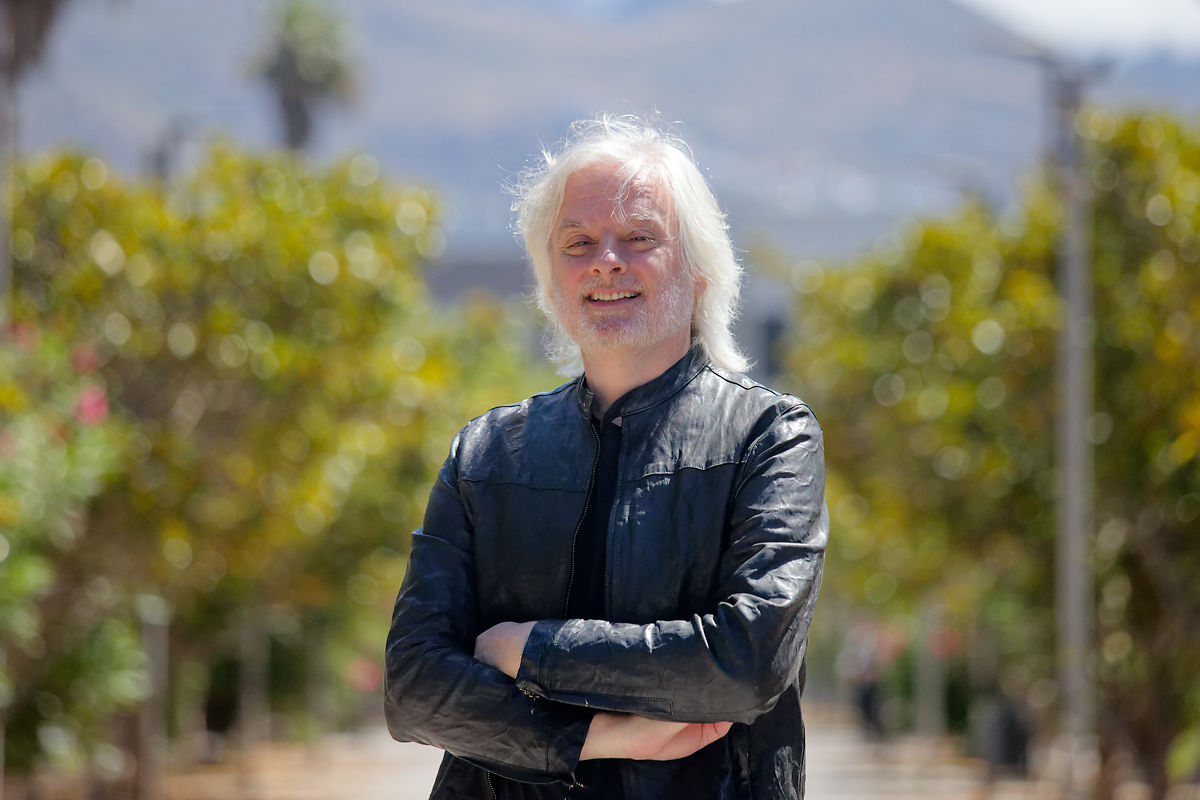
“Consciousness is the experience of seeing and hearing, of feeling pain and pleasure, of experiencing emotions, and the experience of conscious thought.” With these words, the renowned philosopher of mind David Chalmers summarizes the complex concept of consciousness, the central theme of his research career. As one of the most influential contemporary philosophers, he has been a key figure in the XXXII Inter-University Seminar on Cognitive Science (SIUCC), held from June 25 to 27 in the Philosophy section of the Faculty of Humanities of the University of La Laguna, organized by the PoVINV group of the academic center and the Spanish Society of Analytic Philosophy (SEFA).
Currently a professor of philosophy at New York University, Chalmers is known worldwide for his formulation of the "hard problem of consciousness" and for his contributions to the debate on artificial intelligence, possible worlds, and the relationship between subjective experience and physical processes. Connecting several of these aspects and also addressing another major question—whether it is possible to know why human beings possess consciousness—he points out: "The hard problem of consciousness is to explain how a physical system, like a brain with all those neurons firing against each other, can have a subjective experience, and so far we don't know the answer to this question.".
The philosopher refers to consciousness as an inner film through which people subjectively experience the world, understood as a property of human beings. Therefore, if this reasoning were extended to other animals, it would also be worth considering whether this is even applicable outside the natural world.
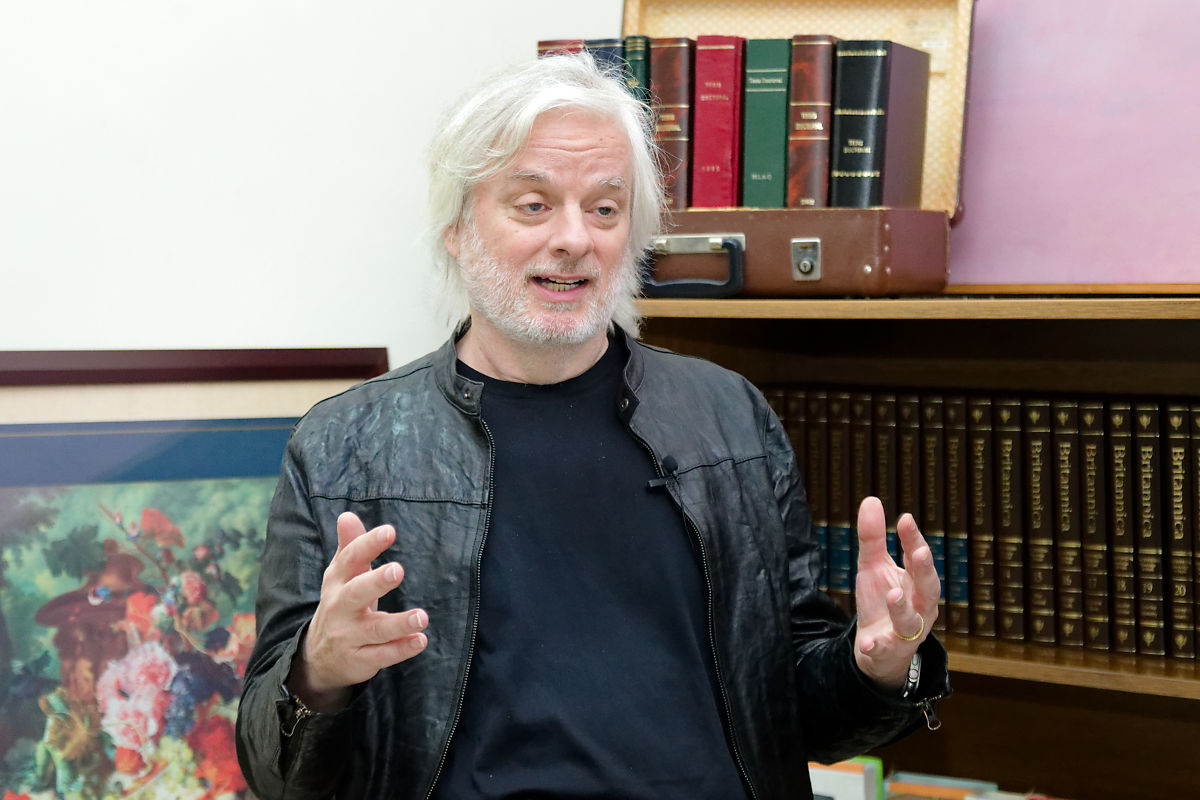 “We have very impressive artificial intelligence systems, such as ChatGPT or Claude, that behave in conversation quite similarly to a human being… So, even if they aren't conscious now, I think it's very possible that in 10 years we'll have AI systems that we can reasonably consider conscious,” Chalmers explains. He dedicated two of his presentations at the University of La Laguna to the relationship between consciousness, the mind, and artificial intelligence.
Chalmers, who is also co-director of Center for Mind, Brain and Consciousness From New York University, he emphasized that consciousness “is what gives meaning and value to our lives; without it, nothing would mean anything to human beings.” However, this idea could open the door to an ethical debate about whether other animals and artificial intelligence should be treated or valued differently because, if they were conscious, they could experience suffering.
Therefore, the expert considers the work being done at universities and other research centers vital. He argues that this is the path to getting to the bottom of these fundamental questions, combining philosophy and science through sound scientific analysis, and thus being able to understand, for example, the capabilities of AI.
For Chalmers, the SIUCC was his first experience in his extensive career at the University of La Laguna, and he hopes it will lead to future inter-university collaborations. Although he was already familiar with researchers like Margarita Vázquez, the current Vice Dean of the Philosophy Department and organizer of the seminar, his participation in this meeting on cognitive science allowed him to learn about the work being done at this academic institution in his field.
“There is a wonderful research team here in Philosophy, some of whom I have known for a long time… I have also been able to meet the students, it is a very good group, it is a fantastic department in a wonderful university,” praised the philosopher, who shared that he was really enjoying his first visit to Tenerife.

 Spanish
 English
 French