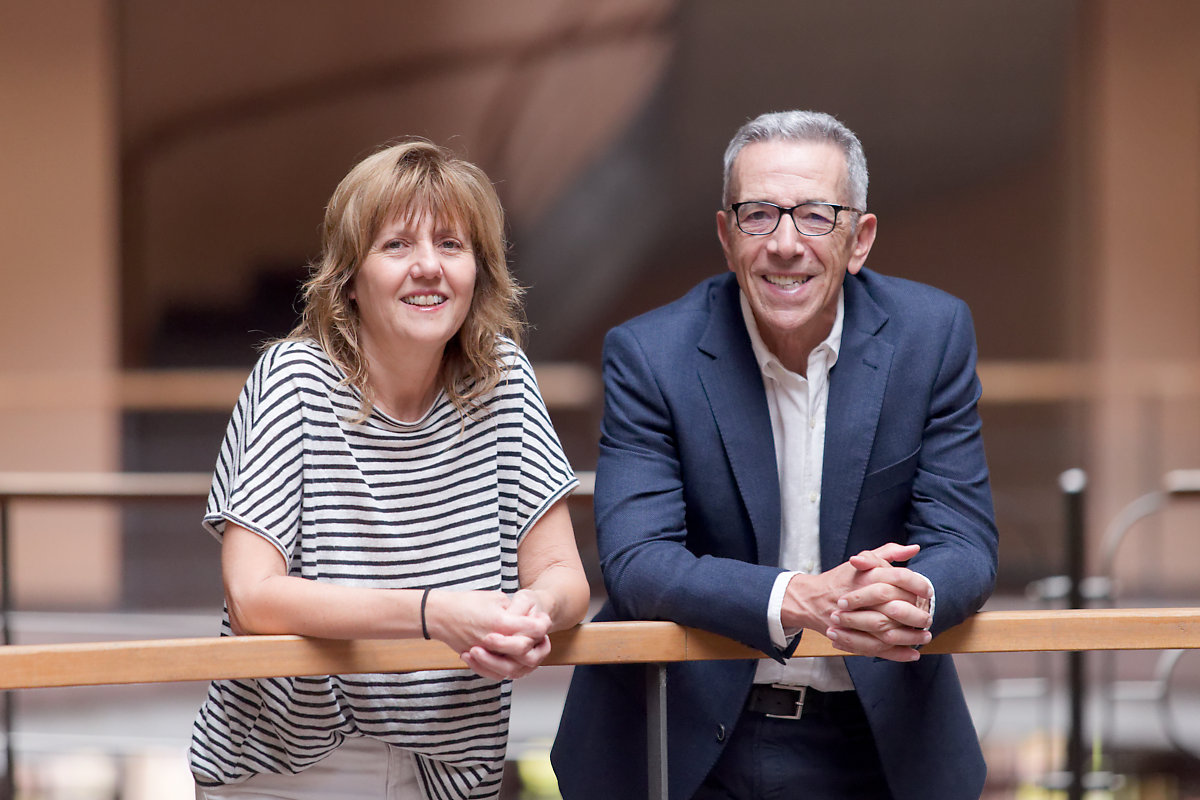
Few business models express a set of values as clearly as the cooperative. “As a business model, they are characterized (and differentiated from commercial companies) by prioritizing people in terms of value, rather than capital,” he points out. Cándido Román, tenured professor in the Department of Business Management and Economic History at the University of La Laguna.
The great challenge for contemporary cooperatives is finding a balance between efficiency and their founding principles, established in 1844 in a small British town called Rochdale. There, a group of 28 artisans working in cotton mills formed the first modern cooperative: the Rochdale Equitable Pioneers Society. Later, in 1895, the International Cooperative Alliance (ICA) was founded as the federative body for all cooperatives worldwide. Therefore, since 1995, to mark the ICA's centenary, the first Saturday of July has been celebrated as International Day of Cooperatives.
Far from being a marginal model, cooperatives now play a leading role in the global economy. “There are more than 300 large cooperatives worldwide that generate astronomical revenues. Many of them in Canada or the United States are veritable multinationals,” Román points out. In Spain, the Mondragón group serves as the spearhead of the cooperative movement.
However, there are sectors where cooperatives are key without needing to be giants. This is the case in agriculture. “Practically the entire agricultural sector in Spain is in the hands of cooperatives. Olives, oranges, olive oil… Without them, we could hardly feed ourselves,” he points out.
The cooperative model has a dual nature; from a sociological perspective, its nature is analyzed as les enfants terrible of the economy. On the one hand, it must satisfy market demands and compete with other companies: be profitable, generate revenue, and provide benefits for its shareholders. On the other hand, it incorporates a fundamental social dimension. “They must be businesses, they have to be efficient, compete, generate profits, but at the same time they cannot ignore the social aspect,” Román argues.
Cooperativism must be understood within the context of the market. “Throughout the centuries it has proven that it works, or at least that a significant part of society embraces it,” he states.
Agricultural Transformation Societies
Cooperatives play a fundamental role in the social economy. However, it is also important to recognize other associative models that, although less well-known, fulfill similar functions in the agri-food sector. One of these is the Agricultural Transformation Societies (SATs), which have a strong presence in the Canary Islands. In the archipelago, the figures speak for themselves: there are approximately 380 active SATs, compared to 76 cooperatives. Although both aim to improve people's position in the market, their legal and organizational structures are very different.
Cooperatives operate on democratic principles such as one person, one vote, regardless of each member's economic or productive contribution. In Agricultural Transformation Societies (SATs), the weight of each vote may vary depending on the number of hectares or the volume of production contributed by each member.
Furthermore, while cooperatives tend to have a more regulatory dimension and are governed by cooperative legislation, SATs were designed as a more agile model adapted to the needs of the agricultural sector, especially after the entry into force of the European Union's Common Agricultural Policy in the 1980s. In fact, SATs emerged in 1984 to replace the old Agricultural Colonization Syndicate Groups of the Francoist period, which no longer met the new European requirements.
Its organizational flexibility has made it easier for many family wineries in the Canary Islands, especially in northern Tenerife, to adopt this legal structure. “For example, if your father has a winery in Tacoronte and your cousin also wants to participate in the project, you can both form a SAT,” Román points out. Even large operators like SAT FAST, with nearly 300 employees and several aging facilities nationwide, use this model successfully.

Cándido Román
Cajasiete Chair of Social and Cooperative Economy
Created in 2017 at the University of La Laguna, the Cajasiete Chair of Social and Cooperative Economy (CESCO) has been a driving force for change, at a time when the social economy was still largely unknown in the Canary Islands. “It was born with a regional focus,” explains its director, Cándido Román. “Nothing similar existed in Gran Canaria, so we went to present it both in the University of Las Palmas de Gran Canaria as in the ASESCAN”,” he adds.
Since then, the chair has promoted conferences, developed lines of research and, above all, supported the creation of new cooperatives, such as the Civic Innovation Office, an initiative that combines design, architecture and participatory urban planning.
Furthermore, it boasts well-established research groups with excellent results in terms of high-impact publications and publication awards, such as the one granted to the group of agri-food cooperatives. Corporate social responsibility is also a key aspect of this group, which, in addition to publishing in JCR-indexed journals, is commissioned by the University of La Laguna to develop the following: annual reports University Social Responsibility, social accounting, with excellent results in publication and case studies in Canary Islands social economy companies, and finally, the line of work of legal and legislative analysis developed by Law professors.
“The chair has also brought together more than 40 people from diverse disciplines, such as economics, law, sociology, and agricultural engineering, into an interdisciplinary team,” Román explains. Furthermore, it has become a space for practical training for numerous students, who have participated in research, database management, regulatory analysis, and communication.
Its institutional role has also been fundamental. It has collaborated with the Canary Islands Employment Service in the drafting of legislative proposals, including the Canary Islands Law on Cooperative Societies of 2022 and the Canary Islands Law on Social Economy.
The chair has a diverse Advisory Board comprised of companies, cooperatives, agricultural service providers (SATs), educational networks, and public administrations. Its members include Coplaca, Global de Gran Canaria, Cofarte, SAT El Jable, Colegios Echeyde, the Anagos Network, the Tenerife Island Council, the Canary Islands Government's Deputy Ministry of Employment, and, of course, Cajasiete, which has funded this initiative from its inception. As a credit cooperative, Cajasiete has been a model of resilience, growing even during the worst years of the financial crisis.
One of the most positive developments in recent years has been the integration of social economy into university education. In 2017, it barely appeared in the curricula of public universities in the Canary Islands. Today, after years of work, the situation has improved significantly.
This is demonstrated by a recent CESCO study comparing the initial situation with the current one. To this end, the academic offerings were analyzed in detail: subjects, master's degrees, doctoral courses, and postgraduate qualifications, identifying where social economy is addressed. Furthermore, the Expert Title in Social Economy, developed in conjunction with the General Foundation of the University of La Laguna, was recently completed.
Social accounting,
One of the research groups associated with the chair works on social accounting, a tool that seeks to quantify the social value generated by a company, beyond its economic results. “What we do, although it may seem like a contradiction, is to put a number on the intangible, the invisible, the immeasurable,” Román explains.
This approach, increasingly valued by public administrations, allows for the evaluation of the real impact that companies have on their environment. “Often, even the company itself is unaware of it. But it generates social value, and that can be measured,” he states.
This complex method was developed by José Luis Retolaza at the University of Deusto, with contributions also from American researchers. Through indicators and technical procedures (the proxies), allows us to translate into figures issues such as social cohesion, sustainability or the creation of decent employment.
The cooperative model has also found its place in tourism, a key sector in the Canary Islands. There are examples of tourism cooperatives that are committed to a more sustainable, respectful, and culturally focused approach, moving away from mass tourism.
A notable example is Cooproute, A European initiative that promotes ecotourism in rural areas. Through this program, visitors explore villages where agricultural cooperatives, some dating back to the 19th century, are at the heart of local life. “In many cases, without the cooperative, the village wouldn't exist, and vice versa,” explains Román. “Everyone is involved: from the mayor to the village elders,” he adds.
Internal social networks
Another key aspect for understanding the success and sustainability of cooperatives is the study of their internal networks, that is, the relationships between members. “We have worked on an article about internal networks, which analyzes how members relate to each other within the cooperative and how this influences its functioning,” explains Román.
He article entitled “The strategic behavior of cooperatives: their adaptive cycle” received the award for the work with the greatest potential impact presented to REVESCO. Journal of Cooperative Studies during the 2024-2025 academic year. Its authors, Ana M.ª García, Vanessa Yanes and Cándido Román, researchers from the Department of Business Management and Economic History, along with Enrique González, The Department of Mathematics, Statistics and Operations Research analyzes variables such as age, gender, level of training or the volume of production contributed by each partner in a cooperative.
One of their conclusions points out that, both nationally and internationally, Spanish cooperatives are often penalized for their smaller production capacity compared to cooperatives in countries like the Netherlands or Denmark, which, although they have fewer members, manage much larger production volumes and revenues. “However, in the Canary Islands, this relationship between size and efficiency isn't so clear, because small has an added advantage,” Román explains. This is largely due to the quality of the internal networks, the social capital that keeps the cooperative united and dynamic. “Depending on how that social capital is managed, the cooperative can take one path or another,” he maintains.
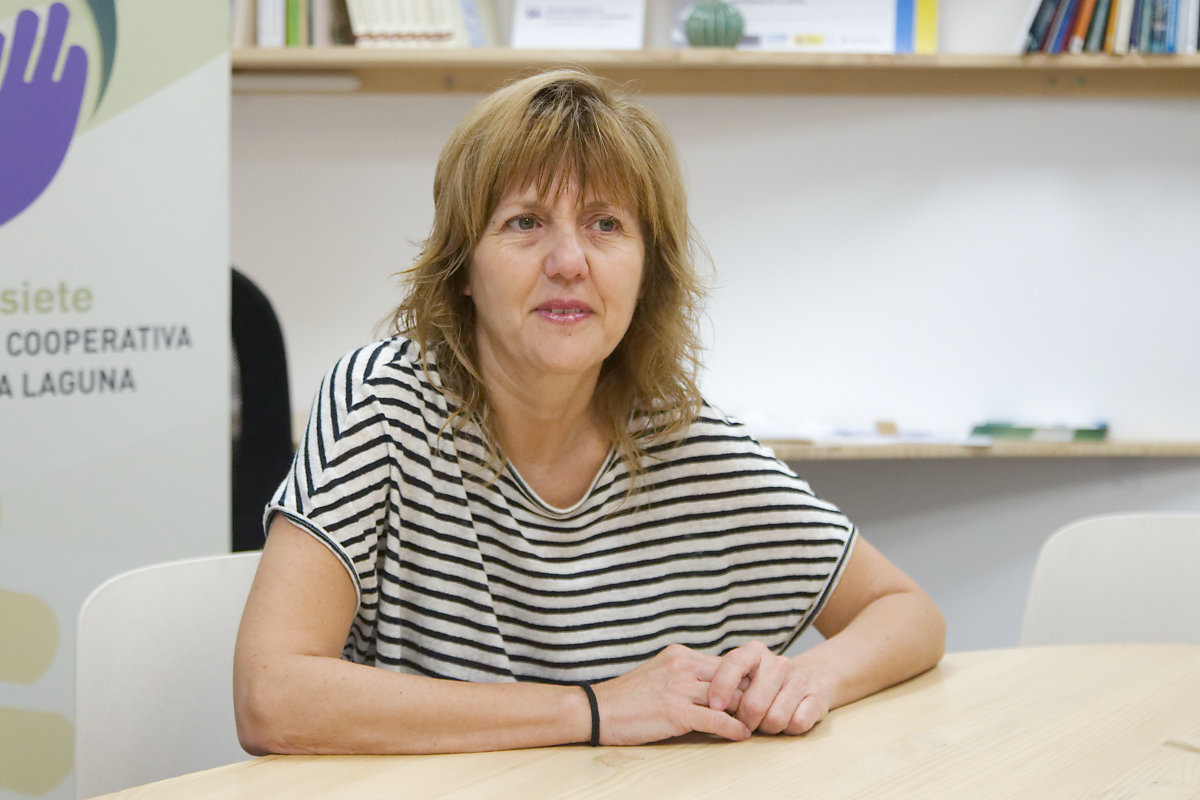
Inés Ruiz.
Teaching to become entrepreneurs
With the aim of fostering entrepreneurship from an early age and promoting values such as cooperation, responsibility and solidarity, Inés Ruiz, Professor Ruiz, a tenured professor and current dean of the Faculty of Economics, Business and Tourism, decided to implement the cooperative model as a methodology for the Teaching for Entrepreneurship (EPE) project. This initiative, promoted by the General Foundation of the University of La Laguna, began to take shape around 2008-2009, when Ruiz and her team took over the entrepreneurship support service and began to look for new ways to approach entrepreneurial education.
Ruiz was inspired by a project carried out in the Nalón Valley in Asturias, led by José Manuel Pérez Díaz, known as Pericles, who was recognized as a social entrepreneur by Ashoka, the world's largest social entrepreneurship network and a leading organization in social innovation. They decided to adapt this experience to the Canary Islands, giving rise to EPE, an initiative that introduces students to entrepreneurial culture through the creation and management of school cooperatives.
During a school year, students aged 9 to 12 work in teams to design, develop, and market products, which they then present to the public at a market. Throughout this experience, the students take on different roles such as treasurer, communications, or production; they request token loans, manage municipal permits, prepare financial statements, and, in the end, donate their profits to a non-governmental organization of their choice, thus fostering social awareness and community engagement.
“The cooperative offers a structure that teaches collaboration, consensus-building, and shared responsibility, which not only fosters academic learning but also interpersonal skills and strengthens community bonds,” explains Ruiz. Furthermore, the project has incorporated small elements that reflect the local context, such as the participation of older adults (grandparents) and the economic and financial analysis of the final results.
 Beyond practical experience, the EPE project has also contributed to scientific knowledge. In the research “Family support for the entrepreneurial activity From the study of young people in the Canary Islands, conclusions can be drawn such as the importance of the family environment in fostering youth entrepreneurship. For example, it is observed that, although only 30% of parents are inclined towards self-employment, this percentage is significant. Furthermore, many parents are optimistic when asked if they would be willing to support the idea of their children becoming entrepreneurs. This attitude seems to be influenced by previous entrepreneurial experience within the family and by the children's age, as they receive more support from their parents as they grow older.
Ruiz argues that cooperatives are not only important as educational tools, but can also play a fundamental role because they represent the collective effort of many people. “In an increasingly collaborative world, cooperatives offer a real alternative to the individualistic model,” he states. He further illustrates this point: “Instead of thinking, ‘I have the power because I have the information,’ we should focus on sharing and generating value together. When my environment improves, I improve too.”.
Currently, the EPE project has completed more than a dozen editions and is requested directly by schools, which have witnessed its positive impact. What began as an innovative proposal has transformed into a comprehensive educational strategy that fosters citizens committed to their community.
(This report is an initiative framed within the InvestigaULL Commemorations Calendar, a scientific dissemination project promoted by the University of La Laguna).
Scientific Culture and Innovation Unit (Cienci@ULL)

 Spanish
 English
 French