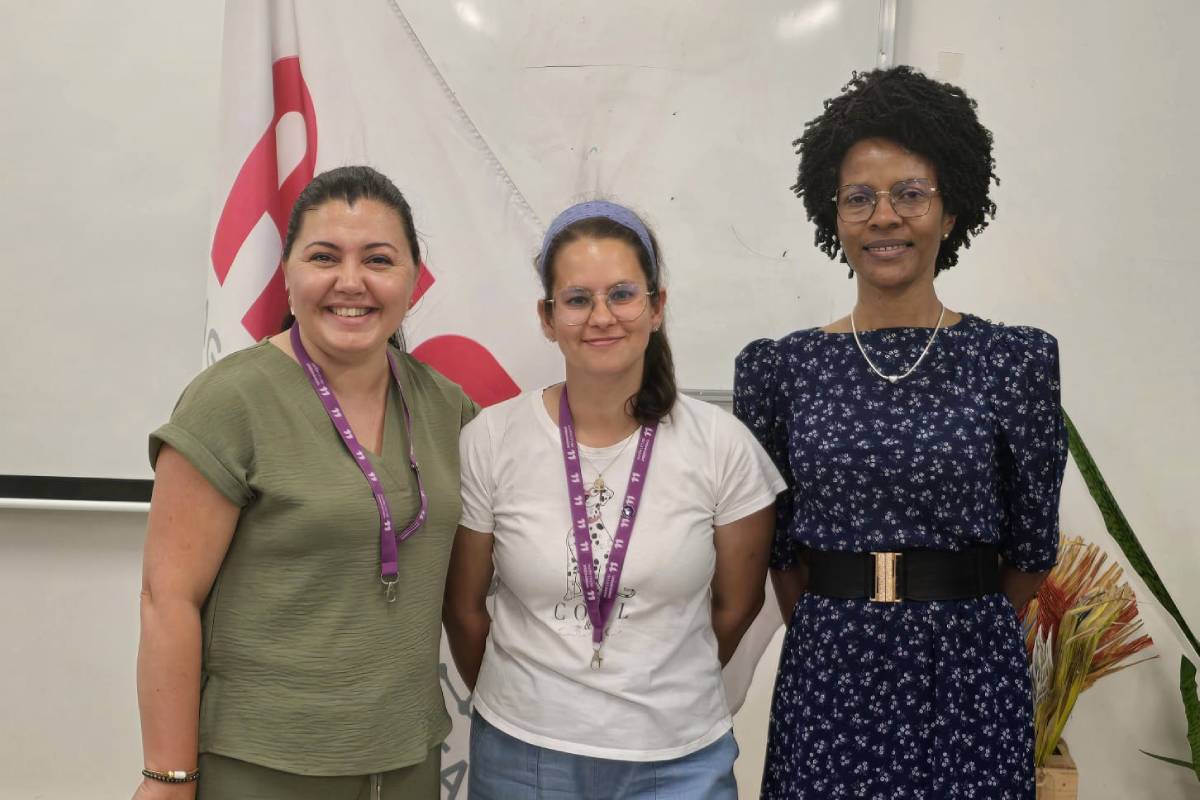
Two researchers from the University of La Laguna visited Praia, the capital of Cape Verde, in mid-June to conduct an initial assessment of the situation of young women with family responsibilities regarding entrepreneurship and access to the workforce, particularly in more vulnerable rural areas and outlying neighborhoods. Specifically, they traveled to the island. Matilde C. Díaz Hernández, from the Social Psychology Area of the Faculty of Psychology; and Yasmina Álvarez González, from the Area of Theory and History of Education of the Faculty of Education; who were accompanied by Carmelita Afonseca Silva, director of the Center for Research and Training in Gender and Family (CIGEF) from the University of Cape Verde,
During their stay in the city of Praia, the researchers conducted interviews with representatives of various public and private entities working in favor of Cape Verdean women, such as the Organização das mulheres de Cabo Verde; the Cape Verdean Institute for Equality and Gender Equity; the Associação Cabo-Verdiana de Luta Contra Violência Baseada no Género; and APIMUD, an entity that fights for the rights of women with functional diversity.
They also established contact with organizations that provide economic support through microloans, such as Morabi, a cooperative that promotes social empowerment, and SOLMI COOP, a non-governmental organization that works to promote social empowerment. In addition, they connected with two entities at the University of Cape Verde involved in entrepreneurship, employability, and student-led empowerment projects.
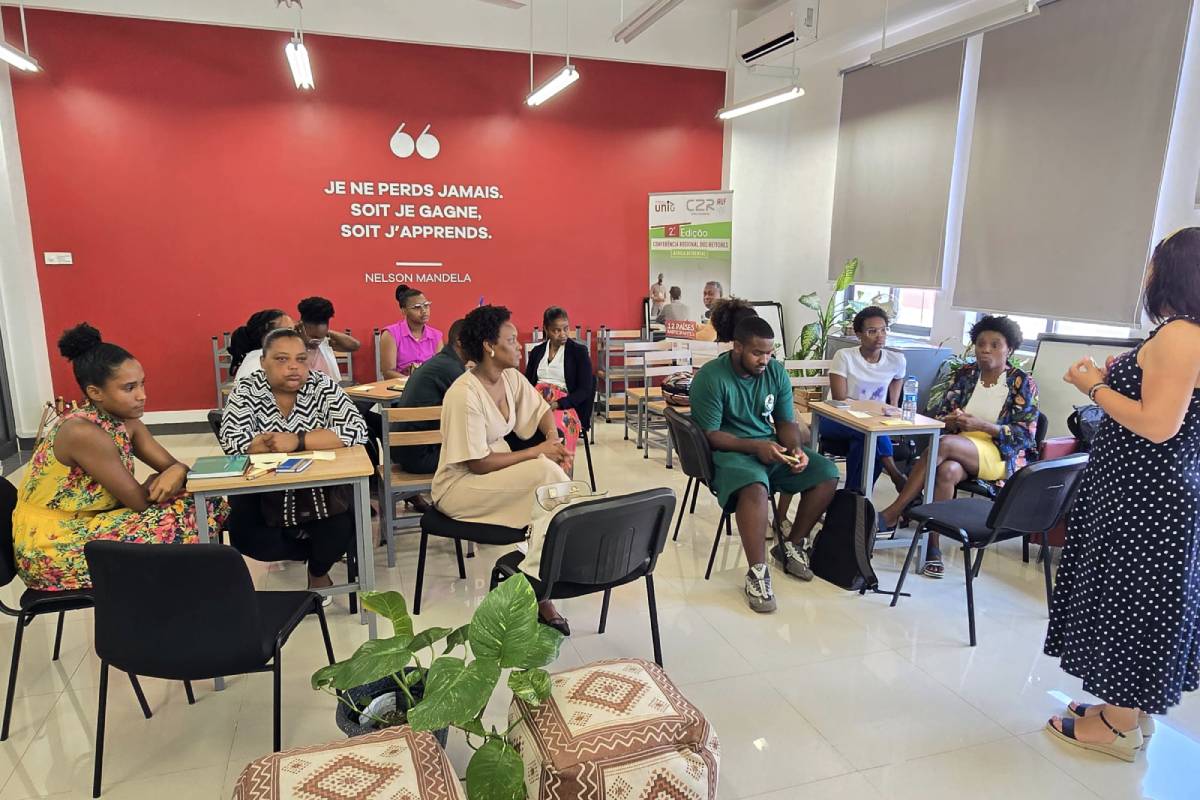
Workshop with students from the University of Cape Verde.
Another activity carried out by the researchers during their stay in Cape Verde was the delivery of a workshop on diagnosing the reality, with the participation of representatives of some of the aforementioned entities, as well as final-year students in the process of developing empowerment projects.
Following activities such as problem tree analysis, goal setting, and the development of alternative solutions to the identified problem, the workshop focused on working with women who are responsible for their families and require structural support for caregiving while they commute to work. It also addressed training in financial management and other skills, as well as the development of psychological aspects such as self-esteem, sex education, and mental health, among others. Another training module covered economic, business, and legal advice for starting a business as an employee.
This diagnostic work has been made possible thanks to the call for aid for carrying out workshops to identify university cooperation projects for development promoted by the Vice-Rectorate for Internationalization and Cooperation.

 Spanish
 English
 French