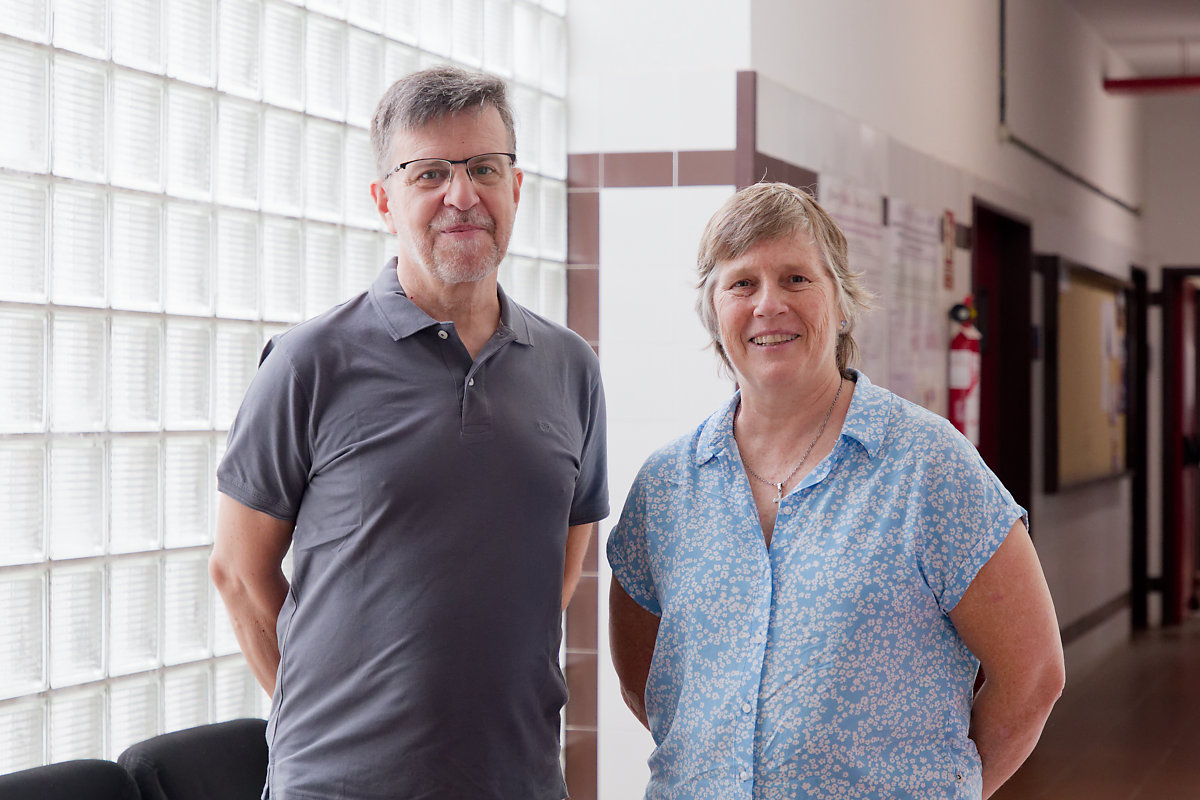
Professor and researcher Sonia Brühl from the National Technological University of Argentina (UTN) has been invited by the professor of Physical Chemistry at the University of La Laguna Ricardo M. Souto, to undertake a research stay at this academic center and delve deeper into shared lines of research. During her stay, she collaborated with the Electrochemistry and Corrosion group, attached to the Institute of Materials and Nanotechnology, and gave a lecture on plasma-assisted surface engineering to protect metal components from wear and corrosion at the Faculty of Science, which took place this week.
This visit is part of the Research and Teaching Staff Research Stay Grants program, promoted by the Vice-Rectorate for Internationalization and Cooperation, and linked to agreements with universities and educational institutions in countries receiving official development assistance. Brühl is a renowned expert in the study of materials, surfaces, and coatings from a physics perspective, and has specialized in surface engineering using plasma-assisted techniques.
The project developed within the framework of this collaboration between ULL and UTN proposes a multidisciplinary approach with the aim of understanding and improving the behavior of industrial steels in the face of the environment, in terms of degradation by wear and/or corrosion, as well as identifying surface modifications that optimize their performance.
 At the University of La Laguna, this problem is addressed from the perspectives of Physical Chemistry and Electrochemistry, while Brühl's team at the UTN applies methods specific to Physics and Engineering, such as plasma-assisted treatments and thin coatings, known as coatings, to modify the surface of the material. The ultimate goal is to increase the hardness of these steels and improve their resistance to both wear and corrosion, two complex processes that interact with each other and significantly affect the durability of materials.
For Brühl, collaboration between physics, materials engineering, and electrochemistry is key to advancing in this field, since steels, being alloys, and especially after surface modifications and the inclusion of new interfaces, exhibit particularly complex behaviors. Therefore, the joint work between the Electrochemistry and Corrosion group at the University of La Laguna (ULL) and the Surface Engineering group, a research team led by Brühl in Argentina, seeks to identify effective microscale modifications or treatments that can simultaneously combat wear and corrosion when materials are exposed to demanding environmental conditions.
According to Souto, one of the most important aspects of this collaboration is achieving a deeper understanding of the mechanisms that cause these degradation processes, studying them from the dual perspective of materials chemistry and physics. Through this integrated approach, the aim is to analyze both the surface and the internal structure of the material in order to better understand the factors that affect its durability.
Souto emphasizes the distinctly multidisciplinary nature of this collaboration. Although physics and chemistry share a broad common ground, the approaches each discipline adopts to address research challenges are highly diverse. This methodological diversity enriches the process and makes it an innovative experience within the field of materials. Added to this is the need for a close relationship with industry, which constantly demands materials better adapted to the specific conditions of their environment of use. This means that many solutions are not transferable from one context to another and require development in direct collaboration with the relevant sector to adapt to the specific environmental conditions in which they will be applied.
Since the central objective of the project is to delay the degradation of industrial tools and components as much as possible, the researchers point out that this is research with a high potential for applicability and technology transfer, relevant to sectors as diverse as agribusiness, petrochemicals, renewable energies or the development of biomaterials.
According to Brühl, material corrosion is a particularly critical phenomenon, as it often leads to “catastrophic failures,” since in many cases the defect remains hidden until the part stops working or breaks unexpectedly. Souto adds that degradation does not occur uniformly, introducing an even more complex and challenging component to materials research.
During his stay, Brühl will analyze and discuss with the Electrochemistry and Corrosion group the scientific results of various experiments carried out, as well as participate in the planning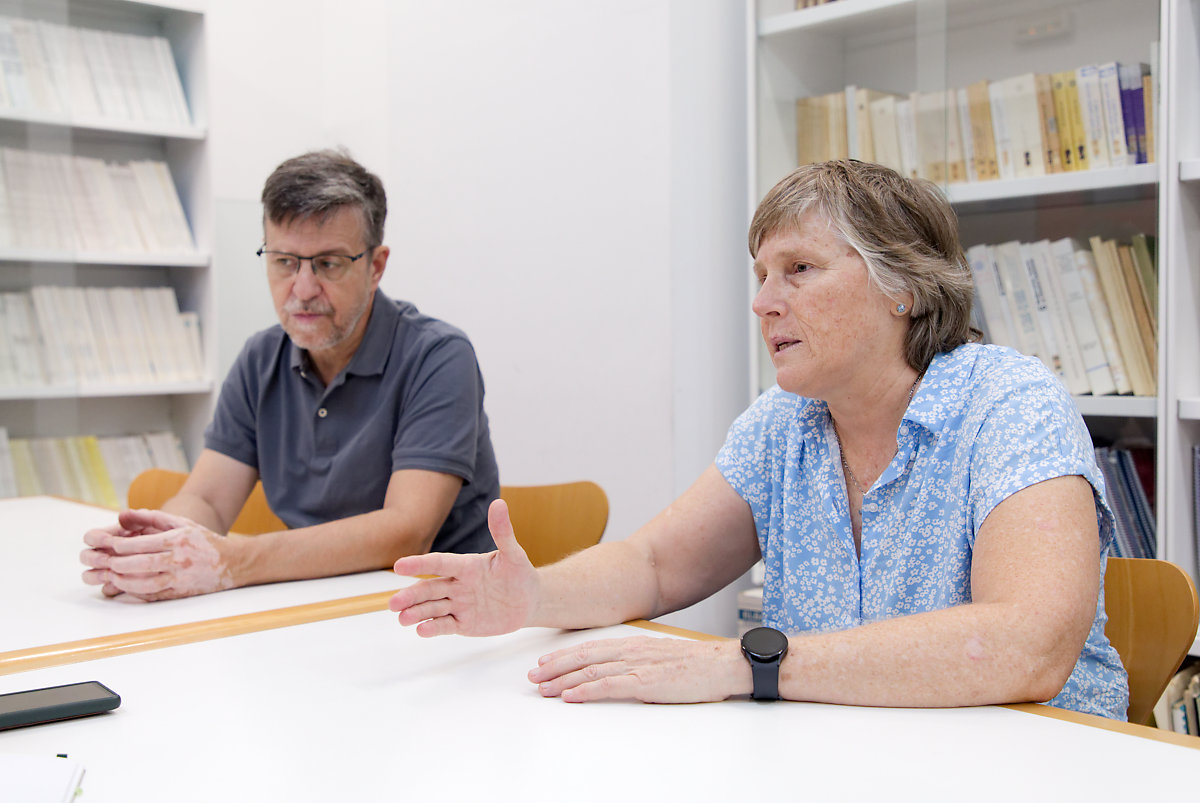 A joint meeting was held to discuss the next steps of the project. This stage will include defining new objectives and designing experiments for the second phase of the research. Both professors emphasized the value of these face-to-face meetings within international collaborative networks, fostered by the Grants for Research and Teaching Staff Stays program, stating that “nothing replaces the opportunity to talk and exchange ideas in person, and to directly observe how the team works in the laboratory.”.
This visit is part of a collaboration that began two years ago through a framework agreement signed between the National Technological University of Argentina and the University of La Laguna, which was recently renewed. This agreement led to an initial research project, and work is currently underway to consolidate a second phase. This is Sonia Brühl's first visit within the framework of this exchange, while Ricardo M. Souto has already visited the UTN twice.

 Spanish
 English
 French