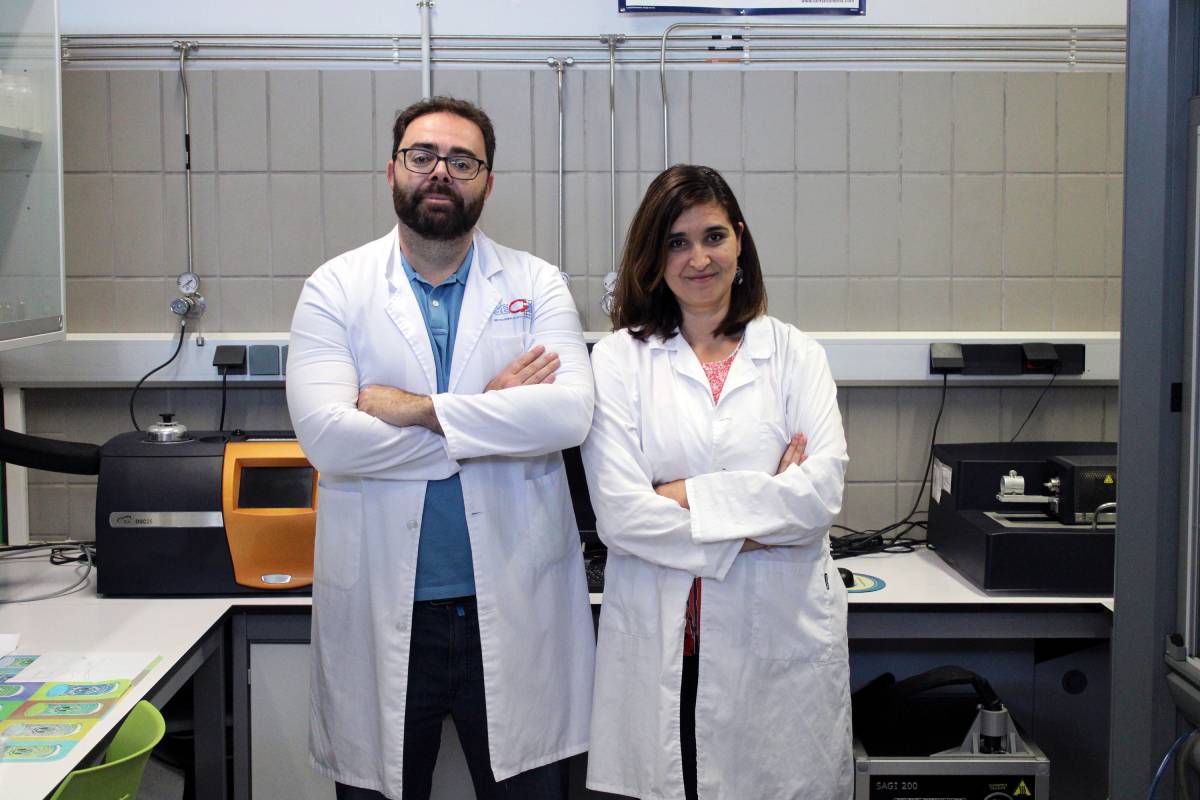
He General Research Support Service (SEGAI) The University of La Laguna provides scientific, instrumental, and technical support to both the university research community and external entities. One of its services is the Forensic Criminalistics Support Service, It has established itself as a unique platform in the Canary Islands by combining science, technology, and multidisciplinary knowledge to offer expert solutions to the justice system, citizens, and the business sector. “It is a service created to foster collaboration between different areas of SEGAI,” he explains. Rebeca González Fernández, jointly responsible for the service.
Its objective is to respond quickly and effectively to the demands of the expert field, providing technical reports that can be used in legal proceedings or as support for individuals who need to resolve complex situations. “It is an excellent forensic criminalistics service in the Canary Islands, available to anyone who needs it,” says Antonio Santos Delgado, its technician.
The team is prepared to identify, analyze, and verify facts that require technical evidence, applying scientific principles from disciplines such as chemistry, biology, physics, and materials science. “All of this is done with scientific rigor, ensuring reliable results to clarify the facts,” explains Santos Delgado.
Resources and applications
This unit draws on the technologies available in the SEGAI laboratories, which boast powerful and modern equipment. “The advantage of this service is that, although it doesn't have its own equipment, it can use all the equipment from the other SEGAI services,” the co-director points out. She also emphasizes that the staff is highly qualified, with the vast majority of technical personnel holding doctorates. Thanks to this, even if there isn't a specific unit to meet a particular need, qualified personnel can be found to perform the test from another unit or in collaboration with research groups.
The service has intervened in a wide variety of cases, ranging from document forgery to product fraud and technical disputes. They have performed comparative paper analyses to detect fraud and forgeries; mineralogical identification of precious and semi-precious stones; corrosion determination in metals; detection of contaminants and food and cosmetic fraud; voice analysis; scratch and tampering analysis; detection of hidden signatures and markings on documents and works of art; and art appraisals.
One of the cornerstones of the work is the exhaustive control of the chain of custody. From the receipt to the analysis of the samples, everything is recorded to guarantee the legal validity of the evidence. This even allows for the re-examination of tests years later in the event of counter-analyses.
Among its regular users are individuals with technical, property, or household problems; forensic experts and laboratories; law firms and courts; police forces and public administrations. “We serve individuals who, for example, want to know if some tiles are warped or if their house has aluminosis,” says González Fernández. “However, the bulk of our work comes from experts who need evidence for trials, and even from judges who require some type of proof,” he clarifies. In all cases, the results obtained can be used as technical evidence in legal proceedings or as private reports.
Access is simple. Just contact SEGAI and explain your case. From there, the team assesses the feasibility of the analysis and determines the best course of action. All of this is done while maintaining scientific rigor and professional ethics. “We study each case and evaluate how we can intervene,” says Santos Delgado.
It has funding from the University of La Laguna through SEGAI, as well as the support of programs such as the Canary Islands Development Fund, managed by the Government of the Canary Islands.

 Spanish
 English
 French