Throughout our lives, material objects come and go, the places we visit appear and disappear, and the people we meet come and go. What we retain from all these vital interactions are the lessons they taught us. We no longer have our first bicycle, but we still know how to ride. We've lost track of our first children's storybook, but we still know how to read. Education, which gives us the opportunity to fill our backpack with enduring wisdom, is our best guarantee for thriving in society, because we can lose all our material possessions, but not our knowledge. Constitution It states that education aims at the full development of the human personality, respect for fundamental rights and freedoms, and the promotion of democratic coexistence, tolerance, and individual liberty. Are these objectives being achieved?
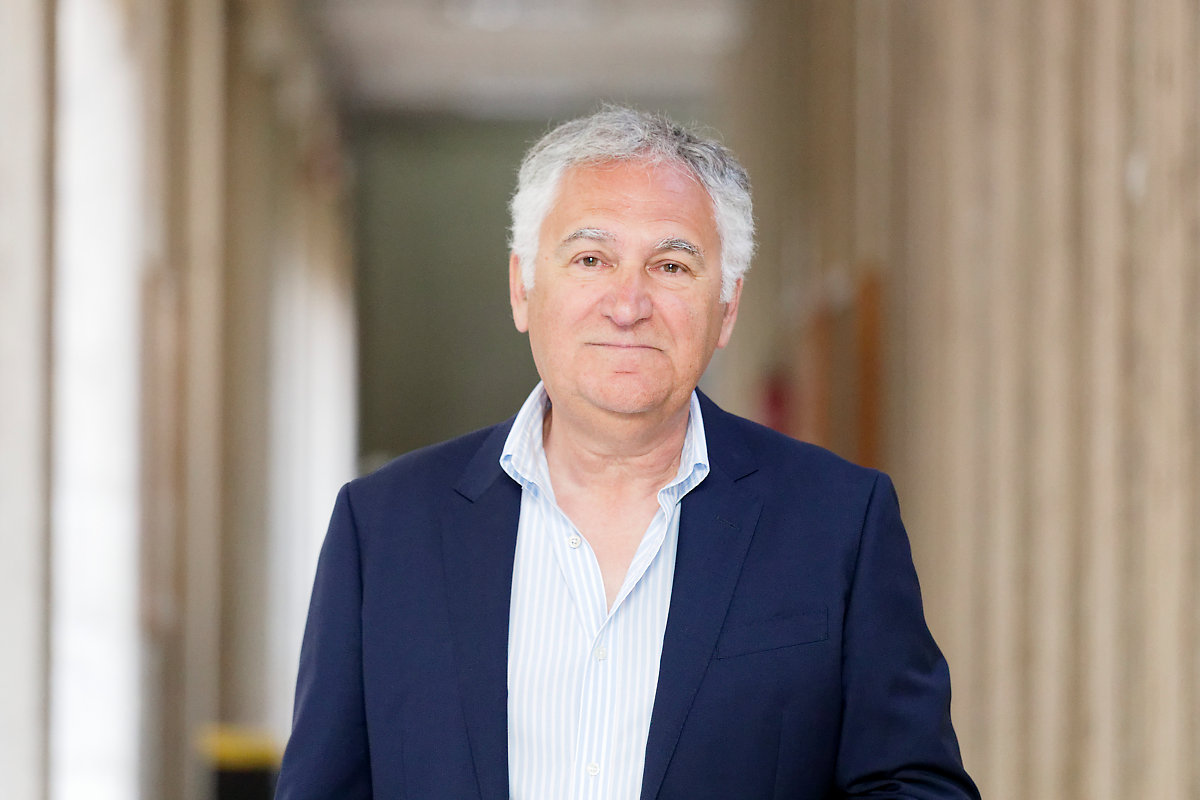
Our constitution also recognizes education as a fundamental right, a guarantee of equal opportunities in a democratic society. That is why it urges public authorities to guarantee access to quality, public, and free education. To learn how universal access to education has changed our society and the old and new problems it brings, we spoke with Leopoldo José Cabrera. The tenured professor of the Department of Sociology and Anthropology at the University of La Laguna has dedicated a large part of his career to studying educational inequalities and their impact on society.
 The PAU
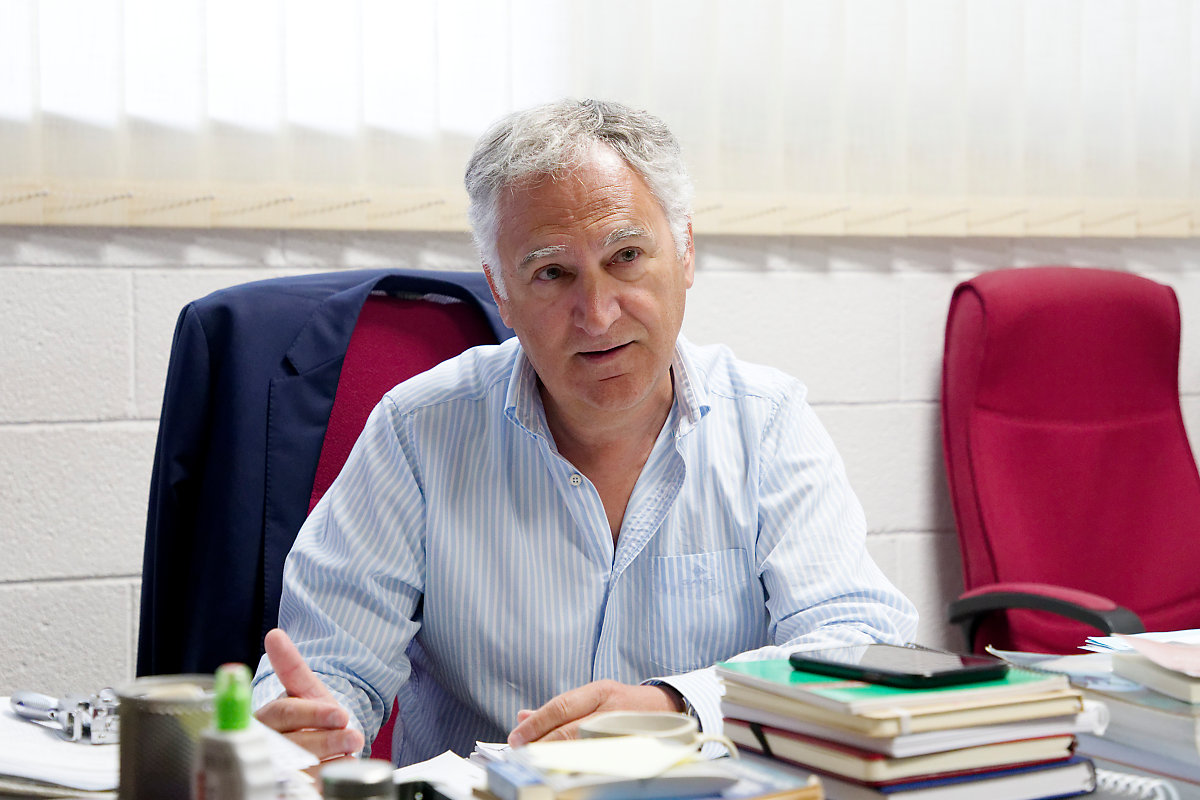
Every year, thousands of students across Spain face one of the most decisive tests of their academic lives in just a few days: the PAU (University Entrance Exam). An exam that, although it complements the high school grade, continues to generate debate. Cabrera reflects on these issues and issues a clear warning: the social structure weighs heavily on students' academic future.
According to the expert, the university entrance exam process isn't very different from other access mechanisms found in various areas of life. “Athletes who don't achieve a minimum qualifying standard don't go to the Olympics. The same applies to the civil service: entry is based on scores,” he points out. He explains that the university entrance exam doesn't replace academic records, but rather complements them within a system of limited places based on degree and university.
The problem, however, isn't just the grade, but the starting opportunities: “Public universities have limited resources. You can't simply increase the number of places. In highly competitive fields like health sciences, there isn't the capacity to accommodate all the applicants,” he warns. For him, the key lies in funding and the political decisions that determine the number of places and the resources allocated to higher education. One of the reforms underway is the implementation of a single university entrance exam (PAU) for the entire country. The intention is clear: to guarantee equity. But is that really possible in a country with marked socioeconomic and educational differences between its autonomous communities?
According to the sociologist, the debate is complex. He cites the comparison between Madrid and the Canary Islands as an example: “The enrollment rate in upper secondary education (Bachillerato) in Madrid is higher than in the Canary Islands. This means that more young people study at that level there. Here, however, with fewer students, those who do are more selective.” In other words, in regions with higher dropout or grade repetition rates, the students who manage to reach upper secondary education and take the university entrance exams (PAU) have already passed a preliminary screening. “There are fewer of them, but they are more competitive,” he asserts. A single exam, therefore, does not in itself guarantee equal opportunities: “If the social structure pushes many young people out earlier, those who reach the final exam may have a more resilient profile, but there are also fewer of them.” The differences in academic results between regions are not solely due to the education systems. Structural factors also play a role: income, families' educational level, employment status, and expectations. “Social origin is a determining factor. Not because children from humble families are less capable, but because they face more obstacles,” Cabrera maintains. He adds: “The Canary Islands, like other regions with lower average income, starts from a structurally weaker position. This affects performance and access to higher education.”.
The solution, says Cabrera, lies not in the family, but in educational policy: “We need intensive policies that compensate for the context. Involving teachers, offering more resources, more support… Only in this way can we counteract the weight of the social environment.” Another aspect the expert highlights is the performance difference between boys and girls. “Girls achieve better academic results, but they still perform worse than boys in mathematics. The opposite is true in language,” the researcher explains. And the most striking finding: “We conducted a study with an intelligence test and saw that the levels were the same for both sexes. There is no basis for thinking that one sex is better than the other in certain subjects. The problem lies in how it is taught, in biases, in the expectations we project onto students.” Inequality, he concludes, is not explained by individual ability, but by a set of intertwined factors—economic, social, cultural, and pedagogical.
The expert is clear on this: there is no determinism. “Schools have room to maneuver. A good teacher, a committed school, and a coherent educational policy can change many things. But that requires will, investment, and a clear strategy.” Meanwhile, the university entrance exams will continue to be a necessary filter, but not necessarily fair for everyone.
 The university and social mobility
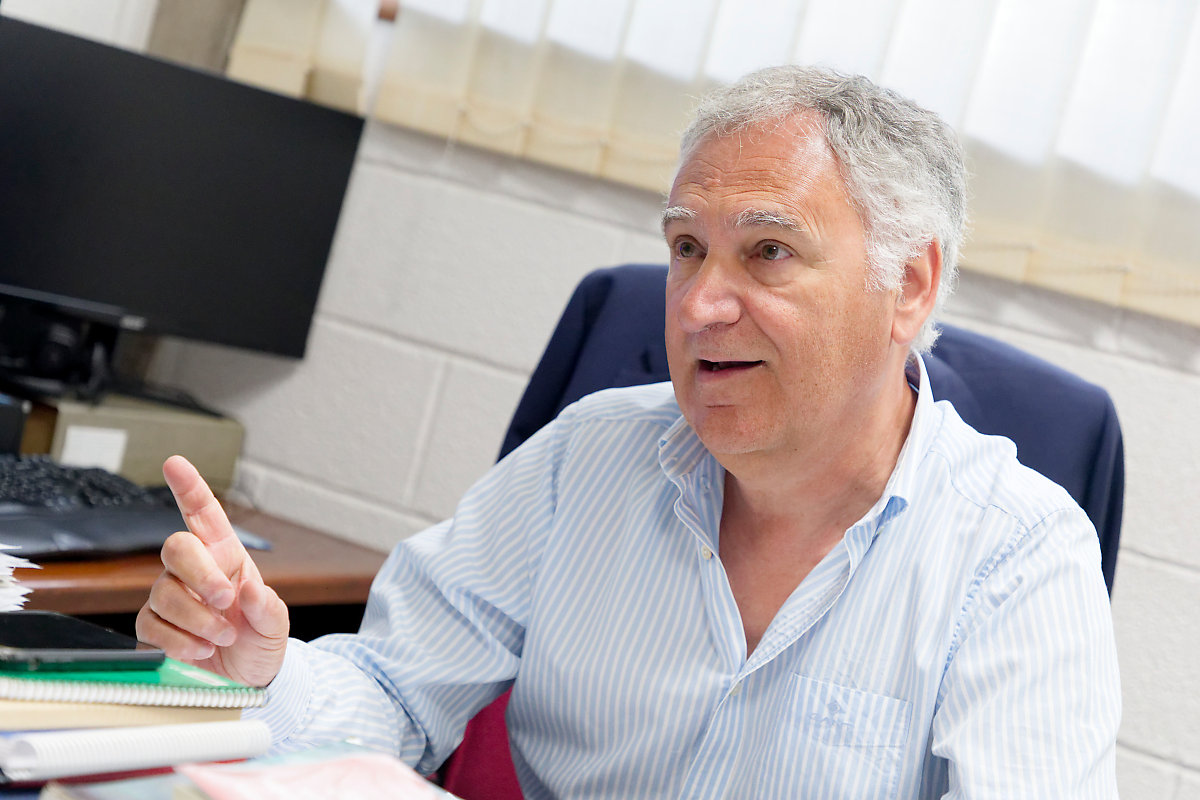
According to Leopoldo Cabrera, those born into disadvantaged backgrounds have three possible paths to break the cycle of poverty: education, the lottery, or elite professional sports. “Winning the lottery is obviously improbable. And the prospect of a Messi or a Pau Gasol emerging from a suburb is also unlikely. So, the most realistic path is education. There aren't many others.” The analogy with medicine is clear: there are no guaranteed cures. It's about social probabilities, not certainties. And within that statistical framework, education emerges as the only tool with an acceptable success rate for those starting from the bottom.
Another factor that decisively influences children's educational future is the role of mothers. "When a mother has a university degree and works, her involvement in her children's education is usually greater than that of the father," she states. She adds: "In single-parent households, in 901% of cases, the mother is the primary caregiver. That makes a difference." This pattern is especially relevant in communities like the Canary Islands, where the proportion of single-parent households—and in particular, single-mother households—is higher than the average. Structural poverty is intertwined here with family composition and gender, directly affecting the educational opportunities of new generations. Place of birth also plays a significant role. "Being born in the Basque Country is not the same as being born in the Canary Islands, or in a peripheral suburb of a large city. The environment shapes opportunities." In regions with less school segregation and better public networks, such as the Basque Country, a child from a low-income family is more likely to share a classroom with children from middle or upper-class families. And that has a positive ripple effect. “If you play chess with better people, you improve too. But if you're always at the lowest level, your ceiling is closer,” the expert summarizes. Territorial inequality thus becomes another obstacle to educational equity.
Today, access to university is easier than before, but not everyone succeeds. The chances of admission are still four times higher for upper-class families than for lower-class families, especially if both parents have education and job stability. However, even for the most privileged, expectations have their limits. A family in the 95th percentile of income—with the highest civil servant salaries—cannot expect their children to surpass that position. They can only equal it… or fall below it. Cabrera points out that statistics show that around 20% of those children will not reach their parents' status. This isn't physics, it's not determinism. It's social probability.
If two students—one from a high-income background and the other from a low-income background—share a classroom, teacher, and textbook, why do inequalities in their results persist? Shouldn't they start from the same point? The sociologist dismantles part of the initial argument. He rejects the romanticized or stereotypical image of working-class families where the child must care for siblings or cook due to parental absence. “Today, large families are a minority. Generally, we're talking about one or two children per household. Therefore, that type of domestic burden is no longer the norm,» he states. Where a structural difference is identified is in access to extracurricular resources. Higher-income families can afford private tutoring, language support, or activities that act as performance enhancers. However, he clarifies: “The education received at school should be sufficient for everyone, regardless of their family background.”.
The expert also questions the common belief that private education guarantees better results. In fact, he points out how, upon reaching university, preferences are reversed: “Families prefer their children to study medicine in public universities. It’s more competitive. It’s more prestigious.” Unlike other educational levels, true meritocracy prevails in public universities: access depends on academic record, not on economic capital or the parents“ profession. ”There’s more democracy in university access. You can inherit wealth, but you can’t inherit your medical exam score.”.
The pressure some families exert on their children to achieve certain academic goals can be counterproductive. “Many parents become frustrated if their children don't go to university, even if they have other aspirations. And that's not right,” she warns. She points out that there are technical professions and trades that can offer status and well-being without a university degree. “Social standing doesn't depend solely on education. It also depends on how others perceive you.” In the debate about equal opportunities, there are invisible factors that profoundly influence the academic and personal development of young people.
 An inequality that begins with the calendar
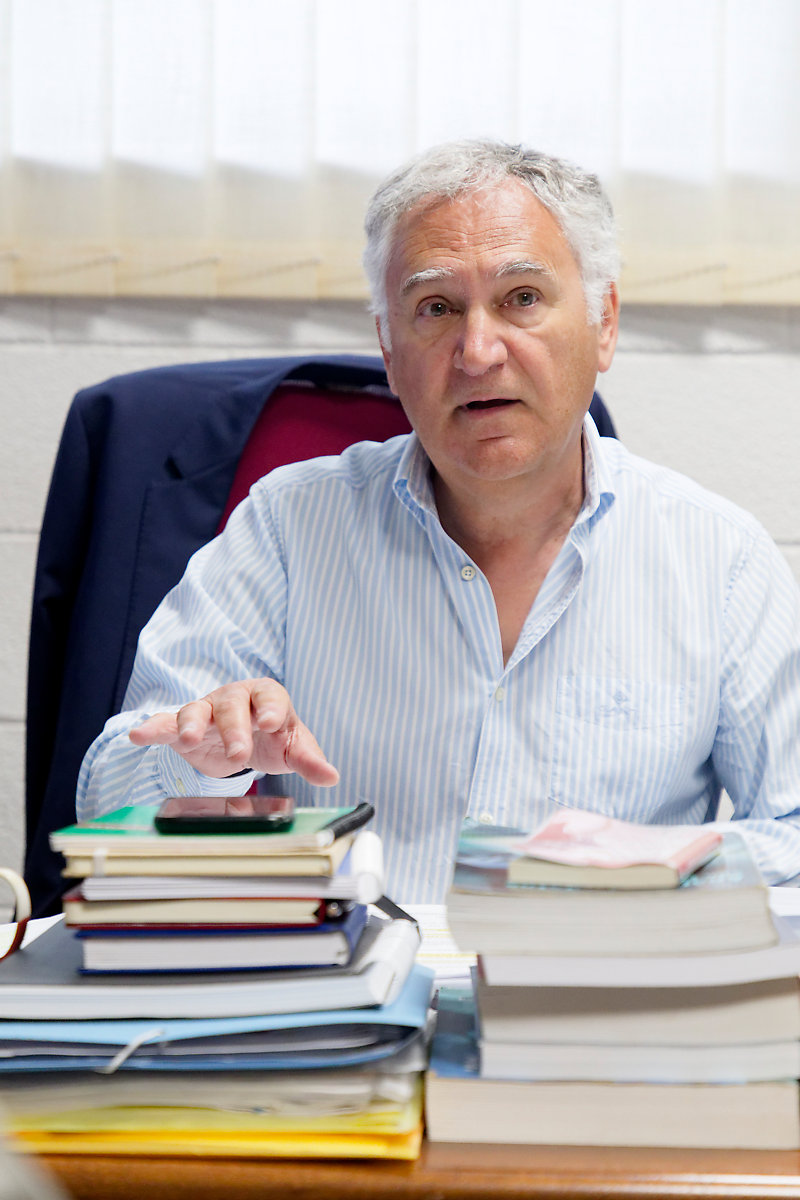
Beyond economic status or the cultural capital of families, birth month and participation in sports can make the difference between success and stagnation in the education system. This is the argument put forth by Leopoldo Cabrera, who, based on his experience and analysis, paints a complex picture of structural inequalities, some as surprising as they are persistent. "We know for certain that students born in the last quarter of the year have worse academic performance over time." This disadvantage, which begins in the early years of schooling, translates into a greater likelihood of repeating a grade and has repercussions throughout their educational journey.
The problem, he emphasizes, lies not with the families or the students, but with the very design of the education system. "It's a matter of school demographics. It's not about compensating with labels or separating students, but about redesigning a system that penalizes those born later in the year," he argues. This observation connects with research in the sports field, where it has been shown that most young people who reach professional levels in disciplines like basketball are born in the first few months of the year. Those born later are left behind: "They lose their enthusiasm, they aren't selected, they don't play. It's not a lack of talent, it's a lack of opportunity.".
According to the sociologist, the responsibility doesn't fall solely on public policy. "The effort must be collective," he insists. Families, schools, teachers, and the community at large all have a crucial role to play in improving academic performance and reducing inequalities. And while institutional investment is essential, so is citizen engagement: "In the Canary Islands, we need this collective effort, not just political, but from the entire population. And it must begin in primary school, not when the problems have already taken hold in secondary school." The focus, however, shouldn't be exclusively on avoiding school failure at all costs. "It's not about handing out passing grades, but about improving the educational level and inspiring students with a passion for learning." And that requires changing the narrative: the goal can't be solely future financial gain. "No one can guarantee their future income, not even with a university degree. Some degrees offer fewer job opportunities than certain technical professions.".
This approach challenges a deeply ingrained idea: university as synonymous with success. "It's not right for a parent to call their child a failure for not going to university. There are equally respectable professions with equivalent incomes. Being an electrician or a plumber doesn't imply less social value," he points out. And he reminds us that social standing depends not only on the individual but also on how others perceive them. This pressure, moreover, can generate frustration. "Sometimes parents project unattainable goals onto their children, without respecting their own aspirations. That's not fair," he laments. In his case, he admits, he could have studied Medicine, as most of his classmates did, but he chose another path. "I didn't see myself in that environment. The prestige of a profession cannot be imposed.".
Among the factors that help generate this sense of belonging and motivation is sport. "Sport builds a sense of community and fosters a common goal. That improves educational outcomes," he says. And that community spirit should also extend to classrooms and society. Culture also plays a key role. "My leisure time is cheaper because I enjoy reading. I buy books like others buy tickets to see Coldplay or the French national team," he says with a touch of irony. But behind that choice lies a reflection on income and autonomy: "Being able to choose how to live has as much to do with one's level of education as with one's economic status.".
Equal opportunities are not a starting point, but an ideal to which we must aspire through concrete actions. And although not everyone will be able to reach the top—"not everyone can be a doctor or a university professor"—society's mission, Cabrera concludes, is to build a system where talent and effort do not depend on the chance of one's birthplace or the month in which one is born.
Communications Office

 Spanish
 English
 French