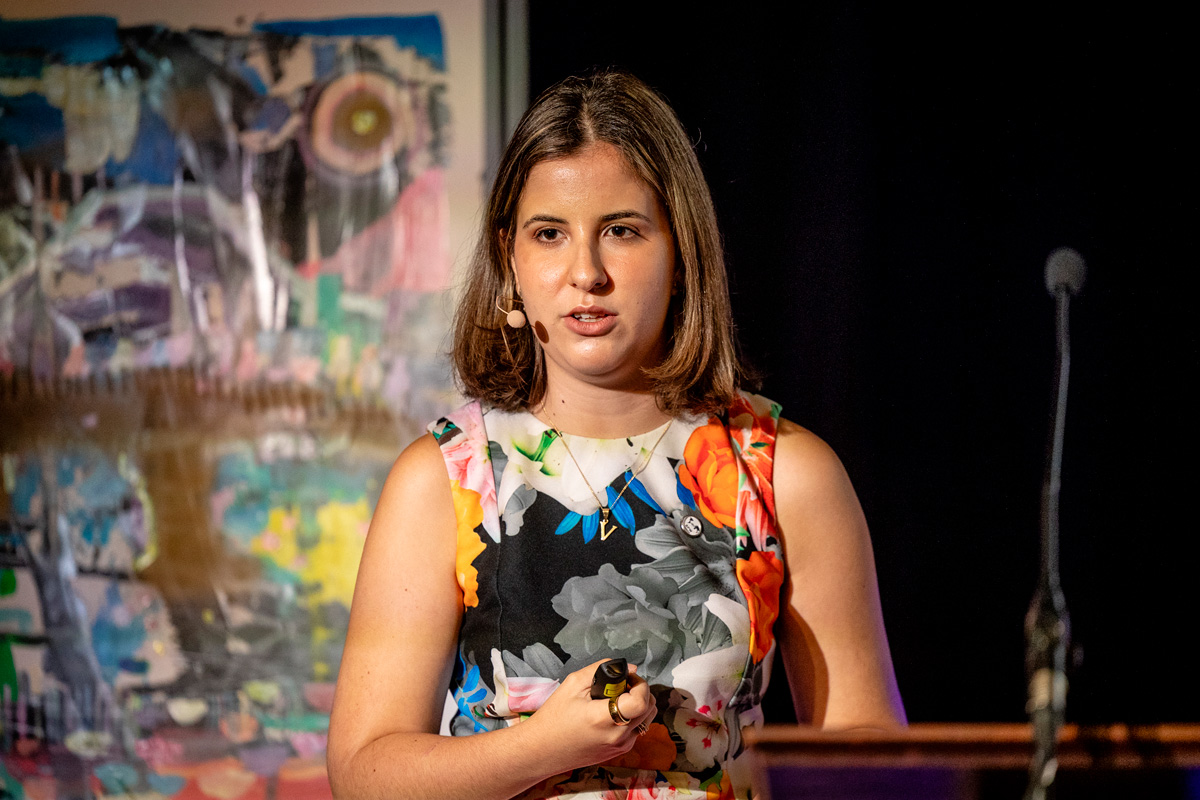
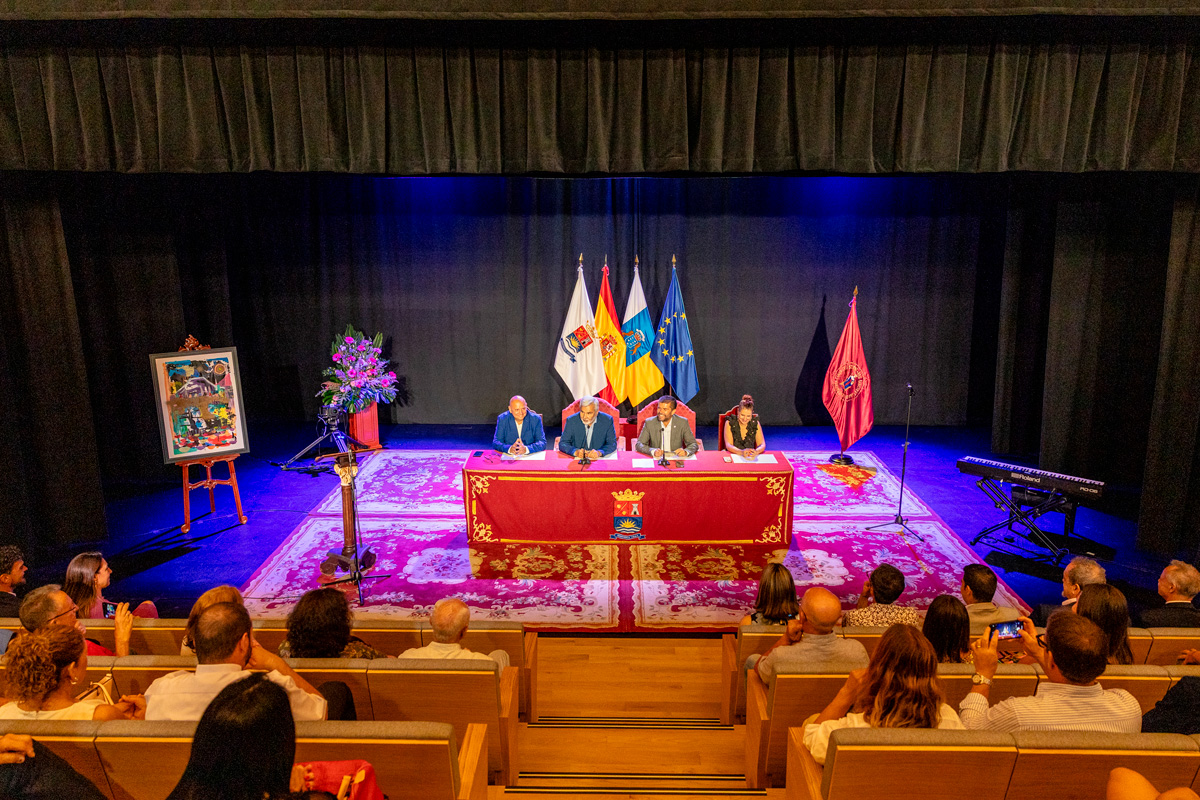
The Adeje Summer University Today, Friday, July 18th, the opening ceremony of its thirty-second edition was held, featuring public policy specialist Victoria Ballesteros as the inaugural speaker. Her presentation focused on the concept of "multiculturalism," which is precisely the theme that structures the program of the summer courses in 2025. "Multiculturalism is not a destination, it is a continuous process of negotiation, care, and co-creation of the world we share," the speaker explained in a presentation that championed the richness of mutual understanding between cultures.
Previously, the event was formally opened by the rector of the University of La Laguna, Francisco García, and the mayor of Adeje, José Miguel Rodríguez, and also featured a musical performance by Pablo Bello and Candelaria Hernández, a student and teacher from the Municipal School of Music of Adeje, respectively.
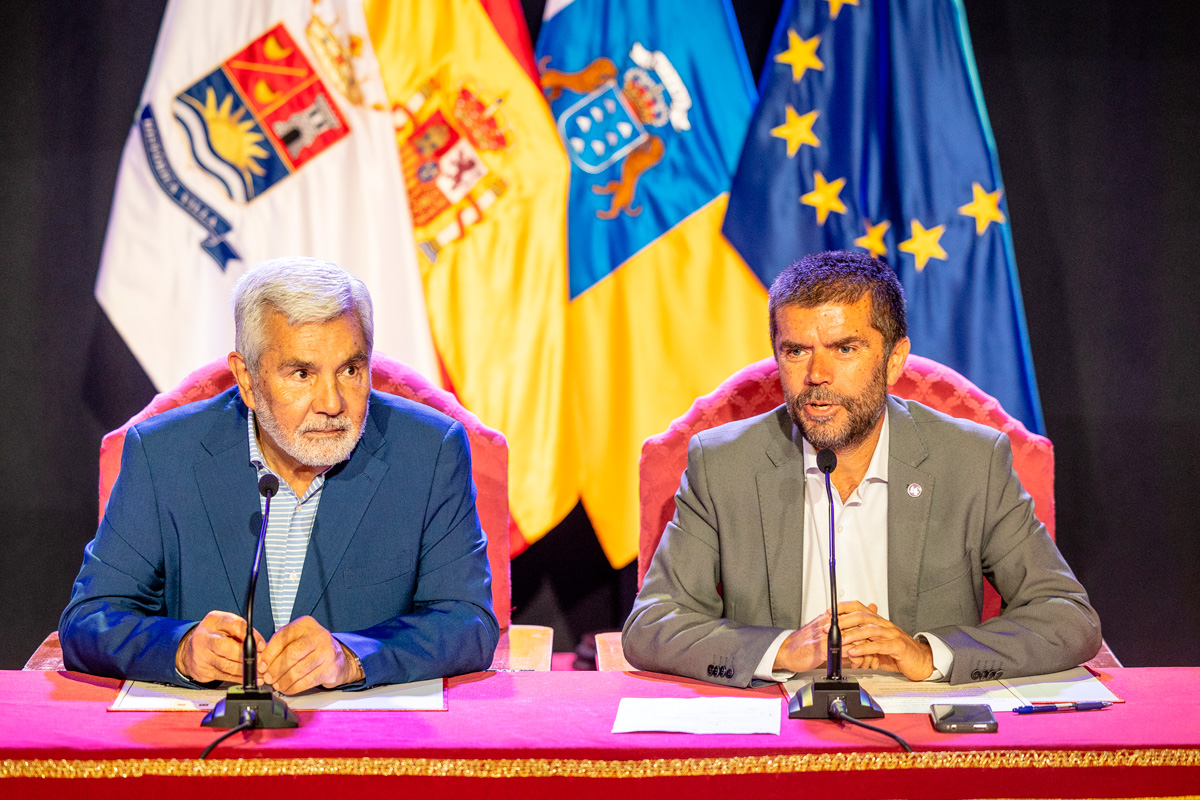 The rector pointed out that the Adeje summer university is the longest-running in the Canary Islands thanks to its ability to adapt to a changing environment. For example, this year's program features a new two-day course model with an online component, and for the 2026 edition, they are exploring the implementation of micro-credentials to attract working professionals, within the framework of lifelong learning. "Adeje has always been a laboratory for university extension because it has always been at the forefront of change.".
Regarding multiculturalism and its challenges, such as immigration, García recalled the recent words of the High Representative of the African Union, Carlos Lopes, during his address at Campus Africa, in which he advocated for an “honest conversation” about migration based on “common sense, prudence, and data.” And the data, García pointed out, demonstrates that immigration “is not an African phenomenon, as some would have us believe, since only 141% of migrants come from that continent. It is also false that there is a correlation between immigration and crime,” he added.
For his part, the host mayor highlighted the satisfaction his municipality feels that the opening speaker is a native of Adeje and reflected that figures like Victoria Ballesteros or the musician Pablo Bello, who had just spoken, are examples of the effects of the university's presence in the south, "which has facilitated a more conducive environment for personal commitment and has allowed these young people to settle into society in a more active way," compared to other times when talents like theirs went undeveloped or emigrated.
Rodríguez Fraga pointed out that his municipality was rich, not in terms of hotels and other infrastructure, but in terms of its people. He clarified, however, that economic activity, which in his case is embodied in the tourism sector, is essential for personal flourishing. Regarding the Summer University, he noted that its 450 enrolled students demonstrate its continued success, despite the general decline in such educational programs. He also cited the adaptability of this educational initiative as one of the keys to its longevity.
 Multiculturalism in action
The Councillor for Culture, Sports and Education, Adolfo Alonso, was in charge of introducing the speaker, highlighting that this is the first time that a person born in Adeje has starred in the event and, in addition, highlighting that Victoria Ballesteros is the youngest inaugural speaker that the Summer University has had.
She began by reflecting that she doesn't like to talk about a "globalized" world and prefers the adjective "intertwined" to explain the many kinds of relationships that exist between people all over the planet, as it's a term that better reflects the dynamism of these constant connections. This network brings with it challenges, problems, and cultural conflicts, but also benefits, innovations, collaboration, and development. "That's why it's the great theme of the 21st century.".
She differentiated between passive multiculturalism, in which identities coexist adequately but do not go beyond mere understanding, and active multiculturalism, in which there is a dialogue between cultures guided by a “strategic leadership” that she characterized at another point in her speech with three main features: cultural awareness, which is knowing who you are and what your beliefs and even prejudices are; relational adaptability, which is knowing who you are talking to; and strategic empathy, which is understanding the other person.
She explained two metaphors that account for the two major models of multicultural coexistence discussed in the United States, where the speaker resides and was educated: the “melting pot” Or “puree,” in which different cultural identities merge to create a new one where no trace of the originals remains, and which for a long time was the preferred model: immigrant families from different backgrounds merged into a single American culture. Now another model is preferred, the “salad,” in which cultural identities are the ingredients that create a new dish, but without losing their original characteristics. There is unity, but also differences.
Cultural conflicts are inevitable, and the speaker believes it's essential to address them. Just as families and couples sometimes have "awkward conversations," cultural differences are also bound to arise. This will create conflict, but if handled appropriately, it will ultimately strengthen the relationship through honesty and understanding.
 The current xenophobic climate in the United States is largely due to the fact that the dominant culture represented by Donald Trump has failed to engage in those "uncomfortable conversations" with the Latino community and other communities. This lack of mutual understanding has led to a fear that one group will impose its culture on the other.
The data supports the effectiveness of multiculturalism; studies indicate that, in the business world, multicultural teams made 871 times better decisions than non-multicultural teams, and that more diverse companies are 361 times more likely to outperform their competitors in profitability. “Therefore, if someone tells you that multiculturalism isn't important and human-centered arguments fail to convince you, this data is there to defend it,” he concluded.

 Spanish
 English
 French