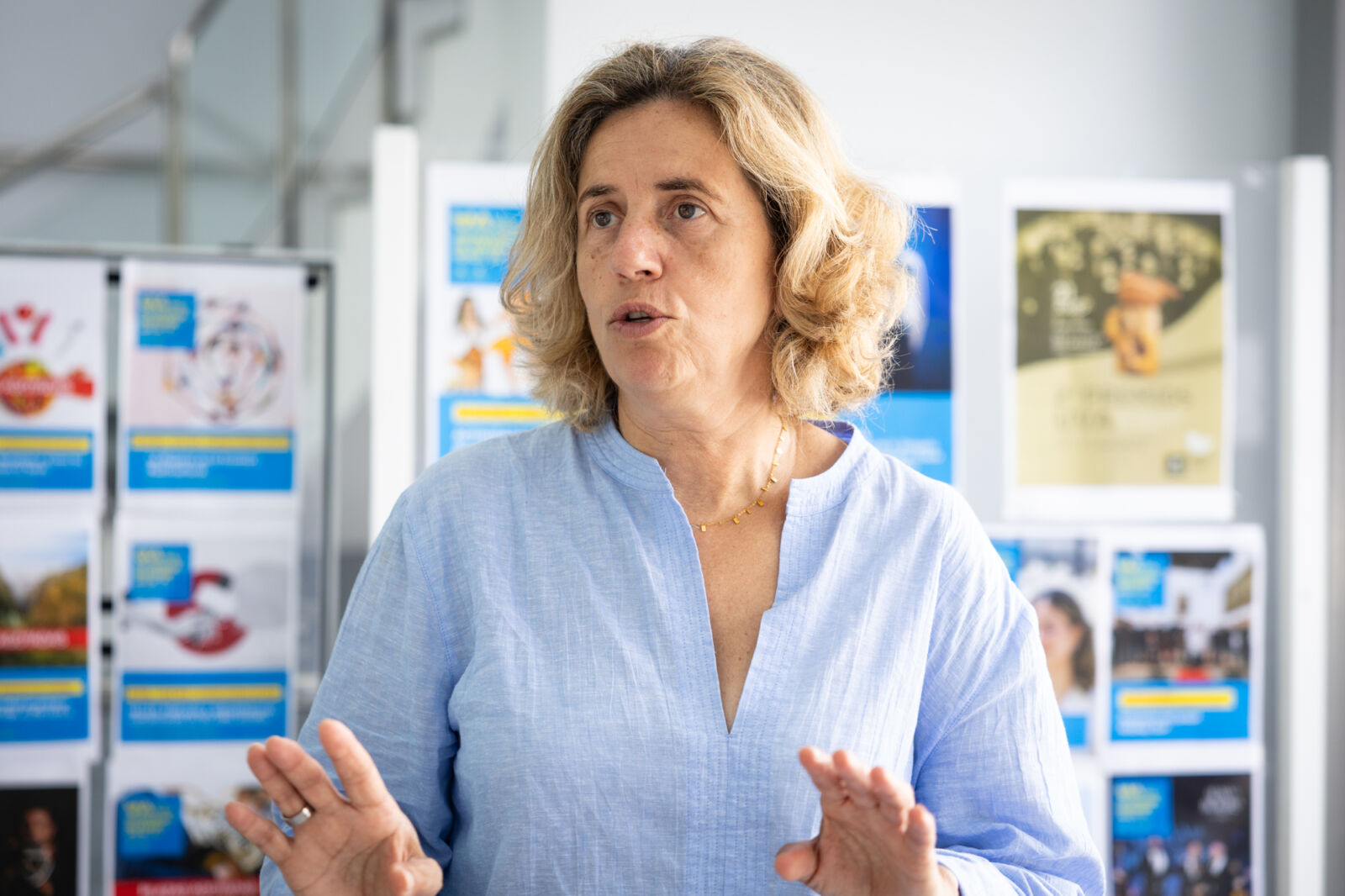
One of the courses of the Adeje Summer University (UVA) The course that has filled all its places is “Family Intervention Strategies to Enhance Well-being in Children with Special Educational Needs,” led by Professor María Carmen Rodríguez Jiménez of the Department of Didactics and Educational Research at the University of La Laguna, with teaching support from Irene Puerta Araña and Davinia Gutiérrez Martín. It is geared towards professionals in education, psychology, and guidance counseling and addresses intervention models for this type of student. The expert believes that it is essential to have professionals involved, but also to have greater participation from families: “We need to explain things to them, give them strategies and tools to use at home: at bath time, mealtimes, in the park, etc.”.
The session on Monday, July 21st, was more theoretical, addressing the different types of families that exist; the entire process of denial that parents go through until they accept that they have a son or daughter with characteristics different from other children; and the more practical part began, which will continue on Tuesday the 22nd. The course covers different cases, from autism spectrum disorder to hearing impairment or ADHD, explaining in each case how therapy would be carried out. The course had 20 places, since working on all these intervention programs requires time with each student, and a larger number of participants would compromise the quality of the training.
Rodríguez Jiménez explains that the concept of family has changed and now goes beyond the traditional model of a mother and father: “There can be families with two mothers or two fathers, single-parent families, separated families, blended families, foster families… There are up to seventeen types,” she points out. And each one has its own peculiarities and needs, which are added to those of the specific situation experienced by the child who needs help. All of these are elements that must be taken into account when designing the intervention. “The idea of the course is to give families the tools to empower them so they know how to meet the needs of these children.”.
Furthermore, it's important to consider that these problems, which initially might seem to only affect the child, can ultimately erode the family unit. “When a child is born with problems or some type of disability into a family, problems begin within the couple. There's a period of denial, followed by a time when the family starts to react. Therefore, close support from all the professionals involved is crucial to try to unite the family and ensure that all members understand how to care for the child born with this disability.”.
In addition to the family's support, a team of professionals from the healthcare and education sectors must be involved: psychologists, school counselors, teachers, social workers, and speech therapists, who together can address each child's specific needs. "And above all, there's the emotional support for the family; that's the most important thing. And if the child has siblings, we need to guide the parents on how to support the other sibling, who will likely feel left out throughout this process. We have to try to ensure that the family has a good quality of life," not only for the immediate family but also for everyone around them: grandparents, aunts, uncles, and cousins must also understand how to support the child and have the tools to help them in their daily life.
Rodríguez Jiménez explains that the course primarily covers programs addressing hearing impairment (although they can be applied to other conditions) and the Hanen Program, which focuses on family-centered therapy. “These are the two main working philosophies, and they are very important, because while we have child-centered therapy, which is excellent, we also have family-centered therapy.”.
Therefore, the course director emphasizes the importance of greater family involvement: “The current approach is for children to attend the sessions, where the children are treated, especially in speech therapy or psychomotor skills, while the parents remain outside. At the end of the session, they come in and are informed about the work done. But the crucial thing is for the parents to be present,” she insists. “In other European countries and in some parts of Spain, this type of intervention is already gaining ground over traditional clinical sessions.”.

 Spanish
 English
 French