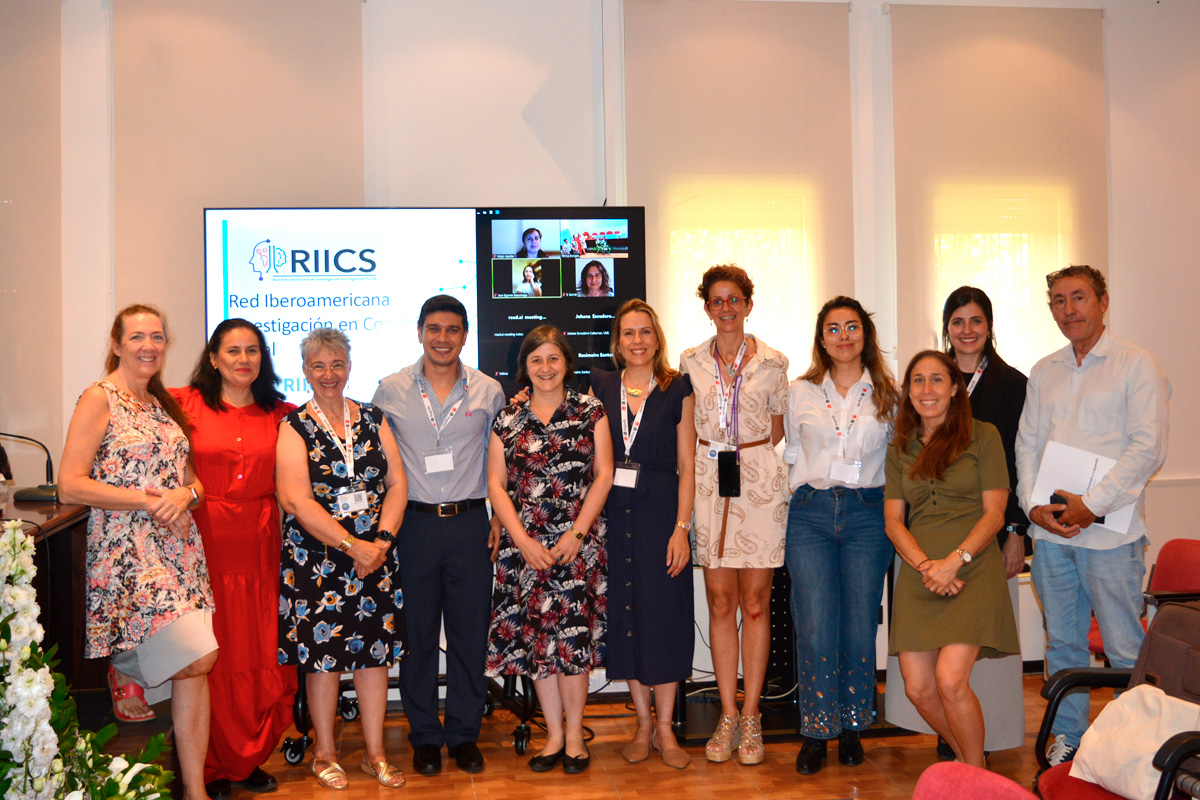
The Faculty of Psychology and Speech Therapy The University of La Laguna was today the setting for the official presentation of the Ibero-American Network for Research in Social Cognition, a scientific initiative that integrates 50 researchers from 23 universities in ten countries, with the aim of advancing knowledge about neurodevelopmental and affective disorders in children and adolescents from an interdisciplinary perspective and with clinical, educational and social application.
This network is envisioned as a sustainable structure that links research with early intervention, focusing on the development of culturally adapted tools and the use of emerging technologies such as artificial intelligence. The Vice-Rector for Internationalization, Inmaculada González, presided over the institutional event, emphasizing that networks like this are essential because they “contribute to building healthy societies, promote peace, and pave the way for academic cooperation at a time when working together is more necessary than ever.” She also underscored the “effective and real support” of the University of La Laguna for this network, which was presented within the framework of the XI European Congress of Methodology (EAM), which is being held this week at this academic center.
The International Network for Social Cognition is defined by its transdisciplinary approach, integrating fields such as psychology, neurophysiology, genetics, and physics, with a shared perspective on the processes that shape social cognition throughout life. The network's representative in Mexico, Bernarda Téllez Alanís, maintains that social cognition is studied from different disciplines "not only to compare, but also to understand cognitive variability across the lifespan." She added that the network enriches the Ibero-American scientific ecosystem through a horizontal approach that bridges academia, clinical practice, and the social sector, "working with scientific evidence adapted to each culture.".
For her part, África Borges del Rosal, academic promoter of the network and professor at the University of La Laguna, emphasized the importance of carrying out this collaborative work, given its significance for the advancement of science. She highlighted the activities being developed within the network (the creation of a book on social cognition, the publication of a monograph in a scientific journal, and the organization of the first congress of the Ibero-American Network for Research in Social Cognition in 2026).
“Transversality is fundamental because it allows us to relativize, advance, and investigate with an integrative vision,” he noted, expressing his gratitude for the involvement of researchers from various Ibero-American countries. He also thanked the University of La Laguna (ULL) for its support in raising awareness and for its backing at this international presentation of the network. Wilmar Pineda Alhucema, director of the network and researcher at the Simón Bolívar University in Barranquilla, Colombia, emphasized the scope of the project, which already includes the participation of Colombia, Mexico, Argentina, Bolivia, Costa Rica, Brazil, Chile, Ecuador, Spain, and Portugal. “We study how we interact as a society, how interculturality influences us, and how we can conduct research in common languages such as Spanish and Portuguese, facilitating the creation of tools adapted to our realities,” he explained. The main mission, he stressed, is to transform the study of social cognition in Ibero-America, connecting science, health, and well-being.
Finally, the Dean of the Faculty of Psychology and Speech Therapy, Juan Manuel Bethencourt Pérez, expressed his appreciation that the event was held at the University of La Laguna and noted that these types of initiatives strengthen the faculty's international standing, "generate research synergies, and enhance the transfer of knowledge to clinical, educational, and social settings." With this presentation, a network was officially launched that aims to have a real scientific and social impact, with results applicable to improving the lives of children and adolescents, available on its website. digital platform.

 Spanish
 English
 French