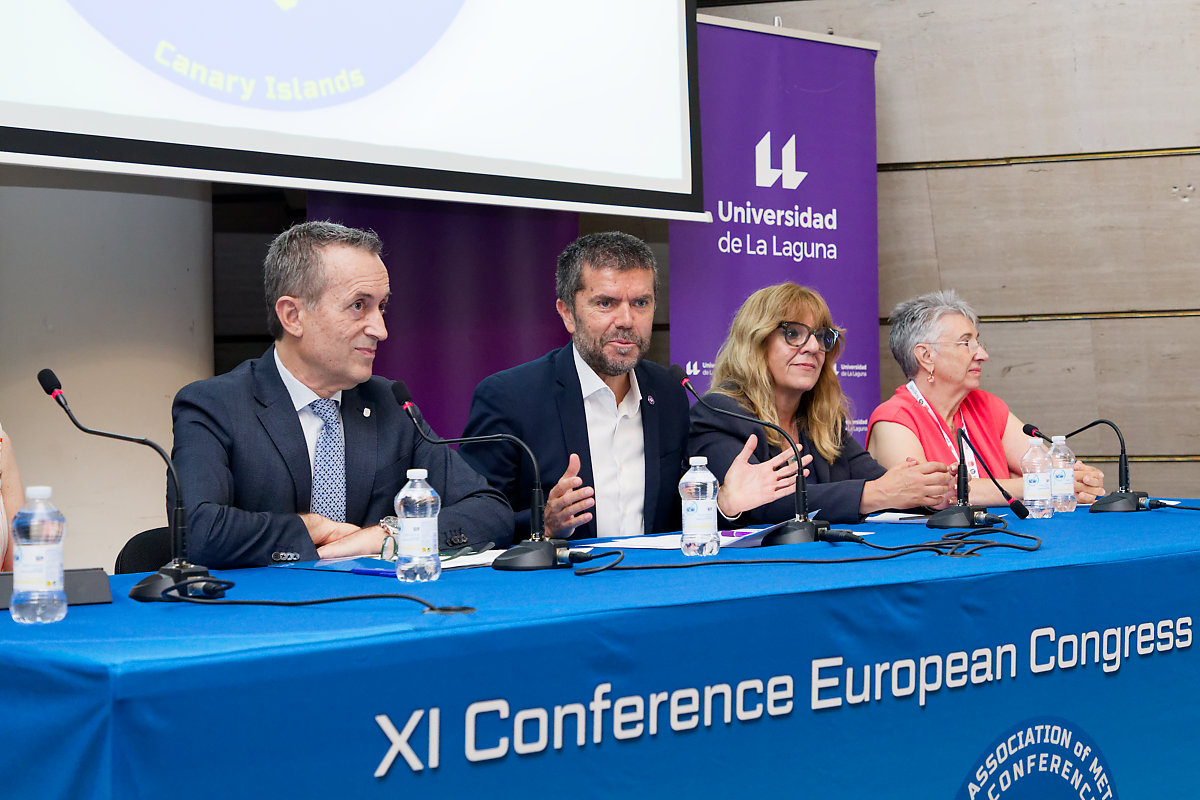
The auditorium of the Faculty of Social Sciences and Communication at the University of La Laguna hosted this morning the official opening of the eleventh edition of the European Congress of Methodology, The congress, organized biennially by the European Methodology Association (EAM), a scientific body that promotes the development, application, and teaching of rigorous research methods in the social sciences, behavioral sciences, and related disciplines, brings together 270 researchers and comprises 120 oral presentations, 98 posters, 18 symposia, three global presentations, six state-of-the-art debates, and a gender roundtable.
The opening ceremony was attended by Mirjam Moerbeek, president of the European Association of Methodology; José Manuel Ruano, island councilor of the presidency of the Tenerife Island Council; Francisca Rivero Ortega, third deputy mayor of the La Laguna City Council; África Borges as head of the local congress committee and the rector of the University of La Laguna, Francisco J. García.
In his welcoming remarks on behalf of the organization, Borges acknowledged the high caliber of the contributions to the congress and the large number of participants: «We are especially proud of the academic quality of the presentations, beginning with the opening address, as well as the open and interdisciplinary dialogue that permeates every corner of this event.” He also emphasized the importance of research in behavioral science methodology, a fundamental field that needs to be disseminated. “We work on the most complex aspects, the ones students tend to find least appealing, which involve how research is designed, how rigorous it is, what biases might exist, and how they are controlled.».
Mirjam Moerbeek thanked the participants for their contributions and the organizers for their work. Ruano, in turn, thanked the organizers for choosing Tenerife to host this event.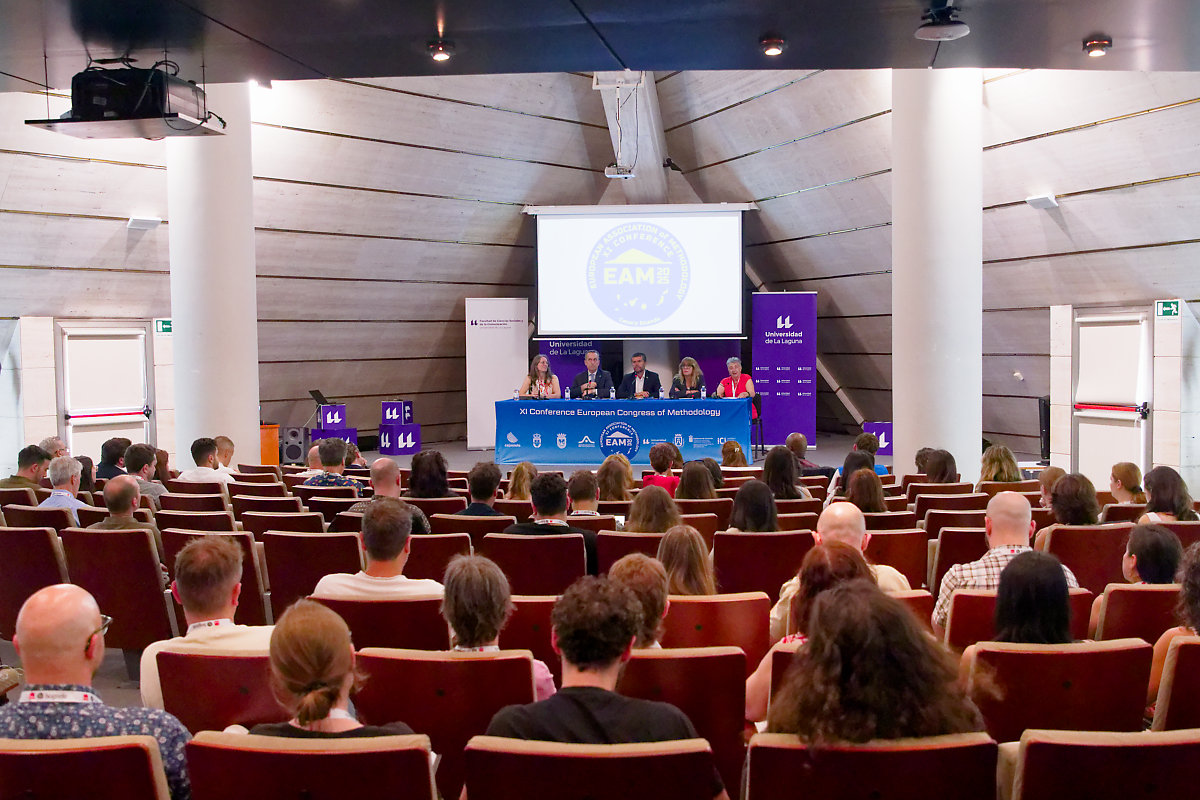 The speaker highlighted the importance of this meeting and expressed appreciation for the support the University of La Laguna receives from the Tenerife institution. “We have provided strong institutional support for this congress, recognizing the significance of bringing together such brilliant minds from across Europe on our island. This support is not limited to financial matters; for us, as a local and autonomous institution, it represents a commitment to the University of La Laguna and to the importance of fostering spaces where cutting-edge research can flourish.”.
The opening session concluded with a welcome address from the Rector, who highlighted the university's experience in data analysis and research on scientific methodology. "In this highly uncertain environment, data is key to generating sound knowledge and making informed decisions. This congress will provide pathways to achieve this, especially in a field like behavioral science. The University of La Laguna has demonstrated its capacity to develop data analysis and management to generate knowledge in various areas of the social sciences.".
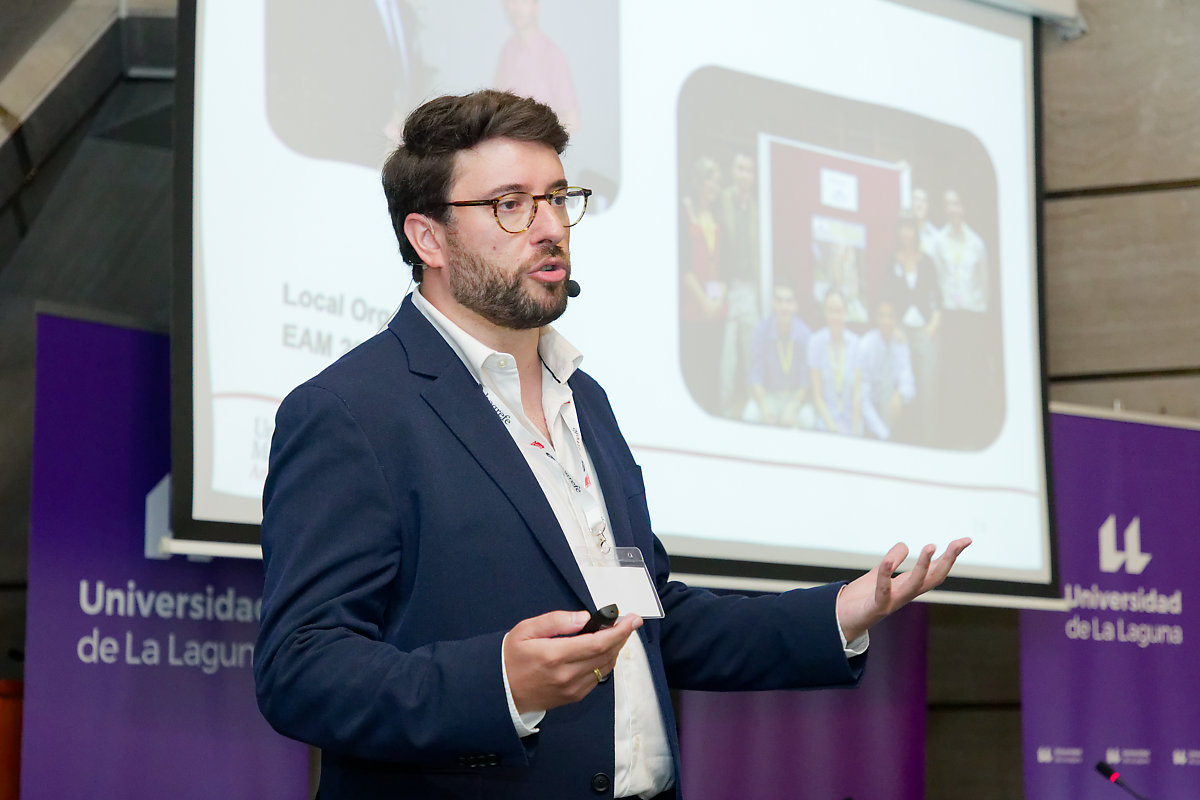
The speaker was Javier Suárez-Álvarez.
The unstoppable advance of AI
The opening lecture was given by Javier Suárez-Álvarez, a professor at the University of Massachusetts Amherst (UMass), where he teaches graduate courses in Research, Educational Measurement, and Psychometrics. The speaker drew attention to the rapid penetration of Artificial Intelligence, achieving in just a few years figures that took the Internet decades to reach. “What it took ChatGPT three years to achieve in terms of users, took the Internet 23 years to reach. By April 2025, ChatGPT had nearly 800 million weekly users. And that doesn't even include the other AI platforms that are emerging.” How do we prepare for this?
Suárez-Álvarez expressed his concern, shared by other researchers, about the impact of AI on education and the time it takes for education to adapt to the rapid pace of technological change. “Our educational and scientific systems are too bureaucratic and fragmented to harness the potential of artificial intelligence. We spend so much time delving into our specialties that we forget how our work fits into the bigger picture,” the speaker lamented.
The professor from the University of Massachusetts also drew attention to one of the key characteristics of scientific research: self-correction. Science's capacity for self-regulation is both a strength and a great responsibility for the entire scientific community, distinguishing it from other social groups. "This self-correcting mechanism gives us a special role as a scientific community. We must use it responsibly, especially now that AI is transforming everything.".

 Spanish
 English
 French