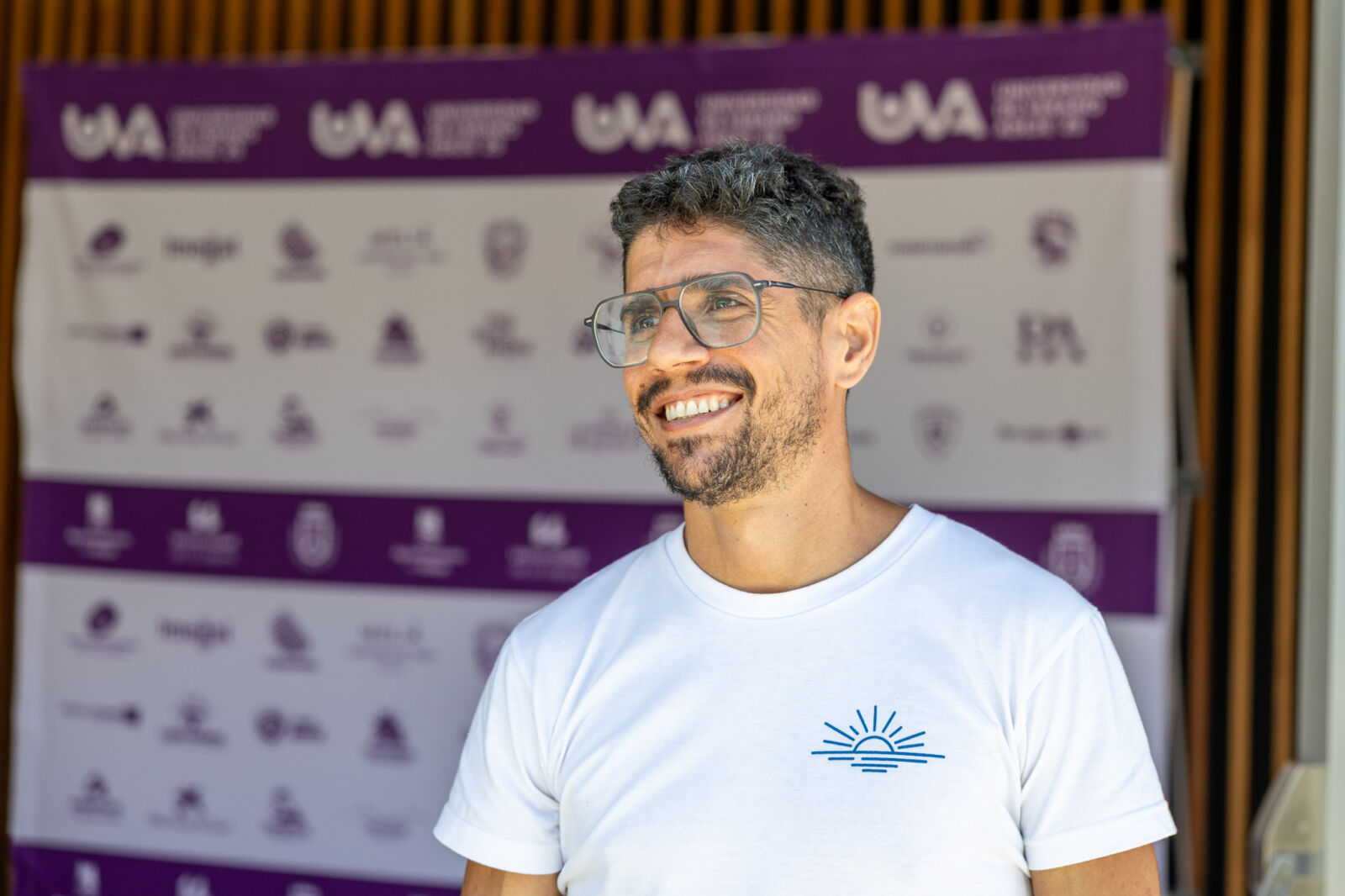
Obesity has become one of the epidemics of the 21st century in the developed world, a consequence of a lifestyle that doesn't promote rest, relaxation, and healthy eating. This has led to the human metabolism not eliminating all the fat it generates, requiring extra effort to counteract these negative effects on the body. This situation is precisely the subject of the Adeje Summer University course, "Metabolic Reprogramming: How Habits Transform Your Health," directed by Javier Rafael Castro Hernández, a professor in the Department of Physical Medicine and Pharmacology at the University of La Laguna. "The problem has been the addition of a high-calorie diet, primarily derived from ultra-processed foods. Now, a gram of food has many more calories because the food is of lower quality, and this disrupts everything.".
Ultra-processed foods are the main element in this situation, but purely evolutionary factors must also be added: Metabolism is the set of reactions that occur in the body to produce the energy necessary for life. “Our hominid ancestors lived in a time of nutrient scarcity and developed strategies to store that energy. The most efficient is fat,” which is the factor that triggers diseases like obesity. “We changed our eating habits in a very short evolutionary period. We lived in a time of nutrient scarcity, we adapted to that environment, and now we are in the complete opposite: an environment of nutritional abundance. And our brains haven't caught on to that.”.
Food addiction arises because there's a molecule in the brain called dopamine, which is released in response to pleasurable experiences, including food. "Due to evolution, it's released when we consume high-calorie foods. We used to move around to find those high-calorie foods, but today we get them without moving. Therefore, this 'metabolic reprogramming' is necessary, consisting of strategies and daily habits that allow for an efficient metabolism. The solution isn't just about improving the quality of food; there are other factors that affect this process: 'Work that stresses us makes us sleep worse. And if we sleep worse, our brain demands more energy, and that leads us to eat worse. There are many, many factors.'".
The expert believes, therefore, that beyond medical and nutritional factors, there is also a related social problem: “We’ve always been told things like, ‘it’s your fault because you don’t move enough and you eat too much,’ and they don’t talk to us about obesogenic environments, about food deserts, as they’re called today. I was telling the students in the course that if they leave the classroom, crossing the street it’s easier to find a croissant than a banana, even though we live in the Canary Islands.”.
During the course, Castro Hernández addresses some very popular nutritional myths. For example, he expresses his disagreement with high-protein diets. “The industry started in the 1950s blaming fats and saying we had to reduce our consumption. Then they blamed sugar, because we've seen that it is indeed bad. So what's left? Proteins, which for the moment don't have a bad reputation and have been pushed on us everywhere. But they are also a problem if consumed in large quantities.”.
However, she does support intermittent fasting because she believes it's a strategy that allows for calorie restriction and for which many clinical trials already support its benefits. The best-known model is the 16/8 method, which consists of eating all meals within an 8-hour window and fasting for the remaining 16 hours, but studies indicate that 13 hours of fasting is sufficient to reap benefits. "And that's simply the 8 hours you spend sleeping, plus a little more: eating dinner early and breakfast a little later.".
So, breakfast isn't the most important meal of the day? "It's a myth created by a marketing campaign." In his opinion, you should eat when you're hungry, except in the case of children, who sometimes need extra encouragement to eat because they're growing and need those calories. "But after age 20, when metabolism stabilizes, and knowing the obesogenic environment we live in, we have to reduce our calorie intake as much as possible, because we're likely to overdo it.".
According to the speaker, one of the biggest challenges for most people is incorporating exercise into their daily routine. There's already a lot of awareness about diets; more knowledge about healthy eating habits, such as increasing the consumption of plant-based products; and even 13-hour intermittent fasting seems quite manageable for many people interested in controlling obesity. "But physical activity is what we find most difficult. As one researcher in this field once said, exercise should be a habit like brushing your teeth—something we have to do every day to maintain our health.".

 Spanish
 English
 French