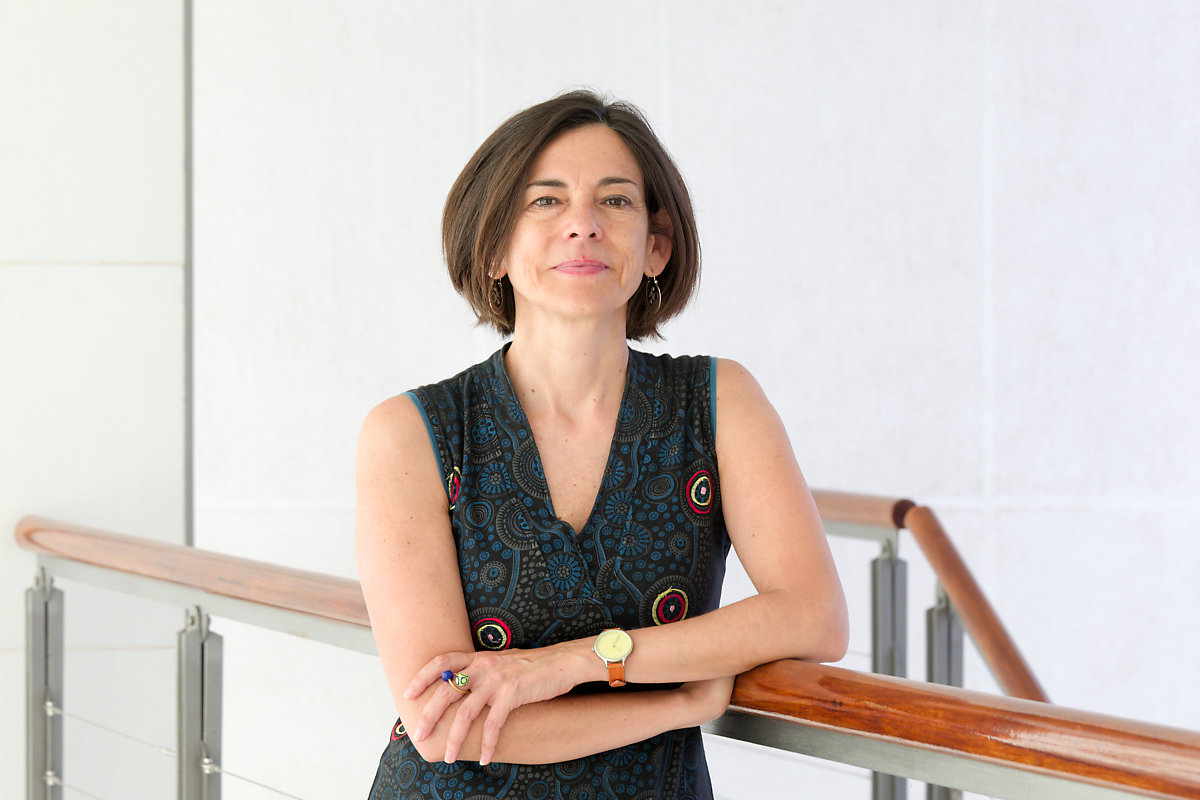
History is full of the names of great figures, illustrious protagonists of events that have shaped who we are today. History is replete with men's names. Why is history dominated by male figures? Despite making up half the population, women seem to disappear from the great milestones of humanity. Could we name any female protagonists of the Conquest of America? Of the fall of the Roman Empire or of the First World War? Missing from major events, women are reclaiming their role in the history of humanity to change the narrative of masculinity and androcentrism. A new feminist historiography is working to unravel the silences of the past, rescue invisible women, and question dominant narratives. One of the people working to make visible the female role in the historical narrative is Inmaculada Blasco Herranz, tenured professor in the Department of Geography and History at the University of La Laguna.
One of her lines of research focuses on analyzing male bias in historical texts, a phenomenon that, as Blasco explains, is not recent. Its roots lie in the historiographical perspectives that prevailed during the 19th and 20th centuries. "The idea that men are at the center of the historical narrative," she points out, "is largely due to the fact that 'great men'—those who held political power—were the protagonists of written history. This emphasis on traditional political history, dominated by male figures, systematically marginalized the experiences of women and other groups.".
However, from the 1960s onward, the landscape began to change. The emergence of social history, focused on contexts and structures, opened the door to other actors, including women. Added to this were "bottom-up" approaches, initially linked to Marxism and later evolving toward a more cultural history, which sought to give voice to those marginalized from the historical narrative. It was within this framework that women, who constitute half of humanity, began to tentatively appear in historical narratives.
Blasco emphasizes that, while traditional historiography has associated women with the domestic sphere—an idea reinforced by the liberal revolutions—this conception is simplistic and, in many cases, erroneous. «Women have always worked,» she stresses, debunking the myth of their recent entry into the workforce. What is more recent, however, is their access to paid work outside the home for certain social strata. This is just one example of how an androcentric perspective has distorted our understanding of women's role in society.
The question of whether the bias stems from male preeminence in positions of power or from the fact that history has been predominantly written by men finds a clear answer from the researcher: "It's a combination of both." While it is true that figures of power were predominantly male, the exclusion of women from academia and historical writing also contributed to their invisibility.
However, Blasco clarifies that the presence of women in the creation of historical narratives is not exclusive to the 20th century. Even in the 19th century, there were women writing on social or cultural topics, although they were not formally recognized as historians. It was from the 1960s onward that the democratization of university teaching and research facilitated a greater incorporation of women into the writing of the past.
 The loud women
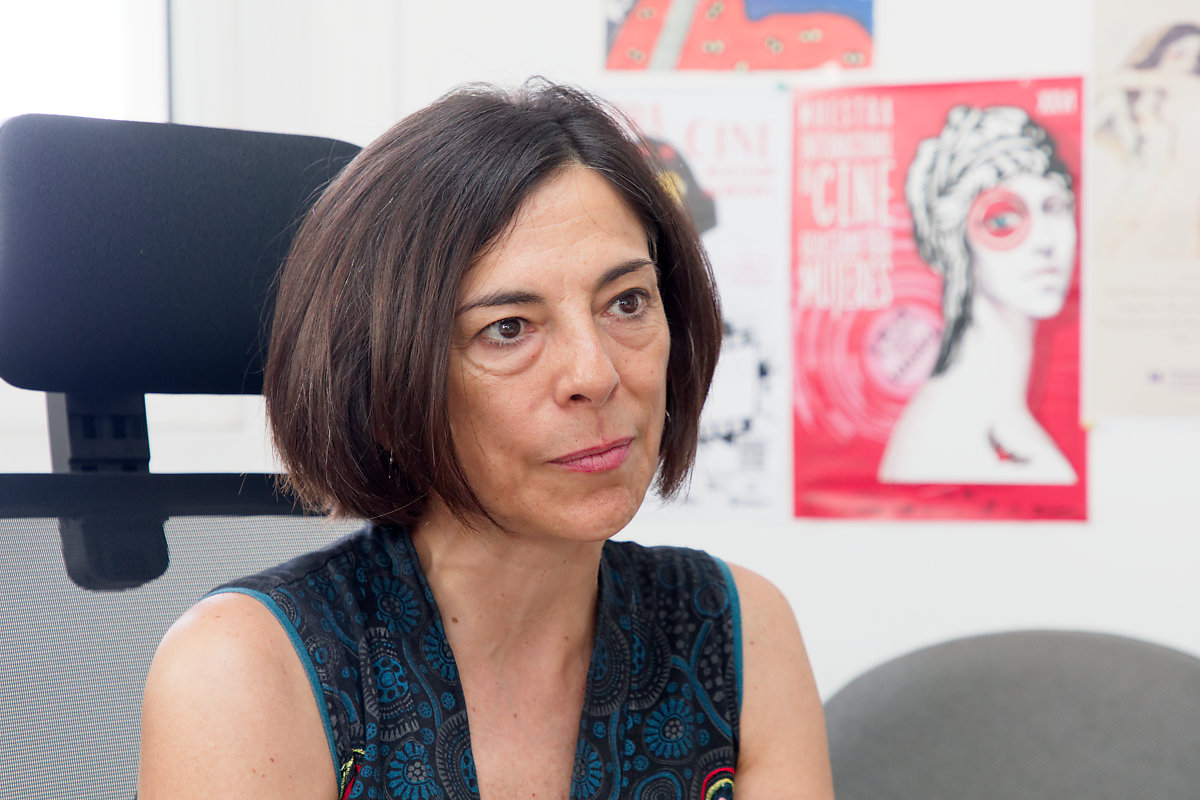
The history taught in schools often presents women as exceptional and almost "outrageous" figures: queens, princesses, or individuals with a very prominent political or cultural role. According to Blasco, the reason is that the initial focus of women's history was precisely that: to rescue exceptional women from obscurity.
However, the historian argues that this perspective limits our understanding of women's true impact on history. "If we only look for prominence in the political sphere, we will only find the exceptional ones," she states. In contrast, if we broaden our focus to include their role in the productive sector or in social reproduction—understood in a broad sense as caregiving, education, and sustaining life—the number of relevant women increases exponentially.
One of the most important feminist critiques, according to Blasco, is precisely the recognition of the value of unpaid work in the domestic sphere. The sociologist Ángeles Durán, in a classical study The study from the 1980s demonstrated the immense economic value of this work, which has traditionally fallen to women. This recognition not only brings visibility to an essential task but has also generated debates within feminism about its potential remuneration.
To rescue the women who don't appear in history books, Inmaculada Blasco explains that historians rely on primary sources. The archive, although now supplemented by digitized sources, remains the fundamental "laboratory." Newspapers, essays, literature, and private documents are key tools, always applied using a critical methodology. Blasco emphasizes the importance of analyzing the author's intention, the context, and, crucially, the silences of the sources. In a world saturated with information, even sources generated by artificial intelligence must be subjected to rigorous critical analysis, questioning their provenance, biases, and objectives.
This historiographical analysis with a gender perspective is changing thanks to a "multidimensional" shift in the training of future historians in recent decades, according to Inmaculada Blasco. The historian highlights two key aspects: the massive influx of women into academia since the 1960s and 70s, and the development of a robust body of feminist and gender studies. This body of work, in constant dialogue with disciplines such as philosophy, sociology, and anthropology, has consolidated a theoretical and intellectual foundation that allows for a rigorous study of women's history. Although the majority of researchers in this field are women, Blasco points out that there is a growing number of young men interested in women's history and gender studies, which contributes to greater acceptance and consolidation of these approaches.
Despite a fairly widespread acceptance in contemporary Spanish historiography, driven by generational change, Blasco acknowledges that resistance still exists. Some older historians initially considered these topics marginal or merely women's issues. However, the tireless work of many female historians, including Blasco herself, has demonstrated that women's history is central to historical analysis, as it forms part of fundamental social relations.
 Current Challenges
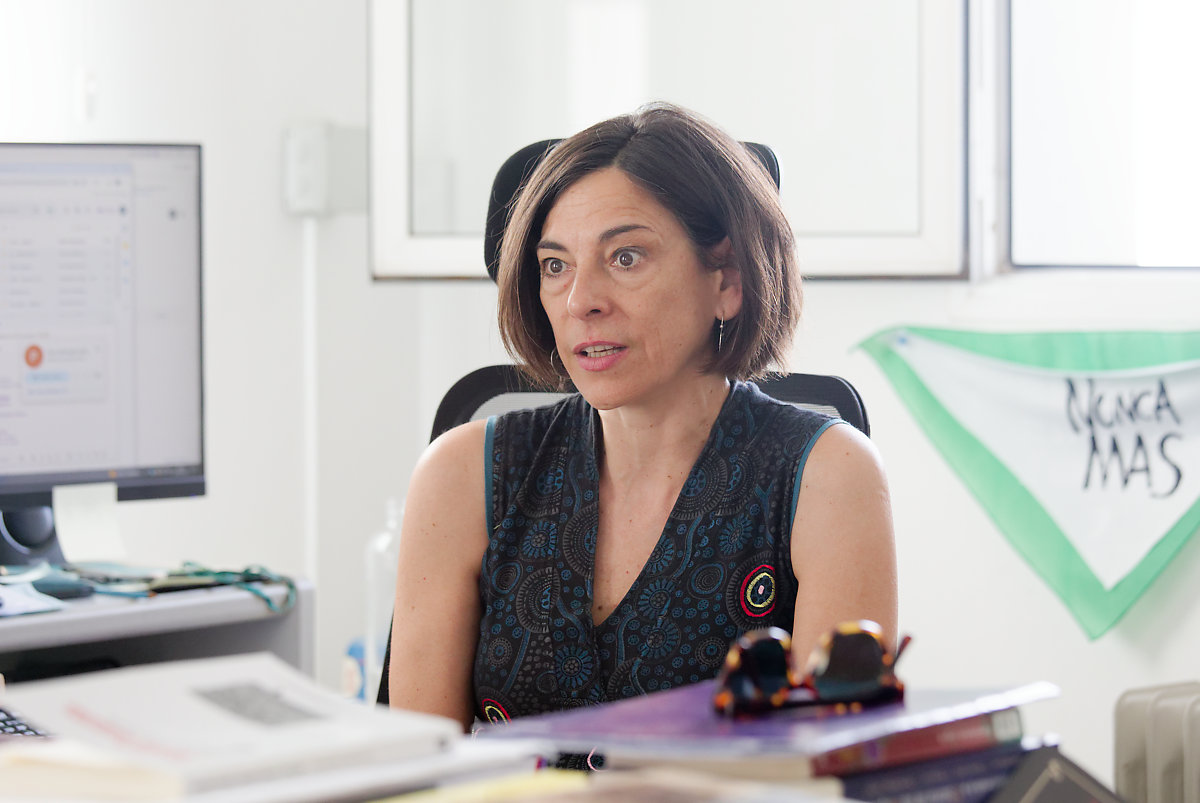
Inmaculada Blasco is aware that resistance to these approaches doesn't come solely from older generations. There are also young people who reject women's history and gender studies, a phenomenon that, according to her, could resurface. Her strategy for combating it is based on methodological rigor. "What I try to do is teach students to critically examine sources, to be aware of biases, and to avoid presentism," she explains.
The reinterpretation of established historical events, such as Franco's coup, is another worrying phenomenon that the historian largely attributes to disinformation on social media. This "deliberate attempt—whether out of conviction or self-interest—to rewrite the past" leads to "dangerous simplifications" and "distortions," making it difficult to distinguish between interpretation and proven fact. The inherent complexity of the past, as with the present, is sacrificed to simplistic and often politicized narratives. Blasco laments that historians, especially in Spain, are "very much out of the public debate about the past." She attributes this withdrawal to a "tainted" and "simplified" public debate governed by the logic of social media, far removed from the dynamics of historians, who prefer a "calm" debate with "more nuanced positions." Nevertheless, she acknowledges the responsibility of the historical community to communicate its findings more effectively.
The tendency to "twist history to make one look good" is not new. Examples such as damnatio memoriae romana The manipulation of photographs during Stalin's era demonstrates that rewriting the past has been a constant. However, Blasco distinguishes between a reinterpretation based on new sources and methodologies, and a "consciously politicized use of history" lacking rigor and foundation. The latter is a dangerous practice that departs from research and delves into the logic of political confrontation.
 Women and Catholicism
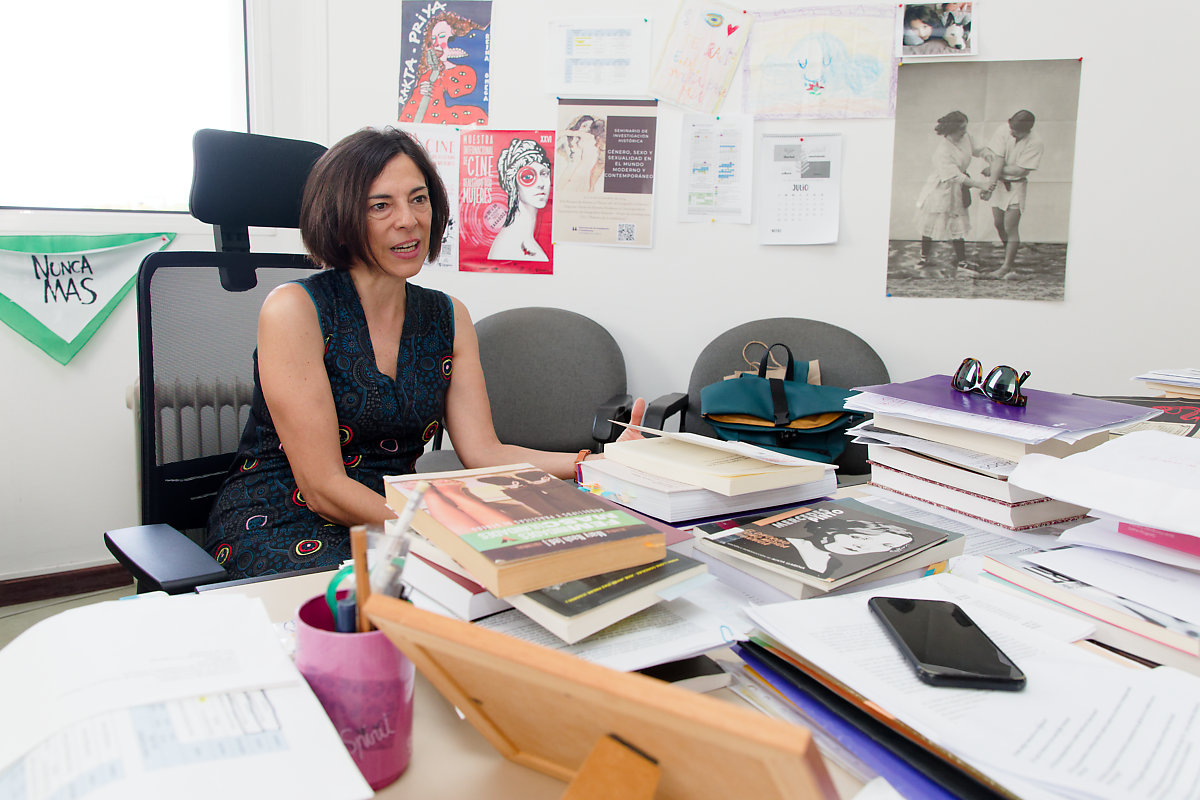
The influence of Catholicism on the perception of women in Spain is an area of specialization for Inmaculada Blasco. Her research, which began with a study of the Women's Section during the Franco regime, led her to analyze the mobilization of Catholic women as rivals of the Falange in the indoctrination of women. Studying the Catholic right was a personal challenge for the historian, who did not subscribe to those ideas. However, her goal was "to understand the motivations behind their actions, the discourses that underpinned that mobilization." She discovered that the idea that Christianity had "saved" women from paganism through marriage was a deeply held belief among these women, who mobilized in defense of a Church perceived as under attack by secularization. This historical analysis is crucial for understanding the present, according to Blasco. Perception, however exaggerated it may seem, is a driving force for action. The historian has unraveled the "feminization of religion," the attribution of religion as a feminine trait. Although the conception of women has changed today, in the past they were understood as domestic beings and complementary to men.
The Catholic Church, especially in the 20th century, developed a conception of sexual difference based on complementarity, although the idea of subordination still persisted at the beginning of the 20th century. In Spain, the Franco regime represented a return almost to the doctrines of the Council of Trent (1545-1563), with very strong ideas of female inferiority. Issues such as sexuality, the indissolubility of marriage, and the rejection of contraception remained unchanged, even after the Second Vatican Council (1962-1965).
At the beginning of the 20th century, Catholicism, aware of social changes, mobilized women into the public sphere, Blasco explains. The idea was that their "innate qualities," especially religious ones, made them ideal defenders of the Church and the family. For middle-class women educated in the bourgeois domestic model, this participation outside the home was not problematic if "feminine virtues" were projected onto social, charitable, and religious life.
There was fierce competition with socialism for the recruitment of women. Catholicism could not allow women to remain at home while socialism mobilized them. In the emerging mass society, women became a mobilizable collective subject, a fact that even led some republican sectors in the 19th century to resist granting women the vote for fear of its association with the religious right. The mobilization of Catholic women was not a phenomenon exclusive to Spain; it is transnational, Blasco asserts. The Catholic Church, as a global actor, has demonstrated great effectiveness in its process of reconstruction and expansion, especially since the world wars. However, there are clear limitations, such as the exclusion of women from the priesthood.
Throughout the 20th century, the Church developed a discourse on the «dignity of women» and the «feminine genius,» but at the same time, it confined them to certain spheres under the premise of complementarity. This difference, although presented as exaltation, actually «prevents equality.» Blasco concludes that, while the overt inferiority of women in the Middle Ages and at the Council of Trent was reformulated in the 20th century in terms of difference («Mary replaces Eve as the model»), the underlying logic remains the same: difference is used as an argument for exclusion. Future research, including from an anthropological perspective, will be crucial for understanding the continuities and changes in the Church’s anthropology.
Communications Office

 Spanish
 English
 French