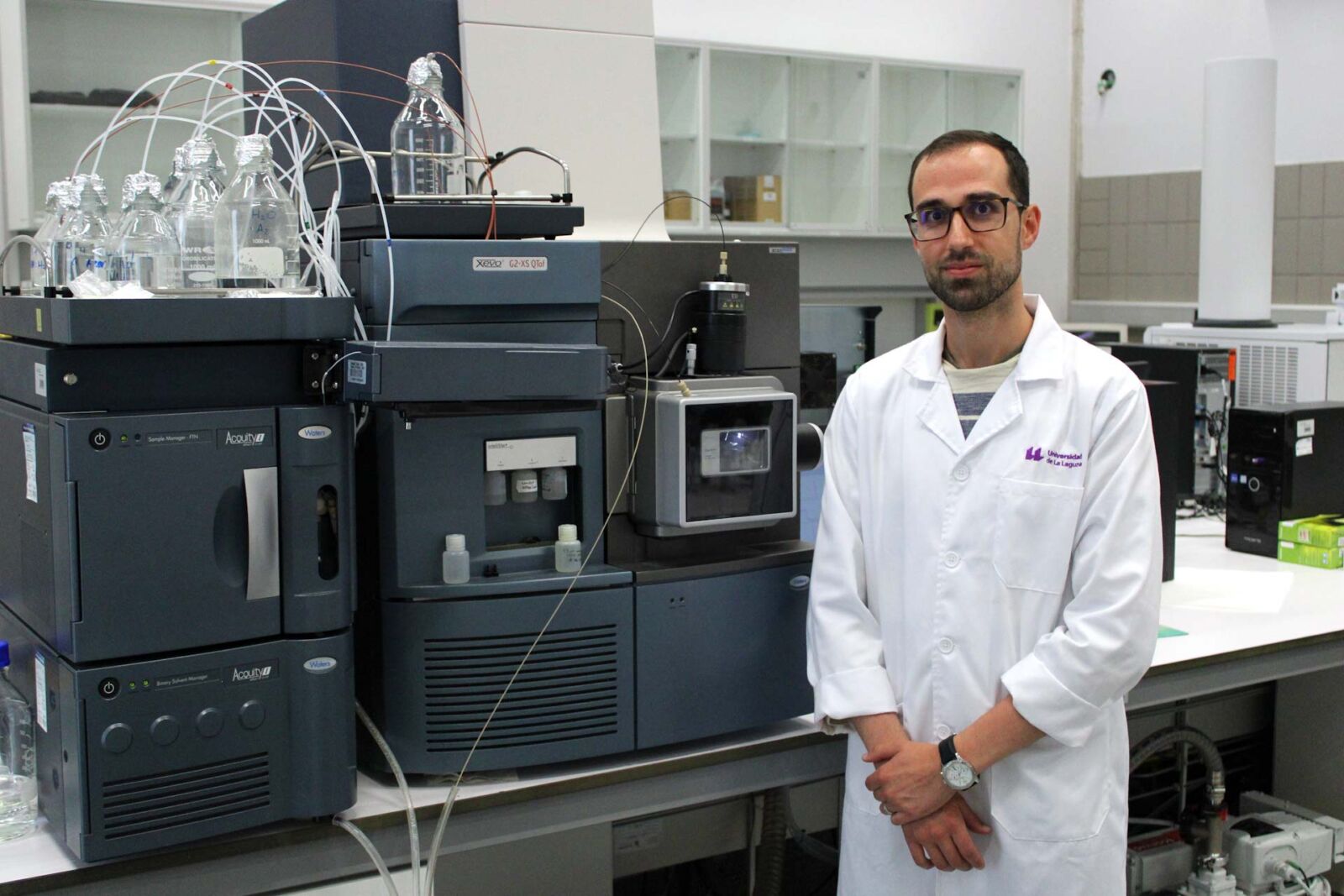
The General Research Support Service (SEGAI) of the University of La Laguna provides scientific, technical, and instrumental assistance to research projects both from the university itself and from other entities. Agri-food Techniques Service It performs qualitative and quantitative analyses using chromatographic techniques in combination with mass spectrometry detection systems. These tools allow for the determination of various parameters in agri-food samples, as well as the presence of compounds of interest in samples of agri-food, environmental, or archaeological origin, or the determination of organic contaminants.
The analyses performed have multiple applications: detection of pesticide residues in food, identification of bioactive substances in plant matrices, and characterization of fatty acids in the field of conservation and restoration of historical heritage and works of art. In addition, the service collaborates on studies of plant protection products, analysis of contaminated soils, search for metabolites with potential in the cosmetic or pharmaceutical industries, and location of relevant biomarkers in archaeological investigations.
The service also offers specialized consulting to companies in the agri-food and environmental sectors. Its main users are private companies, particularly interested in quality control of their products, although they also collaborate with public institutions such as the CSIC (Spanish National Research Council) and the ICIA (Catalan Institute of Agricultural Research), as well as with researchers from the University of La Laguna itself, in areas such as Pharmacy, Biology, Chemistry, and Archaeology. The chromatographic equipment can also be rented to research groups at the University of La Laguna, provided they have qualified professionals to operate it.
Equipment
The Agri-food Techniques Service has equipment divided into two units, in which the technical staff are responsible for both the preparation of the samples for their treatment and subsequent chromatographic analysis, as well as the entire analysis process leading to quantitative results.
This analytical laboratory comprises a gas chromatograph (Scion 436-GC) coupled to a triple quadrupole mass spectrometer, enabling non-targeted analysis by establishing correlations between the components of an analyzed sample and the system's data library, as well as analyses for specific molecules. This equipment also allows the use of a flame ionization detector (FID), employed for less specific analyses, such as fatty acid profiling or alcohol analysis in various types of beverages.
On the other hand, they have a liquid chromatograph coupled to a high-resolution mass spectrometer (Xevo G2-XS QTof), which is especially useful for characterizing the proteomic or metabolomic profile of a sample. This service's equipment is shared with the Lipid Analysis service. Furthermore, there is close collaboration with other SEGAI laboratories, such as the Atomic Absorption Spectroscopy Service and the Forensic Science Support Service.
This SEGAI is kept operational thanks to the general budgets of the General Research Support Service, as well as contributions from the European Regional Development Fund (ERDF) for infrastructure and scientific equipment.
The application process for using the Agri-food Techniques Service is unified within SEGAI and is managed through a web platform. Users access the portal, select the service they require, and submit their application.

 Spanish
 English
 French