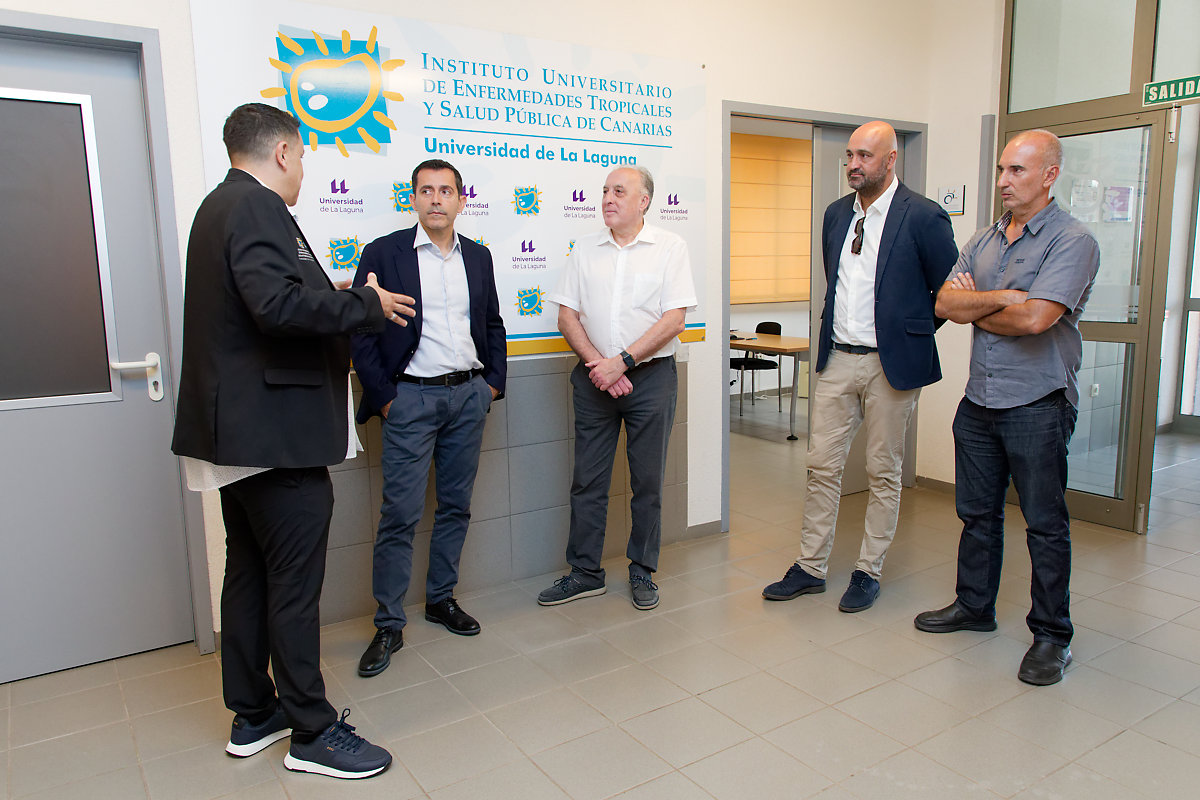
The Councillor for Innovation, Research and Development of the Tenerife Island Council, Juan José Martínez, visited yesterday, Tuesday, July 29, the facilities of the University Institute of Tropical Diseases and Public Health of the Canary Islands (IUETSPC) from the University of La Laguna. Accompanied by the Vice-Rector for Research and Transfer, Antonio Aparicio, and the Institute Director, Jacob Lorenzo Morales The councilor emphasized the importance of this research center, recognized as a national and international benchmark in its field.
This meeting was framed within the project “Improving the scientific and technical capacity of the University Institute of Tropical Diseases and Public Health of the Canary Islands 2023-2028”, which has an investment of 2.5 million euros from the island council, intended for the hiring of research and technical staff for five years, supporting the various lines of research developed by the center.
Martínez pointed out that this institute stands out for the high clinical applicability of the research carried out in its laboratories and referred to the important work done in the area of development cooperation, thanks to the agreements with various countries that enable the presence of students and research staff from, above all, North Africa.
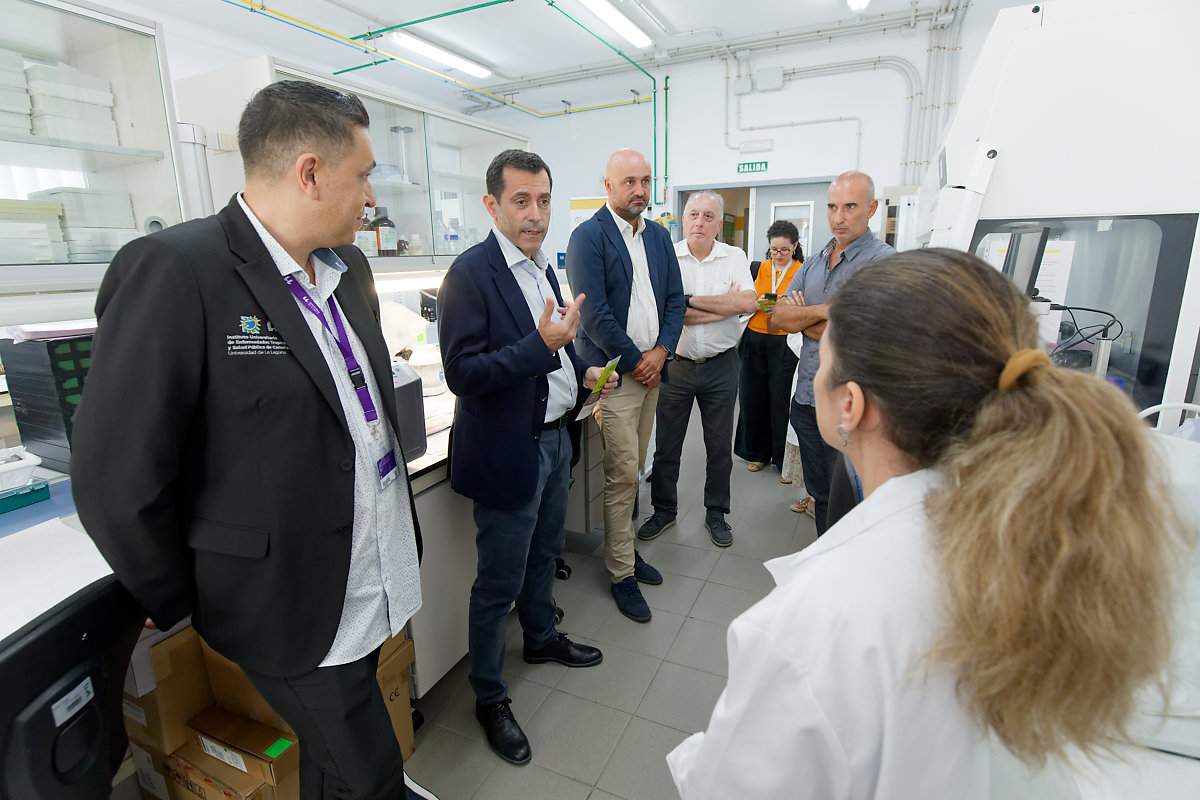 The main objective of the visit was to monitor the grant that allows the institute to enhance its research capacity. Thanks to this funding, ten new professionals—five PhDs and five laboratory technicians—have joined the center's scientific team. Jacob Lorenzo emphasized the importance of these grants in the field of human resources in science, especially in such a crucial area as tropical disease research. "This funding is essential to strengthening research in the Canary Islands and preventing the brain drain of young talent," explained the institute's director.
For his part, Antonio Aparicio highlighted that these types of initiatives contribute to providing more stable support for scientific and technical staff, guaranteeing the continuity of research projects that benefit both the scientific community and society in general.
Thanks to the collaboration of the Tenerife Island Council, this university institute is strengthening several cutting-edge research lines, many of which are global benchmarks. These include studies on free-living amoebae; new lines of research such as biomarker investigations for disease, a field that emerged during the COVID-19 pandemic; and entomological surveillance and the study of zoonoses, which are increasingly relevant in the fight against diseases transmitted by vectors such as insects.
In this regard, one of the most outstanding investigations is the mosquito surveillance network, which currently has about 1,100 traps installed throughout the Canary Islands to develop a precise and constant monitoring of the different mosquito alerts.
Furthermore, the institute is part of the Ministry of Science's National Biological Alert Network, which gives it a key role in the study of emerging pathogens and the development of molecular diagnostic techniques. The presence of highly qualified personnel is essential to address disease outbreaks and ensure effective monitoring. Thus, the University Institute of Tropical Diseases and Public Health of the Canary Islands continues to develop its research in a key area for public health, constantly updating and adapting to new scientific and healthcare challenges.

 Spanish
 English
 French