Autism Spectrum Disorder (ASD) encompasses a range of neurodevelopmental conditions characterized by difficulties in social interaction and communication, as well as atypical behavior patterns. These include problems coping with changes or unusual responses to sensory stimuli. According to the World Health Organization (WHO), approximately one in 100 children lives with ASD.
The characteristics of this disorder can be identified from early childhood. However, in many cases, the diagnosis is not made until later stages of development. Currently, the detection of ASD is based primarily on behavioral observation and structured interviews, such as the Autism Diagnostic Observation Schedule (ADOS). These tools, although widely used, rely heavily on the subjective judgment of the professional.
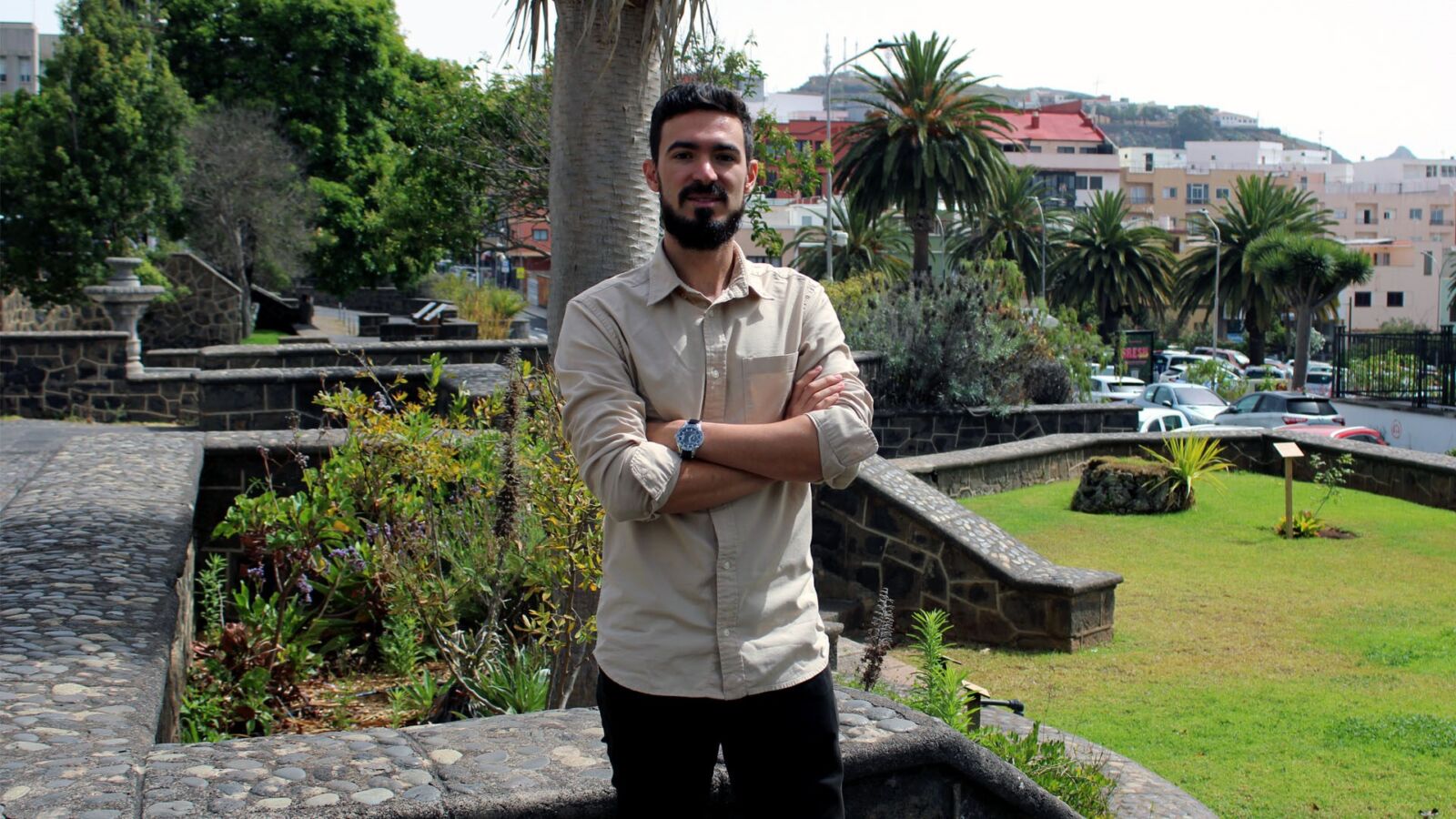
In this regard, a doctoral thesis recently defended at the University of La Laguna by Roberto Chávez Trujillo, a graduate in Electronic Engineering and a PhD in Systems and Automation Engineering, has led to the development of a diagnostic support tool based on the analysis of eye-tracking data (eye trackingand in the training of an artificial intelligence (AI) algorithm capable of determining whether a person's visual patterns correspond to an autism diagnostic group. The proposal seeks to offer a more objective tool to complement traditional methods in the identification of ASD.
With early diagnosis, individuals with ASD can access psychoeducational and behavioral intervention strategies that significantly improve their quality of life. “Data analysis through eye-tracking is a very interesting tool, since it has been shown that the visual patterns of individuals with ASD present alterations from approximately six months of age and can be recorded using this technique,” notes Chávez Trujillo.
The researcher began to take an interest in areas such as data science, the machine learning and AI during the Master's in Industrial Engineering. “She was my supervisor for my Master's Thesis, Rosa Aguilar Chinea, "A professor in the Department of Computer and Systems Engineering suggested to me the idea of doing a thesis on the application of AI techniques to support diagnosis." This led to the transition from the field of electronics to the field of computer science, developing a thesis directed by the professor.
Machine learning
The thesis work process was arduous. In its initial stage, a rather complex data processing was carried out, since the eye-tracking It returns an enormous amount of data. “We were collecting samples approximately every three milliseconds, and each sample contained more than 100 variables,” he says. “All of that requires data processing and analysis that isn't possible using classical statistical techniques,” he maintains. Data science plays a crucial role in this process, extracting patterns from vast amounts of information.
After that, the next stage involved employing machine learning algorithms. “Not so much of deep learning, ”Because the number of subjects we had at the beginning wasn’t large enough to develop a model based on neural networks,” he explains. Therefore, they opted for more traditional models. Specifically, they used the XGBoost model, a technique that combines simpler models and, when combined, offers better performance than if they were used separately.
“Thanks to this model, we achieved good accuracy in sample classification,” he states. “By performing this classification individually, aggregating each of the samples, we were able to correctly classify 100% of the subjects in the test set. It's important to keep in mind that when using a machine learning algorithm, the dataset must be divided into three parts: one for training, one for validation, and one for testing,” he explains. First, the model is trained, then its performance is adjusted and tested, and finally, it is evaluated with the test set. “This final evaluation allows for an impartial and unbiased view of how the model would perform with real data,” he points out.
Finally, a website in the style of plug and play which simplifies the diagnostic process. “The data file is extracted from the eye-tracker, and without the user having to perform any processing, they simply upload it to the website,” he explains. “The website then automatically handles all the steps to provide a diagnosis for each individual included in the file.” In this way, the website allows people without technical knowledge, programming experience, or engineering training to easily obtain a diagnosis.
Conclusions
Scientific literature had already indicated the existence of distinctive or atypical visual exploration patterns in individuals with ASD compared to neurotypical individuals. This thesis leveraged these differential patterns to record their behavior while viewing a series of images selected to highlight these differences. Based on these patterns, a machine learning algorithm was developed. In parallel, on the more technical side, a Python code library was developed. open source. “It is available to developers or researchers working in the field of eye-tracking”,” he explains.
In the second part of the study, the data sample was expanded. “The results were somewhat more heterogeneous,” he notes. “There were more than 100 subjects, and a new set of challenges arose, for which various solutions were proposed,” he indicates. “When the algorithms were retrained with these new subjects, the model's performance dropped considerably,” he explains. Thus, to address this problem, Chávez Trujillo developed several analytical techniques to try to identify these atypical subjects within the autism spectrum disorder (ASD) population. One of the techniques involved analyzing their blink patterns, as well as pupil size, among other aspects. “Another technique involved analyzing the scanning sequence, that is, the points their gaze passed over,” he says.
This analysis was performed in pairs of individuals: individuals with ASD, controls with controls, and controls with individuals with ASD. “In the end, a similarity score could be extracted between their visual exploration patterns, and based on that, it was possible to detect that the specific patterns of some individuals were very different from those of the rest of their group,” she explains.
Chávez Trujillo points out that the data was provided by the professor José Luis González Mora, Professor and head of the research group at the Neurochemistry and Neuroimaging Laboratory of the University of La Laguna. Initially, this data was processed by Chávez Trujillo and his supervisor, Aguilar Chinea, although later the author of the thesis joined the group, which allowed him access to a second, larger sample. All the data were obtained using the equipment available to the research group.

 Spanish
 English
 French