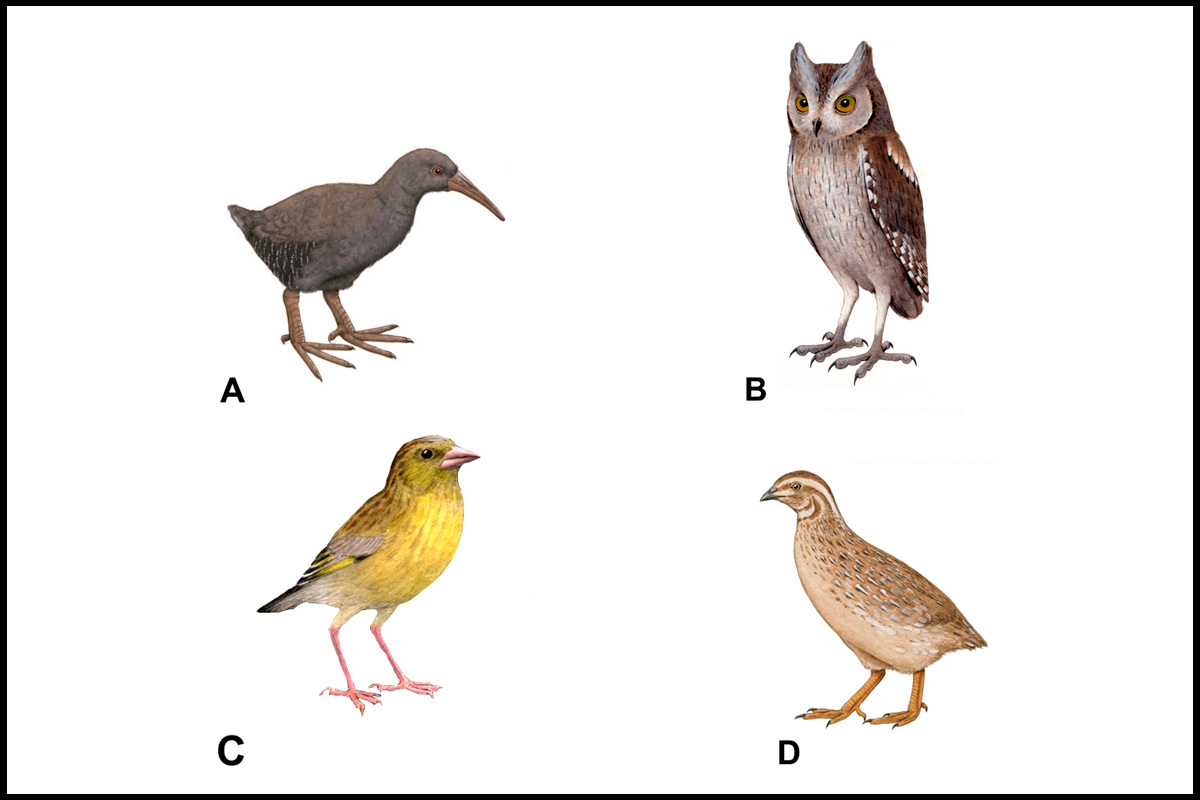
An international investigation, led by the Professor of Ecology at the University of La Laguna José María Fernández-Palacios, reveals that half of the extinctions of Macaronesian endemic species were caused by human activity.
Scientists have conducted the first synthesis of all known extinctions of terrestrial endemic species in the Azores, Madeira, the Savage Islands, the Canary Islands, and Cape Verde, including information on the species' original distribution, as well as when and why they went extinct. The study, published in the journal PNAS Nexus, has identified 220 disappearance records, with the highest numbers observed among land snails, arthropods, birds and reptiles.
Very few plant extinctions were recorded, and none in fungi or lichens. Half of the losses of endemic species have extinction chronologies that coincide with human occupation of the islands, providing a minimum estimate of the number of extinction events that can be attributed directly or indirectly to human activities. Other researchers from La Laguna, Oxford, and the Spanish National Research Council (CSIC) also collaborated on the article.
This work presents a thorough review of existing literature, enabling the compilation of the first list of known extinct terrestrial endemic species from the Macaronesian biogeographical region, encompassing the following taxonomic groups: arthropods, mollusks, bryophytes, fungi, lichens, vascular plants, birds, reptiles, and mammals. The work also includes information on the original distribution of these extinct species, as well as the chronologies of their extinctions and their probable causes, according to the authors of the original works.
This review identified 220 extinctions of terrestrial species endemic to Macaronesia, with mollusks accounting for the largest share (111 species), followed by arthropods (55), birds (27), and reptiles (15). Proportionally, the impact has been greatest on birds, with a loss of 50% of known endemic species, followed by mammals (43%) and reptiles (28%).
However, very few extinctions have been recorded in bryophytes or vascular plants, and none at all in lichens and fungi. These low numbers likely indicate the difficulty these groups have in leaving fossil remains, rather than that they haven't been affected in a similar way to other groups, the researchers explain.
The Canary Islands, with 86 extinct species, is the archipelago most affected by extinctions, followed by Cape Verde and Madeira, with 58 and 57 extinctions respectively, and finally the Azores, with 19. Of the 86 extinctions recorded in the Canary Islands, 67 (representing 78%) occurred before the arrival of humans, and these are primarily land snails. A similar situation exists in Madeira, where up to 40 species (69%), almost all land snails, disappeared before the arrival of humans. However, the pattern in the peripheral archipelagos of Macaronesia is different, with the largest proportion of their extinctions linked to human activity, reaching 95% in Cape Verde and 100% in the Azores.
Exactly half of the recorded extinctions, including virtually all vertebrates, as well as arthropods and vascular plants, have chronologies that coincide with the human occupation of the islands, so it could be attributed to the impact that humans and the species they introduced had on a pristine nature upon their arrival on the islands.
For their part, extinctions with chronologies prior to the arrival of humans and, therefore, not attributable to them, have been mainly due to climatic causes, such as those linked to the Pleistocene glacial cycles.
Far from being an exception, the pattern and causes of the extinctions of endemic species detected in Macaronesia perfectly reflect what is known to have occurred in volcanic archipelagos with similar conditions, such as Hawaii, Galapagos or the Mascarene Islands, highlighting how humans abruptly transform the nature that existed there and that had evolved independently of them for millions of years upon their arrival on the islands.

 Spanish
 English
 French