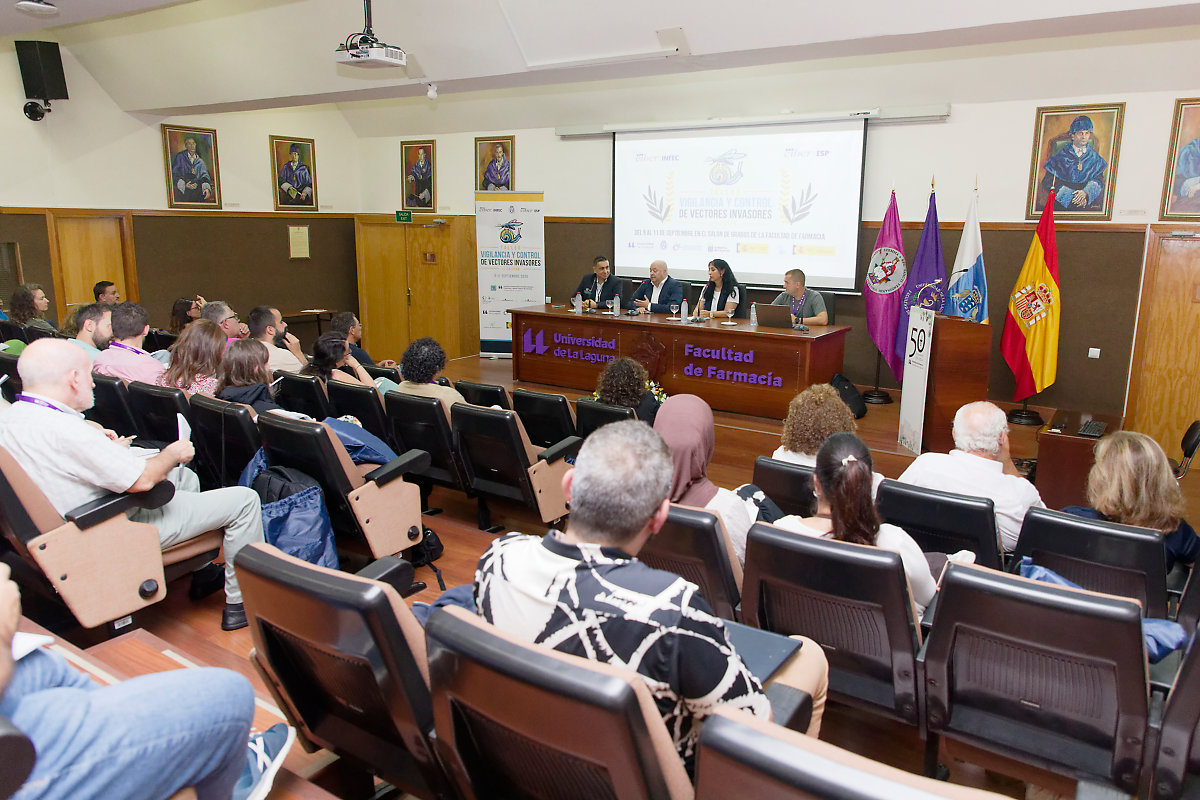
The Faculty of Pharmacy at the University of La Laguna hosts the second edition of the event today, September 9th. Workshop on Surveillance and Control of Invasive Vectors, under the academic direction of the director of the Institute of Tropical Diseases and Public Health of the Canary Islands, Jacob Lorenzo Morales, and the postdoctoral researcher Carlos Estrella and the coordination of José E. Piñero Barroso.
Vector-borne diseases are a public health priority due to their global emergence and re-emergence. This situation is a consequence of the changing distribution of these organisms, due to factors as diverse as the transport of goods and globalization. This has been the primary mode of introduction of invasive mosquitoes. Aedes aegypti y Aedes albopictus. In Europe, including Spain, these invasive species have established themselves in various locations and have been responsible for the transmission of emerging diseases, including outbreaks such as the recent ones of dengue and chikungunya, which this summer has reported 31 outbreaks in France.
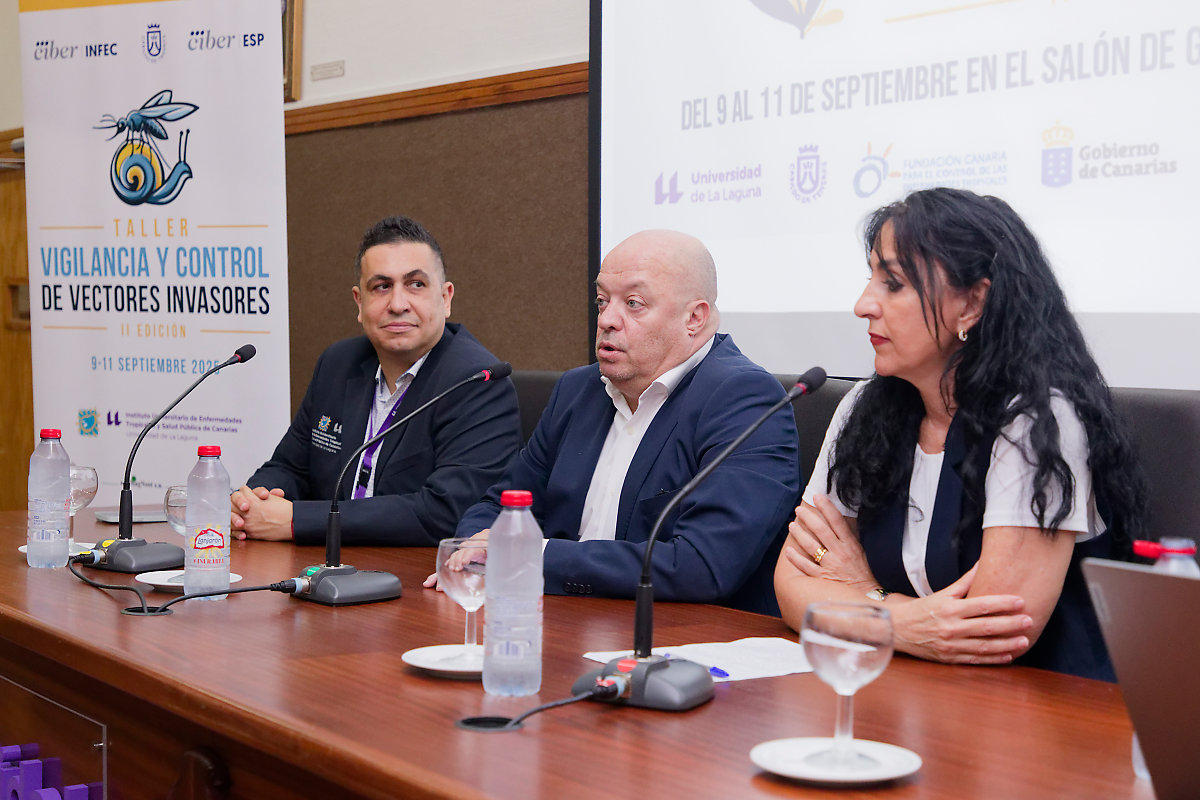
From left to right, the director of the organizing institute, the general director of Public Health and the dean of Pharmacy.
The Canary Islands are no strangers to these invasive vectors, and in fact the General Directorate of Public Health, together with the university institute, has implemented a robust entomological surveillance system since 2013 that has made it possible to detect more than twenty alerts for the introduction of invasive vectors, all of which have been controlled or resolved, including the detection of A. Aegypti In the Piletas neighborhood of Gran Canaria, ten weeks have passed without detecting the vector. “Although the European Centre for Disease Control indicates that 18 months must pass without detection, public awareness and the involvement of public entities coordinated by Public Health give us hope,” Jacob Lorenzo noted at the workshop.
The workshop features some of Spain's leading experts in vector control and will showcase the work being done in the Canary Islands in this field, the organizers added. This event is aimed at students in health sciences, biomedicine, and medical sciences, as well as professionals in the public and private sectors.
This training will continue until Thursday the 11th, with a series of theoretical presentations in both in-person and online formats. These presentations will analyze the specific characteristics of each type of vector likely to arrive in the Canary Islands from other regions, as well as the diseases they can cause and how to identify and manage them. All of these sessions will take place in the morning. After lunch, there will be practical sessions focused on the morphological and molecular identification of the vectors.
The workshop is organized with the support of CIBERINFEC and CIBERESP, as well as the Vice-Rectorate for Research and Transfer of this university, the Tenerife Island Council, the General Directorate of Public Health, the Ministry of Health, the Canary Foundation for the Control of Tropical Diseases and several companies.

 Spanish
 English
 French