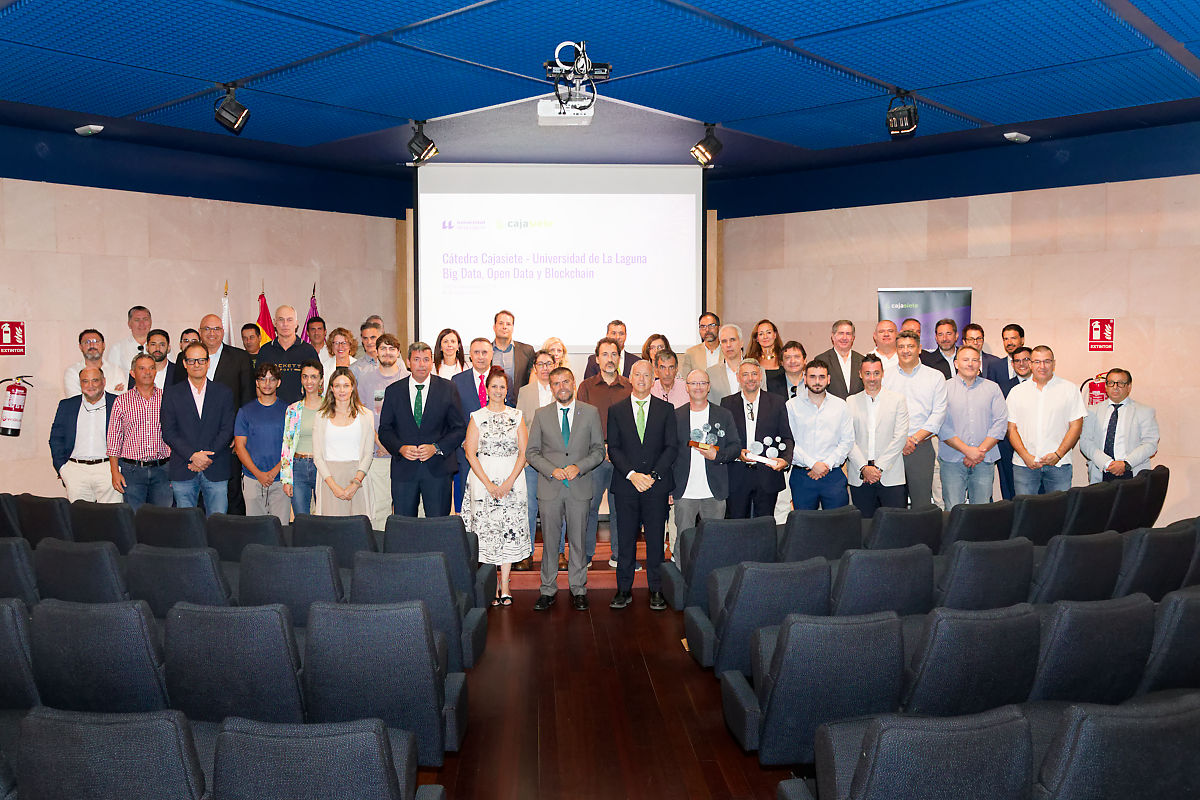
The Blas Cabrera Felipe Auditorium of the Faculty of Sciences hosted today, September 16, the signing ceremony for the renewal of the Chair of Big Data, Open Data and Blockchain, which is run by the University of La Laguna with sponsorship from Cajasiete. Led by José Luis Roda and Carlos González, this entity pursues, among other objectives, the greater digitalization of Canary Island companies, with the aim of making them more competitive and adapted to the changing times.
Many students have completed their undergraduate and master's theses under the auspices of this chair during its six years of existence, and it has also served to guide a number of doctoral dissertations. Thus, its leaders stated at today's session that the chair generates new knowledge and transfers it to society, which is undoubtedly its greatest achievement.
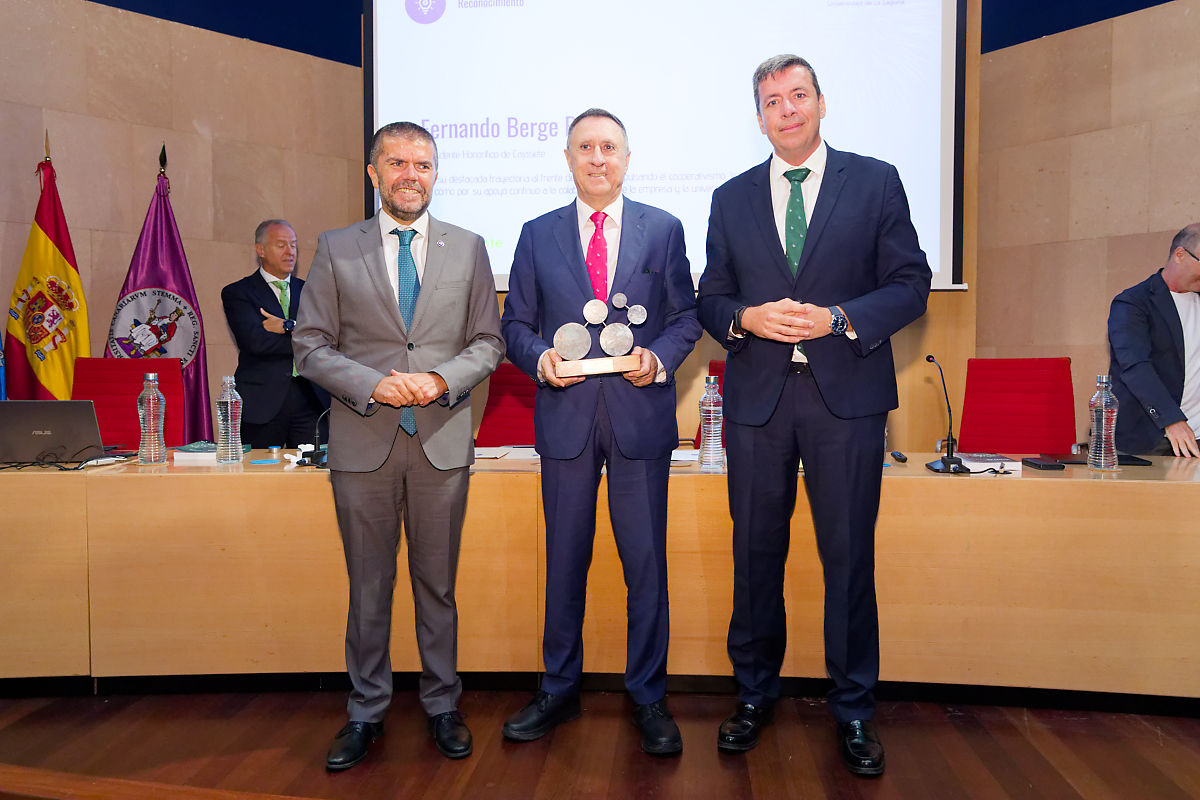
The rector, the honorary president of Cajasiete and the director of Strategy of the same entity.
The session also served to bid farewell to Fernando Berge, the outgoing president of Cajasiete, who now assumes an honorary position, and to welcome his successor, Manuel del Castillo. Both emphasized the value of cooperativism and the savings bank's close ties to the public university, with which it collaborates on numerous projects.
The university's rector, Francisco García, emphasized the innovative nature of the chair, which is always at the forefront of knowledge and supports companies in their technological challenges. Nearly forty specialized seminars have been held during this time. "This is a success story of our corporate chair program," which makes the knowledge generated at the university available to organizations and institutions, he stated.
This morning's session included several awards, which went to the company Atos, for its great advances in digitization thanks to the chair, to the honorary president of Cajasiete, Fernando Berge, and to one of the directors of this entity, Professor José Luis Roda.
One of the chair's most robust projects is the BOP Map, which measures the degree of digitalization of Canary Island companies and supports them in improving this index. To participate, each company must first undergo a diagnostic assessment of its processes to understand its current situation in this area before embarking on new developments.
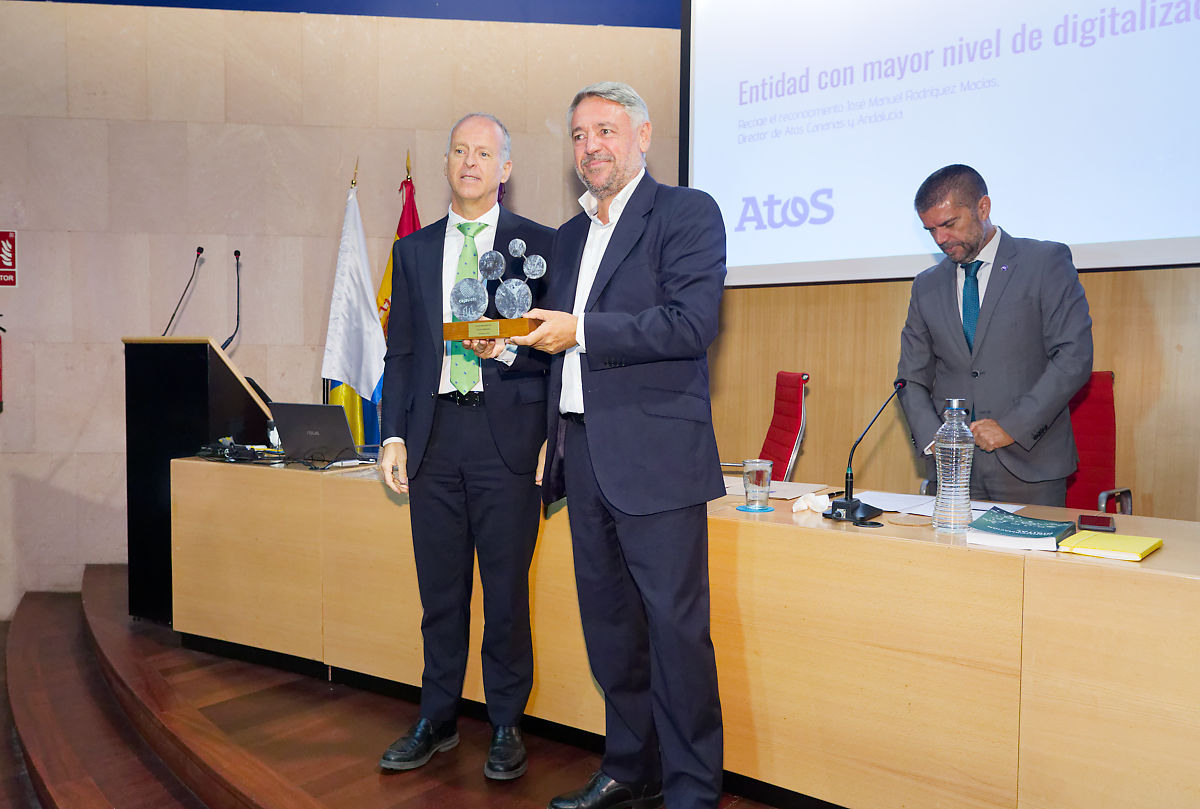
The Atos representative receives his award.
500 companies from the archipelago have participated in this experience, and have substantially improved their position.
From document to intelligent dialogue
One of the chair's strengths is the human capital behind it: students, faculty, and industry professionals united by innovation and a constant desire for improvement. One of them is José Carlos González, head of the Information and Communications Technology Service at the University of La Laguna, who took the opportunity to present some of the ongoing projects.
González argued that it's necessary to move from documents to intelligent dialogue, meaning that it's essential to combine information sources, process them, segment them, vectorize them, and index them so they can be useful. He noted that over time they've realized that the new
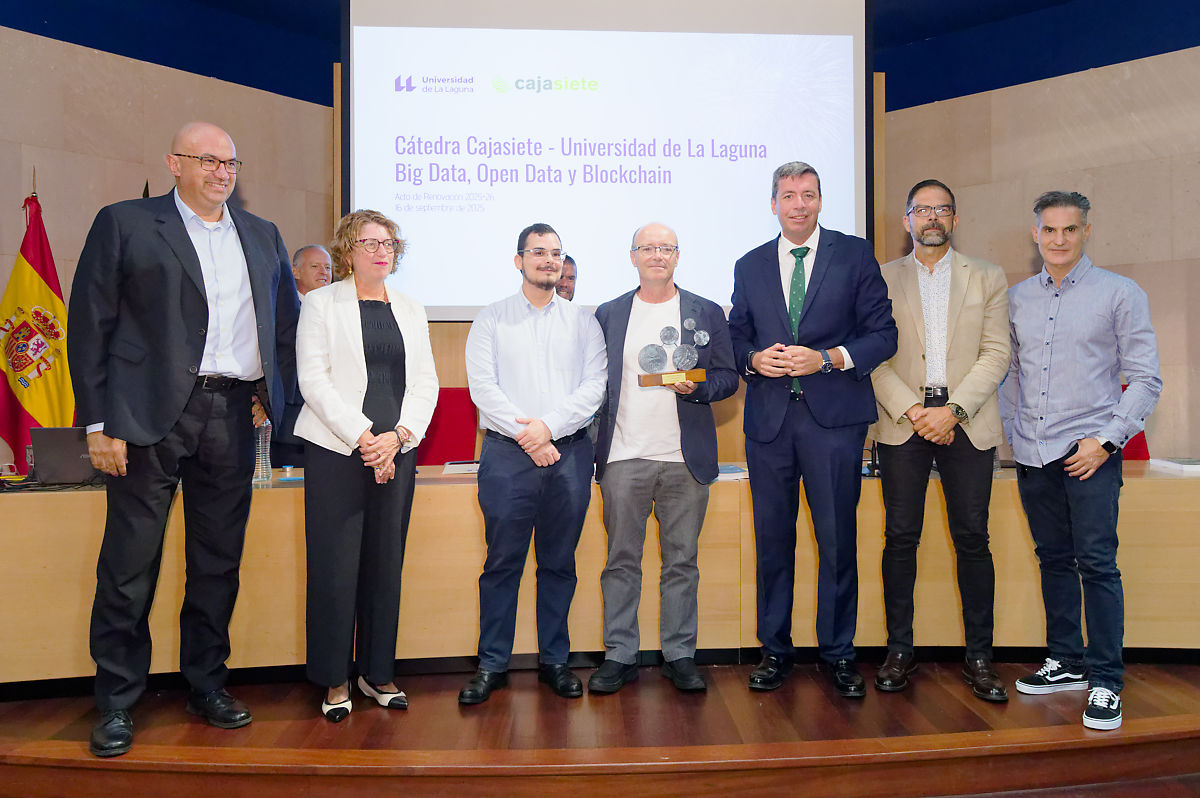
The co-director of the chair, José Luis Roda, honored by his colleagues.
Tools that empower professionals must first be tested and adapted by technical teams, so that they can then be used by employees and, finally, provide answers to users.
Thus, having quality data and putting people at the center of the system is, in his opinion, the most important thing. “What matters is not the models, but the value we create for people by offering them reliable information,” he concluded.

 Spanish
 English
 French