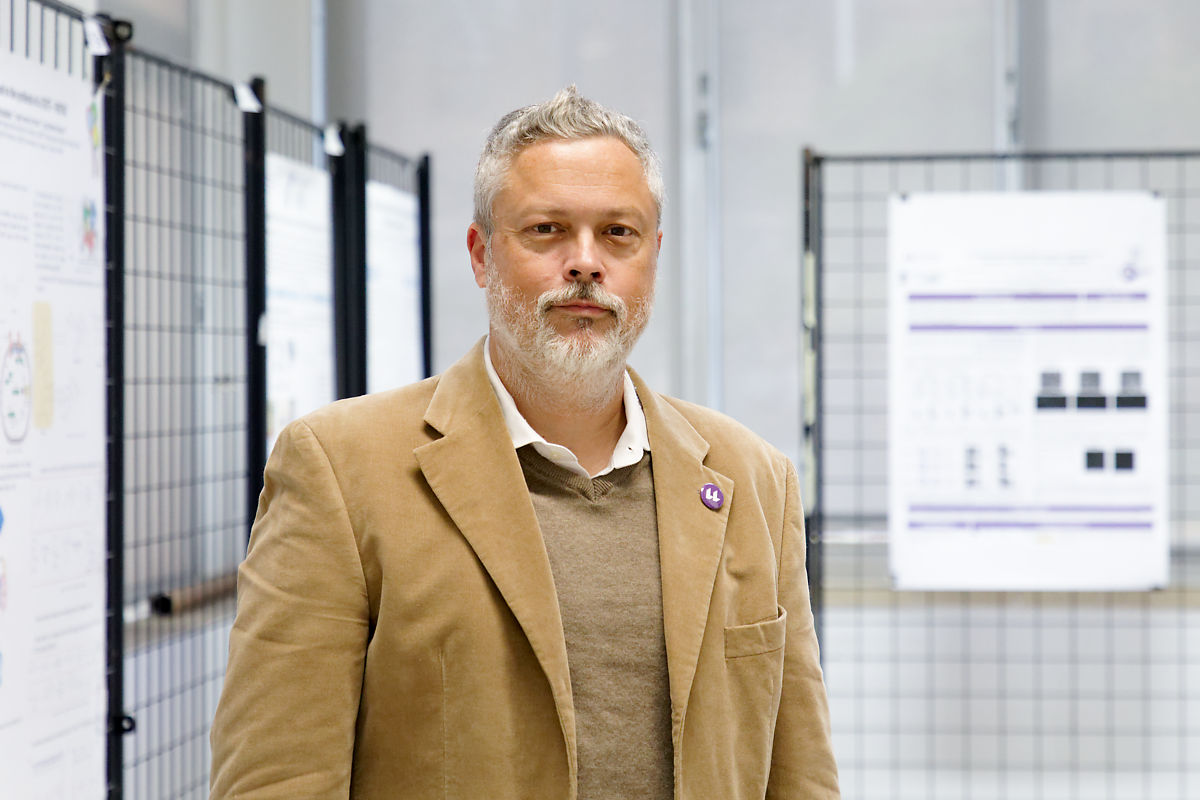
The researcher José Manuel Padrón, director of the Antonio González University Institute of Bio-Organic Chemistry (IUBOResearchers from the University of La Laguna have collaborated on the development of an innovative family of multifunctional molecules with the potential to combat both Alzheimer's disease and certain types of cancer. These compounds, hybrids of isofagomine and coumarin, represent a promising therapeutic and preventative strategy against neurodegeneration and cancer.
In addition to Padrón's participation, the study, published in the journal Chemico-Biological Interactions, It has the collaboration of research staff from the University of Stavanger, the University of Bergen, the Federal University of Rio de Janeiro, the University of Bologna and the University of Seville.
Interest in finding common therapies for Alzheimer's and cancer is growing. Recent studies have shown that some drugs originally designed to treat cancer, such as sunitinib and saracatinib, may have beneficial effects in treating this disease. Similarly, drugs used for neurodegeneration, such as galantamine and donepezil, have also shown anticancer properties.
While Alzheimer's is characterized by neuronal cell death and cancer by uncontrolled cell proliferation, both diseases share important biochemical mechanisms, such as common risk factors, chronic inflammation, genetic instability, and alterations in energy metabolism. Research suggests that these diseases may be connected through abnormal activation of the cell cycle: in Alzheimer's, this alteration causes neuronal degeneration; in cancer, it promotes excessive cell multiplication.
Inspired by these studies, the research team has designed a new family of multifunctional compounds to target both diseases. To do this, they created and tested in vitro hybrids of isofagomine, a type of modified sugar, and coumarin, a substance found in many plants, as potential dual-action molecules. Key structural variations were carried out, such as different substitutions of hydroxyl groups and changes in the length of the hydrocarbon linkage.
Tested in the laboratory, these compounds demonstrated a strong ability to inhibit a type of cholinesterase, the brain enzyme called butyrylcholinesterase (BuChE), which is particularly active in moderate to advanced stages of Alzheimer's disease. Furthermore, these compounds showed high selectivity, acting on BuChE without significantly affecting another similar enzyme (AChE), which could be beneficial in minimizing potential side effects.
On the other hand, some of these compounds showed remarkable activity against cancer cells, halting their growth and activating controlled cell death mechanisms (apoptosis). One of the most potent compounds achieved these effects at low concentrations, reinforcing its therapeutic value. Additionally, the compounds exhibited reduced neurotoxicity and moderate neuroprotection.
This research opens the door to the possibility of developing multifunctional drugs capable of simultaneously treating neurodegenerative diseases and certain cancers, taking advantage of the common biochemical pathways that link them and resulting in more comprehensive and efficient therapies.

 Spanish
 English
 French