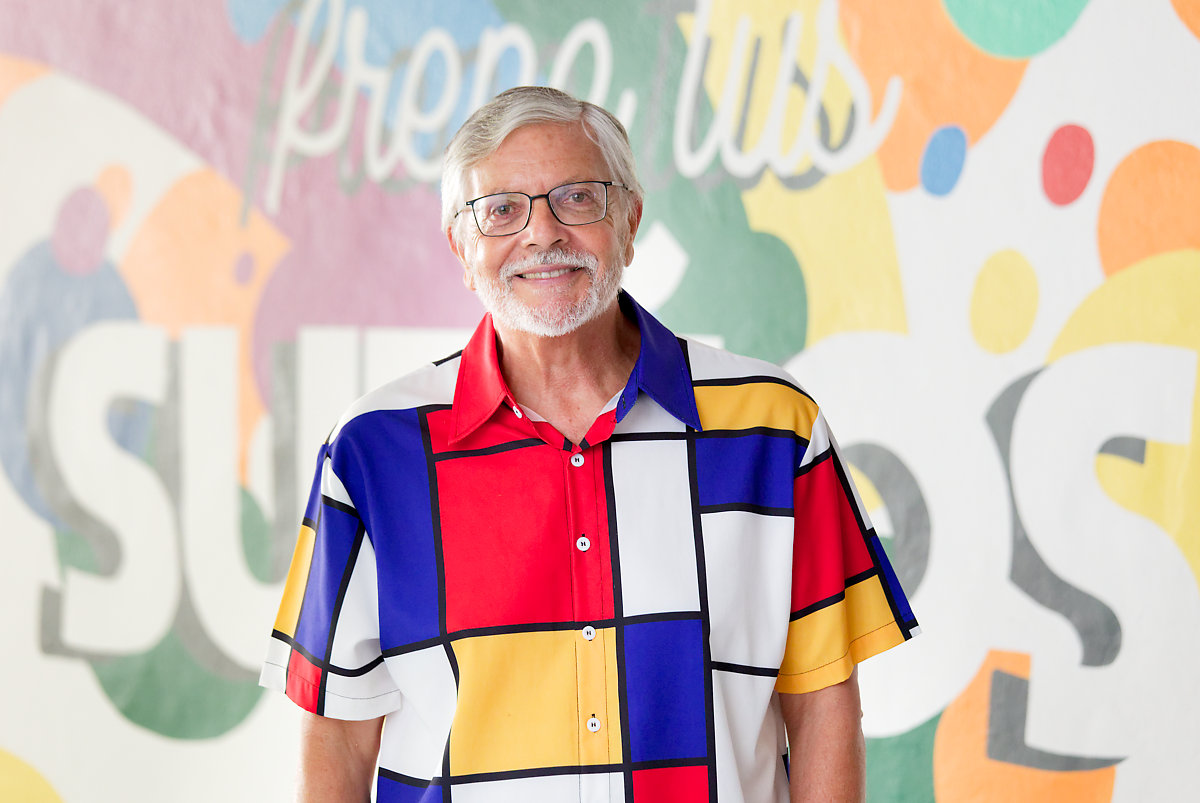
Just over five years ago, a total of 5,017 people registered for what was then called the University Access Baccalaureate Assessment (EBAU), an unusually high number of enrollments, as they typically hover around five hundred fewer. It was 2020, the year of lockdown, a time of unpleasant memories that we bring up here to highlight the enormous organizational effort involved in carrying out an already complex process, to which unprecedented health and safety measures had to be added.
In fact, the entrance exam was held later, between July 1st and 4th, almost a month after the usual dates. Multiple venues had to be used to allow for social distancing in classrooms, as recommended by health authorities. Therefore, in Tenerife, in addition to the usual faculties on the Guajara Campus, others were used on the Anchieta and South (Adeje) campuses.
The results of that university entrance exam (EBAU), with a first-time pass rate lower than 90% (specifically, 88.92%), reflected the difficult conditions the students faced. But the important thing is that the exam took place, and thus the 2020-21 academic year was able to begin with 5,504 new students, who joined the 13,865 who continued their studies. This was all thanks to the well-oiled machinery for organizing these exams, which falls under the Vice-Rectorate with student affairs responsibilities, with excellent coordination between the universities, the Canary Islands Government's Department of Education, and the high school teachers. And also because this institution had a highly experienced coordinator at the helm., Antonio Adelfo Delgado Núñez.
 Communication and political science
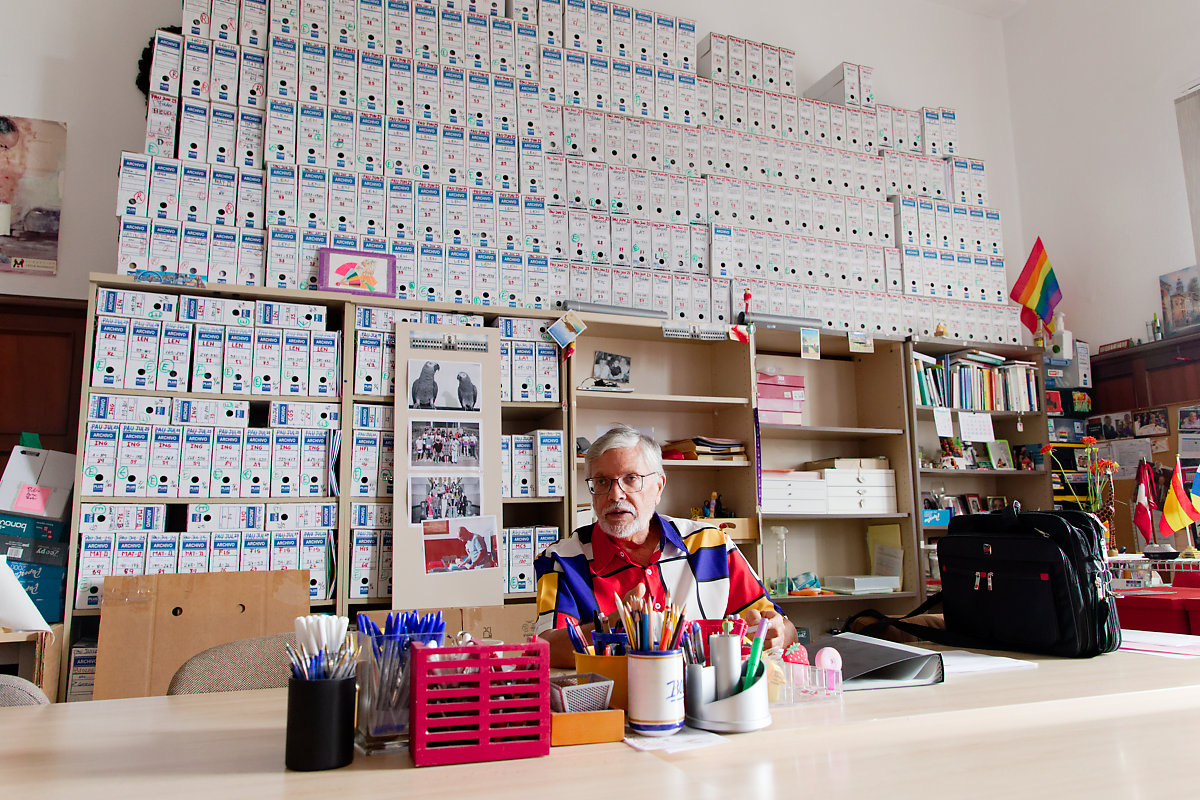
He greets us in spacious rooms of the Central Building, where a wall is entirely covered with filing cabinets stacked almost to the height of the soaring ceiling. “I think I have the biggest office in the university,” he jokes, explaining that this is the documentation accumulated after the entrance exams, which is collected periodically by the University Archives. During our long conversation, he displays one of the characteristics that perhaps best defines him: his communication skills. It's no wonder he's a well-known figure at the institution beyond his duties as a lecturer in the Department of Political Science and Public Administration or coordinator of the entrance exams; for example, it's his voice that has been heard in the Paraninfo (Great Hall) for years before every performance, asking everyone to silence their cell phones.
As he himself acknowledges, his first calling was always communication, and in fact, he was involved in the world of radio for many years, presenting and directing a weekly magazine program on Radio Nacional de España in the Canary Islands, later working at other stations such as Radio Isla, Azul Radio, and Radio San Borondón. It was a job he started as a hobby and which he combined for many years with his teaching and administrative duties. “I improvised a lot, but based on a structure, having a script and preparing the segments thoroughly. There came a point when the Saturday program, more than a pastime or a way to have fun, had become a sacrifice requiring a great deal of personal effort, and that's why I left.”.
He has also been a contributor to television programs, where he did “some very outlandish things about celebrity gossip,” although he points out that “20 or 25 years ago, celebrity talk shows, compared to today's, were intellectual discussions.” He has even ventured into film studies, another of his passions, on which he has also published academic works and chapters in reference books such as “The Encyclopedia of Illustrious Canary Islanders,” published by the Center for Canarian Popular Culture.
However, his connection to the University of La Laguna stems from his degree in Political Science and Public Administration from the Complutense University of Madrid. Initially, he worked for several years in the private sector as an administrative manager, registered through the Ministry of Public Administration. This was a family tradition, as his father, uncle, and brothers were also managers, and in fact, he continued in this field even after joining the University of La Laguna part-time in 1990, in the Political Science department, which had grown somewhat and was able to offer a position which he filled.
Delgado Núñez had first come into contact with the department a few years earlier, when its head, Professor Juan Hernández Bravo de Laguna, was writing a book on local elections in the Canary Islands and needed someone to help him clean up the data in the electoral records. He was hired for that specific collaboration, which soon expanded to include more work for a second book, before he won a permanent position through a competitive process, initially part-time and later full-time.
Currently, Delgado Núñez is employed as a collaborating professor, a dying breed that, in turn, was the position he himself held when he was hired as part-time or full-time collaborators. “When I started full-time, I was everywhere; I even taught six complete courses a year at centers that had nothing to do with each other,” he recalls.
 From teaching to management
In that academic journey, Delgado Núñez also came to take on several optional subjects of the Pedagogical Qualification Course created in 2001 to replace the Pedagogical Adaptation Course (CAP) and, later, the coordination of the internships in the Master of Teacher Training, as well as the coordination of the specialty of Didactics of Economics, which he continued to maintain for several years.
That academic coordination work was her entry into university administration, which from 2008 onwards would increase until it became almost one of her main occupations. “I always say that, paradoxically, I left the field of administration to do other things, like teaching, research… And life took me in different directions—not immediately, because in truth it wasn’t like that in the first few years—until from 2007 onwards I returned to administration and I haven’t left it since, because I’ve been doing it for 18 years now.”.
This new stage began that year when the then Vice-Rector of Students, Juana María Rodríguez He was offered the position of Director of the Secretariat for Student Participation and Performance Improvement. The Vice-Rector's office was also responsible for organizing specific access for adults, which at that time was only for those over 25, and Delgado Núñez was also entrusted with this task. Exactly one year later, a new decree created access for 40- and 45-year-olds, further complicating the process.
“It was complicated,” he recalls, “because it also coincided with the period before the 2012 crisis, when there was already a backlog of people who wanted to get qualified, and the course and the entrance exam grew significantly. Some subjects even had up to six groups, and therefore, a single teacher couldn't teach them all.” By comparison, those same subjects now only have one group. “We're talking about times when there could be 700 students,” compared to the roughly 200 currently enrolled in the courses for those over 25 and 45.
Reflecting on this entrance exam, popularly known by its acronym PAM, Delgado Núñez believes it may have lost some of its purpose in its current format. He explains that the two public universities in the Canary Islands submitted a report two or three years ago to the CRUE's sectoral committee on access for students over 25 and over 45, including a historical analysis of its origins and evolution.
“The system for older students was established in 1973, and the circumstances that year were still those of a post-war period in which many people had fallen behind in the education system and where education wasn't compulsory until the age of 16. At that time, it was fully justified in today's terms. But I think that's quite outdated, because we've had compulsory schooling until the age of 16 for more than 20 years, which means that most people complete their secondary education (ESO).” Therefore, he believes that nowadays, people aspiring to the PAM 25 program should have, at a minimum, a secondary education (ESO).
He justifies his opinion by pointing out that this access process can cause considerable frustration, because these entrance exams for older students can be very difficult, and the figures are clear: a large number of people fail. “During the presentations for the access course, I have to play the role of the bad cop, the one who warns them that it won't be a walk in the park.”.
 PAU Coordination
After spending several years in the Vice-Rector's office focused exclusively on access for students over 25, 40, and 45 years of age, a decade ago he also assumed the overall coordination of access for new students from Baccalaureate and Vocational Training. During his time as Vice-Rector for Students of Alfonso García Hernández, Delgado Núñez stepped down as director of the secretariat, although he continued to coordinate access for senior citizens. When García and his team resigned in May of that academic year, he became vice-rector. José Manuel García Fraga, took charge of coordinating the upcoming university entrance exams, while the new director of the secretariat, Juan Manuel Herrera, took charge of the access for seniors.
Even so, Delgado Núñez never completely severed his ties with the admissions process for older students, because during the two years that Herrera coordinated it, he served as president of the examination board, given his prior experience. With the arrival of the vice-rectorate of Lastenia Hernández Zamora, He remained linked to the position of access coordinator, which eventually became unified: both the access for adults and the then-EBAU (University Access Assessment) were under his responsibility. In the current phase with the vice-rector Rosario Hernández Borges, Delgado Núñez once again holds the rank of director of the secretariat, specifically of Access and Diversity (an aspect we will return to later).
“The PAU and the tests for older students are different things, but they are related, and sometimes we have used the PAM to do some experiments and tests on issues such as student lists, classroom distribution, exam format models and other things” that are then applied in the PAU.
Over the years, university entrance exams have undergone several modifications—changing from the PAU to the EBAU and then back to the PAU—and have not been without controversy, with accusations, founded or not, of varying levels of difficulty across different autonomous communities. Last year, a new royal decree came into effect, representing a substantial change, but its implementation is being phased in gradually. “It means moving towards a more competency-based system for the exam, which is consistent with the fact that the education law (LOMLOE) also aims for a more competency-based approach to teaching, and it is logical that this should be reflected in the exams.”.
Technically, the new university entrance exam (PAU) has been in place for two years, with changes introduced each year. “Since there was no decree implementing the LOMLOE (Organic Law for the Modification of the Organic Law on Education) until last year, the 2024 exam only included a few new subjects. Back in 2005, we had a decree that came out very late, in June 2024, when we were administering that year's PAU, with some important provisions because it established limits on elective subjects and a greater emphasis on competencies.”.
With the new decree now in effect in 2025, the CRUE's sectoral commission created a national commission comprised of subject coordinators from across Spain to establish commonalities in the university entrance exams across the different regions. These commonalities will begin to be applied in the 2026 university entrance exams. For now, these commonalities affect the penalties for spelling mistakes in each subject and the reduction of optional subjects. “No one will be able to study half a curriculum and get a perfect score anymore. Before, this was possible because in some subjects, option A, for example, covered topics 1 through 10, and option B covered topics 11 through 20. Someone could easily study three authors or specific topics and not touch the rest because they were only going to prepare for one of the options.”.
Delgado Núñez explains that the idea is to achieve greater convergence, incorporating the results of the commission's work last year, approved at a meeting held in Madrid shortly before the 2025 university entrance exams. “There, agreements were reached on each subject, which don't go so far as to implement the same exam, but they do establish the percentage increase in competency-based questions each year. Compared to the previous system, the differences will now be smaller. The exam will be different, but the curriculum content will be the same, and the levels of difficulty are also intended to be consistent.”.
This process of seeking consensus and implementing it gradually has been, in his opinion, a success. “I think the Ministry has been reasonable, as have the educational authorities throughout Spain. They have allowed it to be done progressively, and in fact, this year, when we implemented it, we saw a slight decrease in grades across Spain, which would have been much greater if the implementation had been immediate.”.
 Diversity
As mentioned earlier, the secretariat currently headed by Delgado Núñez not only manages access but also diversity, as social activism is another facet to which he has dedicated his time at the university. For this reason, he was one of the promoters and the first director of the LGBTIQ+ Diversity Cultural Classroom of the institution, which It began its journey in 2021 And, despite its relative youth, it has already organized several events in which, in addition to advocating for the rights of these groups, it has also focused on research into issues that concern them.
She explains that the initial driving force behind the classroom was the then Vice-Rector Lastenia Hernández, who understood that diversity, and especially sexual and gender diversity, should have a designated space within the university. At that time, it was understood that, at least initially, this should be a cultural classroom. “I came on board because it was necessary for someone from the Vice-Rectorate for Students to be involved, and I assumed the presidency in a representative capacity for official actions, knowing from the outset that it was a collective leadership of a core team that also included…” Sergio Siverio Luis, Dolores Morera Bello, Alfredo Pazmiño and José Antonio Ramos Arteaga”.
Once the student group had its bylaws in place and was up and running, Delgado Núñez handed over the leadership to Sergio Siverio, understanding that his role was precisely to take those initial steps toward the organization's launch. "I left at a time when the group was already well-known and, to some extent, needed to separate itself from the Vice-Rectorate for Students.".
Delgado Núñez emphasizes that this is an open classroom, and people who are not part of the LGBTQ+ community also participate: “An issue like this isn't exclusive to those who identify as LGBTQ+; it affects us all.” Since Rosario Hernández became Vice-Rector, the creation of the Diversity Secretariat was also promoted, and the existing Equality Unit is also related to these matters.
One of Delgado Núñez's first tasks as director of the secretariat in this latest phase has been to comparatively analyze how other universities address diversity, and he found that there is a wide variety of institutional approaches. "We are finding our niche," he says. "But the fundamental idea is to work with these groups." And, in that sense, he believes that the University of La Laguna has things to be proud of. For example, for years, in the university entrance exams (PAU), transgender students have been called to class using their chosen name. "Long before this issue was regulated, we had already taken the initiative, and if a person requested to be called by their chosen name, we did so. Their official name will still appear on their grade report, but at least a culture is being created that we are bringing into the classroom.".
Antonio Adelfo Delgado Núñez believes he will remain in charge of the university entrance exams until at least 2027. “I turn 70 that year, which seems reasonable, doesn’t it? Many people don’t understand the importance of university entrance exams, which are, after all, one of their calling cards. But generally speaking, and this is important, I think that the people who participate in the exam, whether they are university professors or staff, administrative and management personnel, appreciate the work that is done. And that is very satisfying.”.
Communications Office

 Spanish
 English
 French