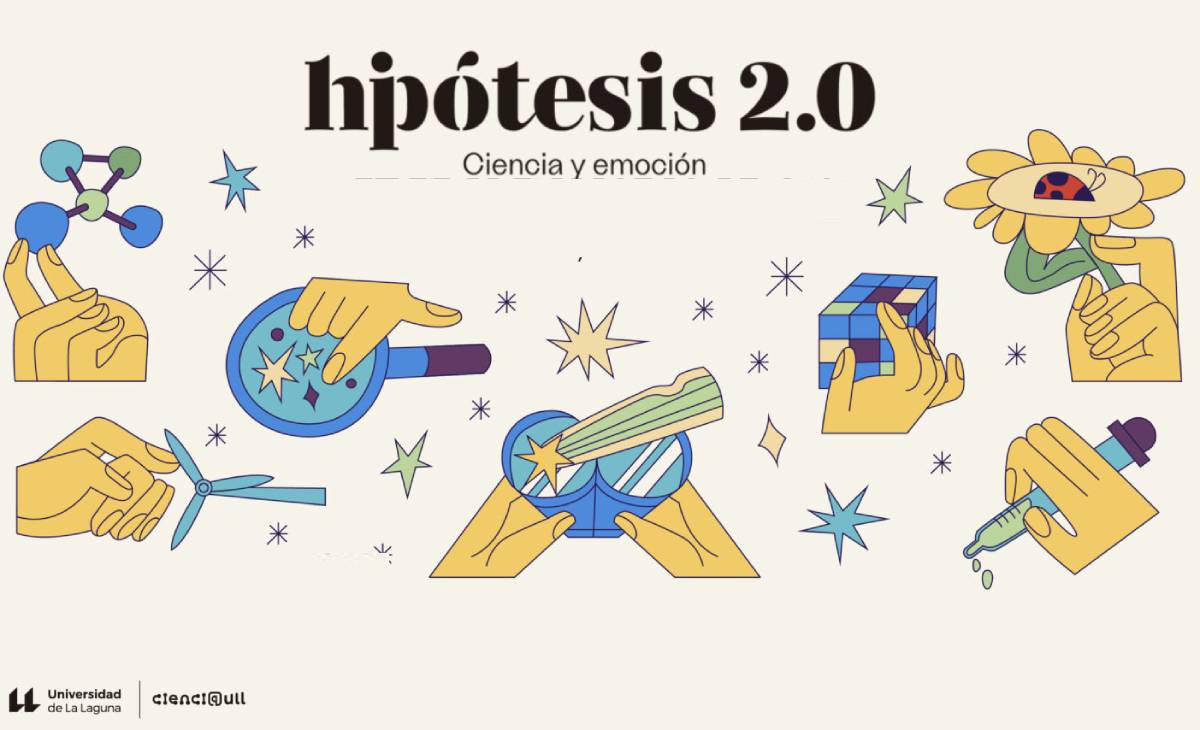
 The popular science magazine of the University of La Laguna Hypothesis 2.0 The journal launches its 19th issue, a special edition showcasing the results of the "HYPOTHESIS" educational project. This project, now in its third year, is designed to introduce non-university students to scientific inquiry and the writing of popular science articles. This pioneering initiative in the Canary Islands has enabled students from ten schools across the archipelago—Tenerife, Fuerteventura, Lanzarote, Gran Canaria, La Palma, and El Hierro—to investigate topics of scientific interest, connect with researchers and authors, access specialized sources, and learn firsthand what research entails.
The aim of this project, made possible by the support of the STEAM department of the Canary Islands Government's Department of Education, is to foster interest in science and research among pre-university students. Through writing articles, students have developed written communication and outreach skills, stimulated their critical thinking and independent work abilities, and cultivated an appreciation for science and, in many cases, a scientific vocation. A total of twenty training sessions were held at the participating schools, culminating in the presentation of 63 articles written by 96 students.
The texts selected for this issue of the journal reflect the diversity of students' scientific interests and range from neuroscience, public health, and biomedicine to ethics, history, and technology. The editorial committee also awarded three special mentions to the most outstanding articles. In the best writing category, the award went to…“The HIV pandemic: a story that may be coming to an end”, by Sergio Negrín and Daner Martínez, from IES Marina Cebrián. The award for best original theme went to “Deciphering the magnificent world of dreams in children with ASD”, by Aitor Pérez, from IES Garoé. Finally, the award for best research went to “The mark of a journey”, by Indira Carballo, Oriana García and Lunimar José Silva, also from IES Garoé.
With this issue, HIPÓTESIS 2.0 reaffirms its commitment to early science education and to science communication as a tool for building bridges between science, schools, and society. This comes in a context where, according to data from the Spanish Foundation for Science and Technology (FECYTGiven that only 161% of the Spanish population expresses a spontaneous interest in science and technology, the journal champions the role of education as a driver of cultural change. The publication of these articles represents not only an academic exercise but also an invitation to experience science as an everyday activity and a social commitment. Issue 19 of Hipótesis 2.0 is now available digitally on its website. web.

 Spanish
 English
 French