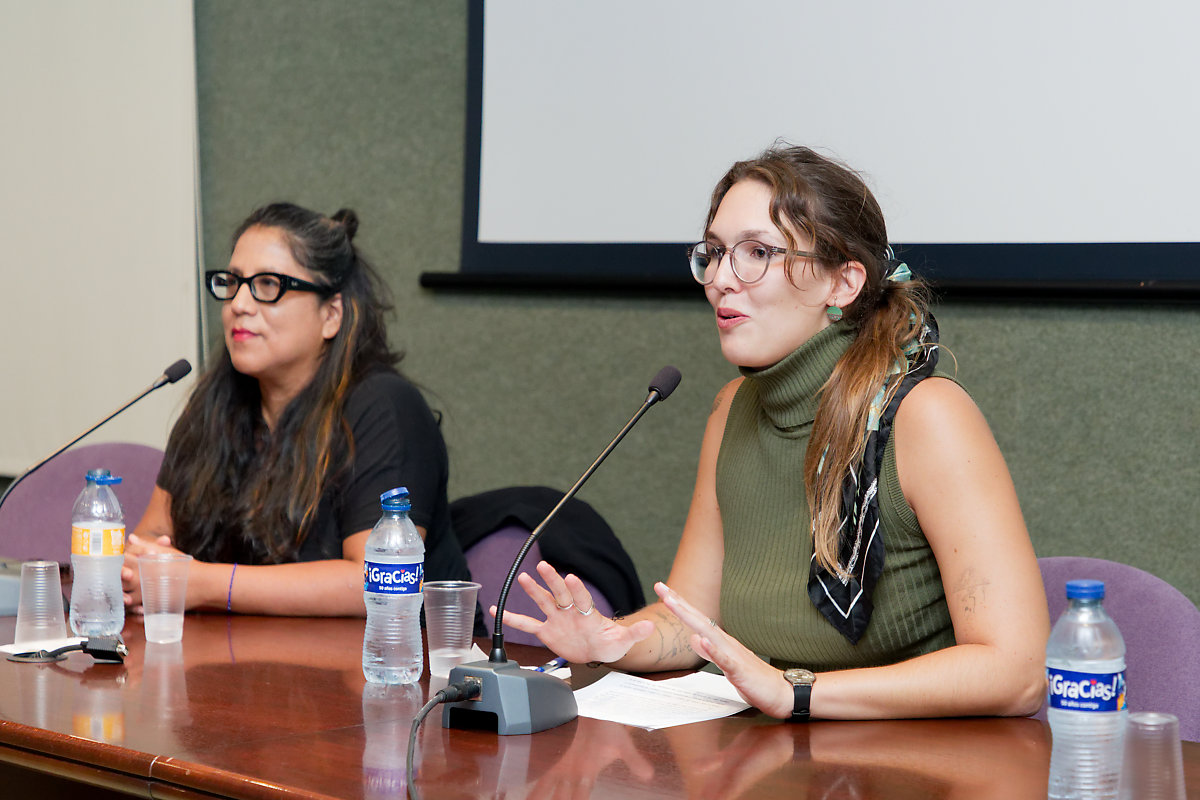
The second part of the International Conference “Memory, Testimony, and Trauma in Transatlantic Literature,” a project of cultural interest awarded by the Vice-Rectorate for Culture and University Extension of the University of La Laguna, began this week with the participation of two of the leading figures in contemporary Latin American literature. The event was funded by the Tenerife Island Council and supported by the Philology Section of the Faculty of Humanities, the Department of Spanish Philology, and the Ateneo de La Laguna.
On this occasion, the Cultural Classroom of Language and Literature opted for a meeting with two outstanding Latin American authors with international projection, with the purpose of reflecting on topics of full relevance such as migration, post-indigenism, the possibilities of imagination and the role of literature in the current context.
The first session was led by Peruvian writer and journalist Gabriela Wiener, who discussed her most recent novels, 'Huaco retrato' (Penguin Random House, 2021) and 'Atusparia' (Penguin Random House, 2024). During the session, Wiener explained the creative process of looking to the past to confront a memory that leads directly to a history of violence and colonial wounds.
 The author argued that literature was a way to reclaim a new justice, a “kind of revenge,” built from “fragments stolen from an incomplete history,” in which unearthing, exploring, and carrying out an archaeological process are essential. Gabriela Wiener also drew a bridge between fiction and immediate reality, recalling that little has changed since the writer Manuel Scorza starkly defined the Andean experience: “In the Andes there are five seasons: spring, summer, autumn, winter, and massacre.”.
During the subsequent conversation with postdoctoral researcher Katya Vázquez Schröder and the audience, she emphasized on several occasions that literature can have an impact on reality, even from small reading clubs, where critical discussion, organization and meeting are already a political, vindicatory and resistance act.
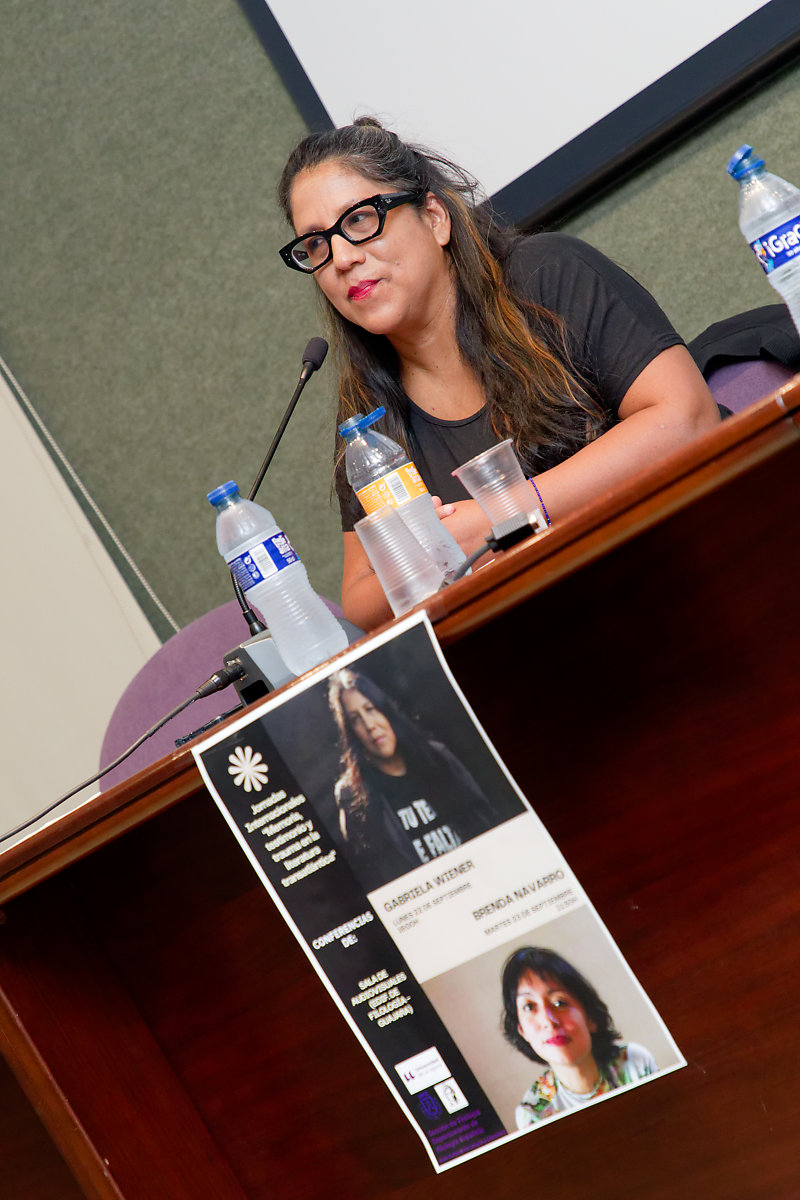
The following morning, the Audiovisual Room of the Department of Philology Building hosted another meeting with Brenda Navarro, a leading figure in contemporary Latin American literature. She delivered a lecture entitled “Creative Power in the Face of the Modern World,” sparking a debate that was as insightful as it was necessary. Navarro challenged the labels often imposed on female authors, especially those who, like herself, write from the perspective of migrant experience in Spain, often forced to conform to a “literature with a surname.”.
The writer explored a wide range of personal influences, not only literary but also musical, to share with the large and diverse audience that filled the room that literature is, above all, a strategy. For the author of 'Ceniza en la boca' (Ashes in the Mouth) and 'Casas vacías' (Empty Houses), this strategy consists of ‘creating new ways of expressing my native language to approach the unknown or, in any case, to invent it.’.
In her speech, the themes that run through her novels—historical memory, grief, disappearance, and xenophobia—became threads of reflection on the present. “When the
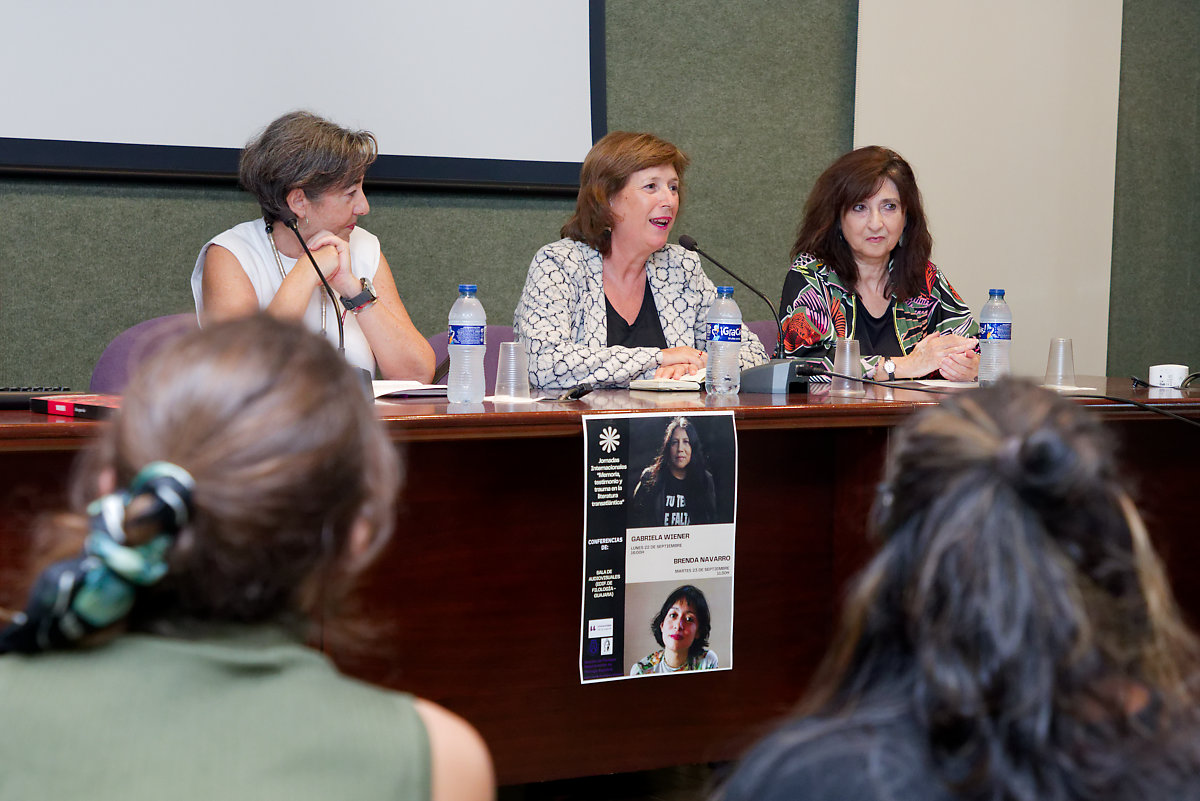
A moment from the opening of the conference.
"Official narratives want us to talk about something in the public sphere, but literature has the ethical responsibility to raise other questions and talk about what they don't want to talk about," he stated.
The ensuing dialogue, led by Vázquez Schröder and enriched by the active participation of the audience, left a question posed by the author herself hanging in the air: How to respond to so much violence? The question remained open, though with a possible shared horizon for both guests of the Conference: refuge will be found in places, such as literature, where what is censored can be said and where other worlds are still possible.

 Spanish
 English
 French