A recent scientific study from the University of La Laguna examines the evolution of inequality in child health in 15 sub-Saharan African countries, using data from the Demographic and Health Surveys (DHS) collected between 2008 and 2018. The research, published in the journal The Journal of Development Studies and developed by David Pérez-Table, Gustavo A. Marrero y Sara Darias-Curvo, belonging to the Center for Social Inequality and Governance Studies of the academic center, offers for the first time an analysis of how various family, maternal and geographical factors contribute positively or negatively to changes in health gaps in the first years of life.
Over the past decade, inequality in child health has decreased on average in the countries analyzed. However, this trend shows strong inertia, as current levels are closely correlated with and dependent on previous records. Furthermore, observable factors such as household wealth, maternal education, and maternal health are playing an increasingly important role in explaining these inequalities.
In this context, one of the most relevant findings is that the portion of inequality not explained by the models (unobserved factors) has helped to reduce it in most countries, while observable circumstances tend to increase it. Specifically, family background and characteristics, and those related to maternal demographics, appear as key factors explaining changes in inequality in child height (adjusted for age and gender), a health measure used in the study.
Experts warn of a possible positive, albeit weak, relationship between changes in average child health and changes in child health inequality. Specifically, they point out that factors related to maternal demographics and family history contribute to improving average child health, but at the same time, increase health inequality. This finding underscores the need to design policies that not only raise overall levels of child health but also reduce disparities from an early age.
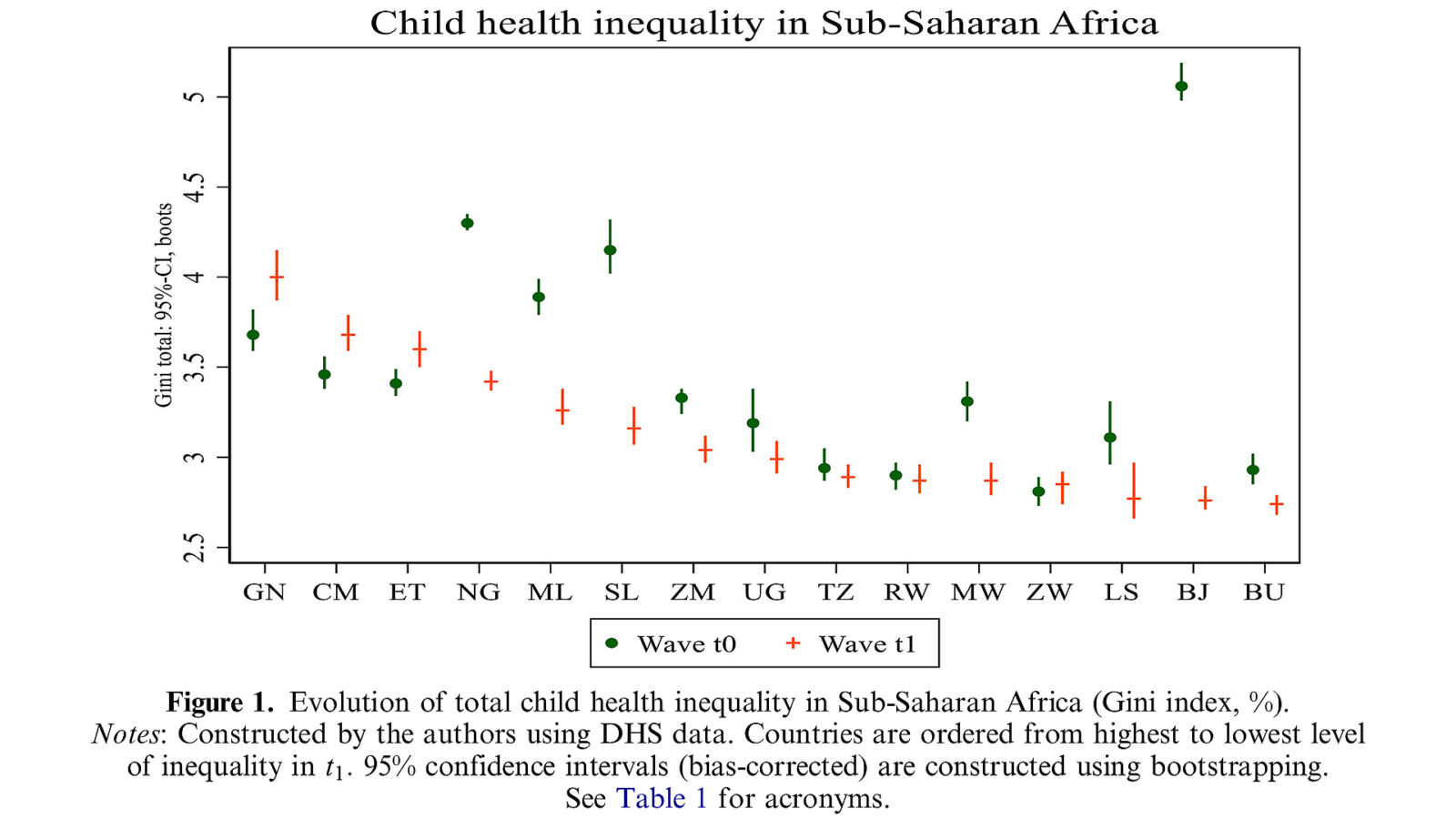 In the case of Sub-Saharan Africa, the results suggest that reducing inequalities in child health requires public health policies that disproportionately affect those with the poorest health, thereby simultaneously improving average child health and reducing inequality. Furthermore, compensatory policies are needed to mitigate inequality of opportunity from the earliest years of life, preventing these disparities from negatively impacting individuals' future health, education, and economic outcomes.
Although the findings provide a comparative perspective for all the countries analyzed, the research team emphasizes the importance of conducting country-specific studies to more accurately understand which specific factors explain changes in child health inequality in each context.

 Spanish
 English
 French