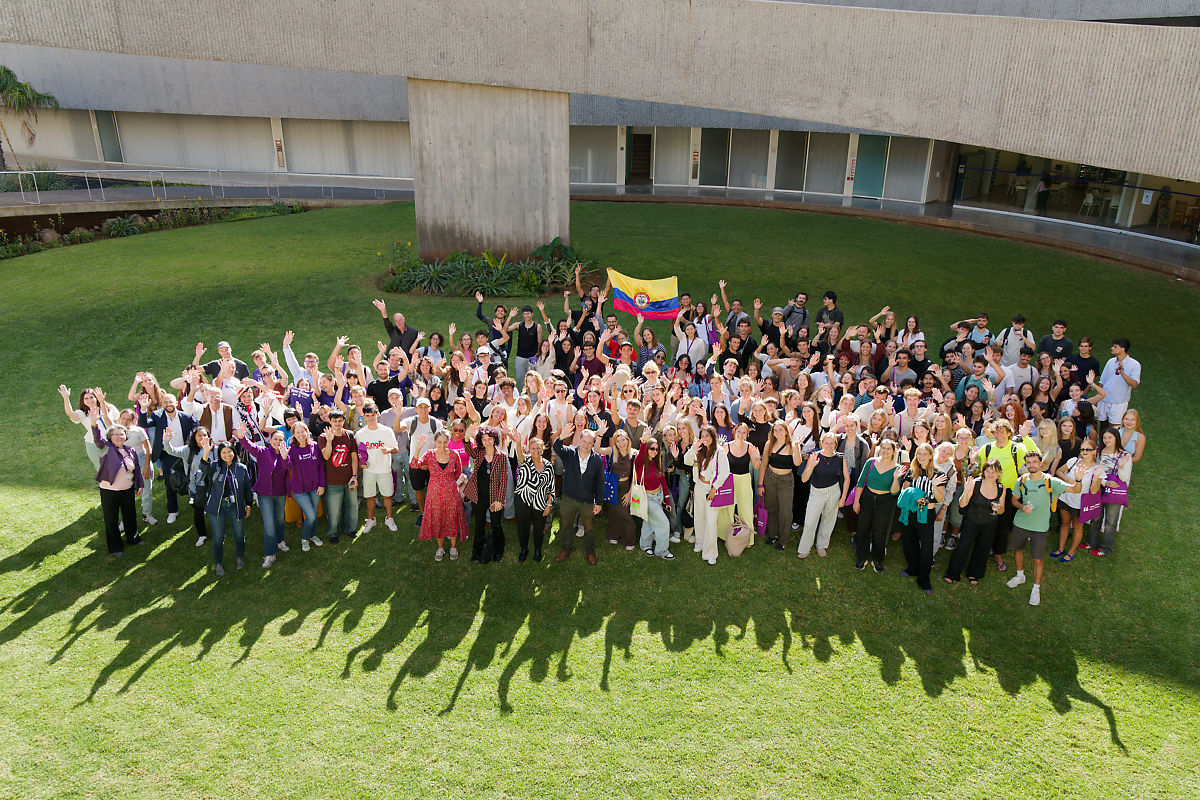
The University of La Laguna celebrated yesterday, Monday, September 29th, at the Faculty of Fine Arts, the welcome day This meeting was for students participating in national and international mobility programs during the first semester, including Erasmus+ and SICUE, as well as those with non-EU agreements. With over 700 students expected this year, the goal was to facilitate their integration into the academic and social life of the institution from the start of their stay.
The Vice-Rector for Students, Rosario Hernández, opened the ceremony with a few words addressed to the newly enrolled students. In her speech, she encouraged them to enjoy this experience and take advantage of all the learning opportunities the university offers, while also providing them with several pieces of advice. Specifically, she reminded them to pay attention to academic procedures to avoid later problems with changes in registration or course selection, which commonly occur every semester.
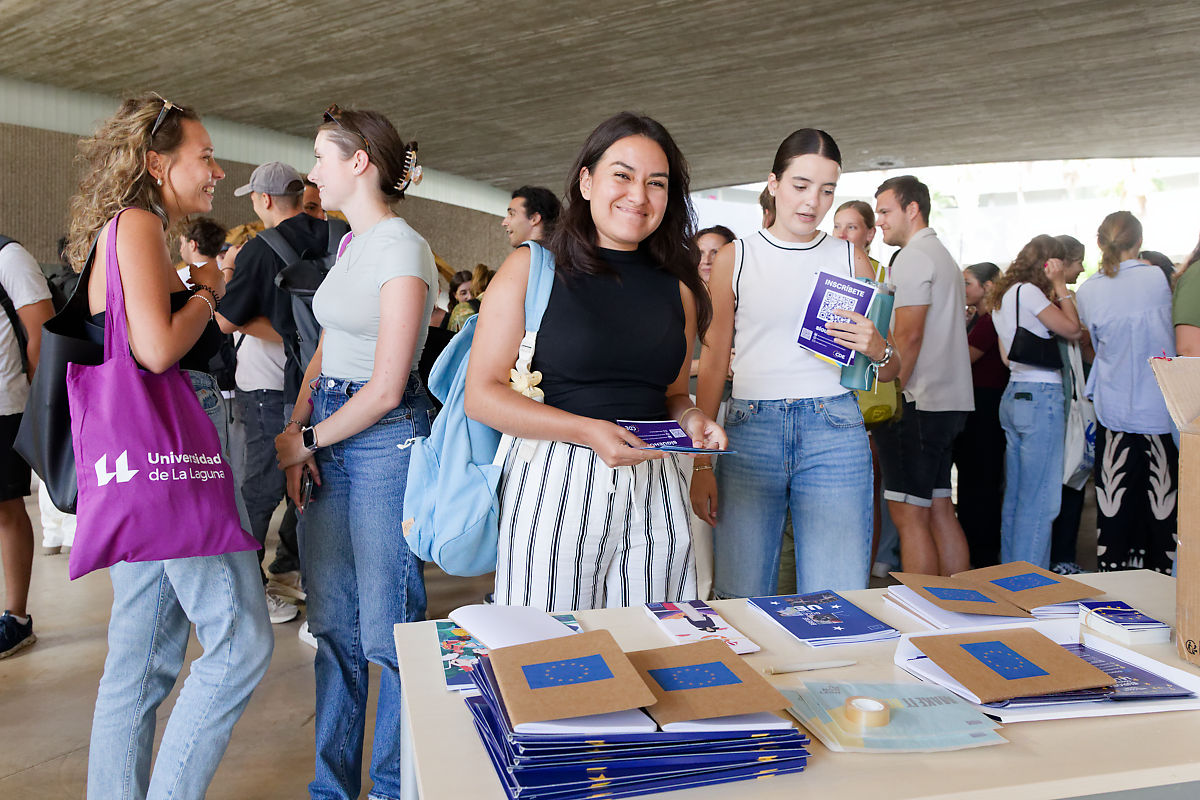 For her part, Inmaculada González, Vice-Rector for Internationalization and Cooperation, expressed her gratitude for the trust placed in the University of La Laguna and emphasized that the institution welcomes and supports its students with respect and a personal touch through all its services, encouraging them to use them without hesitation. She also stressed the importance of taking advantage of their stay to learn or improve their Spanish as a second language, since languages represent “a wealth of opportunities” for the future. She further invited them to explore the rich cultural heritage of Tenerife, a territory that serves as a meeting point for people from all over the world and, therefore, a true treasure trove of diversity.
Jorge Cruz, president of AEGEE Tenerife, presented the general lines of action of his association and, later, together with his colleague Daniel Martín, spoke about the free activities that the entity carries out every week, visiting different places on the island thanks to the funding of the Vice-Rectorate of Internationalization and Cooperation.
From the Bahamas to the Sahrawi Republic
The figures projected for this academic year reflect the breadth of student mobility at the University of La Laguna, with a total of 758 students. Within the European framework, the institution will host 245 Erasmus+ students, primarily from Italy, Germany, Poland, France, Portugal, the Czech Republic, and Romania, representing a total of 13 countries. These will be joined by 38 non-EU students. Of these, 24 come through bilateral agreements with universities in countries such as the Bahamas, Chile, Colombia, Costa Rica, Ecuador, and Mexico. Another 4 students are recipients of scholarships from the Carolina Foundation, coming from Argentina, Bolivia, and Honduras. In addition, 4 students are participating in the 'Learn Africa' program of the Women for Africa Foundation, from Equatorial Guinea, Madagascar, the Sahrawi Arab Democratic Republic, and Senegal. Finally, 6 students from Cape Verde and Benin are pursuing master's degrees through the Canary Islands-Africa Scholarship Program (PbCA) of the Government of the Canary Islands.
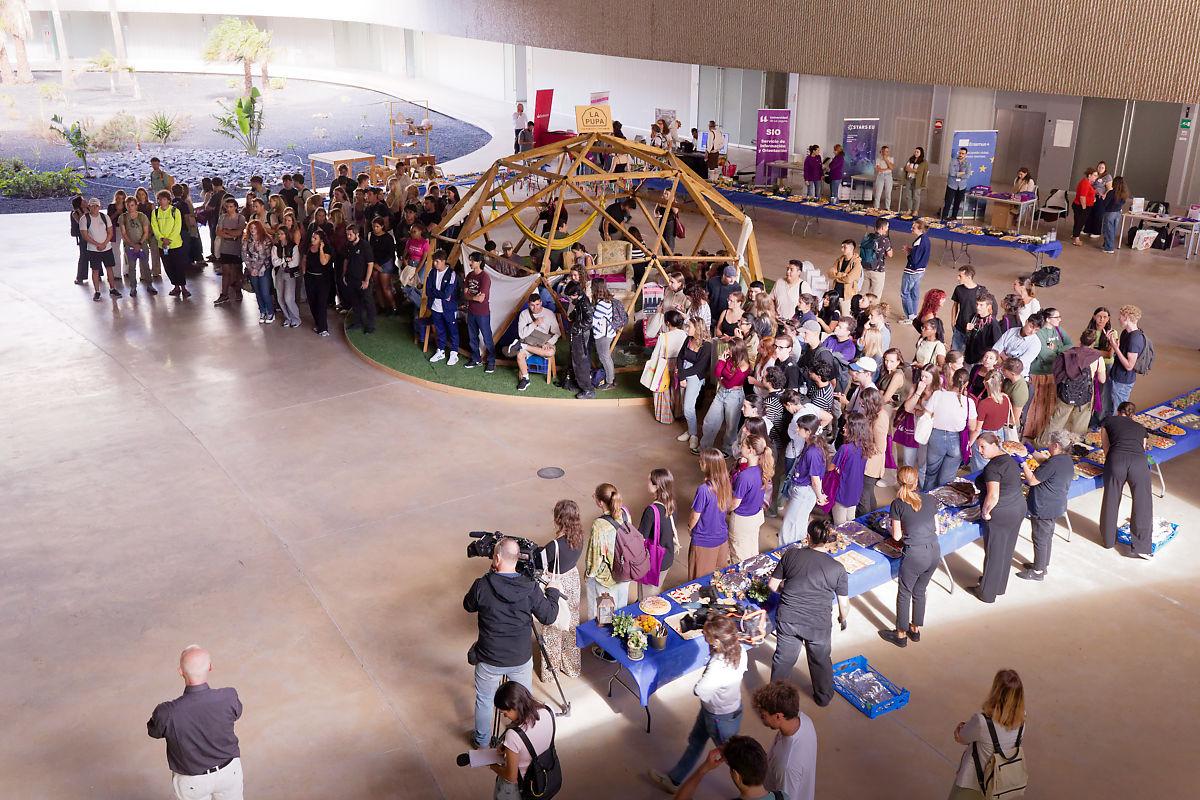 Due to the positive reception at the previous event, it was decided to maintain a fair format in which students could visit the various information stands for several hours and thus learn in detail about the university resources available to them. Representatives from the Language, Library, Sports, International Relations, European Documentation Centre, and Information and Guidance services of the university were present. Also playing a prominent role were Santander Bank, the STARS EU alliance (which brings together nine European universities to promote joint projects in teaching, research, and social innovation), and the student association AEGEE (States General of European Students).
The day became a relaxed affair thanks to live music by a DJ and an informal cocktail reception. This combination blended academic guidance with social interaction, helping students get acquainted with university life and take their first steps toward integrating into the community.

 Spanish
 English
 French