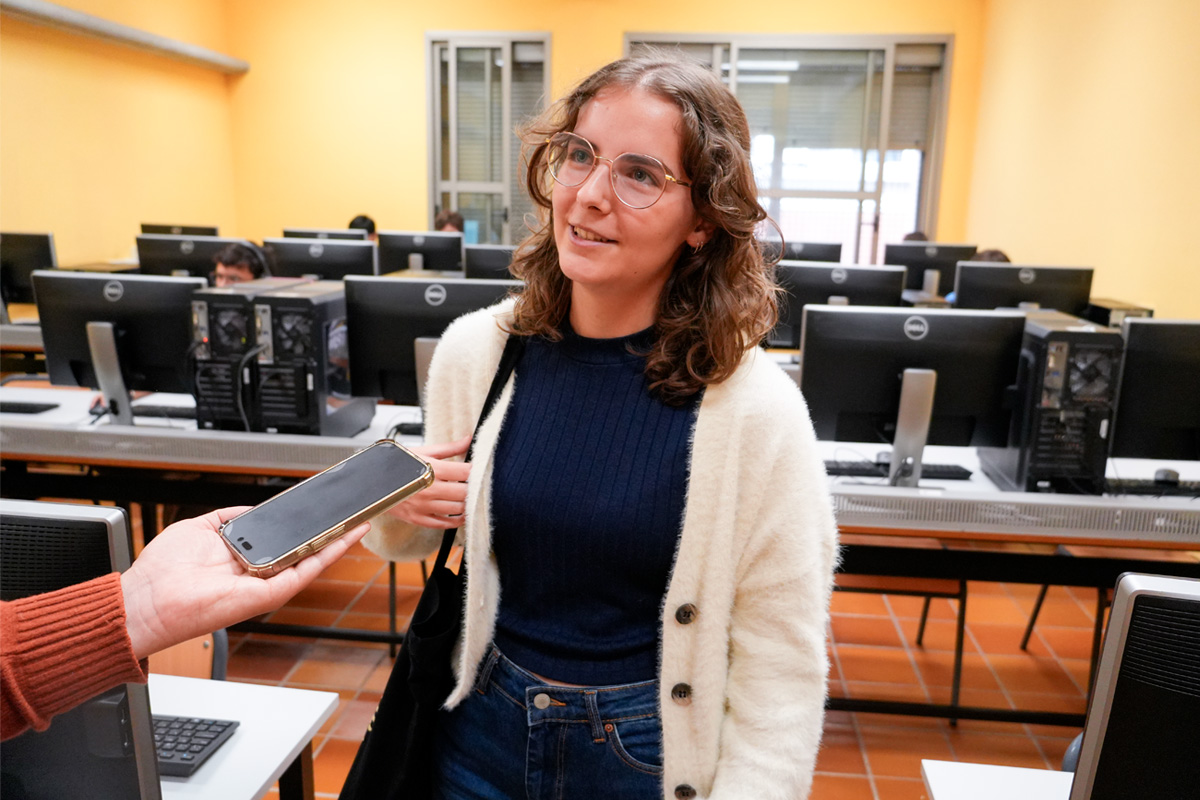
Belinda Hazel Cáceres Barreras is a graduate in Math y Master's Degree in Cybersecurity and Data Intelligence by the University of La Laguna, where she will soon begin working on her doctoral thesis, and has been chosen as an alternate member of the national team that will represent Spain in the European Cybersecurity Challenge (ECSC) to be held from October 6 to 9, in Warsaw (Poland).
The selection was made by the National Cybersecurity Institute (INCIBEThe agency, which reports to the Ministry for Digital Transformation and Public Administration, has assembled a team of ten young cybersecurity talents—five women and five men aged between 18 and 25—selected through a competitive process organized by the agency in collaboration with Spanish public universities. This edition marks a milestone, as it is the first time two parallel teams, one for women and one for men, have competed on equal footing to determine the national team.
The international event, organized by the European Union Agency for Cybersecurity, will bring together more than 20 national teams from across Europe and will be held in a Capture The Flag (CTF) format. The challenges cover key cybersecurity disciplines such as forensics, cryptography, reverse engineering, exploitation, web hacking, penetration testing, malware analysis, and secure development. Its aim is to identify, foster, and showcase the technical talent of member states in a highly competitive and collaborative environment, as well as to connect national talent with training and employment networks in the sector.
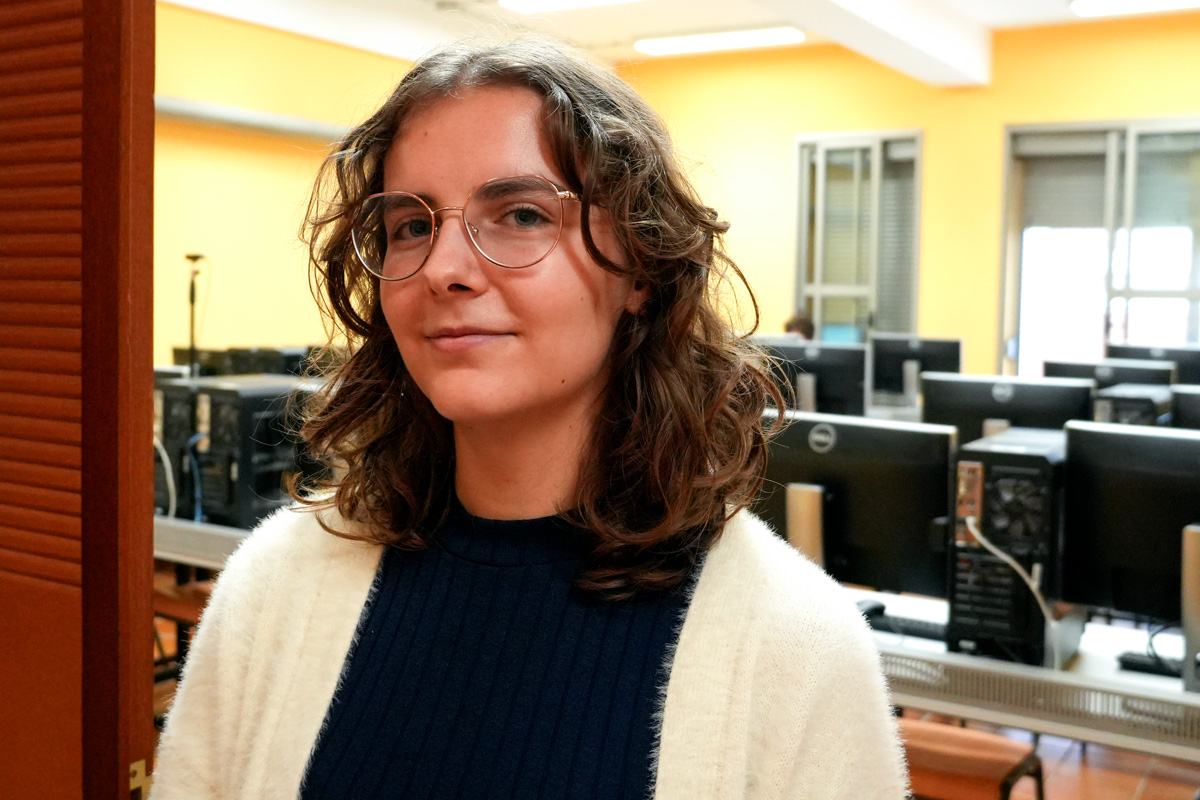 From mathematics to cybersecurity
During her undergraduate studies, Belinda Cáceres had no contact with anything related to cybersecurity, and her interest focused on pure mathematics. “Since everything in my degree is very theoretical, I wanted to see something more practical,” which is why she pursued a master's degree. “I really liked the cybersecurity aspect, and in fact, I completed the TFM with Pino Caballero Gil, "...on quantum computing, in which I related all the mathematics I liked to cybersecurity.".
During her postgraduate studies, she participated in her first hackathon, an experience that led to her being selected for INCIBE. This competition presents challenges across various categories to find vulnerabilities in code from the perspective of an "ethical hacker"—one who doesn't intend to cause harm. "Before getting into all this, I had no idea how complicated the challenges could be or that they involved pure mathematics," she confesses. "But to solve them, you have to know real math and be constantly learning, because new vulnerabilities are always emerging. You have to try to think like the person who posed the challenge, who racked their brains to create something difficult for you.".
His case is remarkable because, despite having been in the cybersecurity field for a relatively short time, he has already achieved such an important milestone as this selection. However, he doesn't believe he has any special aptitudes. "I think I simply put in the effort, that's all. You don't have to be super intelligent. Anyone, if they enjoy it and are committed, can achieve anything they want.".
He explains that the Warsaw competition will have two phases; one is based on the previously described "capture the flag (CTF)" model. The second is an attack-defense style competition. "All teams have the same services and set up their own infrastructure. Each team must find vulnerabilities in the other teams' services and, at the same time, patch their own to prevent attacks. It lasts eight hours, is a bit more chaotic, but fun.".
Industrial PhD
Following this competition, Cáceres Barreras will complete his doctoral thesis in the industrial PhD program with the company Atlantis Technology. Cándido Caballero Gil y Hector Reboso Morales as tutors. “I’ll be studying intrusion detection systems, which are devices that detect malicious activity on the network. We’re going to try to design prototypes based on artificial intelligence and also incorporate a bit of quantum computing to accelerate those algorithms.” Once she finishes, she hasn’t decided whether she’ll go into research or the private sector. “I like both. I’ve always idealized working at a university; I like being a professor and I haven’t ruled it out, but now I’m experiencing the more industrial sector and I like that too.”.
Belinda Cánceres considers her undergraduate mathematics degree at the University of La Laguna to be a positive experience: “It helped me a lot with cryptography, which uses a great deal of mathematics, even though it might seem otherwise.” However, she believes the degree program should include content related to this subject. “Cryptography could be a fantastic elective that could attract more people to cybersecurity by focusing solely on mathematics.” She also considers her postgraduate studies to be positive, and it truly redirected her academic interests: “At first, I was sure I wanted to write my thesis on something in pure mathematics, but doing the master's program changed my perspective.”.
The doctoral candidate also addressed the lack of women in specialties like hers: “I think there aren’t many role models in this field, and it can be a little intimidating, because it’s true that there are still many men and few women in cybersecurity. That’s why I think it’s important to publicize these initiatives and get involved, even if it’s a bit scary at first, because anyone with the necessary training and commitment can eventually participate in a European competition or whatever it may be.”.

 Spanish
 English
 French