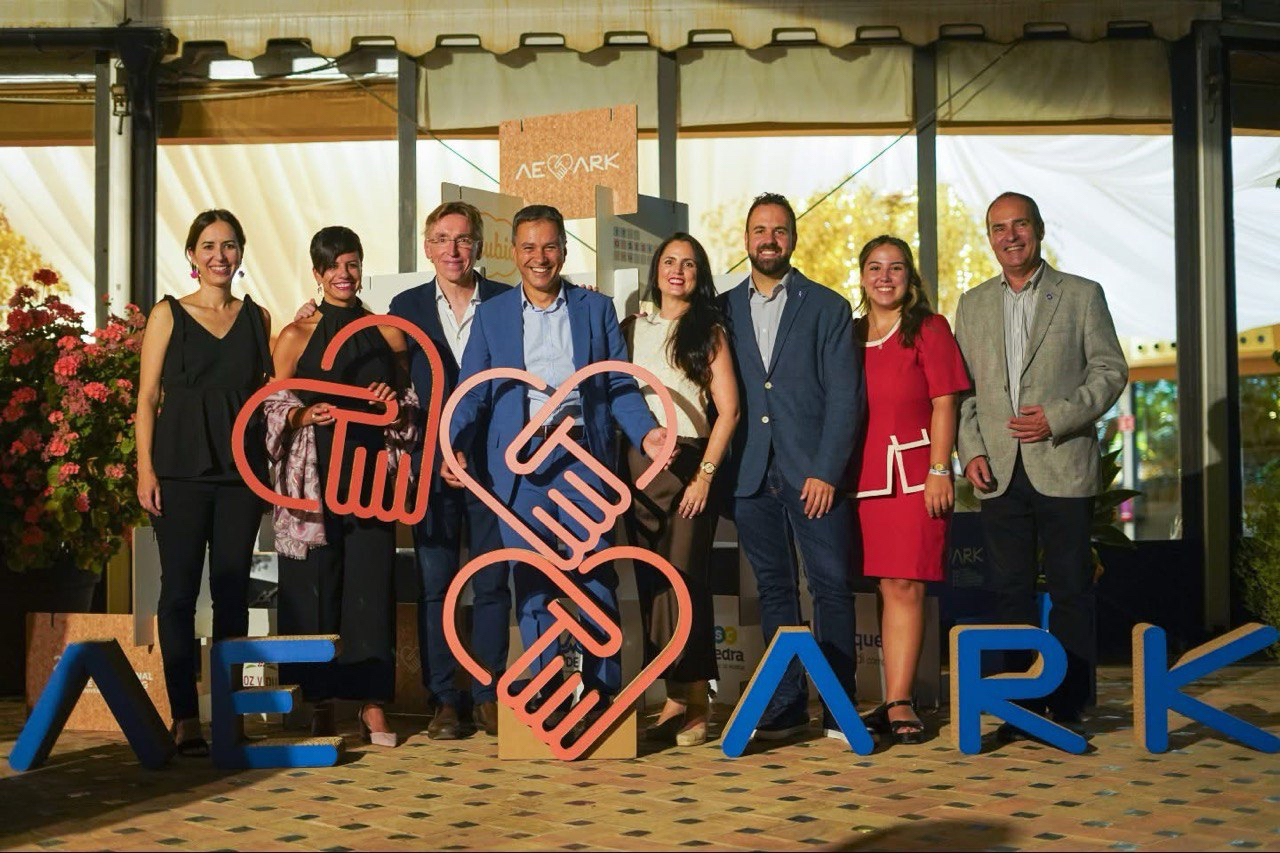
The Marketing and Market Research Department of the University of La Laguna had a prominent role in the XXXVI edition of International Congress of the Spanish Association of Academic and Professional Marketing (AEMARK), The event, recently held in Murcia, brought together leading national and international specialists in marketing research and teaching. Within this framework, several professors and researchers from the University of La Laguna (ULL) presented papers on current topics of academic and professional relevance, including an award-winning work recognized for its significant impact on the business sector.
The contributions, some developed in collaboration with national and international universities, addressed topics such as tourism, wine, consumer behavior and new technologies, highlighting how culture, experience and sustainability generate both academic and applied value in the professional sector.
Doctoral candidate Lucía Moreno presented her thesis, “Musical and Contextual Influences on Wine Tasting,” at the Doctoral Colloquium. Her research examines how music and the environment can transform the perception of wine, evaluating the reactions of young people, tourists, and the general public to different musical styles. The results offer guidelines for designing sensory marketing strategies. In addition, the authors defended ongoing research that delves deeper into the influence of music on young people's sensory evaluation of wine.
Along the same lines, Edgar Sabina, Ricardo Díaz and Desiderio Gutiérrez presented the study “Agritourism and local wine consumption: an extended model of goal-directed behavior”, Developed in collaboration with a researcher from Almería, the study, based on surveys of over 700 European tourists, demonstrated that anticipated emotions and attitudes towards local wine influence consumption intentions, highlighting the importance of wine tourism for cultural preservation and sustainable development.
Within the framework of tourism research, Professors Gutiérrez Taño and Díaz Armas, in collaboration with researchers from Alicante and the Balearic Islands, published “Beyond Rationality: The Role of Emotions in Residents” Support for Tourism.” This work delves into how emotions mediate the relationship between the perception of tourism impacts and residents’ support for local development. The research, which involved 2,349 participants from Alicante, Mallorca, and Tenerife, offers guidelines for designing communication and governance strategies that incorporate affective and cognitive factors.
Roberto Sandulli presented “Transformation of Chinese Outbound Tourism: From Consumption to Cultural Experience,” demonstrating that post-COVID Chinese tourists prioritize cultural immersion, local experiences, and natural environments, with a preference for independent travel. These findings challenge the traditional view of the tourist as focused on group purchases and offer guidelines for destination brands to leverage cultural and natural resources.
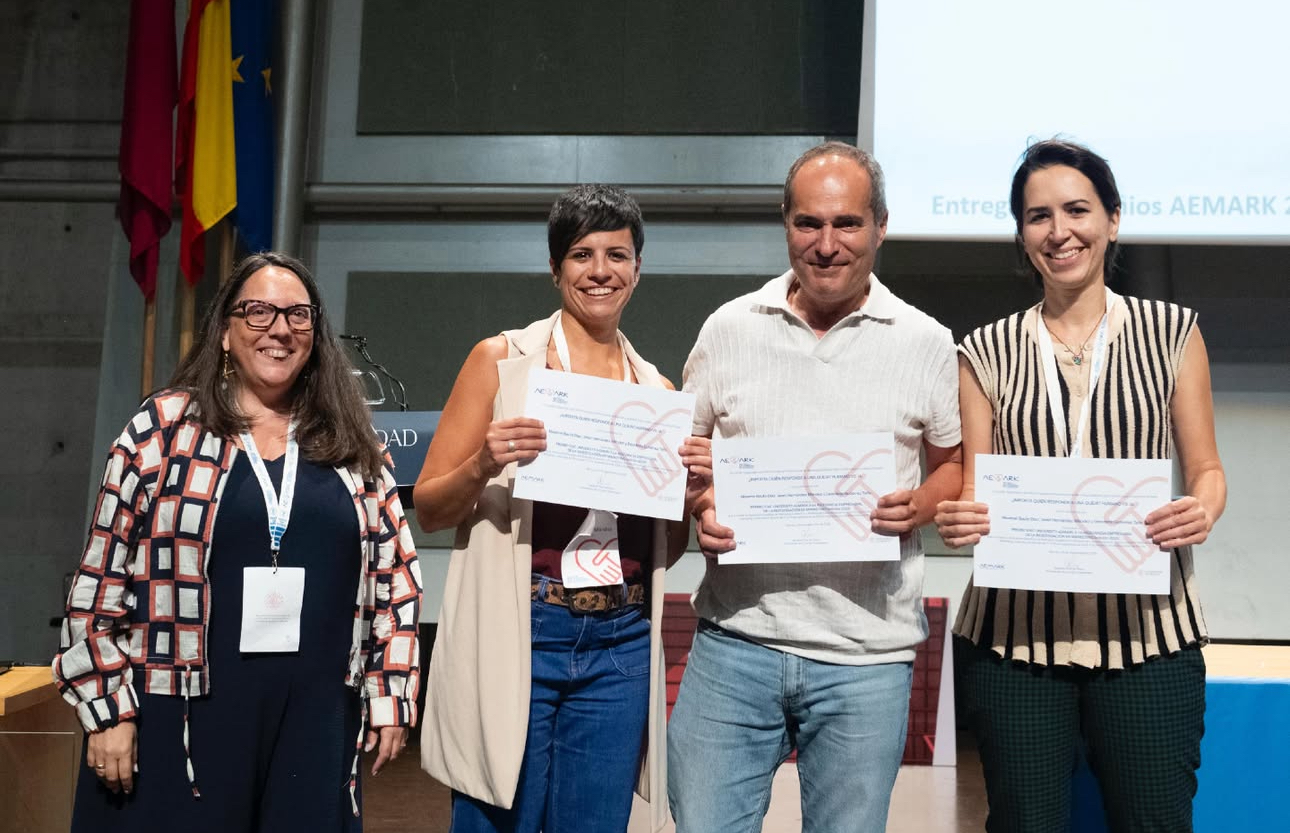
Janet Hernández, Desiderio Gutiérrez and Nisamar Baute, ESIC University–AEMARK Award for Business Relevance.
José Manuel Ramos, in collaboration with Pontificia Comillas and Trier, presented “Evaluating the Attractiveness of Destinations: A Triple-Framework Combining Consumer Surveys, Neuroscience and Multimodal LLMs”, Integrating surveys, neurophysiological measurements, and linguistic models to understand how tourists rate different destinations. Furthermore, together with researchers from Santiago de Compostela, she presented the paper “Review Analysis to Understand How Customers Rate Organic and 'Ugly' Products in Online Direct Sales Stores”, identifying that emotional and social values generate greater satisfaction than functional ones, with a purchasing approach more connected to consumers.
In the technology field, Tatiana David, Desiderio Gutiérrez, and Janet Hernández presented “Showing Your Identity or Protecting Your Privacy? The Evolution Towards Facial Recognition Systems in Tourism.” The study examines how trust mediates the intention to adopt facial recognition systems in tourism services. Using data from 1,130 participants in five European countries, a model based on the Extended Valencia Framework was validated. The results reveal that herd behavior is the most influential factor, and that trust moderates the effects of personal innovation, perceived risk, and technophobia.
Nisamar Baute, Janet Hernández, and Desiderio Gutiérrez presented their paper, “Does it matter who responds to a complaint? Human vs. AI””, This demonstrates that proper management of complaints on social media increases perceived fairness and user satisfaction. However, human agents are perceived as more authentic when offering apologies compared to AI. This research was recognized with the 2025 ESIC University–AEMARK Award for Business Relevance of Marketing Research, highlighting its impact and applicability in the professional sphere. The University of La Laguna (ULL) will host this international event in 2027, as a benchmark for the marketing research and professional community.

 Spanish
 English
 French