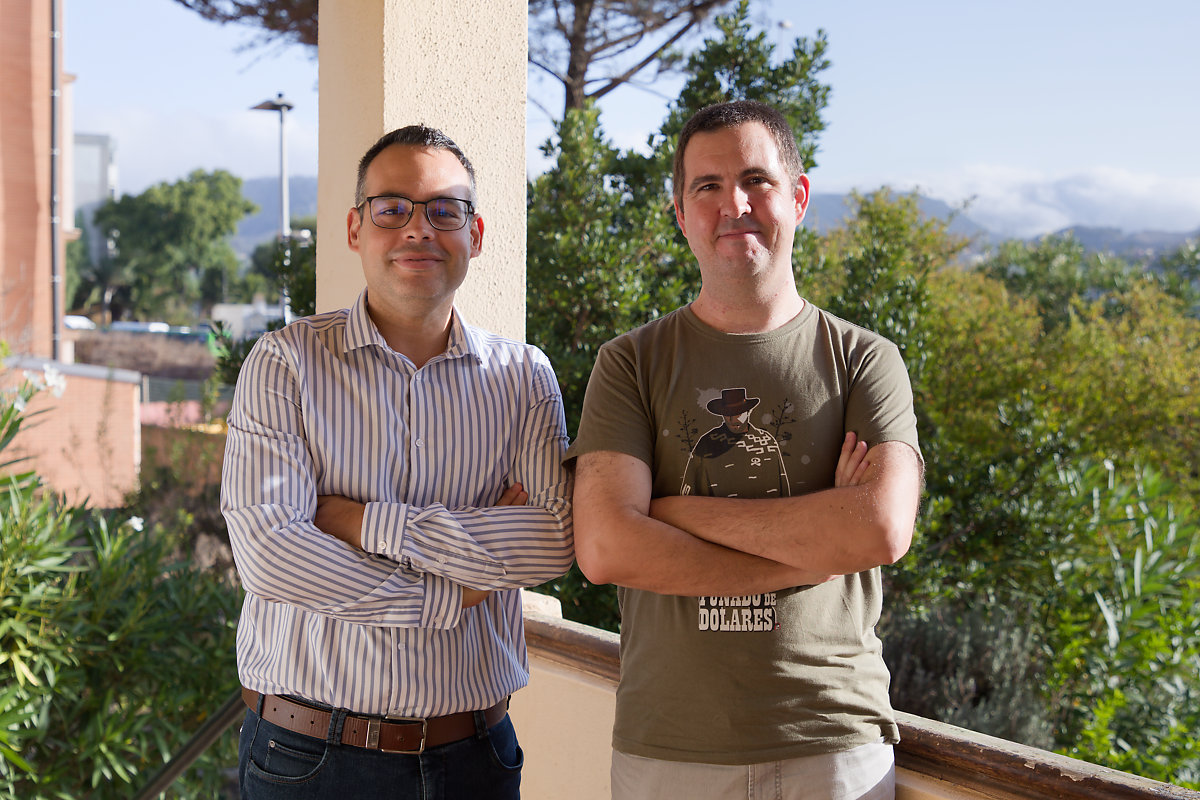
Researcher Miguel Ángel Rincón Cervera, head of the Lipid Laboratory at the Institute of Nutrition and Food Technology of the University of Chile and postdoctoral researcher at the University of Almería, is visiting the University of La Laguna this week at the invitation of a professor in the Nutrition and Food Science department. Jesús de las Heras Roger, to give a presentation on the use of avocado lipids from the perspective of the circular economy in the University Seminar on Avocado in the Canary Islands promoted by the Chair of Agritourism and Wine Tourism of the Canary Islands Institute of Agri-Food Quality.
Specializing in obtaining bioactive compounds and lipids from food matrices, Rincón emphasizes the current strong trend toward innovation and sustainability in the agri-food sector. This approach seeks not only to optimize the use of the edible portion of food but also to minimize waste by utilizing byproducts to obtain high-value-added compounds. These can then be used in formulations for human or animal nutrition as part of a circular economy strategy.
In the case of avocados, her work focuses on obtaining bioactive compounds from fruit waste, such as the peel and pit. Her goal is to extract substances with antioxidant or anti-inflammatory properties, among others, for incorporation into other food matrices. This line of research is part of the studies she is currently developing in the laboratory of the Institute of Nutrition and Food Technology.
Jesús de las Heras, director of the host chair, points out that the organization of this seminar responds to the recent European recognition of the Protected Geographical Indication (PGI) "Avocado from the Canary Islands", published in April 2025. This distinction highlights the value of avocados grown in the archipelago, emphasizing the influence of the climate and volcanic soil on their unique characteristics, and promoting the differentiation of the Canary variety from those of other origins, protecting its quality, added value and uniqueness.
During the event, the researcher was able to exchange ideas with representatives of the sector in the islands about the opportunities offered by utilizing avocado waste. These include the use of byproducts, co-products, and fruit discarded for not reaching commercial size, which are currently considered waste but could have relevant applications in other areas.
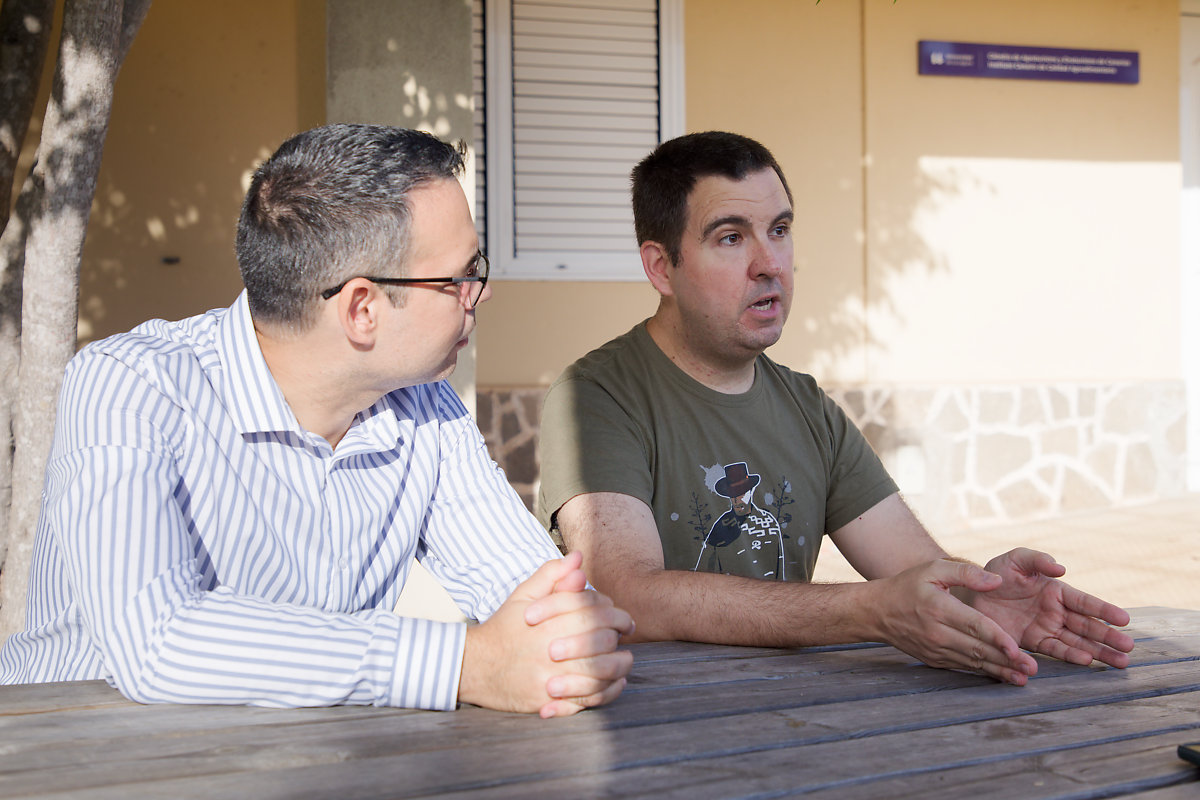 Within this line of research, Rincón points out that incorporating bioactive compounds obtained from avocado waste extends the shelf life of oils that tend to degrade rapidly, such as chia seed oil or fish oil. These compounds also have great potential for application in the field of nutricosmetics, a growing industry with ample opportunities for development and commercialization.
Furthermore, Rincón and his team are investigating molecular modification techniques aimed at improving the nutritional profile of certain lipids. The goal is to alter the molecular structure to eliminate saturated fatty acids and replace them with healthier fatty acids. This line of research, still under development, seeks to consolidate itself through strategic collaborations with the University of La Laguna and other partners to broaden its scope and generate a greater scientific and social impact.
These initiatives are part of the ongoing collaboration between Rincón and Jesús de las Heras, which has already resulted in several joint scientific publications. Their studies focus not only on lipids but also on identifying bioactive compounds in edible fruits such as grapes, consolidating a line of work that combines nutrition, sustainability, and the comprehensive use of food.
Both researchers highly value the opportunity to exchange experiences. “There is a wealth of knowledge in Chile, and in Latin America in general, about certain crops and agri-food practices, but research groups work relatively in isolation, and this exchange of knowledge is lacking,” explains Rincón. Therefore, he emphasizes the importance of initiatives like this visit because they strengthen cooperation between networks and institutions at the Latin American level, generating synergies and expanding the impact of research.
During their brief stay at the University of La Laguna, Rincón and de las Heras are also taking the opportunity to make progress on several scientific publications they are jointly coordinating, as well as on a future issue of the journal Foods, for which they are both guest editors along with other specialists in the agri-food sector. They are also working on a possible collaboration agreement between their universities to facilitate academic exchange, promote joint projects, and strengthen knowledge transfer.
Rincón Cervera's visit was made possible thanks to grants for short-term research stays for international researchers under the University of La Laguna's 2025 Research Plan, managed by the Vice-Rectorate for Research and Transfer. The Canary Islands Avocado University Seminar was supported by the Canary Islands Agency for Research, Innovation and the Information Society (ACIISI) of the Government of the Canary Islands and supported by the Canary Islands Institute of Agricultural Research (ICIA), the Tenerife Island Council, the Institute of Nutrition and Food Technology (INTA) of the University of Chile, and the Association of Tropical and Subtropical Fruit Producers' Organizations of the Canary Islands (TROPICÁN).

 Spanish
 English
 French