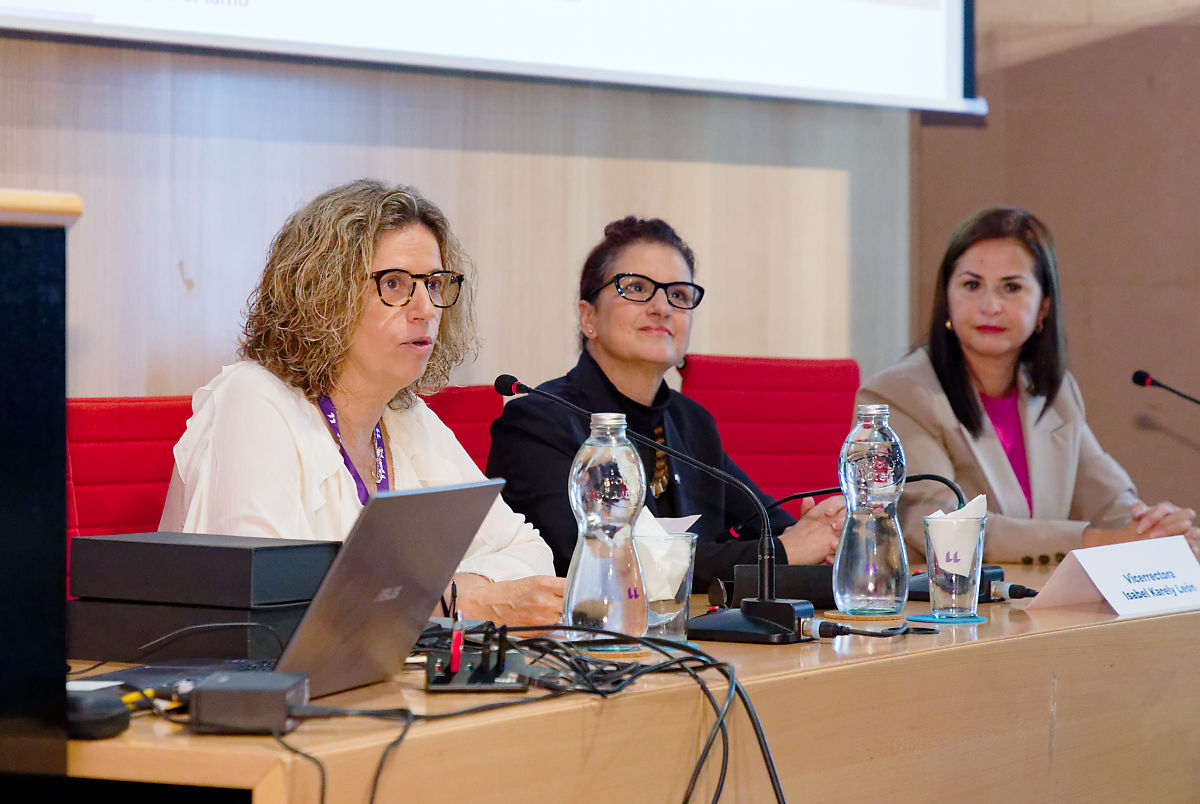
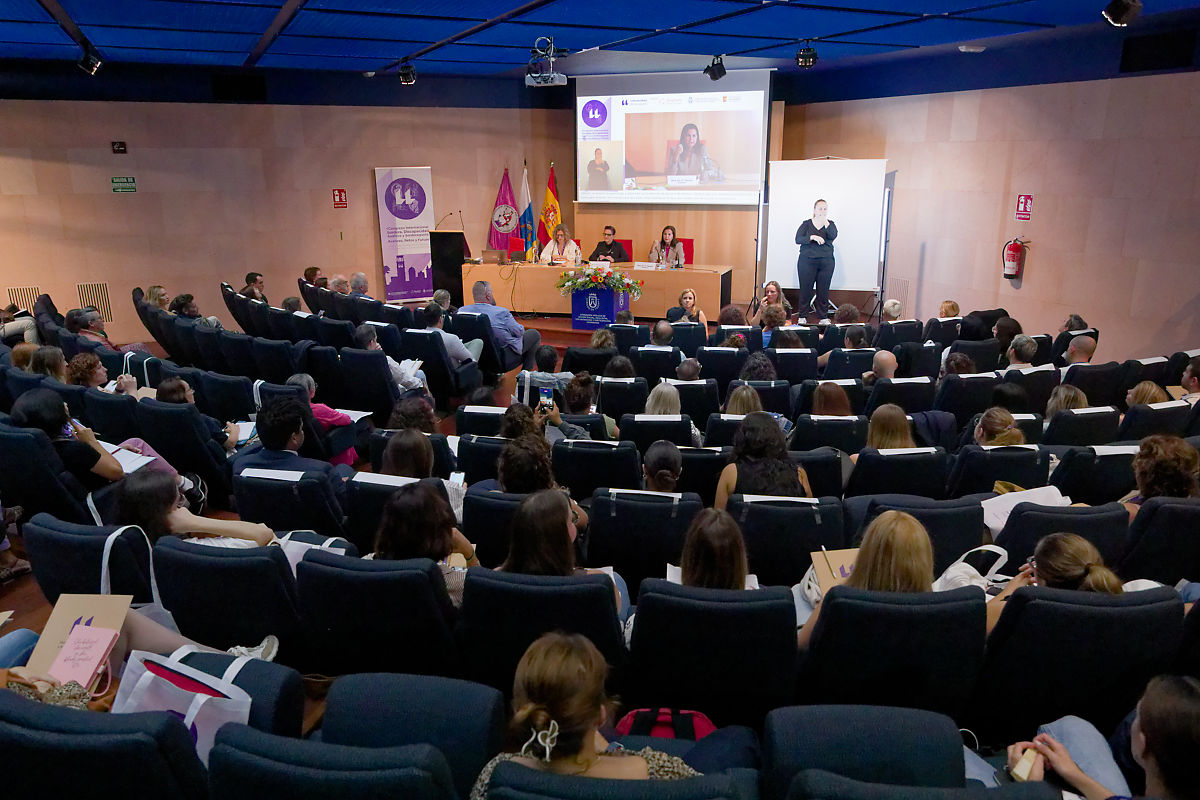
The Institutional Chair of Research and Innovation in Hearing Disability and Accessibility The University of La Laguna inaugurated today, October 9th, the International Congress on Deafness, Hearing Impairment and Deafblindness: Advances, Challenges and Future, which for three days will bring together in the Blas Cabrera Felipe Auditorium of the Faculty of Sciences national and international specialists in the health, education and technological fields related to hearing and communication.
The opening ceremony was attended by the Vice-Rector for Culture and University Extension, Isabel León Pérez; the Councillor for Social Action, Inclusion and Volunteering of the Island Council of Tenerife, Águeda Fumero Roque; and the President of the Congress, María del Carmen Rodríguez Jiménez, director of the organizing chair.
The Vice-Rector welcomed the attendees and stressed that the University of La Laguna hosts this meeting as a space for reflection and shared knowledge about a reality that challenges all groups that are part of the university community and society.
For her part, the island councillor highlighted that this first congress “marks a turning point in the joint work for accessibility and inclusion”, and thanked the chair and the university for their involvement in creating collaborative networks between professionals, institutions and families.
The chair's director highlighted the importance of reviving a forum of this kind in the Canary Islands, which had not been held since 2018, and which brings together 28 speakers of recognized national and international prestige. She noted that the meeting will address issues such as the selection criteria for cochlear implants, speech therapy intervention, the cognitive impact of hearing loss, the importance of sign language, and inclusive education in different countries, among other topics.
Rodríguez Jiménez also emphasized that the program has been designed to guarantee accessibility for deaf, hard-of-hearing or deafblind people, "so that all content can be followed under equal conditions.".
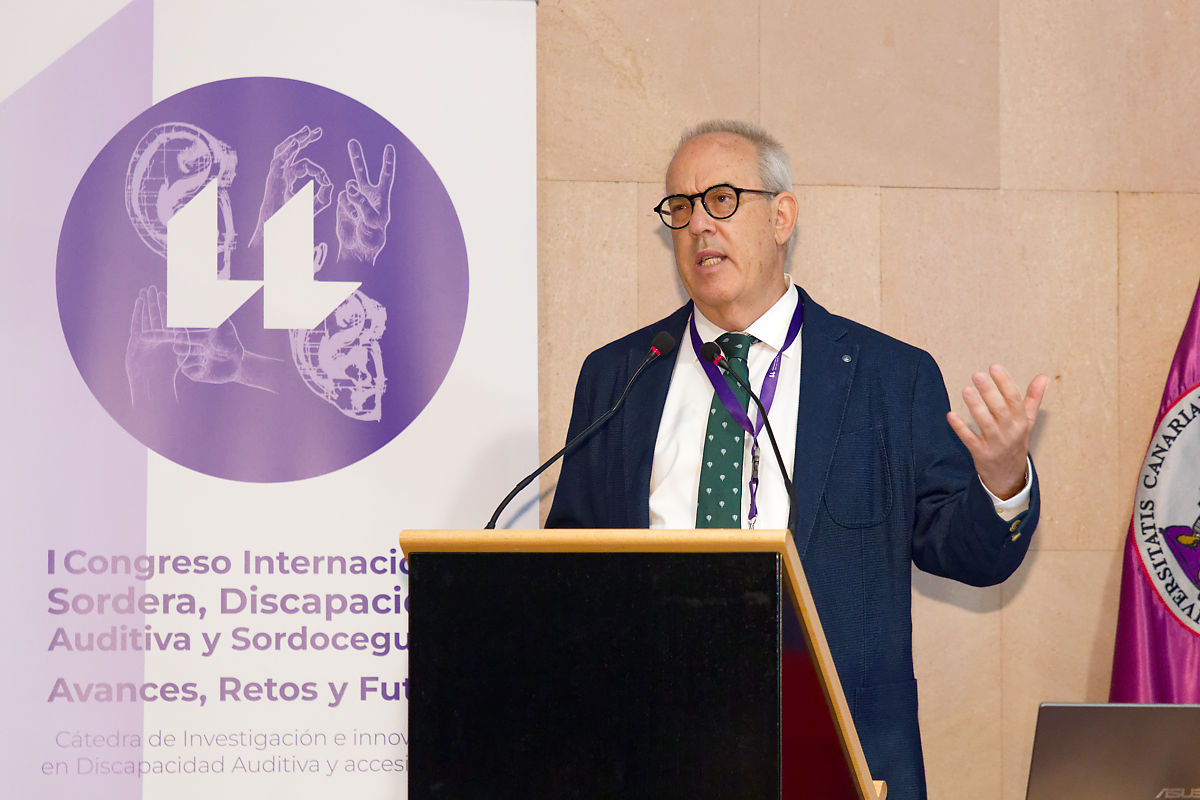
Angel M. Ramos.
Cochlear implants
The first presentation was given by Ángel M. Ramos Macías, head of the Otolaryngology Department at the University Hospital Complex of the Canary Islands, who addressed the selection criteria for cochlear implants. The specialist traced the evolution of these devices from the first implants performed in the Canary Islands in the 1990s to the most recent technologies, including modular and flexible systems and new brainstem stimulation models.
Ramos Macías emphasized the importance of evaluating each case individually, considering not only clinical parameters but also the patient's language development, age, and adaptability. "Not all cases are the same, and the decision should always be based on results and a comprehensive assessment of the individual," he noted, also highlighting the need for ongoing training and collaboration among medical teams, engineers, and educators.
The main objective of this forum is to create an academic and professional space for the exchange of knowledge, experiences and best practices related to deafness, hearing impairment and deafblindness, while offering an update on the latest advances in auditory rehabilitation, inclusive education, sign language, accessibility and new technologies.
 A comprehensive view
He program The congress, which will run until Saturday, October 11, includes scientific presentations, practical workshops, and discussion panels that address hearing impairment from an interdisciplinary and comprehensive perspective.
During the opening day, experts such as Ángel M. Ramos Macías, Juan Carlos Falcón González, and José Juan Barajas de Prat analyzed issues such as the selection criteria for cochlear implants, the impact of hearing loss on language development and cognition, and age-related changes in auditory sensitivity.
The afternoon session includes presentations focused on the educational and social spheres, such as the one by Carla Méndez Trillo on the impact of discrimination based on hearing in the deaf community, and the one by María C. Bao Fente, which delves into the relationship between deafness, speech therapy, and bilingualism. The role of physiotherapy in balance and the vestibular system is also addressed, as well as the challenges faced by older deaf people in the educational field.
The second day will feature international presentations from speakers such as Jane Catherine Mackay Gallacher, Nicola June Clarke, and Helen Cullington, who will address the rehabilitation of people with cochlear implants and the role of emerging technologies in audiological care. Other topics to be covered include Usher syndrome, the education of deaf students, linguistic rights, and sign language interpretation in public services.
The congress also includes specialized workshops, among them one given by José Fierro Marrero and Laura Flix Díez on the functional recovery of people with hearing disabilities and another by María Eulalia Díaz García focused on improving vocal quality.

 Spanish
 English
 French