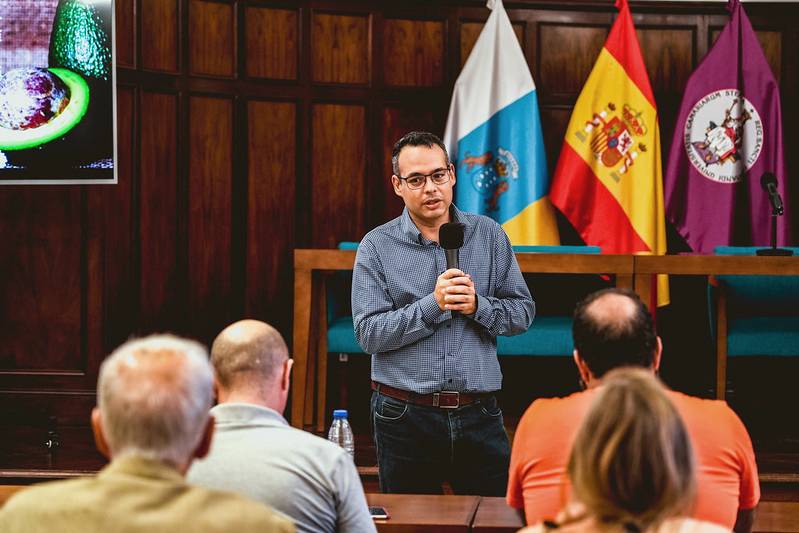
The Canary Islands Avocado University Seminar was held this week in the Aula Magna of the Central Building of the University of La Laguna to highlight the importance of scientific research and knowledge transfer in strengthening the development of the archipelago's agri-food sector. It was organized by the Canary Islands Chair of Agritourism and Wine Tourism of the Canary Islands Institute of Agri-Food Quality and the University of La Laguna, with support from the 2025 Research Plan of the Vice-Rectorate for Research and Transfer, as well as the Canary Islands Agency for Research, Innovation and the Information Society of the Government of the Canary Islands.
The chair's director, Jesús de las Heras Roger, highlighted the importance of the meeting: "This seminar demonstrates how university research can be integrated with the needs of the territory, offering concrete answers to the sustainable development and competitiveness of our agricultural products."“
The seminar brought together specialists from different areas related to the cultivation and value of avocados. These included Hernán Tejera Oval, consultant and co-author of the Protected Geographical Indication (PGI) “Avocado of the Canary Islands”; Eva Dorta Pérez, scientific collaborator at the Canary Islands Institute of Agricultural Research (ICIA); Clemente Méndez Hernández, specialist in tropical fruit cultivation at the Tenerife Island Council; Néstor Benítez Brito, professor in the Department of Nutrition and Food Science at the University of La Laguna; and Miguel Ángel Rincón Cervera, associate professor and head of the Lipid Laboratory at the Institute of Nutrition and Food Technology (INTA) of the University of Chile.
The meeting also included the participation of Francisco José Echandi, president of the Association of Tropical and Subtropical Fruit Producers' Organizations of the Canary Islands (Tropicán), the managing body of the Protected Geographical Indication (PGI) "Canary Islands Avocado," who emphasized the producers' commitment to the quality, traceability, and international reach of the product. His remarks highlighted the role of agricultural associations in consolidating the brand and in advocating for the avocado as a strategic crop for the future of Canary Island agriculture.
The various presentations addressed key aspects of the sector, such as the process of obtaining European certification and its role in protecting the product from external competition, the nutritional and health potential of avocados, their role in a balanced diet, and their impact on cardiovascular health. The agronomic challenges facing avocado cultivation in the Canary Islands were also analyzed, particularly water management, salinity, and the need to adopt sustainable practices that guarantee long-term profitability. Finally, new trends in the comprehensive utilization and circular economy of this product were reviewed.
In the academic field, the seminar stood out for its focus on knowledge transfer between agricultural research and production, highlighting the importance of collaboration between universities, scientific centers and public administrations to strengthen the competitiveness of the sector.
The day concluded with unanimous recognition of the role of the "Canary Islands Avocado" as a strategic product in diversifying the Canary Islands' agricultural sector and as a symbol of the union between science, innovation, and agricultural tradition. In this regard, the Chair announced its commitment to continue promoting forums that foster scientific excellence and enhance the value of the archipelago's agri-food sector.

 Spanish
 English
 French