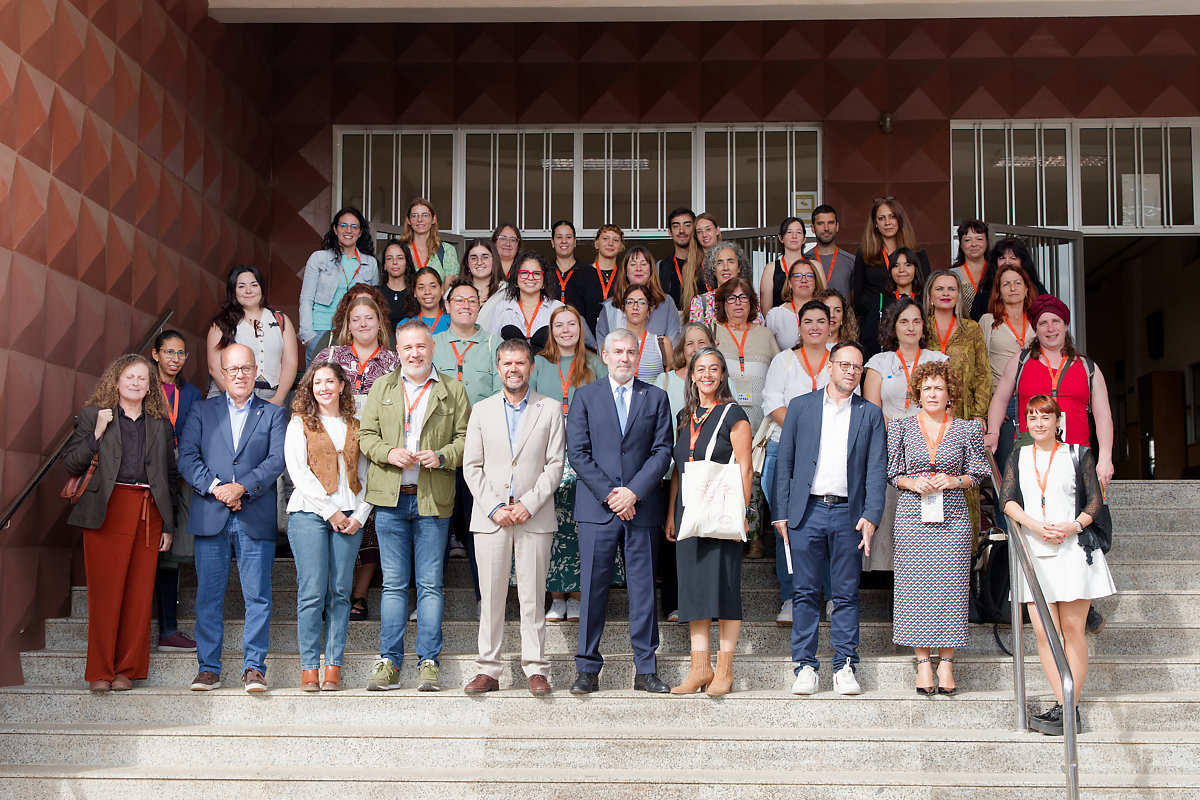
The Agricultural Engineering Department of the University of La Laguna hosted a conference today, October 15th, focused on the female leadership in municipalities with fewer than 10,000 inhabitants. It has been a space that has brought together female farmers, entrepreneurs, winemakers, researchers, representatives of local administrations and businesswomen to assess the challenges that women face in the countryside.
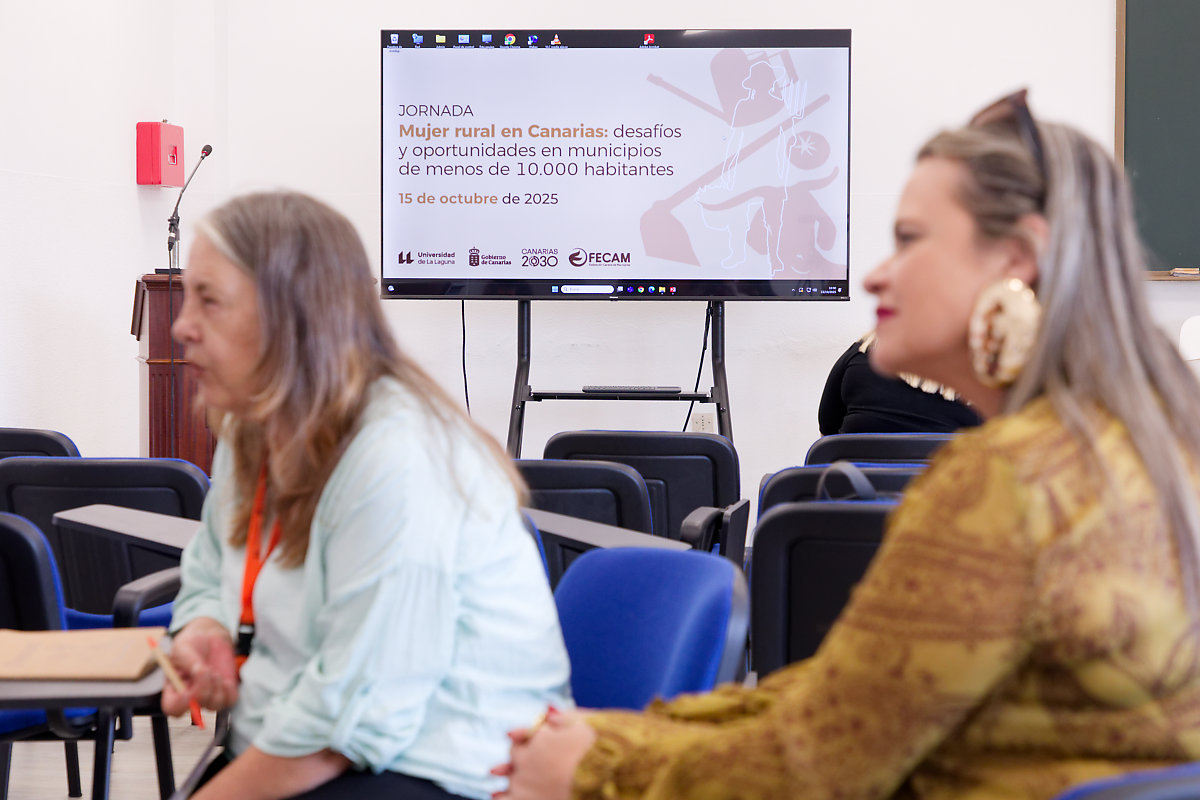
A moment from the work sessions.
Coinciding with International Day of Rural Women, this event solidified its position as a crucial space for promoting female leadership as a key strategy for addressing the demographic challenge in the archipelago. The first part of the session focused on shared discussion through reflections in six working groups, where participants addressed issues such as the lack of services in rural villages, the pressing problem of generational succession, and the stigmatization of rural women and of agricultural work itself, often labeled as hostile, but also tremendously rewarding in others. They also discussed how public universities can contribute to improving these situations through teaching and research.
Following the debate session, the Rector of the University of La Laguna, Francisco García, and the President of the Government of the Canary Islands, Fernando Clavijo, took part in the event. Both emphasized the essential role of women in the economic and social development of rural areas. The Rector took the opportunity to commend the work carried out by the Chair of Agritourism and Wine Tourism of the Canary Islands, Francisco García, who is affiliated with the university and the ICIA, and who in this case co-organized the event with researcher Noelia Cruz, noted that through the chair, the university has established agreements with professional wineries and gained insight into the realities faced by other professionals in the primary sector.
For his part, Clavijo referred to the strategic nature of the primary sector, “a fundamental pillar not only of our food sovereignty, but also of the preservation of the landscape and our traditions.” He added that he will continue working with the island councils and the Canary Islands Federation of Municipalities (FECAM) on the implementation of measures specifically aimed at the 47 Canary Island municipalities with fewer than 10,000 inhabitants, measures in which rural women will play a leading role as “a pillar of the least populated areas of the archipelago.”.
From the very beginning, Gabriel Santos García, general coordinator of the Chair, and Noelia Cruz Pérez, researcher from the university department, who led the day, expressed the
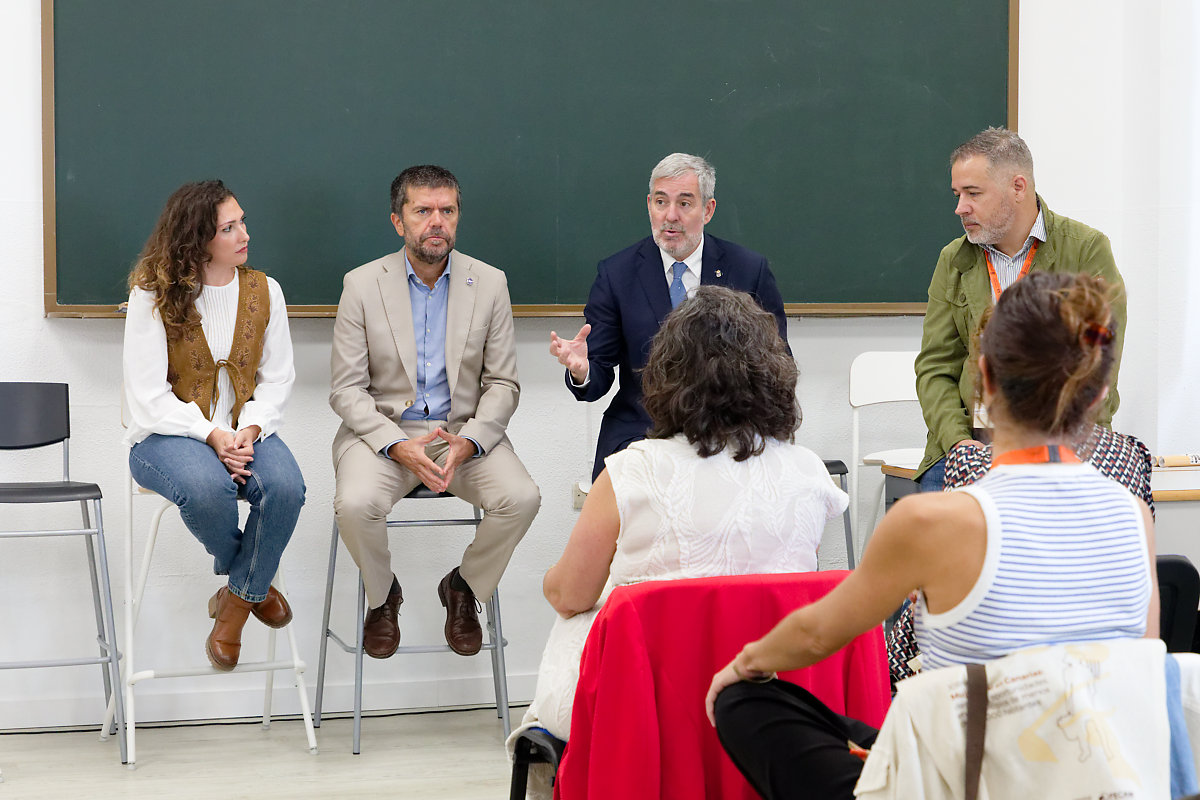
Noelia Cruz, Francisco García, Fernando Clavijo and Gabriel Santos.
The need to break down barriers by creating a space that not only makes visible and enhances the role of women, but at the same time produces effective synergies so that the University can be nourished and contribute directly to this reality.
The work of the dialogue sessions will culminate in a ten-point plan of proposals addressed to the Canary Islands government, local councils, and the university itself, compiled from all the contributions of the participants. In fact, Angélica Padilla, a member of the FECAM Rural Development and Fisheries Commission and mayor of San Sebastián de La Gomera, gave a presentation on the current situation and future prospects of the agricultural sector from a municipal perspective. "Rural women are the cornerstone of our society and the driving force behind local development," Padilla stated. She also emphasized that the commitment of the administrations is "to recognize their efforts and ensure that true equality requires public action and continuity in policies.".
The most emotional moment of the day took place at the shared dialogue table, where prominent women from various islands and rural sectors came together.
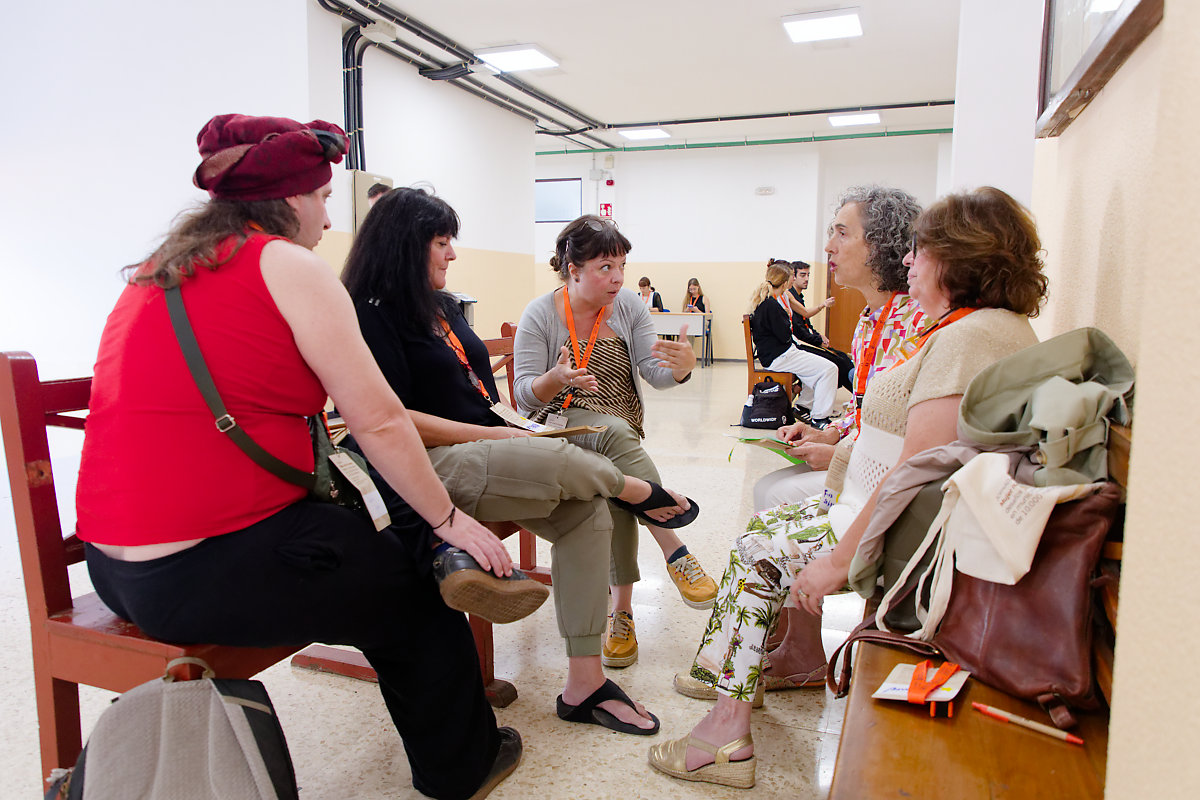
One of the working groups, during their debate.
They shared their experiences, such as the owner of the Imendi gofio mill, Cristina María Mendoza (La Gomera); the winegrower and partner of Ecoagro, Ascensión Robayna (Lanzarote); the rural tourism entrepreneur, Serafina Suárez (Gran Canaria); the beekeeper and teacher in employment training, Mónica Ojeda (El Hierro); the owner of the La Jara Ecological farm, Pilar Carballo (Tenerife), the student of the Degree in Agricultural and Environmental Engineering of the ULL, Hajar El Filali (Fuerteventura); and the owner of Ecofinca Tacande, Eva Álvarez-Ude (La Palma).
The day concluded with remarks from the Vice-Rector for Culture and University Extension of the ULL, Isabel Karely León, and the Deputy Director of the Chair, Carolina Real Torres.

 Spanish
 English
 French