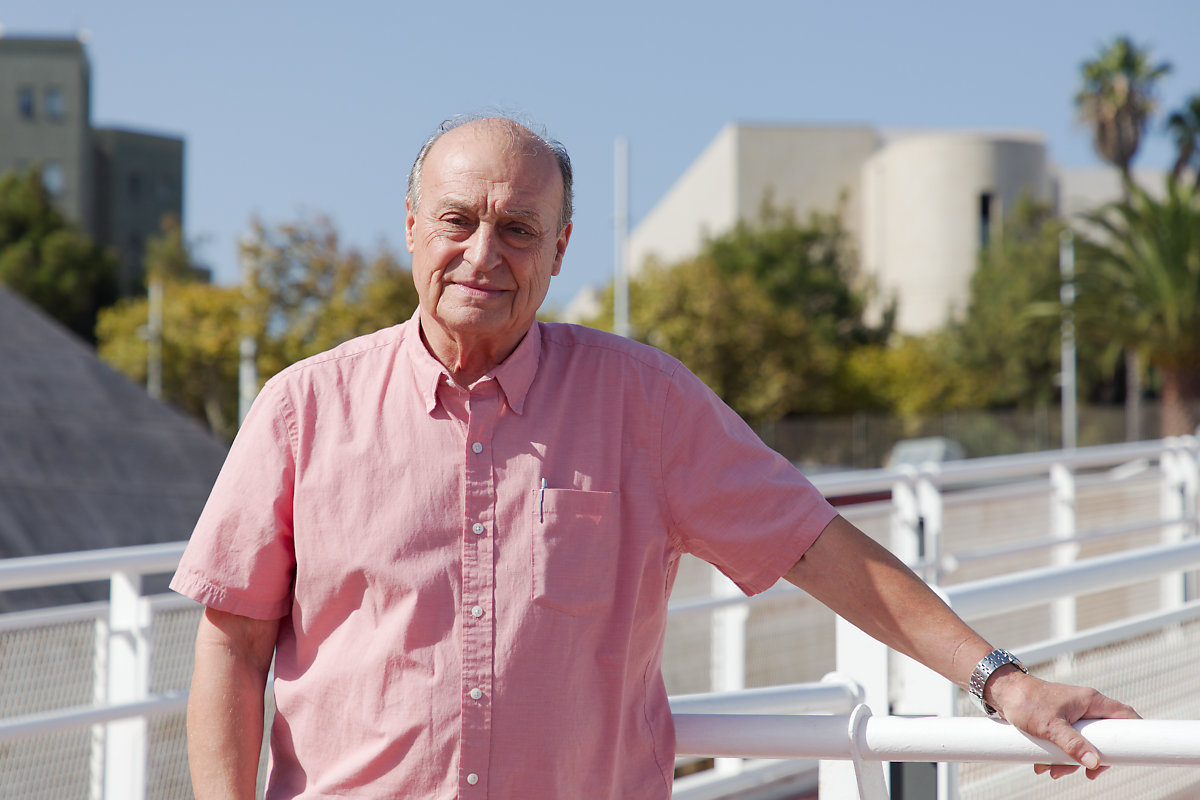
The death of Franco on November 20, 1975, marked the beginning of the democratic transition process that led to our current rule of law. It was a turbulent and exciting time in which many people from different fields played a significant role. In the media, one of those key figures was... José Antonio Martínez Soler, known as JAMS in the profession, who has been linked to TVE and has been director and founder of newspapers such as El Sol, La Gaceta de los Negocios, 20 Minutos and the economic weekly Doblón.
It was precisely while he was in charge of this latter publication that he was kidnapped, tortured, and subjected to a mock execution in 1976 by unknown assailants who wanted to discover the sources he was using to write an article about the internal purge within the Civil Guard that was taking place at the time. Although photographs of his swollen face after the attack were published at the time, he never spoke openly about it until 2006.
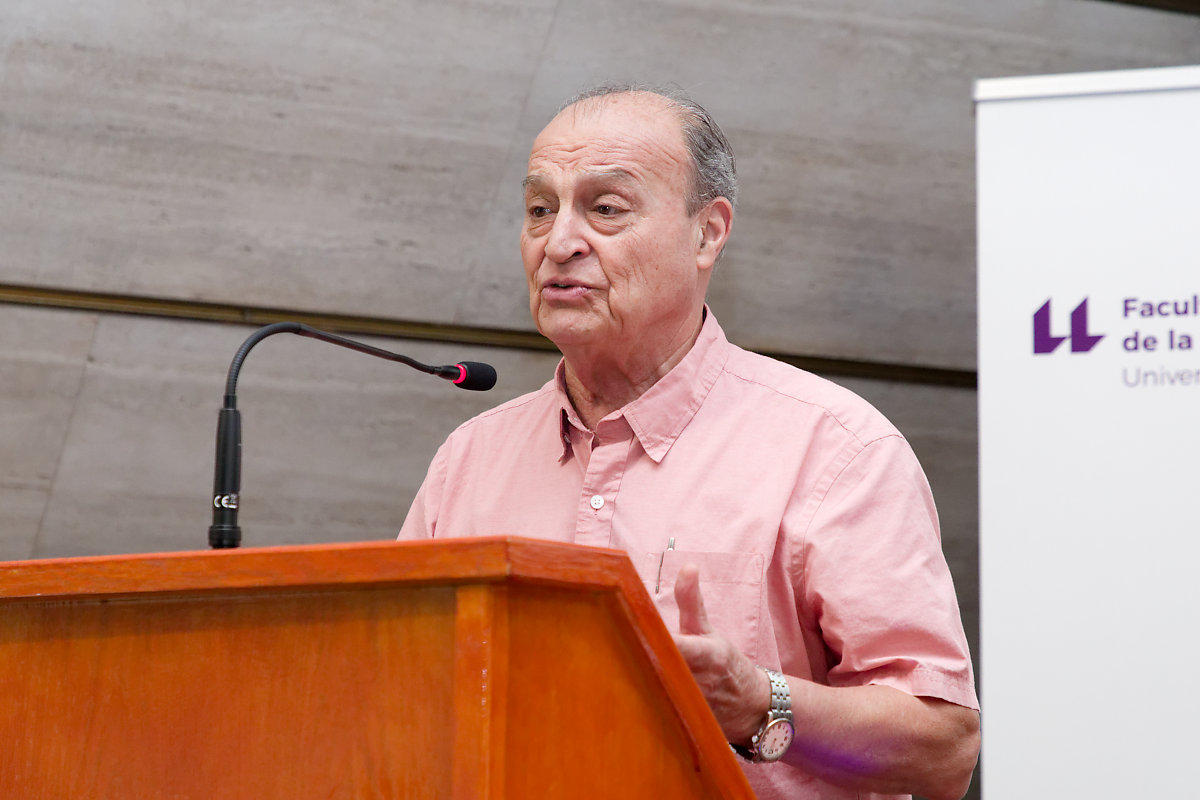
This episode was one of those he recounted in the intervention which took place on October 8th at the Faculty of Social Sciences and Communication of the University of La Laguna, which marked the beginning of the educational and cultural program “For freedom: Spain after 1975”"With which the academic institution commemorates half a century of democratic state. We were able to speak with him after the conference to discuss not only the Transition, but also his career in the media.".
At the end of his lecture, he said something striking: “Forgiving is good, but forgetting is not.” Is that so?
That's the message I've tried to summarize in my entire speech. We made a terrible mistake in the pact of forgetting and silence. We should have explained everything from the beginning. There's nothing wrong with saying, "We forgive, but we don't forget." But there was so much fear that we didn't even dare to do that.
You can't even imagine the fear everyone felt: the dwindling Franco supporters and the growing anti-Francoists, nobody knew the other's strength. And, in fact, there was the rattling of sabers, the fear of another coup and another dictatorship. We were walking on eggshells, protesting in the streets and holding countless demonstrations, but terrified. Nicolás Sartorius said that "Franco died in his bed, but the dictatorship died in the streets.".
 Some younger sectors criticize the Transition model and call it too soft. What is your opinion on this?
They're right to criticize. My son [Erik Martínez Westley], for example, with whom I co-authored the book "Franco for Young People," is in his forties and thinks the Transition was a botched job; we've argued about it a lot. And I think it was almost a miracle. Did we fall short? Of course we did! We could have gone further: demanded a Republic instead of the Monarchy, that the King not be inviolable—what a scoundrel Juan Carlos I turned out to be—that men not have precedence over women in the inheritance of the monarchy… Why was the Constitution a bit incomplete? Simply out of fear. At that time, Sartorius, whom I mentioned earlier, said: "If bulls didn't have horns, I'd be a bullfighter." You have to be in the ring.
And young people like my son say we should have gone further. But how? They kidnap you, torture you, take you to the General Directorate of Security, and you don't come out of there alive. You end up in Carabanchel prison, and nobody knows where you are. The political police were still in place, and they continued to be until very recently, when [the policeman] Antonio González Pacheco, “Billy the Kid,” died with medals.
The Army underwent a true revolution after February 23rd, because they made a complete fool of themselves with that farce, that disastrous triple coup attempt that was straight out of a farce. The Army was ashamed, and the young officers envied the Portuguese military because the people embraced them and placed carnations on the ends of their rifles. And here, the Spanish people saw the military as occupying their country and as the enemy. But the young officers, those from the Democratic Military Union and others I spoke with at that time, were like me; they wanted democracy and to be like the Europeans. And, fortunately, with democracy, the military has traveled, learned English, participated in peacekeeping missions, and the Spanish Army is now excellent.
Even the Civil Guard and the National Police have changed, but for many years they didn't. The Civil Guard continued with its trigger-happy methods. In fact, in '76 they killed a young friend of mine, Javier Verdejo, in Almería. He was doing graffiti on a wall and they shot him in the back, and nothing happened to those responsible. There was a sham trial when Calvo Ortega was the Civil Governor of Almería, which later went to the Supreme Court and the Constitutional Court.
There are two things that weren't done right: the Political-Social Brigade should have been completely reformed and staffed with democratic police officers; and the judiciary. There was a huge revolution in the Legislative Branch, elected by the people; in the Executive Branch, elected by the popular sovereignty that resided in Parliament, also elected by the people; but not in the Judicial Branch. It was never elected by the people, although Parliament intervenes in the system of the General Council of the Judiciary to determine the governing body of judges. But the entire structure of the Spanish justice system remained intact.
It's terrible, and unfortunately, it shows in many ways. It's happening less and less, but there are still sexist judges, and it's a scandal. Not the majority, though; they're young people who do their jobs well, both prosecutors and judges. But the older ones are awful. Judge Peinado is a prime example. I'm not saying he's a pervert because he'd sue me, like he has so many of my colleagues, but he's a disgrace to the Spanish justice system.
The right wing also uses these things to claim that Franco wasn't so bad. That takes some nerve! Fine, the far right says it. But the People's Party (PP), which has a lot to hide, can't be praising Franco.
That's perhaps why a book like yours is necessary, because there is a process of rewriting history.
They're trying to whitewash Franco's image, because there are very honest and good centrists in the People's Party (PP), but there are others on the far right who are bordering on Abascal's, who want to rehabilitate the image of their parents and grandparents. But that's very difficult because they used to go around at gunpoint and seize their neighbors' properties, then report them and keep their land.
The fact is that the PP didn't inherit Adolfo Suárez's UCD. Some members went to the PP, and some went to the PSOE. The PP has a lot of Franco's legacy: Manuel Fraga, who was the founder, was a minister under Franco who signed a death warrant and was in the government. That shameful, Francoist residue—they should get rid of it. It's about time.
It's good that the right wing governs, that there's a change in power. When José María Aznar beat Felipe González, I was happy. I cast a blank ballot and then regretted it because when Aznar won the 1996 elections, I had interviewed him during the campaign [on TVE] and he didn't like the questions. And when he got to La Moncloa, he fired me. But I was glad there was a change in power, because that's what makes the Transition work.
The Transition wasn't exemplary, nor was it peaceful; I agree with my son on that. It was the best that could be done, with many flaws and many problems. And if we had pushed harder, perhaps the coup would have come sooner.
 Because, although you consider the coup d'état almost like something out of a zarzuela, it was a scare, the fear was well-founded.
Exactly, he could have succeeded. And when they came to my door with machine guns and kidnapped me, that was real, and Franco had been dead for three months.
It is also true that there was a confusing period from 1975 to 1978, three years in which there was no dictatorship, but neither was there a formal democracy.
Those years were crucial. And there was no plan; nobody knew how to do it. Anyone who says it was all planned and that democracy was handed to us from above is lying: neither Suárez knew how to do it, nor the king, who wanted to keep his crown and did whatever was necessary.
He wouldn't have supported the coup because he already had the experience of his grandfather, who lost the crown for supporting Primo de Rivera's coup. And his brother-in-law, Queen Sofia's brother, lost the Greek crown for supporting the colonels. Juan Carlos is a scoundrel, but he's not stupid. When he saw that the generals weren't backing the coup, he went on television—too late, six or seven hours—to say: “Everyone back to the barracks.” I think he did the right thing.
They say he was meditating.
They were waiting to see what would happen. And worried that there might be some deaths.
Having lived through the Franco regime, the Transition, and a few years of freedom and stability in Spain, don't you get the impression that there is a setback with the rise of the far right?
I don't think so, I'm optimistic. The rise of the far right is certainly worrying. But it's worse in Germany, France, and Italy. In Spain and England, it's not so bad; the far right is growing in England, but a social democratic, Labour party is in power. And in Spain, a left-wing party is in power. In America, Trump is terrifying; I'm more pessimistic about the United States than about Europe. It's a wave that people are jumping on, but I think there's considerable stability in Spain. Consider that Spain has a seven-year government, while in France, they've changed the government five times a year.
I'm not pessimistic, but I am worried about the rise of the far right and hate speech against immigrants. Where are we headed? How is it possible that people buy into this rhetoric? Is it ignorance, is it resentment?
I understand why young men are angry because women are, in a way, encroaching on their territory. Because they've been oppressed their whole lives, generation after generation. They've finally gained some ground with freedom, they're acquiring rights, and men are losing privileges. It was about time we lost them! That's why young men are more right-leaning than women: they don't want to go back to Franco's regime, which treated them like minors and didn't allow them to travel without their husband's or father's permission, they couldn't sign promissory notes. They were considered inferior beings, and now they're free.
And what about homosexuals? Before, they went to jail or to a mental institution. Or they got beaten up. And today they're free, they're ordinary people who can kiss in the street if they want. In Franco's time, if you put your arm around your girlfriend, the police would arrest you or reprimand you.
I don't think things will get out of hand in that regard, but I'm especially worried about what's happening in America because my wife [Ana Westley] is American, and what's happening there is serious because they're on the brink of civil war. Not here: we've already had a war, and nobody wants one.
He has already discussed Francoism with his son and is now preparing another book to explain the Transition to young people.
Just the other day, Catarata publishing house called Erik and me and said that the first book has been a success, selling 10,000 copies and going through five editions, and that's why they want another one about the Transition for young people. And I said, "Oh my God, here I go again, arguing with my son." Because he thinks the Transition was a botched job, and I think it wasn't perfect, it was incomplete, but it was the best that could be done given the circumstances.
Changing the subject, and given that he was the founder of newspapers such as La Gaceta de los Negocios, El Sol and 20 Minutos, I would like him to explain the history of those media outlets.
That'll take an hour!
 El Sol was a newspaper that only lasted two years, but it reached a circulation of 150,000 copies.
Like Saint Teresa of Ávila, I go from foundation to foundation, with triumphs and failures. El Sol was the biggest failure of my life because I made mistakes from the very beginning due to ambition. I was blinded by the idea that there were three businessmen and I could play the 'two against one' game. In that triangle were the president of Anaya, Germán Sánchez Ruipérez; the president of ONCE, Miguel Durán; and the president of Mediaset, Silvio Berlusconi—what a character!
I didn't know Berlusconi was so ruthless, and in the end, there was a conspiracy between Durán, Berlusconi, and other shareholders to secure a majority stake. They fired Anaya from Telecinco, and Sánchez Ruipérez ended up with El Sol. I had already hired 200 journalists, I was about to launch, we had the printing press set up—it had been a huge investment. And I was thinking, "Should we launch or not?" I shouldn't have published the newspaper because the conditions weren't right.
After the Berlusconi crisis, the owner came to my office, sat at my desk, and said, “JAMS, now I’m in charge. It’s all sorted.” And I thought, “My God, I’ve sunk before I even got off the ground.” I spoke with the CEO, who was a good friend of mine, Pedro Higuera, and I said to him, “What do we do? We’re going to fail. We can’t negotiate with a guy who owns 1001% of the capital. I came here because three people hired me, each with 331%, so we can negotiate something.” That’s how the newspaper El País was born, with many partners, not just one.
For me, it was a disaster. Look: on Gay Pride Day, we gave the same coverage as ABC, El País, and everyone else. Well, the owner threw the newspaper in my face and said, “My wife threw the newspaper at me, just like I threw it at you. She says it's going to ruin our marriage.” She was a very conservative woman.
We had some brilliant ideas, remember the books we gave away? We would have been a huge success if the president, the owner, hadn't been such an idiot, but he wanted to run the newspaper. And after firing me, he fired five other editors. So, it wasn't just me who failed, five of us failed.
I was really excited because I'd thought that newspaper through very well. It was aimed at a young audience. I'd combined ideas from television and print to create short news stories, something I later revisited at 20 Minutos. El Sol was fairly neutral, neither one way nor the other, so that neither the left nor the right could tear it down. It had that spirit of compromise: facts are sacred and opinions are free, but you have to be very rigorous. It was a great newspaper, the project was beautiful, but it's the biggest failure of my life.
He already mentioned that he also created 20 Minutos, which was born with a particular hook: a newspaper that you can read on a subway ride.
In nineteen minutes. That's how long it takes to read the newspaper. News like on the evening news, very brief, very clear, very well written. It was better written than El País, El Mundo, and all those others, very polished. Arsenio Escolar, the editorial director, was excellent at that. And the sales director, Luis Alberto Rivero, was excellent too. We sold the pages for more than El País, and the newspaper was free because it was financed by advertising.
Why would I want a euro for the newspaper? I wanted many more euros per page. In fact, what we did was give the newspaper to the reader, and the reader paid us with their attention. By reading us, they were giving me the cost per impression. And I sold that attention to the advertiser. In other words, the newspaper wasn't free: I charged for the reader's attention, which is pure gold. That's worth much more than a euro. A euro for Polanco or for Pedro "Jeta"!
This is the strategy that digital media are now following.
Yes, we were the first. We also went digital, and it's doing very well. 20 Minutos.es continues to thrive and make money. We've already sold it, and I've retired. It's been a success that has helped me overcome the disappointment of El Sol's failure.
And how did he experience the transition to digitalization, which has been dramatic for many media outlets?
When the railway was born, horse-drawn carriages and stagecoaches disappeared. Progress in life is like that: some jobs disappear and others grow. I'm optimistic. I read elDiario.es. I only read El País in print on Saturdays and Sundays, but the rest of the time I read it online. I read La Vanguardia online every day. I'm already digital despite my age. It's going very well. I think the press complains for the sake of complaining. Remember how they always tell you that the theater is dying, that it's the end of theater… And the theater never dies! Neither does the press. The tools are changing, but I think the press is about to reach a golden age.
 A golden age?
Absolutely! Because there are many women who do excellent work and weren't there before. When I started, there were no women at the newspaper Arriba, few at El País, and almost none at Cambio 16. At Doblón [a weekly business magazine founded by Martínez Soler], I began hiring women: Nativel Preciado, Marisa Ciriza…
When I presented my biography, "The Free Press Was Not a Gift," at the Ateneo in Madrid, one of the speakers was Nativel Preciado, and she said: "Martínez Soler was the first editor to hire women, influenced by his wife, Ana Westley, who's sitting right there." And it was true. Ana had been a correspondent for the New York Times and the Wall Street Journal, and she's smarter than I am. And I assumed that women were very good, so I hired many of them.
I read Carlota Guindal, and she writes better than her father. Or Carlota Estefanía Ramírez, better than both her father and mother. There are young people who write very well, men too. The other day I was with Forges' son, Antonio Fraguas. We call him Toño, and he was one of the first writers for 20 Minutos and is now editor-in-chief of elDiario.es. They're all wonderful people.
Now there are people better than us, we were just a bunch of amateurs who got there because there was nobody else. Why did Juan Luis Cebrián, Sol Gallego-Díaz, Joaquín Estefanía, myself, and many others succeed? Because in our youth, at 18 or 19, there were no journalists. The journalists had won the war and were 60 or 70 years old; they were the combatants. I went to the newspaper Arriba, and they were all old; there were only two young guys there, Vicente Botín and me. And then, from 20 to 60 years old, there was nobody. “When these guys leave or die, the whole countryside is ours,” we said. We were a generation that filled all the management positions very young and unprepared for them. Cebrián, Pedro “Jeta,” and I gradually prepared ourselves over time, but we had an enormous opportunity, a bleak present and a bright future. Then my children come along and say, “Dad, we have a good present, but a bleak future.”.
That's not the case. I think the press will improve; it's necessary. Social media is a tool you can use like a hammer to hit someone over the head or to hammer nails. You can use it like a phone, like a car… for good or for bad. And I think information is necessary, especially for the elites; the masses will always be swayed by what's said in the tavern, which is called TikTok or social media, all this garbage. There's always been garbage in the tavern, and nobody believed it; it's all just rumors.
What truly matters are verifiable and proven facts, filtered by professionals. Those in positions of power, or those who aspire to be well-informed and influential in society, will get their news from the reputable press. And indeed, that's the case: the Financial Times isn't a mass-market newspaper; it's for the elite. The Daily Star and the Mirror are mass-market papers, but they're trash. With a circulation of three million, they're trash nonetheless. The Financial Times has 150,000 readers, but it belongs to the elite. And it's the one that ultimately wields influence.
Communications Office

 Spanish
 English
 French