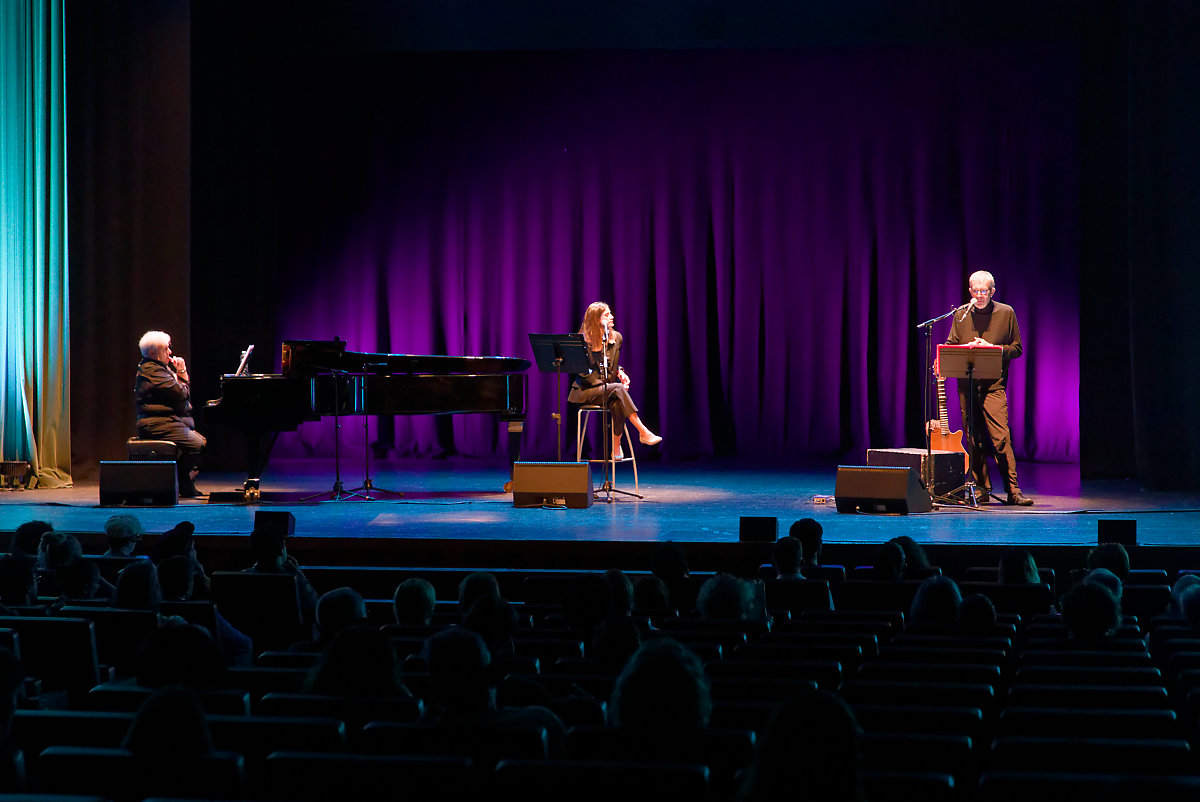
The University of La Laguna celebrates 50 years of the democratic transition with the program of events “For freedom: Spain after 1975”,” which explores different facets of this crucial historical episode. One of its facets is music, since during that period, as well as in the final years of the dictatorship, protest songs experienced a golden age with great titles that remain popular anthems today. Several of them resonated again last night, Wednesday, October 22, in the Paraninfo auditorium, thanks to journalist Máximo Pradera, who, in addition to introducing each piece, also sang some of them, accompanied by soprano Laura Sabatel and pianist Antonio López Serrano.
The title of the evening, “If the wind were to erase what I sing”The phrase is taken from a verse in the song "Gallo Rojo, Gallo Negro" by singer-songwriter Chicho Sánchez Ferlosio, whose ballad dedicated to Julián Grimau, the communist leader executed by the Franco regime in 1963 after a highly irregular trial (even by the dictatorship's low standards), was also performed. Sánchez Ferlosio was Máximo Pradera's uncle, and for this reason, he is the artist who served as the journalist's guiding thread for developing this cultural project, which, although commissioned by the State Secretariat for Democratic Memory within its project Spain in Freedom, It was an idea that the journalist had already suspected.
“I participated in a David Trueba documentary about Chicho Sánchez Ferlosio, which shares the same title as our performance,” Pradera explained in an interview before the concert. “After my appearance [in the film], I thought that some truly excellent protest songs have been written. From Grimau’s execution to the dictator’s death in 1975, this music sometimes served as solace, other times as fuel for the movements of rebellion against the dictatorship. And I told myself that I would like to do something someday to reclaim it.”.
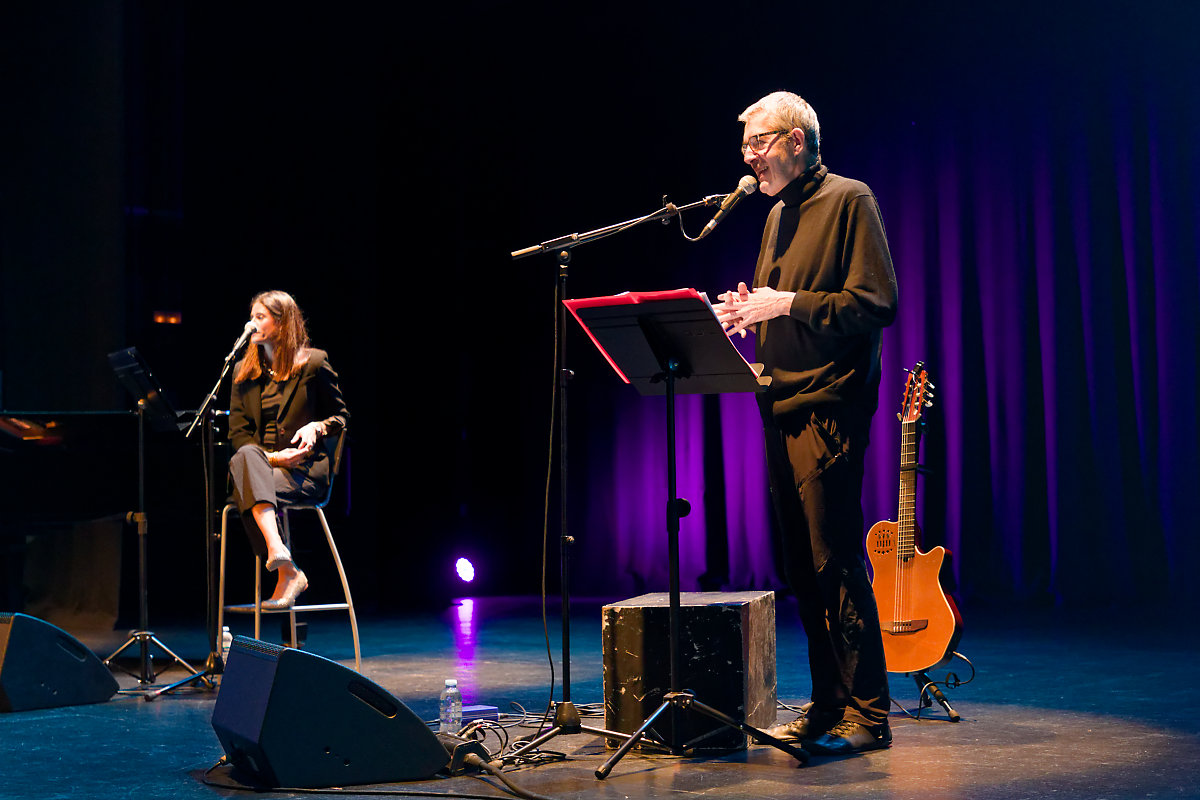 The result was a show featuring songs so deeply ingrained in the collective imagination that they were often sung at the top of their lungs by the university audience: among others, “Libertad sin ira” by Jarcha; “España camisa blanca” by Víctor Manuel; “Mi querida España” by Cecilia; and “A galopar” by Paco Ibáñez, based on a poem written by Alberti in 1937, during the siege of Madrid. Pradera presented them in a relaxed manner, revealing some secrets, such as that the mythical “To the wind”Raimon's "Al alba" and Luis Eduardo Aute's "Al alba" were not born as protest songs, but were given new meaning by the public.
Another special moment of the night was the performance of “La, la, la,” originally by Dúo Dinámico, which marked Spain's first Eurovision victory. However, it wasn't the most popular version they performed, but rather the Catalan version that the regime prevented Joan Manuel Serrat from singing, leading to his replacement by Massiel. While not a protest song per se, the circumstances surrounding its creation exemplify the climate of repression under Franco's regime and its fierce censorship of co-official languages.
Protest songs are generally associated with a soloist accompanied by their guitar, and indeed, that's how Pradera performed his pieces. But it's unusual to find a soprano and a classical pianist in this repertoire. "It was about reclaiming, through arrangements that are some quite cool and sophisticated, the quality of the songs. When you surround them with good harmonies, you realize they aren't songs for shouting at the top of your lungs." He cites, as an example, López Serrano's arrangement of "Ni aguantar ni escapar" (Neither Enduring Nor Escaping), a melody by Sánchez Ferlosio based on a poem by Carmen Martín Gaite. "Antonio has harmonized it in a way that sounds like a Schubert Lied.".
Regarding Laura Sabatel's contribution, she was selected because, in addition to her long-standing collaboration with pianist Antonio López, she is a "very versatile soprano who doesn't shy away from singing over the microphone, something not all lyric sopranos accept," Pradera points out, emphasizing that this type of repertoire requires a microphone. "Laura's power is evident, but she doesn't sing like Montserrat Caballé with Mecano, which I find ridiculous. Because this songbook is truly folk, and singing it in an affected way doesn't suit the genre. It's like when Plácido Domingo sings rancheras; that 'tenoraco' voice doesn't work for him. You have to adapt to the style.".
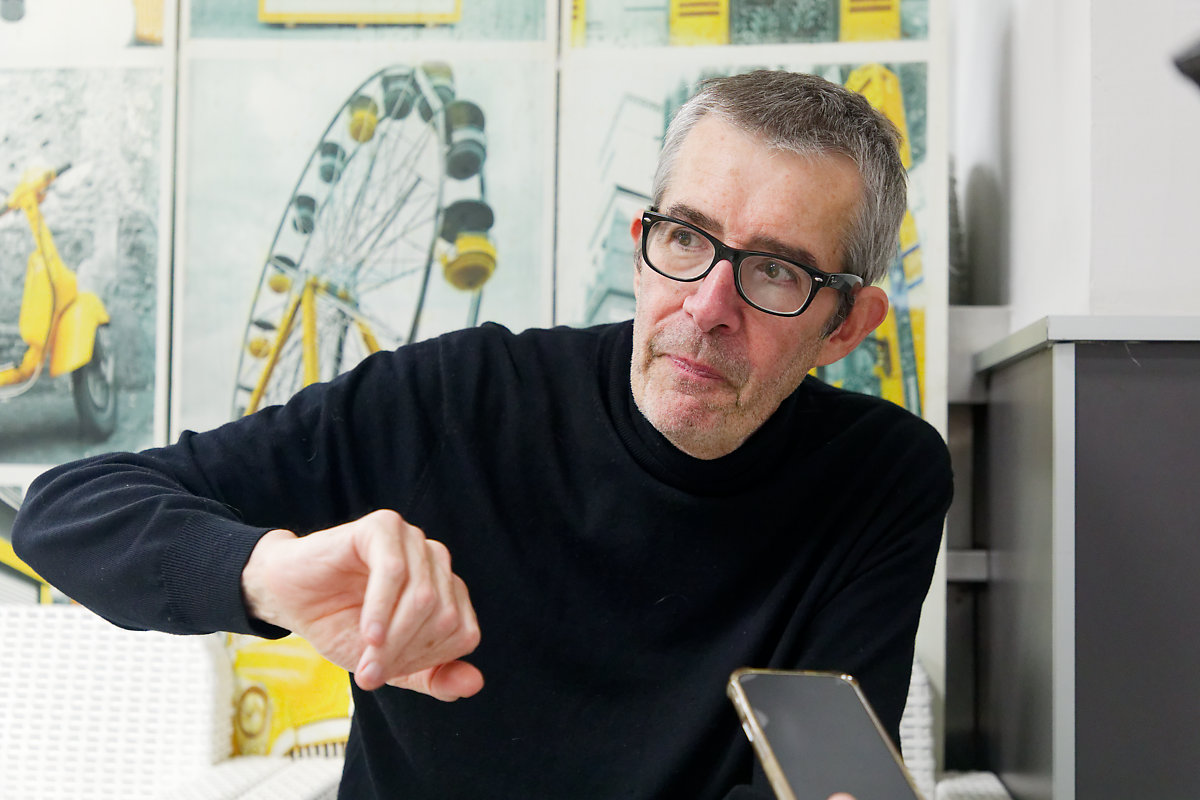
Journalist Máximo Pradera, before the concert at the Paraninfo.
In addition to the State Secretariat for Democratic Memory, this show also has the support of the Cervantes Institute, given the poetic quality of many of the song lyrics. After being presented in various locations across Spain, it will soon travel to European venues in Milan, Naples, and Toulouse. Furthermore, thanks to the collaboration of the Spanish Agency for International Development Cooperation, the show is scheduled to reach several American universities in 2026, with dates already confirmed in Mexico and Argentina.
Reflecting on the current state of protest songs, Pradera acknowledges that they have lost momentum, and perhaps their last great moment was the opposition to Spain's entry into NATO in 1986, with songs like Javier Krahe's "The Naive Crow." From then on, singer-songwriter music has taken a more sentimental turn, and only occasionally do artists like Ismael Serrano address social issues. "And Ismael, because he's the son of a union leader," he emphasizes.
For the journalist, it's a shame that the connection between song and politics has been lost, "because music is a powerful mobilizer, and now political movements don't have great ballads. Either people just want to make money commercially, or they haven't understood the power of music to enhance lyrics," he points out. It's also true that current events are truly turbulent and strange: "It's never happened before that 'the big shot,' who is usually the President of the United States, would suddenly be seen with the Nazis. That's very harsh." Even so, he hasn't given up hope that one day the progressive benches in Congress will respond to the far right with a chant. "They have to get up the courage.".

 Spanish
 English
 French