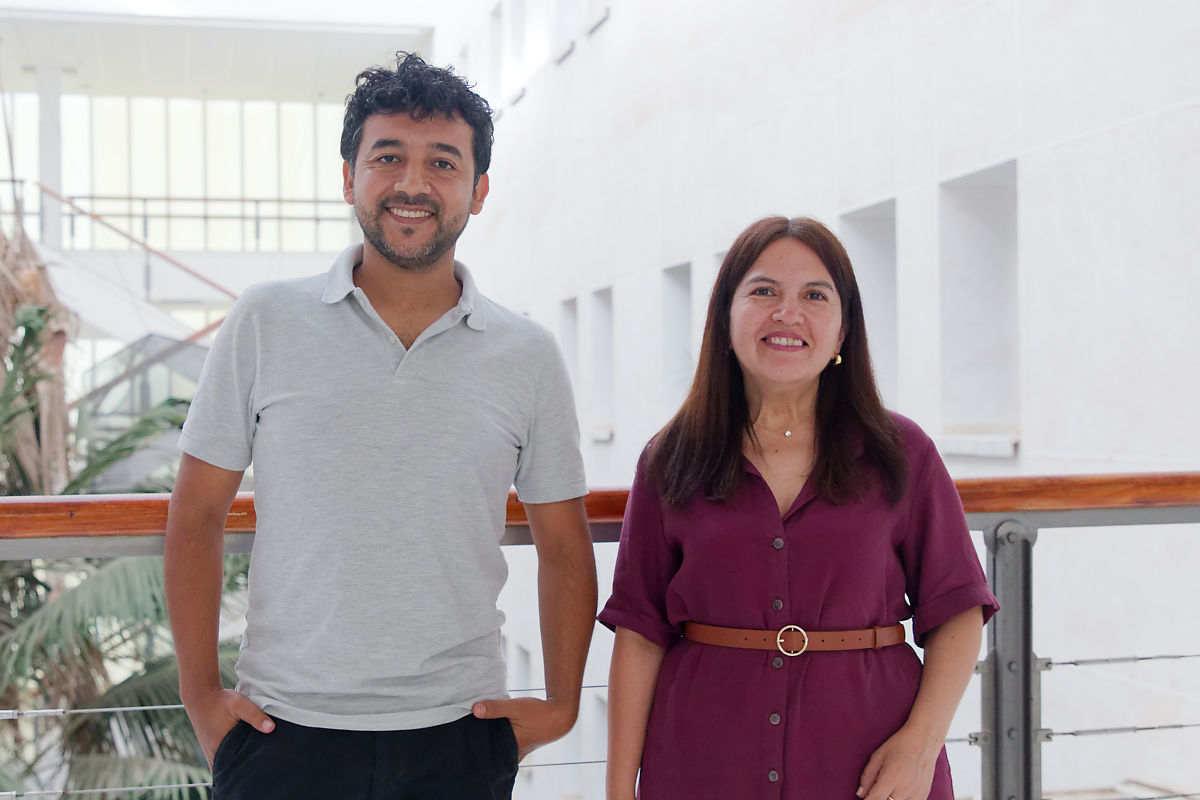
The University of La Laguna is currently hosting the researcher Martha Vidal, of the Central University of Chile, who is currently undertaking a research stay in collaboration with the researcher from the department of Spanish Philology Gabriel Sebastián Valdés León. The project focuses on the rescue of intangible and lexicographical heritage, with a particular focus on community work.
Martha Vidal's research is characterized by its people-centered approach, working directly with communities to recover their knowledge. During her stay, she is working to recover the intangible heritage of the Chilean author Ramón Laval, specifically through the lexicographical recovery of words lost in common Spanish usage. The researcher brings her knowledge of the Araucanía region, where she has worked previously.
The work focuses on creating a glossary, not a dictionary, of local usages noted in Laval's works. According to Vidal, “these hidden glossaries are relevant because often the author was unaware of contributing to lexicography. One example mentioned is the word 'pelador,' which Ramón Laval defines as 'murmurer,' and which in 1920s Chile, in the Carahue area, was a popular, not academic, term.«.
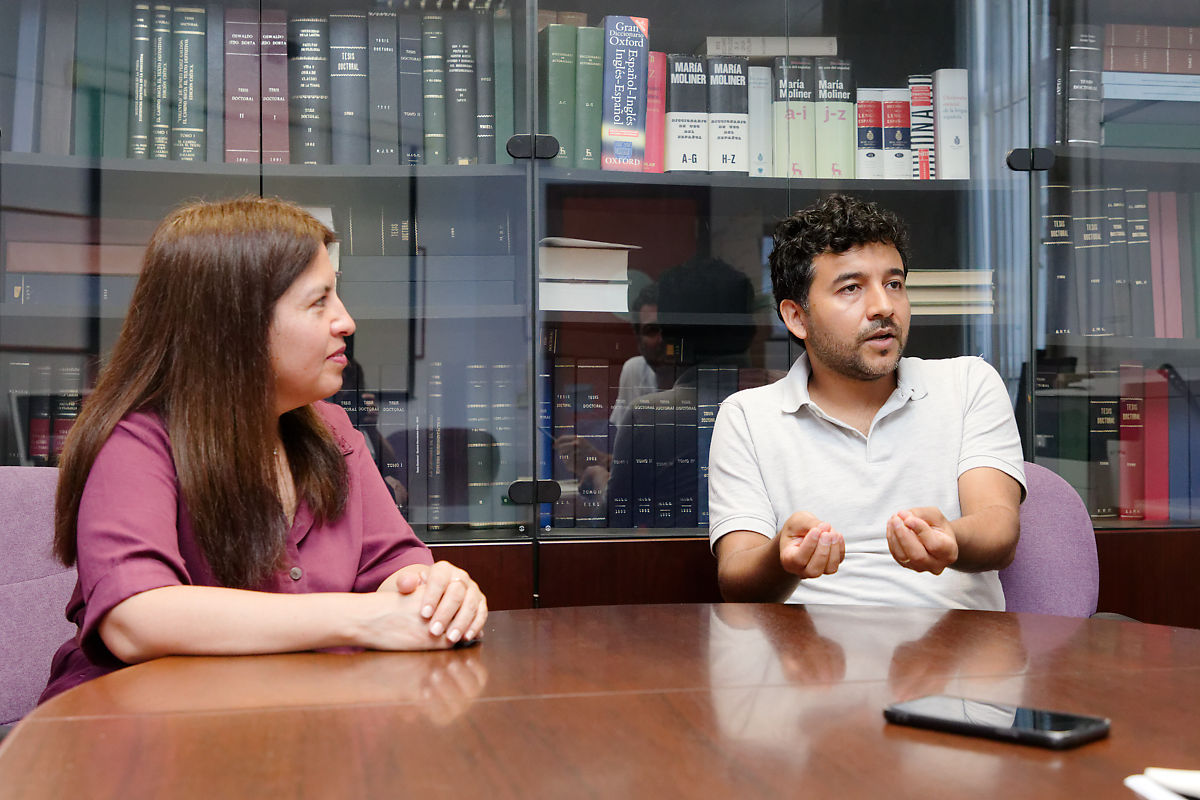
A moment from the interview.
Ramón Laval, a folklorist of French-Chilean origin, carried out this cultural heritage recovery project in Chile during the 1920s. His work is located in the Carahue region, which was not yet fully integrated into the state and where Indigenous communities coexisted with Italian, Swiss, and Chilean settlers. Laval, a prominent folklorist, documented this information, which was unknown to the country's intellectual circles.
This project has strategic value by establishing links between Chile, the Canary Islands, and Spanish lexicography. It seeks to contribute to a larger project, the Lexicographical Treasury of Spanish in the Americas, directed by Dolores Corbella y Alejandro Fajardo. The glossary of "lost glosses" that is intended to be recovered will form part of the corpus and lemmar of said treasure, which represents a significant contribution from the Lexis research group and American lexicography.
In addition to the academic contribution, the project seeks to leverage the experience in Chile to contribute to the local culture and collaborate with a Canary Islands startup from Las Palmas de Gran Canaria specializing in digital humanities, thus supporting local businesses and emerging professionals.
Beyond simply compiling the information, the project aims to add cultural commentary that contextualizes the presence or absence of these terms in contemporary Chile, within the broader American or even pan-Hispanic context. The example of "pelar" (to murmur) is mentioned, which has variants such as "sacar el cuero" (to peel the skin) in the Americas and "descuerar" or "despellejar" (to skin or flay) in Spain, demonstrating a link between local usage and pan-Hispanic equivalents.
The research will also address the state of preservation of these words, acknowledging that some, especially those linked to traditional uses and crafts, could disappear. However, there are ongoing research projects in southern Chile dedicated to rescuing, systematizing, and documenting these words. “It is observed that, although the vitality of the Mapuche language may be declining, some words have permeated Chilean Spanish, such as «pololo» (boyfriend/girlfriend) or «guata» (belly), which come from Mapudungun.”.
The project seeks to trace which of the usages from that era remain current, whether their meaning has changed, or if the word has disappeared altogether. It aims to recover the heritage, cultural, and lexicographical value of Laval, who, unintentionally, created a reflection of the culture of the region and the time.

 Spanish
 English
 French