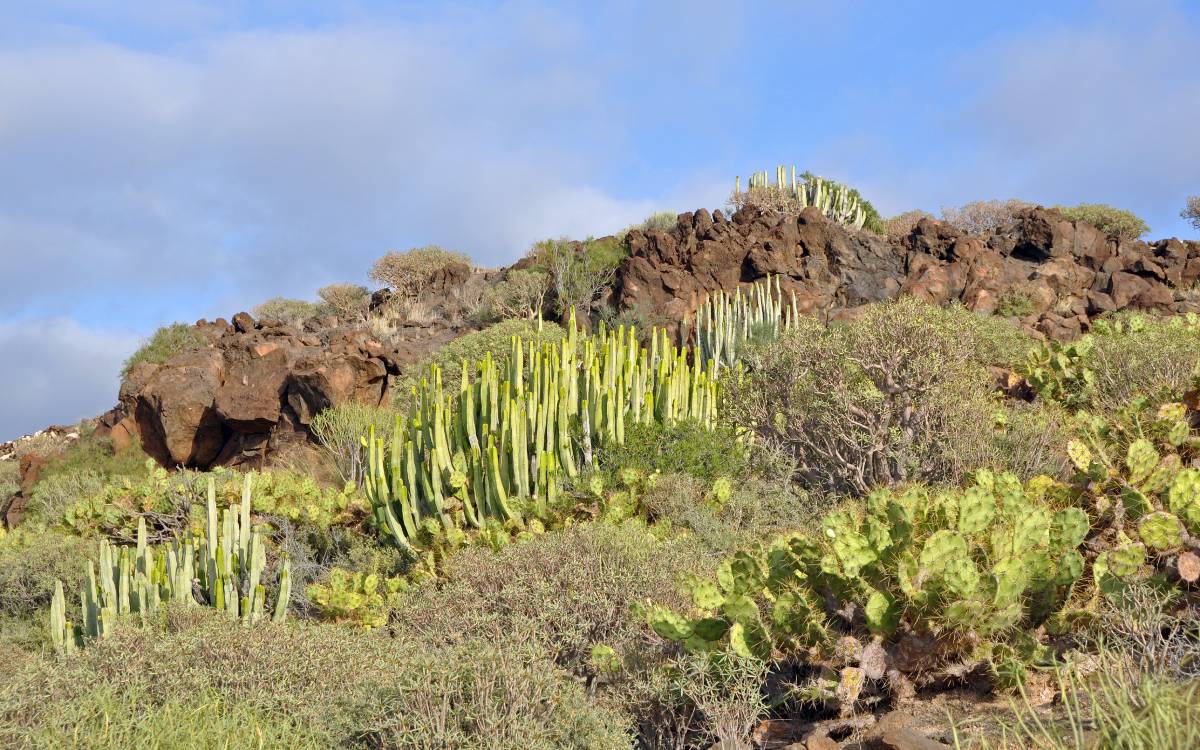
Researchers at the University of La Laguna have developed a model to predict the photosynthetic and respiratory responses of 48 native plant species in Tenerife under varying conditions of radiation, temperature, humidity, and soil water deficit along an altitudinal gradient across the archipelago's five main vegetation types. According to this model, the plants' water status is the most influential factor in the absorption of atmospheric carbon by the studied vegetation, highlighting the importance of including this indicator in carbon assimilation models for future climate scenarios.
The study, published in the journal Global Ecology and Conservation and led by the research group of Plant Ecophysiology The University of La Laguna, in collaboration with researchers from the University of the Basque Country, accurately predicts changes in photosynthetic capacity across a wide variety of species and environmental conditions, thus demonstrating the robustness and applicability of the model.
Analysis of the model parameters clarified the influence of individual environmental factors on photosynthesis and established a classification of species sensitivity to each of these factors. The research team identified that both air humidity and, especially, soil moisture significantly affect photosynthetic capacity. They also detected that temperature has a greater impact on respiration, suggesting a possible increase in CO₂ loss with rising temperatures, although its effect on photosynthesis is less pronounced than that of humidity.
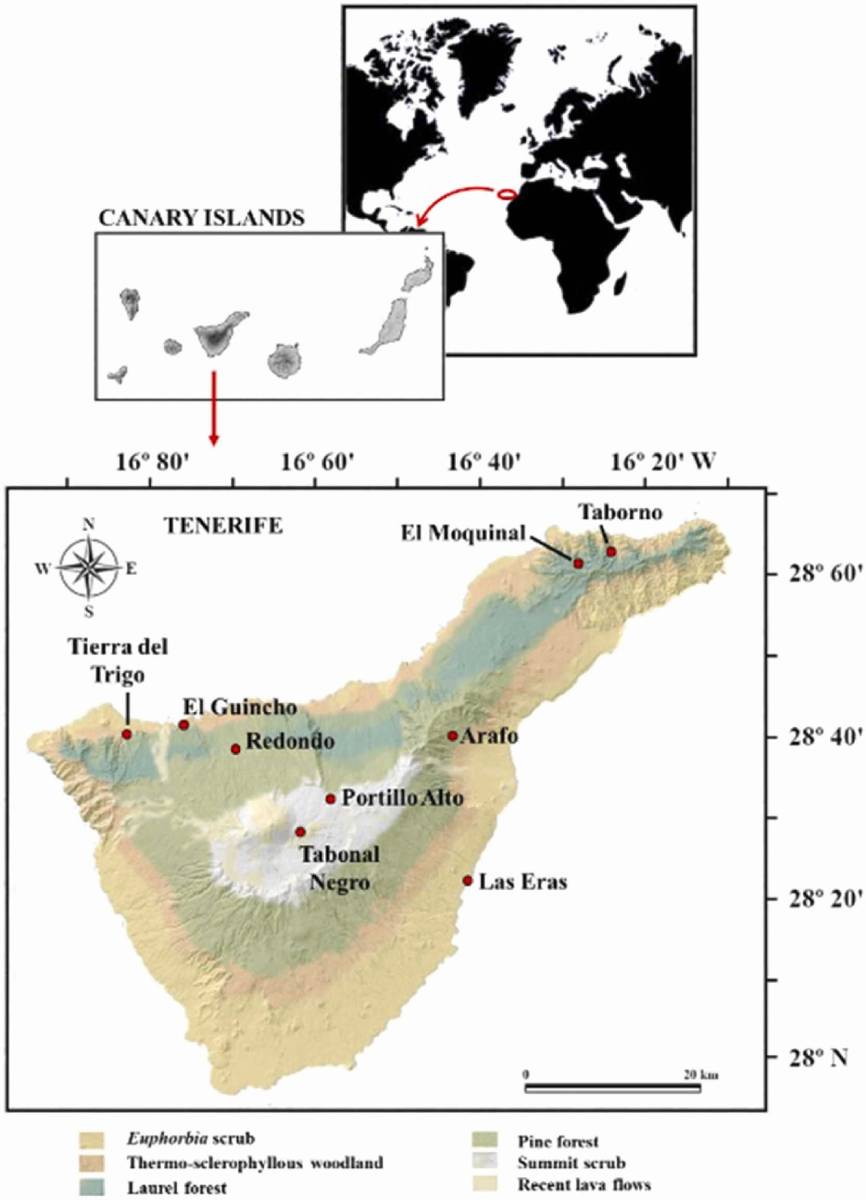
Study sampling areas.
This study underscores that water scarcity and rising temperatures have reduced carbon sequestration capacity in highly biodiverse ecosystems such as the Amazon rainforest. Therefore, understanding the capacity of ecosystems to capture carbon under climate change scenarios is crucial. In this regard, island ecosystems, with their significant altitudinal gradient and rich biodiversity, offer an exceptional natural laboratory for assessing how environmental changes affect carbon sequestration by endemic species in diverse ecosystems.
Tenerife, in particular, thanks to its climatic and natural history, its marked altitudinal gradient, and the diversity of subclimates and flora, provides an ideal setting for developing models that help understand the potential impact of climate change on the carbon absorption capacity of Mediterranean plant communities. The objective of this study was to leverage these conditions to create an empirical model that estimates the net CO₂ assimilation rate from key environmental variables (solar radiation, temperature, relative humidity, and soil moisture status) in native species distributed from the arid coasts to the high mountains.
Furthermore, a submodel was incorporated that relates accumulated precipitation to water potential at dawn, allowing rainfall to be included as an indirect predictor variable. The wide meteorological variability recorded ensures that the model is applicable throughout the annual cycle, even in the face of extreme weather events, making it a robust tool for assessing the impact of climate change on carbon sequestration in highly biodiverse Mediterranean plant communities.
Finally, the study points out that, although predicting the future adaptation and composition of species involves complex processes that do not depend solely on photosynthetic sensitivity to the environment, this model based on high biodiversity ecosystems offers a valuable tool for estimating the capacity of plants to capture carbon under different future climate scenarios.

 Spanish
 English
 French