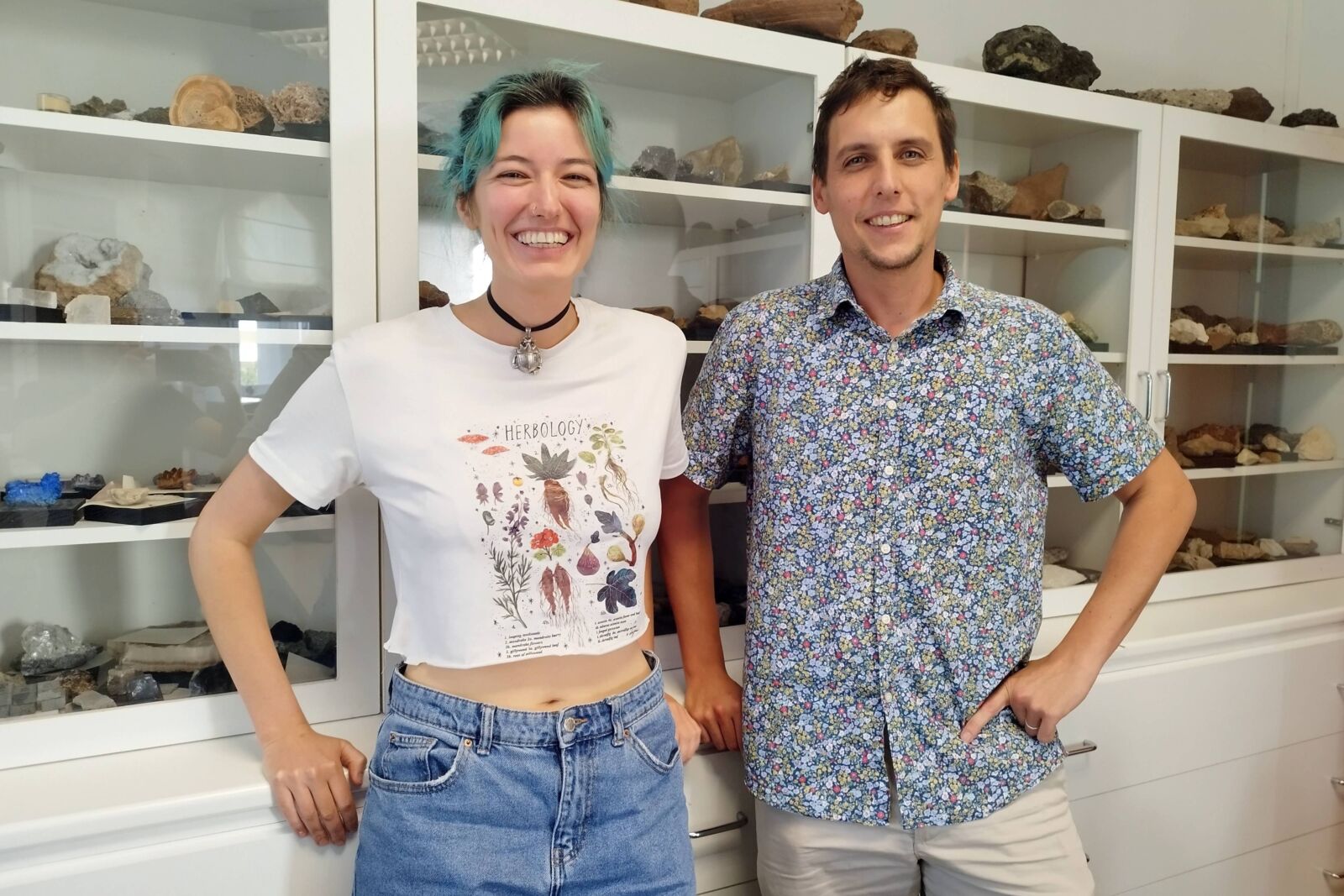
An international team of researchers led by a doctoral candidate from the University of La Laguna Pilar Martín Ramos This research has reconstructed the last 28,000 years of Gran Canaria's climatic and ecological history from sediments in the Vega de Arucas. This work provides one of the longest paleoecological records for the Canary archipelago and unprecedented information on the evolution of climate, vegetation, and fire regimes on the island, revealing an environmental evolution marked by major climatic transitions.
According to the researcher, the study's findings "allow us to understand the past response of the Canary Island landscapes, which is essential for anticipating how they will change in the face of anthropogenic climate change." The work also provides a basis for the management and conservation of island ecosystems in a context of increasing climatic and environmental pressure. has been published published by Quaternary Science Reviews and involved researchers from the universities of La Laguna, Las Palmas de Gran Canaria, Autonomous University of Barcelona and the Manaaki Whenua Long Term Ecology Laboratory in Lincoln (New Zealand).
The study is based on a multi-analytical approach that combines various indicators to reconstruct past environmental conditions. These include microscopic charcoal analysis to estimate fire frequency, the study of fossil pollen and non-pollen palynomorphs to reconstruct vegetation, and sedimentology to identify changes in the composition of deposited materials.
Furthermore, brGDGTs have been used for the first time in the Canary Islands (branched glycerol dialkyl glycerol tetraethers), temperature-sensitive organic compounds, along with climate modeling based on fossil pollen, to estimate past air temperature, precipitation, and relative humidity.
The results show an environmental evolution marked by major climatic transitions. Before the Last Glacial Maximum (between 28,000 and 26,000 years ago), the low-altitude vegetation of Gran Canaria was dominated by laurel forest, a type of humid forest characteristic of cooler conditions and with a very low fire frequency. During the Last Glacial Maximum, these communities were replaced by a dry pine forest following an increase in fire activity. The pine forest reflects colder temperatures and a significant reduction in water availability.
With the arrival of deglaciation came an abrupt shift to a warmer and more variable climate. This process favored the expansion of thermophilic forests, dominated by species such as junipers and palms, along with an increase in the frequency of fires. During the Holocene (the last 11,700 years), although pollen preservation was limited, charcoal records confirm that fires continued to play a significant role in shaping the landscape.
The study reveals that vegetation and fire regimes in the Canary Islands have been highly sensitive to regional and global climate variations. Thus, the results confirm a direct response of Canarian ecosystems to climate fluctuations, with significant implications for understanding their ecological dynamics and their resilience to future conditions.

 Spanish
 English
 French