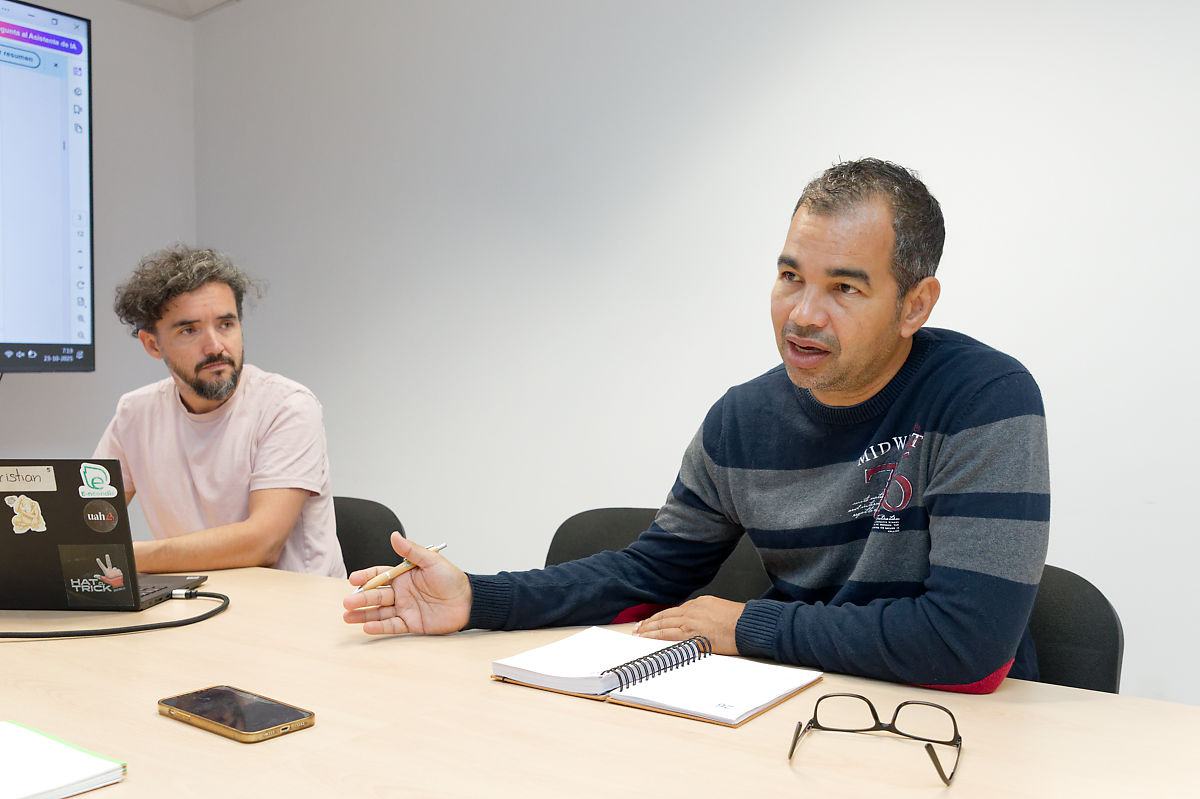
For more than a decade, Tony Castillo Calzadilla, assistant professor PhD in the Department of Industrial Engineering at the University of La Laguna, and Cristian Olivares, PhD from the Alberto Hurtado University From Santiago, Chile, they have been collaborating together and, as a result of this work, they have published five international research studies and hope that before the end of the year a new one will be released, related to the improvement of the efficiency of photovoltaic cells.
Thanks to the academic institution's own Research Plan, Olivares was able to undertake a short-term exchange in La Laguna, allowing her to advance her research alongside Castillo. Furthermore, during this stay they were able to collaborate with... Oscar Gomez Cardenas, assistant professor with a doctorate in the Department of Industrial Engineering at the University of La Laguna and of Emilio Olías Ruiz, professor at the Carlos III University, with whom they have established lines of cooperation for the near future.
Currently, both are immersed in simulating an algorithm created with artificial intelligence that can detect certain behaviors in electrical circuits powered by photovoltaic energy. This will allow them to locate specific points of maximum power, thus helping to maintain the health of the circuits.
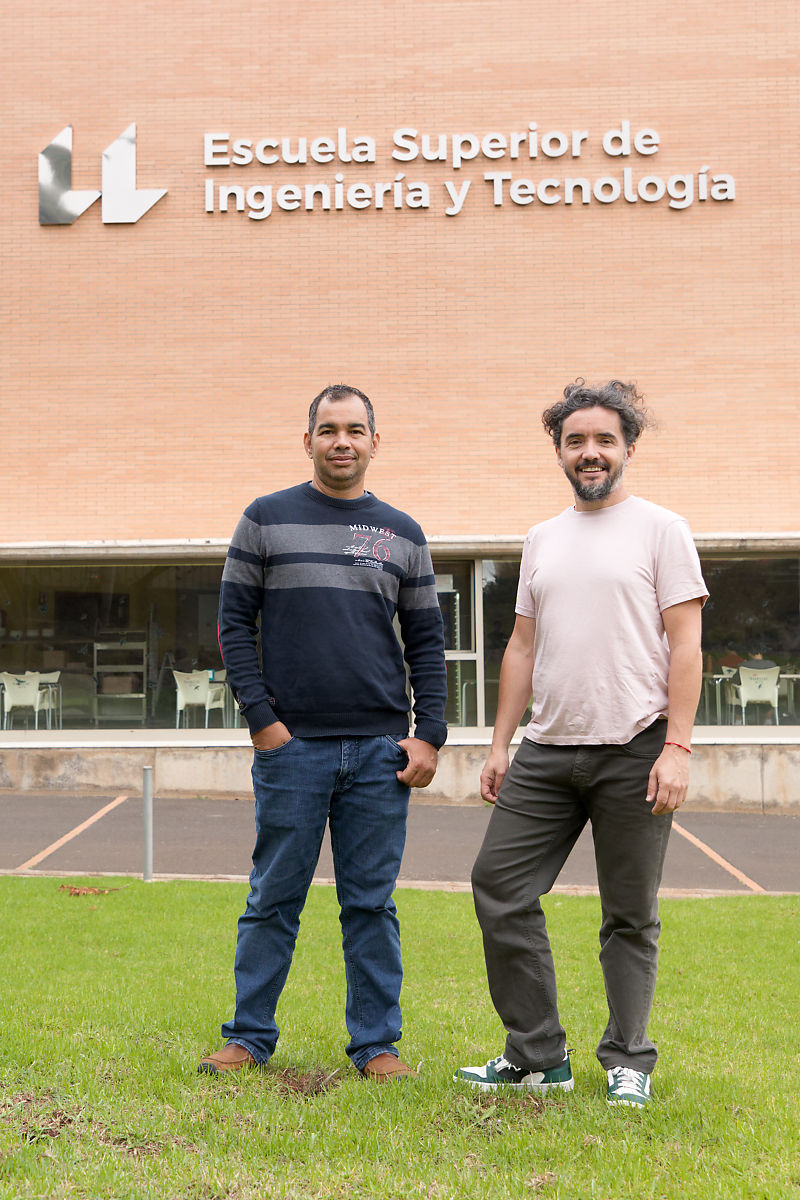
In this case, Tony Castillo, an electronics engineer, is responsible for designing the circuits and understanding how the energy is generated, while Cristian Olivares, a computer engineer, oversees the simulations using artificial intelligence. “The main objective is to make the photovoltaic solar panels as efficient as possible, especially in places like La Laguna where, although the sky is often cloudy, there is still solar radiation,” Castillo explains.
During this visit, Cristian was able to visit the Technological and Renewable Energy Institute, located in the south of the island, to observe firsthand the renewable energy projects being carried out on the island, which will also serve as a basis for the work being done by both experts.
Among the research projects the Chilean doctor is involved in, one that stands out is citizen science, which consists of engaging a segment of the population in scientific challenges alongside public policy. Its objective is to generate data that allows both science and public policy to be grounded in societal behavior. “I have been in contact with communities that have organized themselves to generate their own renewable energy, also called positive energy districts, that is, urban areas that generate more energy than they consume annually through local renewable sources,” Olivares explains.
For both of them, it's impossible not to consider engineering in relation to social problems, whether it's migration processes, wildfires, or energy poverty. "Researchers have to engage with society in their work and not just shut themselves away in a laboratory," he says. "It's impossible to remain neutral in our daily work because we, as engineers, are building a different future that will have an impact on society. For this reason, these findings must be shared with society, and society must be involved in the development process.".
Tony Castillo and Cristian Oliver plan to continue collaborating once they release their latest album. paper, They believe that there are many technical specialists, but the social differentiator of their articles is the distinctive characteristic of their publications and for which they have been congratulated in numerous presentations.

 Spanish
 English
 French