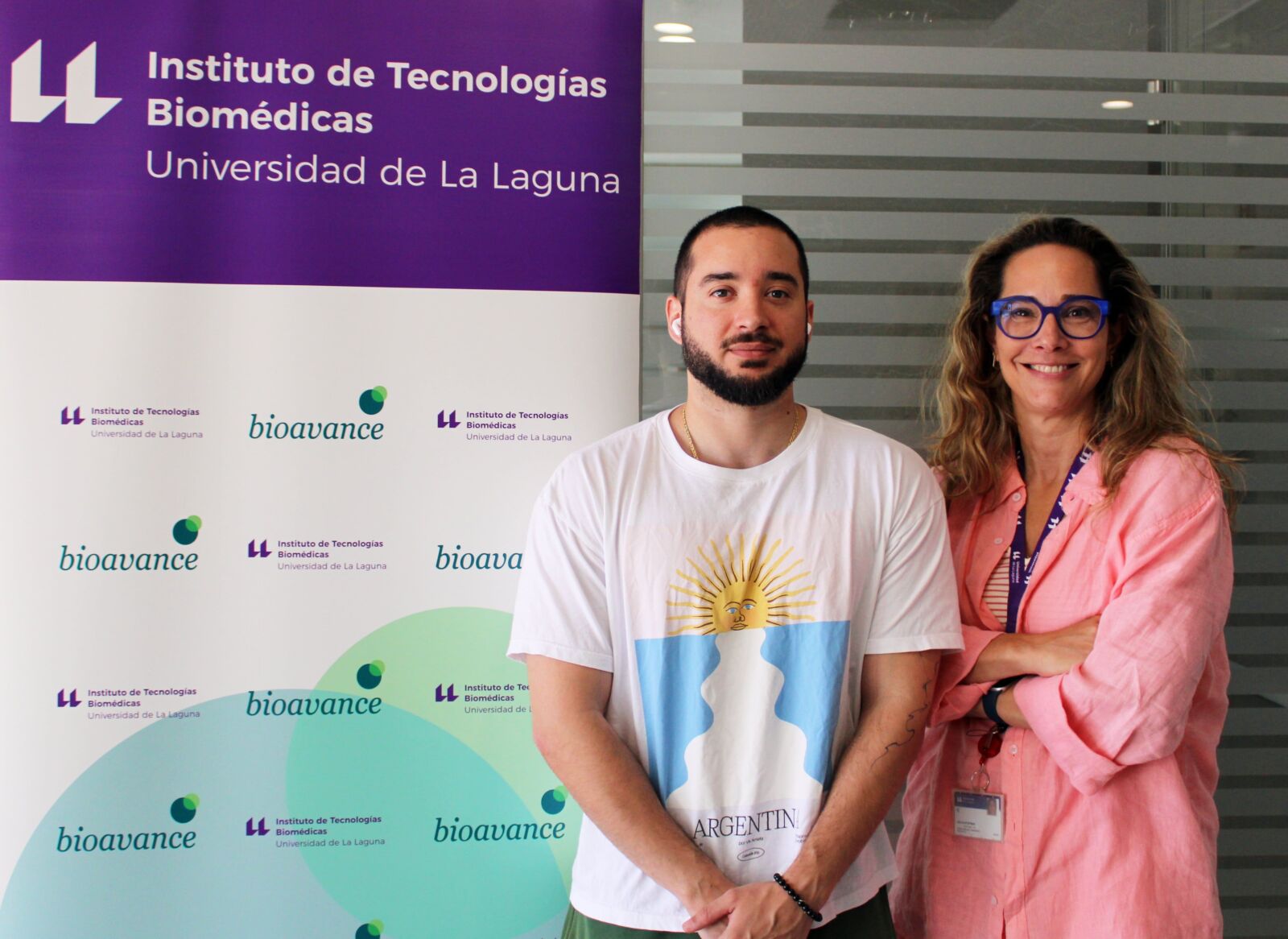
During the month of October, the University of La Laguna received a visit from postdoctoral researcher Luis Romero García, from the University of Texas Health Houston, McGovern Medical School (USA). Her stay, framed within the grant program of the ULL's 2025 Research Plan of the Vice-Rectorate for Research and Transfer, aims to strengthen collaboration with the Molecular Bases of Human Channelopathies (MOLCAN) group, led by Professor Teresa Giráldez in it University Institute of Biomedical Technologies.
Luis Romero has a distinguished career in the field of ion channel biophysics, and his current research focuses on the peripheral nervous system, analyzing how the lipid environment of the cell membrane influences the function of these channels when detecting physical stimuli from the environment. His work particularly addresses the study of mechanosensitive ion channels and how they are affected by changes in pressure or temperature.
She also investigates how diet can modify the lipid composition of cells and, consequently, the body's physiological responses. In this context, her line of research has a clear connection with that developed by Giráldez in the field of neuroscience, which combines approaches from molecular biophysics, electrophysiology, and imaging techniques to study the ion channels that regulate neuronal excitability.
Ion channels are proteins that form pores in the cell membrane, allowing the selective passage of ions across it. This regulation is highly specific and responds to various stimuli, depending on the type of cell in the organism. Dysfunction of these channels can lead to a group of diseases known as channelopathies, which are the focus of the research group at the University of La Laguna.
As Teresa Giráldez explains, the study of ion channels encompasses a very broad field, and each type requires a specific methodological approach and highly specialized knowledge. Therefore, collaboration with experts who analyze different channels is especially valuable for comparing approaches and sharing methodologies that can be integrated into new lines of research and enrich the field.
For the researcher, these types of visits represent an invaluable opportunity to invite internationally renowned researchers to the University of La Laguna to explore synergies, discuss conceptual and methodological approaches, and establish future lines of collaboration. The scientist emphasizes that, although the work of many specialists is familiar and they may be encountered at international conferences, “at a scientific level, these visits are extremely useful, as they allow time for interaction, addressing new ideas, and finding common ground.”.
During his two-week stay, Romero had the opportunity to tour the facilities of the Institute of Biomedical Technologies, meet with those in charge of various projects, and exchange ideas with researchers and students. “Not only have I received an extremely warm welcome, but I have also felt a great willingness to collaborate and explore possible avenues for joint work,” the researcher added. Both scientists agree that their lines of research are strongly interconnected, which has allowed them to identify potential experiments that could serve as proof of concept for future collaborations.

 Spanish
 English
 French