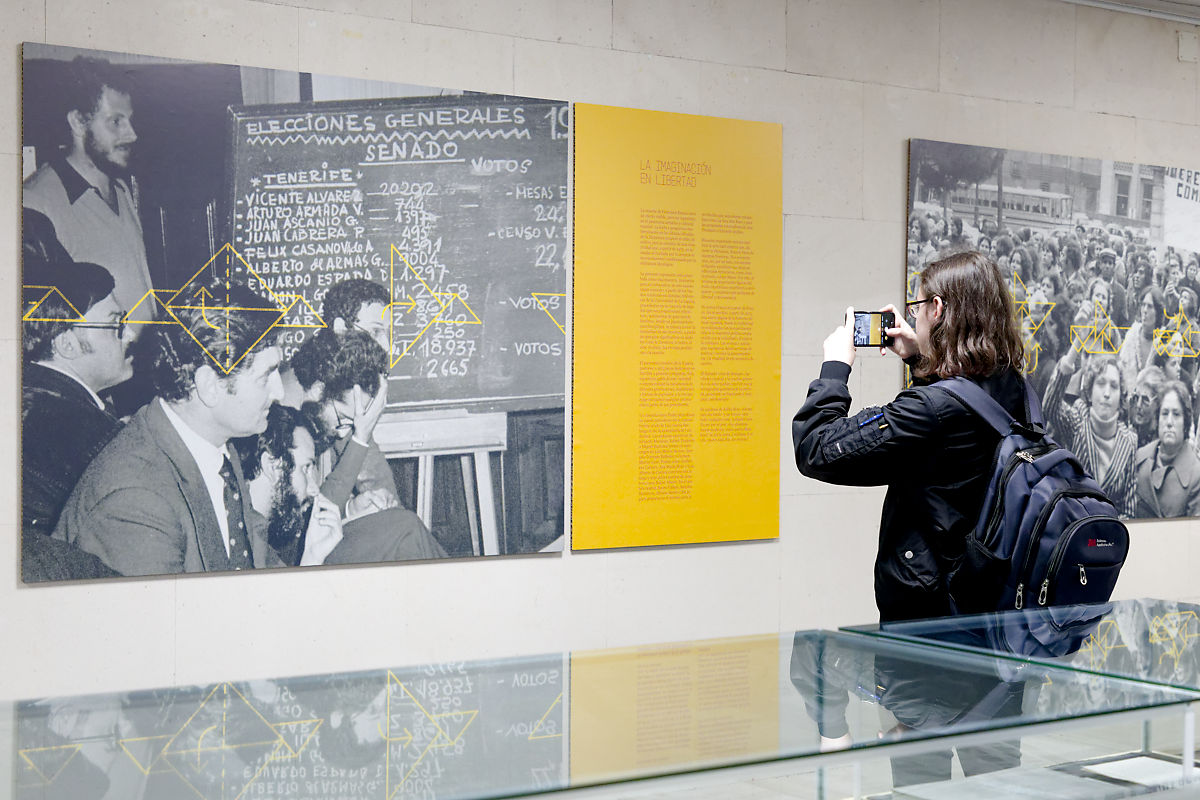
The University of La Laguna commemorates 50 years since the beginning of the democratic transition with the program of events “For freedom. Spain after 1975”, which includes numerous academic and cultural activities. One of them is the exhibition The exhibition, which shares the same name as the series, opened yesterday on the ground floor of the General and Humanities Library on the Guajara Campus. This exhibition, which will remain open until December 4th, aims to highlight, through books, records, magazines, and graphic materials, the cultural, social, and political ferment that characterized this period of such momentous change in recent history.
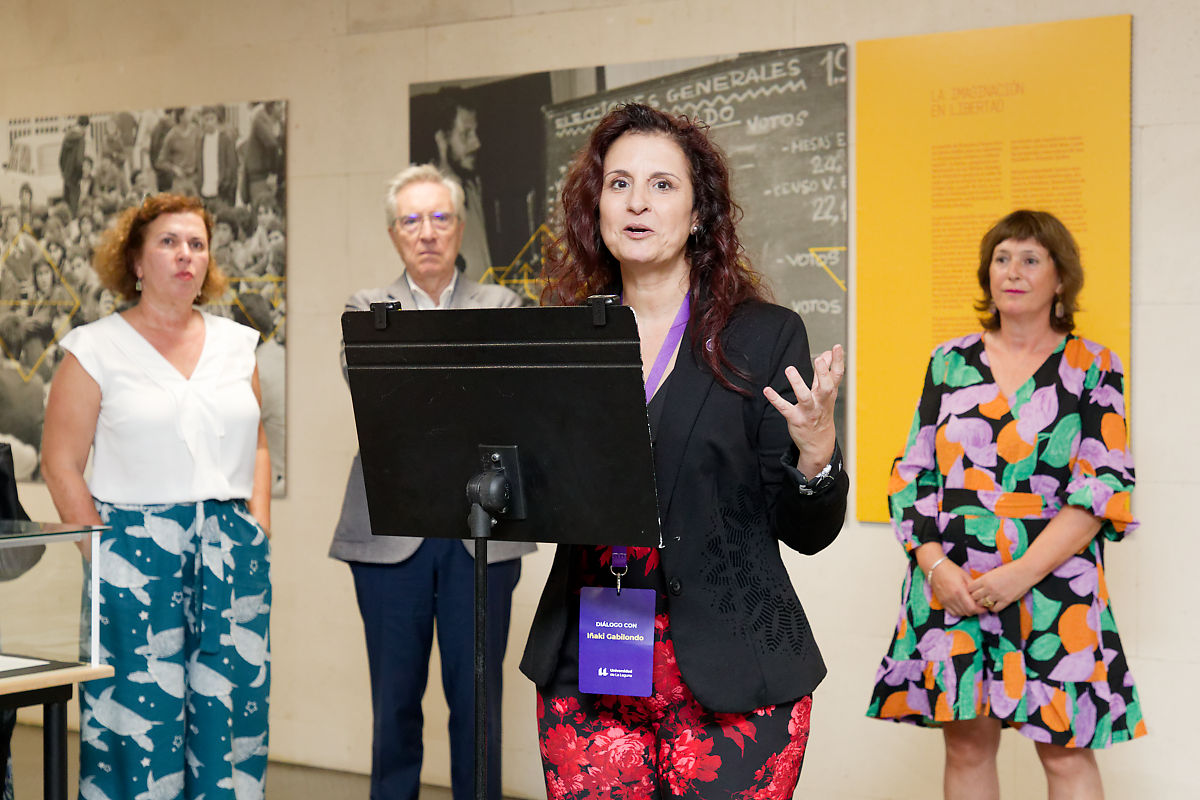 The opening was attended by the Vice-Rector for Culture and University Extension, Isabel León; the academic curators of the exhibition; and the professors from the Department of Spanish Philology. Isabel Castells y Alberto García; and Library Service technician Paqui Rivero, who explained the contents and selection criteria of the materials that make up the exhibition. The event featured journalist Iñaki Gabilondo as a special guest, who hours earlier had been the subject of a dialogue with university students on the same Guajara Campus.
The exhibition consists of several large-format information panels that serve as historical context for the Transition, with a graphic design by Ismael García that presents a perfect metaphor for that period: a succession of images that show how, from several folds, a sheet of paper becomes a dove, alluding to how freedom had to be built in Spain after the death of Franco.
The display cases showcase books, magazines, comics, records, cassettes, programs, fanzines, and other formats that reflect the literary, artistic, political, and activist output produced in both Spain and the Canary Islands. Some exhibits are thematic, addressing issues such as feminism, the labor movement, and the fight for sexual and gender diversity, among other topics.
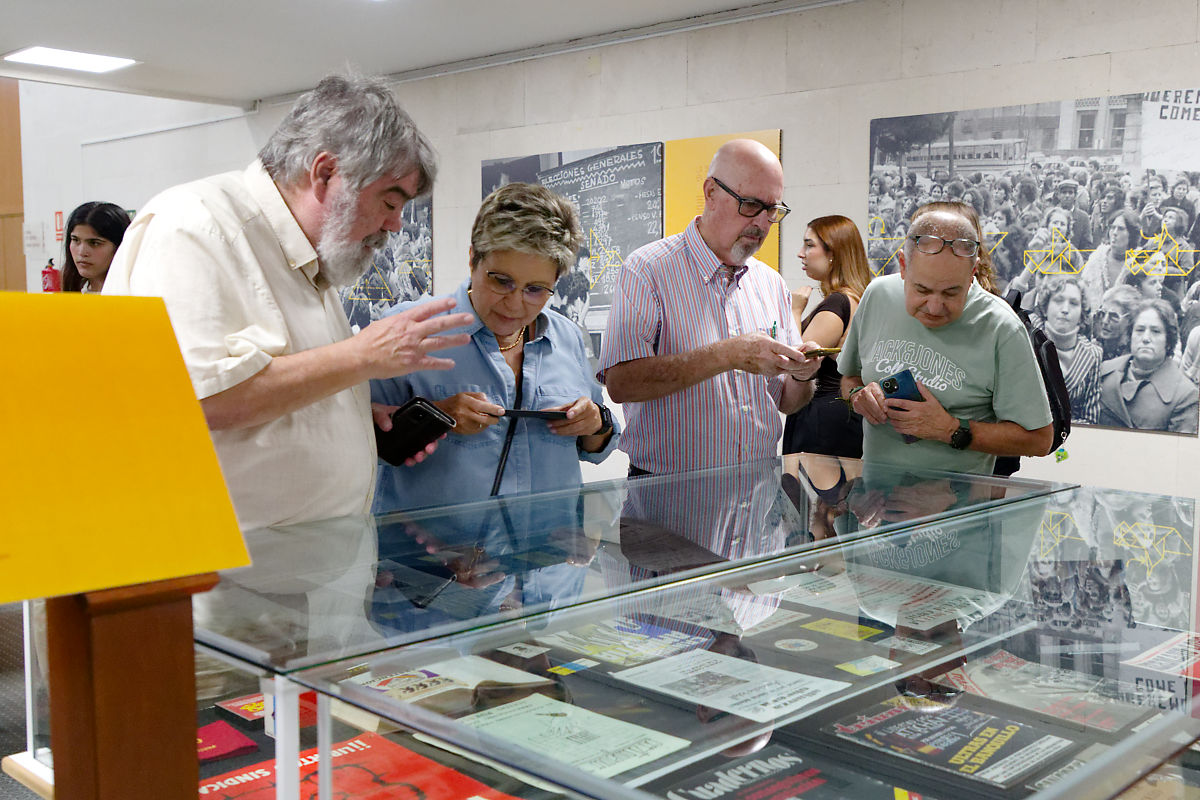 On the other hand, there are more general displays showcasing what was being produced at that time in poetry, theater, novels, film, journalism, and music, from punk to protest songs, including the LP that singer-songwriter Joan Manuel Serrat dedicated to Miguel Hernández, from which the verse “Para la libertad” (For Freedom) that gives this series its name was taken. In this section, a display case is dedicated to authors in exile, and there are also tables with books available for loan, with the aim of introducing younger readers to the diverse creative expressions of this period.

 Spanish
 English
 French